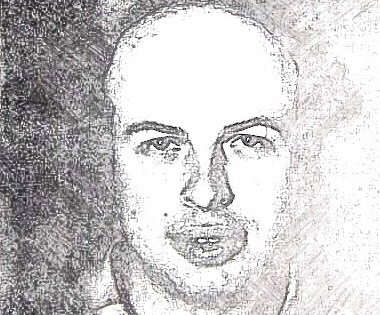
On Feb. 12, 1986, Soviet human rights activist Anatoly Scharansky was released after spending eight years in Soviet prisons and labor camps. The amnesty deal was arranged at a summit meeting between Soviet leader Mikhail Gorbachev and President Ronald Reagan. Scharansky had been imprisoned for his campaign to win emigration rights for Russian Jews — who had been forbidden to practice Judaism in the USSR.
On Feb. 12, 1909, the National Association for the Advancement of Colored People (NAACP) was founded.
On Feb. 12, 1593, approximately 3,000 Korean defenders led by General Kwon Yul successfully repelled more than 30,000 invading Japanese forces in the Siege of Haengju.
Last week’s anti-socialist moment was not limited to the president’s promise that America would never go socialist, as I noted this weekend there was also Panera Bread’s abandonment of its quasi-charitable Panera Cares (“pay-what-you-want”) fast food chain.
Isn’t that a bit of a strange connection? Socialism is not charity. It’s bad because it is force through and through, not because it seeks to help people.
Well, note that while Panera’s notion was the same as many socialists’, to help the poor. Panera’s method was to cajole, or “nudge,” the better-off to pay enough more to cover the costs of paying less.
Kinda like ObamaCare, but without the force.
And without the force, it failed.
What Panera management discovered is that not only is it very hard to get the message across, it is almost impossible to set up coherent incentives to successfully alter consumer behavior.
Getting incentives right is something that plagues all sorts of socialistic experiments, voluntary or coercive, within a capitalist society.
Take Finland’s recent experiment with a Universal Basic Income (UBI).
The idea of that nation’s centrist party was to take care of the unemployed beneficiaries’ basic needs so they could get back to work.
Well, those who received the basic income were happy enough receiving the moolah. Sure. But “there was no evidence from the first year of the experiment,” a report in Huffington Post admits, “that the scheme incentivized work.” Despite that, socialists in England are pushing for the UBI.
Socialism doesn’t work, and socialists would rather not work — except to advance socialism.
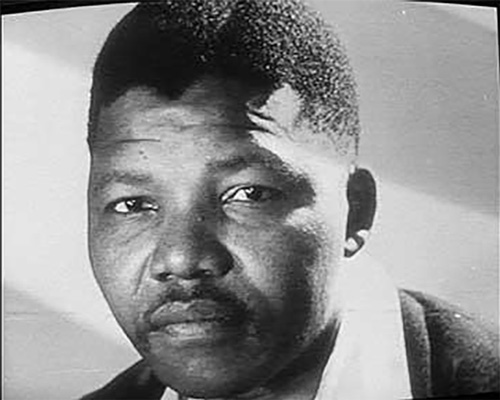
On Feb. 11, 1990, after 27 years in prison, Nelson Mandela was released by South African authorities.
Mandela had joined the African National Congress (ANC) in 1944, becoming deputy national president of the group in 1952. Arrested for treason in 1961, he was acquitted — but then arrested again in 1962 for illegally leaving the country. Convicted and sentenced to five years at Robben Island Prison, he was put on trial again in 1964 on charges of sabotage. He was convicted and sentenced to life in prison along with several other ANC leaders.
In 1989, F.W. de Klerk became South African president and began dismantling apartheid. De Klerk lifted the ban on the ANC, suspended executions, and in February 1990 ordered the release of Nelson Mandela.
Mandela subsequently led the ANC in negotiating an end to apartheid and the establishment of a multiracial government. In 1993, Mandela and de Klerk were jointly awarded the Nobel Peace Prize. One year later, the ANC won the country’s first free elections, and Mandela was elected South Africa’s president.
Socialism depends for its increasing support upon widespread ignorance of economic reality. That it keeps creeping back into politics may not seem strange. What may seem strange is that a major business enterprise would also not understand that reality. But that appears to be the case. More at Townhall. And yet more below:
The Blazereported on its “Panera Cares” experiment going “belly-up.”
But for the full comedy, try NPR’s Planet Money podcast.
For the Pareto-Schmoller tale, you could read Vilfredo Pareto’s Mind and Society. Or just check out this blogpost.
For why socialism cannot work like socialists say it can work, you might try Ludwig von Mises’ classicSocialism: An Economic and Sociological Analysis. (Pareto wrote a two-volume work of a similar nature, but it has never been translated into English!)
Socialism depends for its increasing support upon widespread ignorance of economic reality. That it keeps creeping back into politics may not seem strange. What may seem strange is that a major business enterprise would also not understand that reality. But that appears to be the case. More at Townhall. And yet more below:
The Blazereported on its “Panera Cares” experiment going “belly-up.”
But for the full comedy, try NPR’s Planet Money podcast.
For the Pareto-Schmoller tale, you could read Vilfredo Pareto’s Mind and Society. Or just check out this blogpost.
For why socialism cannot work like socialists say it can work, you might try Ludwig von Mises’ classicSocialism: An Economic and Sociological Analysis. (Pareto wrote a two-volume work of a similar nature, but it has never been translated into English!)
On Feb. 10, 1967, the 25th Amendment to the U.S. Constitution was ratified by Nevada, the necessary 38th state to do so. The amendment sets the process for presidential succession, and reads:
Section 1. In case of the removal of the President from office or of his death or resignation, the Vice President shall become President.
Section 2. Whenever there is a vacancy in the office of the Vice President, the President shall nominate a Vice President who shall take office upon confirmation by a majority vote of both Houses of Congress.
Section 3. Whenever the President transmits to the President pro tempore of the Senate and the Speaker of the House of Representatives his written declaration that he is unable to discharge the powers and duties of his office, and until he transmits to them a written declaration to the contrary, such powers and duties shall be discharged by the Vice President as Acting President.
Section 4. Whenever the Vice President and a majority of either the principal officers of the executive departments or of such other body as Congress may by law provide, transmit to the President pro tempore of the Senate and the Speaker of the House of Representatives their written declaration that the President is unable to discharge the powers and duties of his office, the Vice President shall immediately assume the powers and duties of the office as Acting President.
Thereafter, when the President transmits to the President pro tempore of the Senate and the Speaker of the House of Representatives his written declaration that no inability exists, he shall resume the powers and duties of his office unless the Vice President and a majority of either the principal officers of the executive department or of such other body as Congress may by law provide, transmit within four days to the President pro tempore of the Senate and the Speaker of the House of Representatives their written declaration that the President is unable to discharge the powers and duties of his office. Thereupon Congress shall decide the issue, assembling within forty-eight hours for that purpose if not in session. If the Congress, within twenty-one days after receipt of the latter written declaration, or, if Congress is not in session, within twenty-one days after Congress is required to assemble, determines by two-thirds vote of both Houses that the President is unable to discharge the powers and duties of his office, the Vice President shall continue to discharge the same as Acting President; otherwise, the President shall resume the powers and duties of his office.
On Feb. 9, 1737, Thomas Paine was born in Thetford, England.
Paine would come to America in 1774 and by 1776 publish Common Sense, urging American independence. Later works included The Rights of Man (1792) and The Age of Reason (published in three parts in 1794, 1795, and 1807).
It has been a big week for socialism — or, rather, anti-socialism.
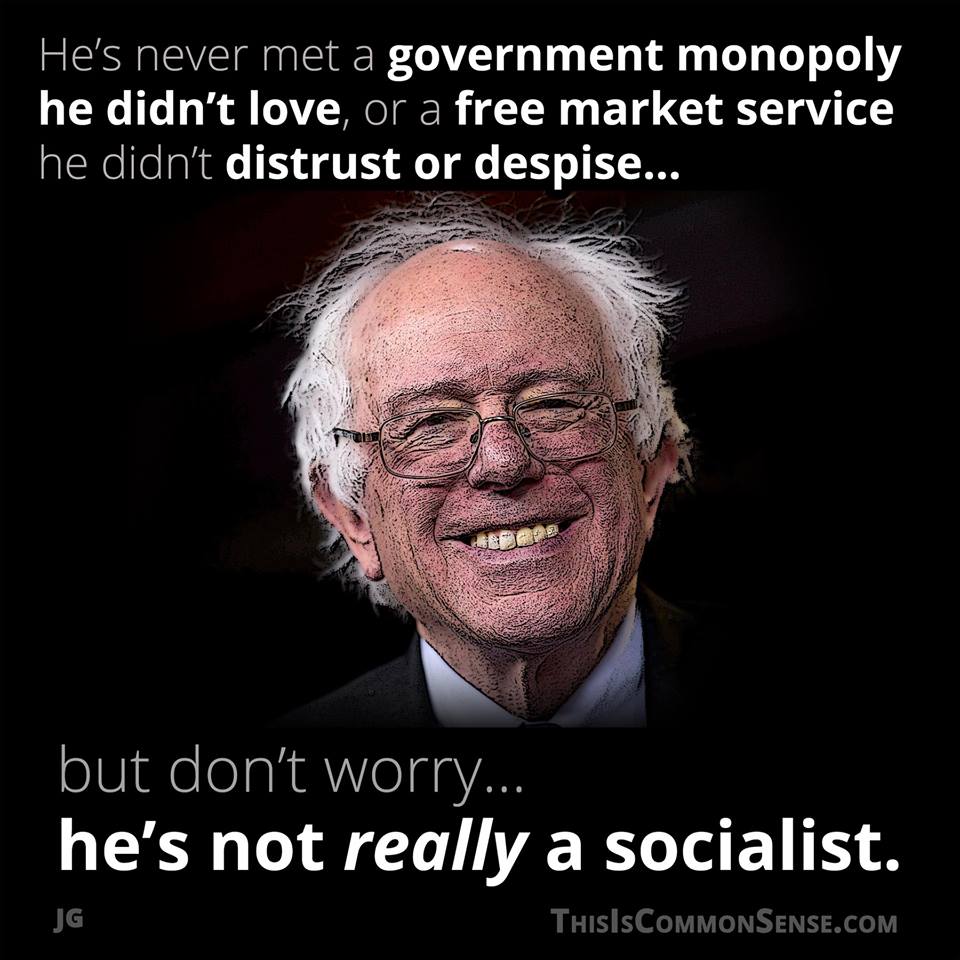
The high point was probably President Trump’s State of the Union Address, in which he opposed not only the murderous, ruinous regime in Venezuela, but also the rising tide of socialism in the Democratic Congress — with Senator Sourface, er, Bernie Sanders, trying not to explode as he heard that taboo word “free” applied to America . . . not goodies.
Meanwhile, Panera Bread announced, The Blazereports, that it is closing “its last pay-what-you-can restaurant, located in Boston, on Feb. 15.”
“Panera Cares” was, it appears, “initially created to serve food to low-income people nine years ago in 2010,” but sure seemed to be itching to prove a sort of post-capitalist point. The company’s founder, Ron Shaich, said that “the program’s aim was a ‘test of humanity.’”
More like a test of gullibility.
No branch of the “experiment” ever ran in the black. Like experiments in society-wide socialism, it relied upon subsidy to carry on — but unlike in socialism, Panera could not force people to cough up the dough needed to keep it going.
Once upon a time, the great economist Vilfredo Pareto, during a lecture, was repeatedly interrupted by one Gustav von Schmoller, who denied that economists had discovered any enduring principles, especially ones that would undermine his beloved socialism. So Pareto dressed down as a bum and approached Schmoller on the streets, inquiring about a restaurant that served meals for free. When Schmoller told him that there were only cheap, but no free meals, at restaurants, Pareto stood up with the ultimate gotcha: