Categories
Thought

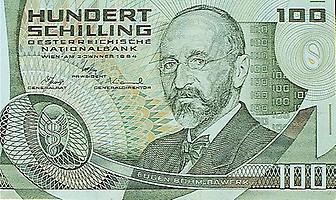
Eugen von Böhm-Bawerk

[T]hrift is never popular. . . . If parliaments have historically been the guardians of thrift, they now have turned much rather into its sworn enemies. Nowadays, the political and national parties — maybe not exclusively in our own country, but certainly also here — tend to develop a certain covetousness, almost considered to be dutiful, for all kinds of benefits for their own electorate at the expense of the general public.

Eugen von Böhm-Bawerk, as quoted by Ludwig von Mises, “The Economist Eugen von Böhm-Bawerk” (Neue Freie Presse, Vienna, August 27, 1924) — described by Mises as “the last words that Böhm-Bawerk addressed to Austria’s financial authorities.”
Categories
Accountability general freedom national politics & policies term limits

The Soul of Citizen Government

Today’s federal holiday represents a truly spectacular feat of modern public administration: actual downsizing.

By our federal government, no less.

Where once there were two federal holidays, Washington’s Birthday and Lincoln’s Birthday, now there is just one: Presidents’ Day.

There is no equal in public sector simplicity, frugality, efficiency. Stand in awe, fair citizens.*

In that spirit of brevity (the soul of citizen government?) I’ll cut out the middle-man, moi, and let presidents speak to a classic example of less being more, term limits.

“If our American society or the United States Government are overthrown,” Abraham Lincoln wrote, “it will come from the voracious desire for office, this wriggle to live without toil, work, or labor — from which I am not free myself.”

“We want to see new voices and new ideas emerge,” explained President Barack Obama. “That’s part of the reason why I think that term limits are a really useful thing,”

‘Actions speak louder than words’ could have been George Washington’s motto. His greatness may spring more from giving up power than from wielding it. He could have been president for life, but he stepped down after two terms, eight years.

In his second term, President Thomas Jefferson expressed hope that his retirement would help establish that two-term tradition for presidents, ultimately leading to a constitutional requirement.**

Success! This February 27th marks the 68th anniversary of the 1951 ratification of the 22nd Amendment: presidential term limits. 

And having declared the 27th to be Term Limits Day, U.S. Term Limits and supporters are rallying all around the country next Wednesday.

Join in celebrating term limits and help push for limits on Congress.

It’s Common Sense. I’m Paul Jacob.


* That’s what it seems like, anyway. The true story? Much more complicated. Officially, the U.S. Government still considers Presidents’ Day to be Washington’s Birthday, believe it or not.

** Jefferson had harshly critiqued the new Constitution for its “abandonment in every instance of the necessity of rotation in office, and most particularly in the case of the President.”


Contact U.S. Term Limits:
termlimitsday@termlimits.com


PDF for printing

See all recent commentary
(simplified and organized)
See recent popular posts
Categories
Today White Rose

White Rose

On Feb. 18, 1943, Hans and Sophie Scholl, a brother and sister, were arrested at the University of Munich for secretly (or not so secretly) putting out leaflets calling on Germans to revolt against Adolf Hitler and the Nazi regime.

In the previous year Hans had founded a group of students, who called themselves “The White Rose.” The group wrote and distributed six leaflets aimed at educated Germans. The leaflets made their way across Germany and to several other occupied countries. The Allies later dropped them all over the Third Reich.

Categories
Thought

Simone Weil

It is the aim of public life to arrange that all forms of power are entrusted, so far as possible, to men who effectively consent to be bound by the obligation towards all human beings which lies upon everyone, and who understand the obligation.

Law is the quality of the permanent provisions for making this aim effective.

Simone Weil, draft for a Statement of Human Obligations (1943).
Categories
links Popular

Townhall: Don’t Interrupt the Democrats

At Townhall, Paul Jacob cuts Alexandria Ocasio-Cortez enough slack for the Democrats to hang themselves.

On Tuesday, the column will be archived on this site.

Categories
Today

President Jefferson

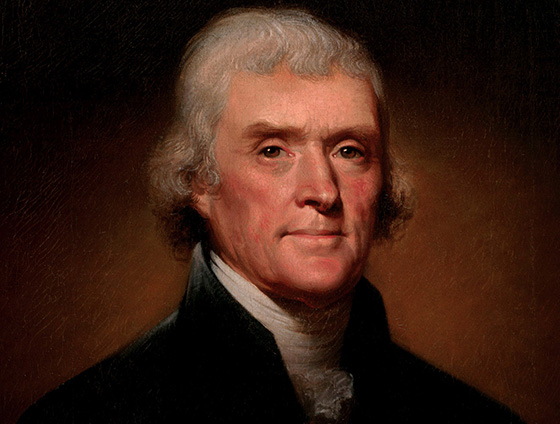
On Feb. 17, 1801, Thomas Jefferson was elected by the U.S. House of Representatives to be the third president of the United States, after an arduous election process that ended only 15 days prior to inauguration.

The fracas included a tie vote in the Electoral College followed by 35 indecisive ballots in the House. At that time, votes were cast for president, with the second place candidate becoming Vice-President. But in the Electoral College, Jefferson tied with his vice-presidential running mate, Aaron Burr. When that sent the balloting to the House of Representatives, the Federalists opposing Jefferson initially threw their support to Burr.


On Feb. 17, 1933, a constitutional amendment to repeal the Eighteenth Amendment to the U.S. Constitution, which had established the national prohibition of alcohol, was passed by the U.S. Senate. Known as the Blaine Act, the prime author was Wisconsin Senator John J. Blaine. By the end of 1933, the repeal of prohibition was adopted as the 21st Amendment to the Constitution.

Categories
video

Arrested in Home for Tweet

In Britain, the police are now arresting people for saying controversial things on Twitter. The controversy, in this case, is the subject of “misgendering” — a mother was taken into custody for calling a “trans woman” . . . “a man.”

https://youtu.be/-aXv8ElhkGY
Categories
Thought

William Graham Sumner

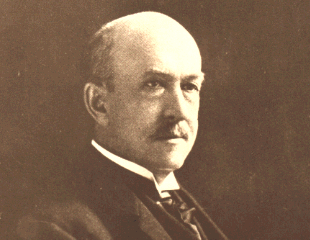
We throw all our attention on the utterly idle question whether A has done as well as B, when the only question is whether A has done as well as he could.

William Graham Sumner, “The New Social Creed,” Earth-Hunger and Other Essays, p. 210 (1913)
Categories
Today

Silver Coinage

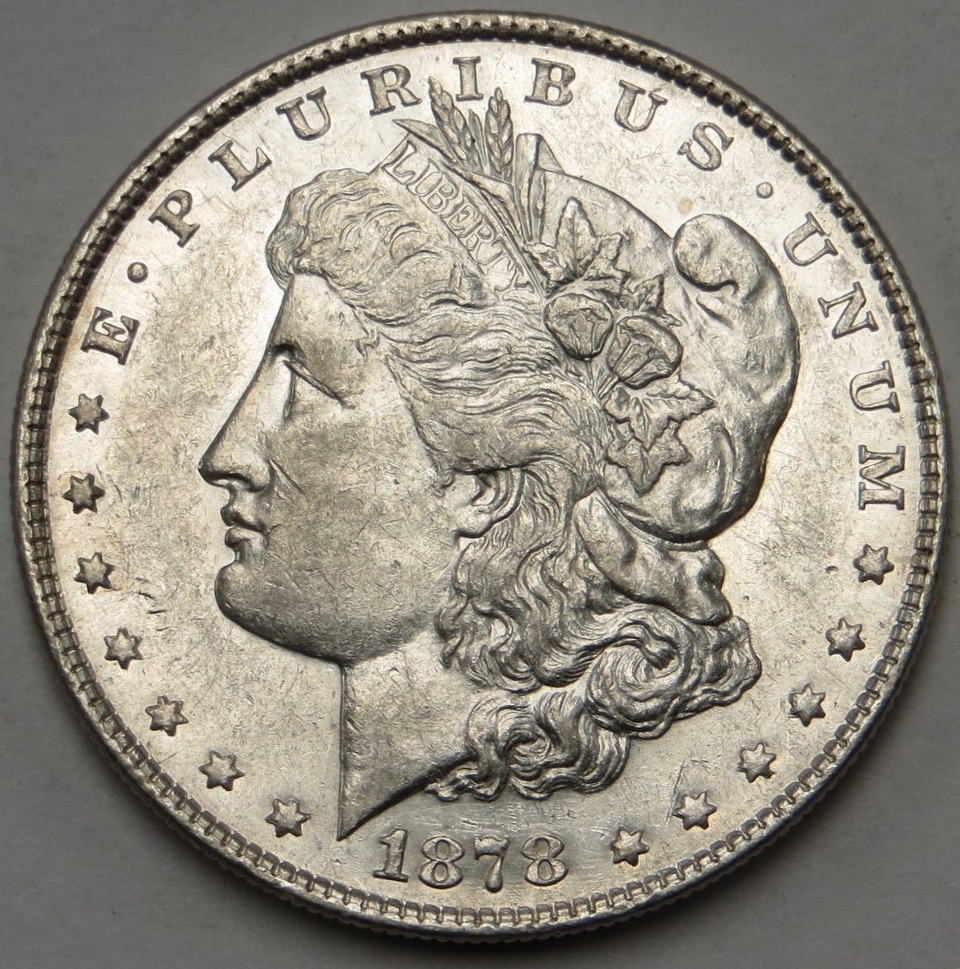
On Feb. 16, 1878, the Bland-Allison Act, which provided for a return to the minting of silver coins, became U.S. law. Today, the value of American money is secured only by public faith in the stability of the government, but during the 19th Century, money was backed by actual deposits of silver and gold.

That is, money was silver and gold. But that did not mean that all was right with the monetary system.

Five years earlier, when Congress had stopped buying silver and minting silver coins — following the lead of European nations — a financial panic ensued. Reasons for the suspension lay in the fact that the exchange value of silver and gold had retained an old, out-moded fixed ratio that favored silver producers. Had the United States Treasury let the two standards freely float, making a distinction between silver dollars and gold dollars, none of the political strife over bimetallism would have occurred.

As it was, with silver over-valued, the silver coins increasingly “drove” gold out of circulation, as well as out of the Treasury and into private hands.

In 1893, in the midst of another financial panic, this time as a result of depletion of gold reserves in the U.S. Treasury, President Grover Cleveland called a special session of Congress to repeal the bimetallic standard. He was successful, though agrarian inflationists took over the Democratic Party and offered up, for the next election, William Jennings “Cross of Gold” Bryan as a counter to Cleveland’s old-fashioned fiscal conservative/social liberalism.

Categories
ideological culture national politics & policies Popular too much government

Greenlighting Socialism

Can we blame U.S. Rep. Alexandria Ocasio-Cortez (D-NY), really? 

A decade of quantitative easing, along with trillion-dollar annual deficits run up recently by congressional Republicans, have paved a debt-ridden road upon which she hopes her massive Green New Deal (GND) might glide.

We can derisively point to the now-withdrawn FAQ, which the congresswoman’s staff “accidentally” posted on the Web and sent out to reporters. It was “unfinished,” and “erroneously” said the GND would be “guaranteeing . . . Economic security for all who are unable or unwilling to work.“

But of course, read the actual totalitarian-esque House Resolution — calling for “a new national, social, industrial, and economic mobilization on a scale not seen since World War II and the New Deal era” and labeling it “a historic opportunity” — and tell me the silly FAQ isn’t accurate.

The GND promises to “create millions of good, high-wage jobs . . . provide unprecedented levels of prosperity and economic security for all people . . . and . . . counteract systemic injustices.” It must, of course, after wiping out tens of millions of jobs in private health insurance (2.6 million) and fossil fuels (10 million).

Senate Majority Leader Mitch McConnell has been so kind as to announce he will bring the GND to a vote in the Senate. Put Senators on record. And more than 100 Democrats in Congress, including four declared presidential candidates — Sens. Cory Booker (D-N.J.), Kirsten Gillibrand (D-N.Y.), Kamala Harris (D-Calif.), and Elizabeth Warren (D-Mass.) — have endorsed the Green New Deal resolution.

Give AOC her due. She has brought fresh young energy to old-fashioned socialism. 

And leading Democrats out of the shadows.

This is Common Sense. I’m Paul Jacob.


PDF for printing

Alexandria Ocasio-Cortez, New Green Deal, socialism

See all recent commentary
(simplified and organized)
See recent popular posts