| The first United States census was authorized, in 1790.
| Ohio was admitted as the 17th U.S. state, in 1803.
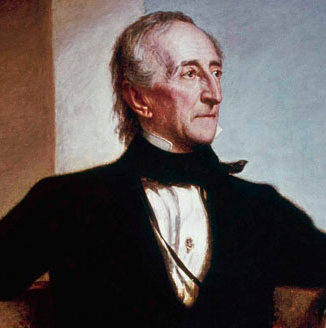
| President John Tyler [pictured above] signed a bill authorizing the United States to annex the Republic of Texas, in 1845.
| The state of Michigan formally abolished capital punishment, 1847.
| Nebraska became the 37th of the United States, in 1867.
On March 1, 1781, the Continental Congress of the United States adopted the Articles of Confederation. With this, the governing body became known, officially, as United States of America in Congress Assembled, more commonly as the Congress of the Confederation. The first session of this newly styled Confederation Congress took over without a break from the Second Continental Congress, adjourning on November 3. Samuel Huntington and Thomas McKean served as presidents during this first session.
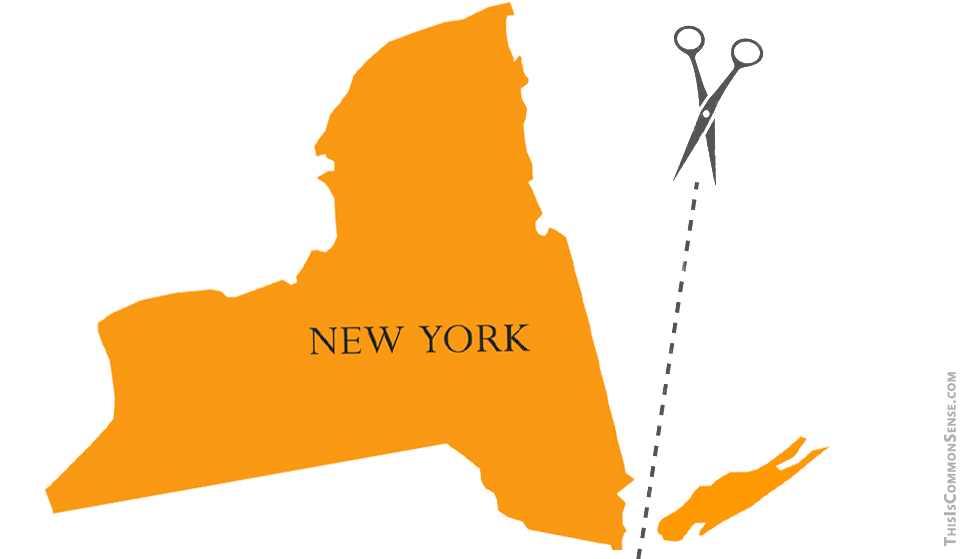
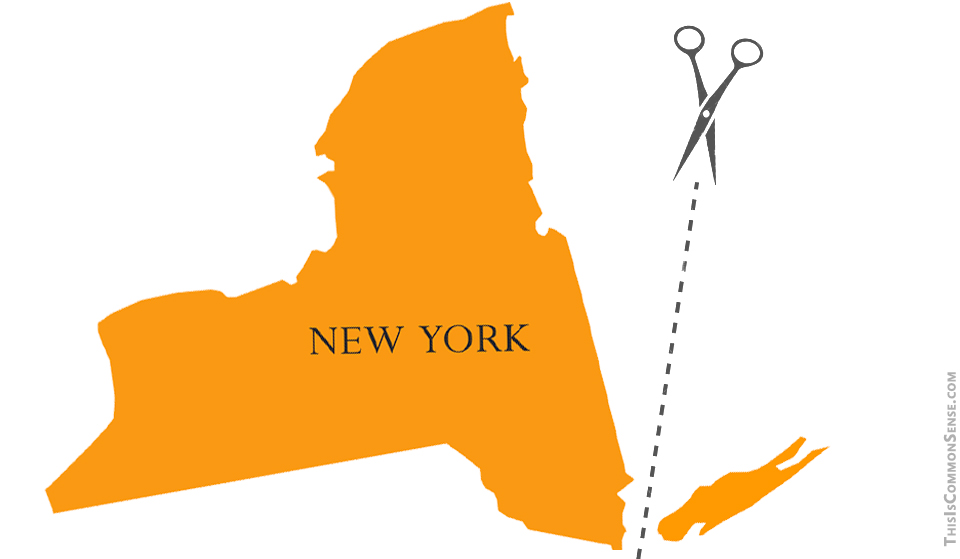
What might be the pluses and minuses to splitting New York State in two?
“Let’s look at it, get definitive figures,” says a first-term state senator, Daphne Jordan.
Sen. Jordan serves a region in the eastern part of the state. Her proposal for an official study, as yet unsponsored in the Assembly, focuses on splitting the downstate region (all five New York City boroughs, Long Island, and Westchester and Rockland counties) from the 53 upstate counties.
The U.S. Congress would have to approve the creation of a new state, of course, and a split would almost certainly be tricky, requiring the geographically larger portion to reconfigure governance completely.
Which is the point.
Downstate politicians and voters have placed a lot of alien and debilitating rules, taxes and (worse yet) subsidies upon the increasingly malfunctional upstate, rural region. Sen. Jordan responded to a charge from a spokesman for Democratic Gov. Andrew Cuomo that her proposal is “the Godzilla of Pandering” in horror-movie form: the governor’s policies are, she says, “the curse of Dr. Cuomostein.”
In Cities and the Wealth of Nations, New York urban analyst Jane Jacobs noted a historical pattern: cities together with their regions constitute the salient macro-economic entities, not “nations.” Trouble is, big cities like New York no longer treat their rural areas as partners — in today’s globalist environment, the whole world serves as a major city’s “region.”
Rural areas have become mere playthings, whipping boys and dumping grounds for out-of-control urban nightmare politics.
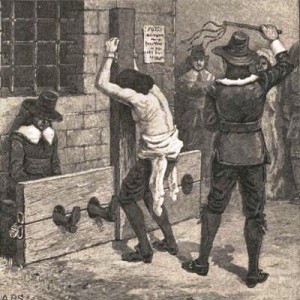
On February 28, 1646, Roger Scott, of Lynn, Massachusetts, was tried for sleeping in church. Awakened in church by a tithingman’s long, knobbed staff hitting him on the head, he struck back at the man, and garnered a whipping as punishment, as well as the dark designation as “a common sleeper at the publick exercise.”
“We live in a republic,” I often hear, “not a democracy!”
Sometimes it seems like we live in neither.
Today is the first National Term Limits Day. Its proponents aim to style February 27th as an annual event.
It’s a new thing.
But term limits themselves are not new.
For instance, 68 years ago today, the 22nd Amendment was ratified, limiting the president to two lifetime terms.
Long, long before that, ancient Athens — often called a democracy — term-limited elected offices, as was done in Rome — which was called a republic.*
The idea being that, if the people are to rule, in even a loose sense, those who hold office must not be permanently perched, able to acquire increasing amounts of power and privilege.
To accomplish this, elections serve as ways to rotate people into and out of power. Unlike in hereditary monarchy or military rule, elections of “rulers” to positions of power require the establishment of terms in office, a set period of time that limits those in power by requiring elections to renew their service for another term, or peaceably to oust them.
A term limit takes the next step, disallowing an individual from staying in office for life by limiting the number of terms legally available.
Thomas Jefferson was upset that the new Constitution, devised in convention in 1787, did not have provisions ensuring “rotation in office,” via term limits. He was what was then called a “democratic republican.”**
Whether you call it “democracy” or “republic,” or something else, citizens being in charge of government is something we could use more of. The United States has term limits for the presidency, for 15 state legislatures, for elected officials in eight of the ten largest cities. We need them for Congressmost of all.
This is Common Sense. I’m Paul Jacob.
* O’Keefe, Eric (2008), “Term Limits,” in Ronald Hamowy, The Encyclopedia of Libertarianism, Thousand Oaks: SAGE; Cato Institute. pp. 504–06. “Political scientist Mark Petracca has outlined the importance of rotation in the ancient Republics of Athens, Rome, Venice, and Florence.”
** Alexander Hamilton, infamously, leaned the other direction: in his first speech at that first constitutional convention he argued to elect a national king to serve for life. He was a nationalist, in those days called a “Federalist.”
On February 27, 1830, American economist and free trade advocate Arthur Latham Perry was born.
The Twenty-second Amendment (Amendment XXII) of the United States Constitution, which sets a term limit for election and overall time of service to the office of President of the United States, was ratified by the requisite 36 of the then-48 states on February 27, 1951.
Congress had passed the amendment on March 21, 1947.
Democratic and aristocratic states are not in their own nature free. Political liberty is to be found only in moderate governments; and even in these it is not always found. It is there only when there is no abuse of power. But constant experience shows us that every man invested with power is apt to abuse it, and to carry his authority as far as it will go. Is it not strange, though true, to say that virtue itself has need of limits?
To prevent this abuse, it is necessary from the very nature of things that power should be a check to power. A government may be so constituted, as no man shall be compelled to do things to which the law does not oblige him, nor forced to abstain from things which the law permits.
Charles de Secondat, Baron de Montesquieu, The Spirit of the Laws (De l’esprit des loix; 1748), Book XI, “Of the Laws Which Establish Political Liberty, with Regard to the Constitution.”
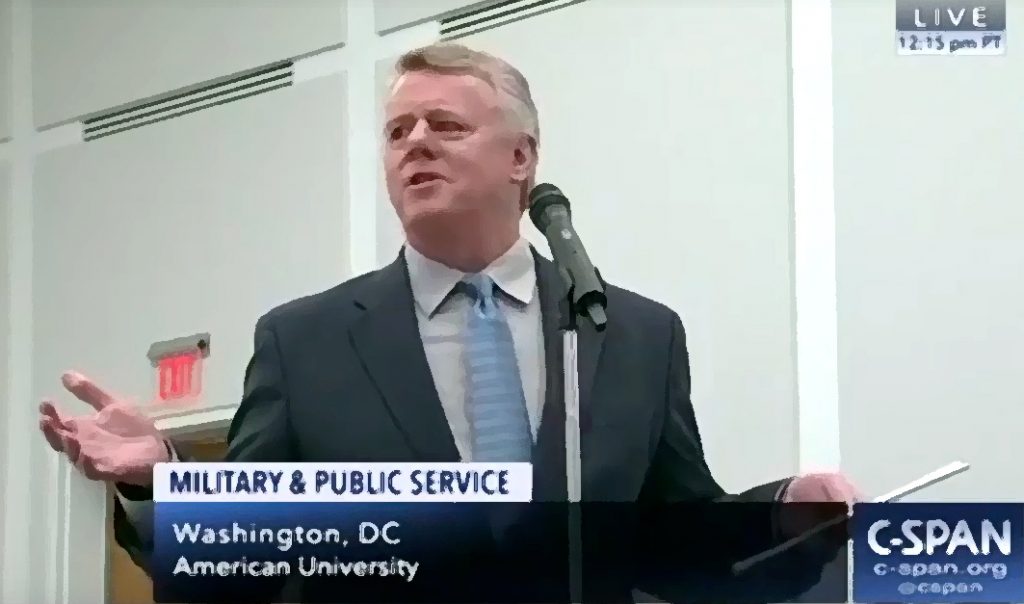
On Thursday, I traveled with two threatened members of that now vulnerable population known as “young people” to a public hearing at American University. There I testified for three-and-a-half minutes of the two allotted to me by the National Commission on Military, National, and Public Service. I implored them to “forswear any forced service whatsoever.”*
“That shouldn’t happen,” I said, “in America.”
Then, late Friday, a federal judge ruled that the Selective Service System’s male-only draft registration program is unconstitutional. Since all combat positions are now open to women, a draft registration program excluding women violates the equal protection rights of men. The lawsuit brought by the National Coalition for Men doesn’t ask that registration be extended to women, only ended in its current discriminatory form.
The judge, however, did not issue an injunction, and there will be an appeal.
“This ruling is going to force the government eventually,” the group’s attorney told the Washington Post, “to either get rid of the selective service requirement or require both sexes to register.”
Between now and the 2020 election, the issue of conscription — for men and for women, for war or for street sweeping — will be before the Congress, the President and candidates for those positions.
Let’s ask them: Whose life is it?
This is Common Sense. I’m Paul Jacob.
* And I offered important advice on the proper website domain name for the Commission, to boot.