Categories
ideological culture Popular too much government

The Hilarity of a Serious Threat

Is today’s politics tragic or comic?

Take the current Democratic Party obsession with socialism. There is nothing more tragic than full-blown socialism: mind-control and the snitch society; purges and mass starvation, with millions upon millions dead. But give them credit: the trendy new Democrats say they’re only for the Nordic Model of . . . well, the European term for it is social democracy.*

But they sure seem to push for evermore government.

Worse yet, they too often defend actual Communist countries — as Bernie Sanders (BS) has done.

This suggests an unfunny ending to their mad rush to power.

So the proud proclamations of the s-label from BS and Alexandria Ocasio-Cortez (AOC) should concern us, as should the eagerness with which the majority of Democratic presidential candidates have signed onto AOC’s over-the-top proposed takeover of the economy in her “Green New Deal.”

And yet . . . these politicians are absurd, on the face of it as well as when we drill down.

It’s hard not to regard absurdity as comic. 

The b.s. doesn’t end with BS.

Sure, our current president is a comic figure, too. And the pathetic nature of most GOP movers and shakers on Capitol Hill make them worthy of satire.

But it is also the case that Trump is funny in a way no one else is: he is playing a role and making many chortle. On purpose.

Too bad we couldn’t move him from the Presidency to a new Constitutional role, like Troll-in-Chief. There he could ensure, through mockery alone, what he promised in his State of the Union Address: America will never become a socialist country.

This is Common Sense. I’m Paul Jacob.


* Denmark, Sweden, etc., support extensive markets and a surprisingly hands-off approach to business — comparable to that of the U.S., and in some ways more lax — combined with extremely high taxes and vast transfers of wealth. You could call this “democratic socialism,” but . . . why?

PDF for printing

socialism, comedy, tragedy, Bernie Sanders, democratic socialism

See all recent commentary
(simplified and organized)
See recent popular posts

Categories
Thought

Walter Bagehot

The great difficulty which history records is not that of the first step, but that of the second step. What is most evident is not the difficulty of getting a fixed law, but getting out of a fixed law; not of cementing (as upon a former occasion phrased it) a cake of custom, but of breaking the cake of custom; not of making the first preservative habit, but of breaking through it, and reaching something better.

Walter Bagehot, Physics and Politics (1872).
Categories
Today

The Constitutional Congress

On March 4, 1789, the first bicameral Congress of the United States met in New York, New York, in accordance with the new Constitution.

Two years later on the same date, Vermont was admitted as the fourteenth state of the union.

In a twist in World War II allegiances, Finland declared war on Nazi Germany on March 4, 1945, beginning the Lapland War.

Categories
links

Townhall: Socialist-ic

This weekend at Townhall: The rise of self-proclaimed socialists within the ranks of the Democrats is alarming. But is it only tragic? Might not it be a little bit comic?

Here you can find some context:

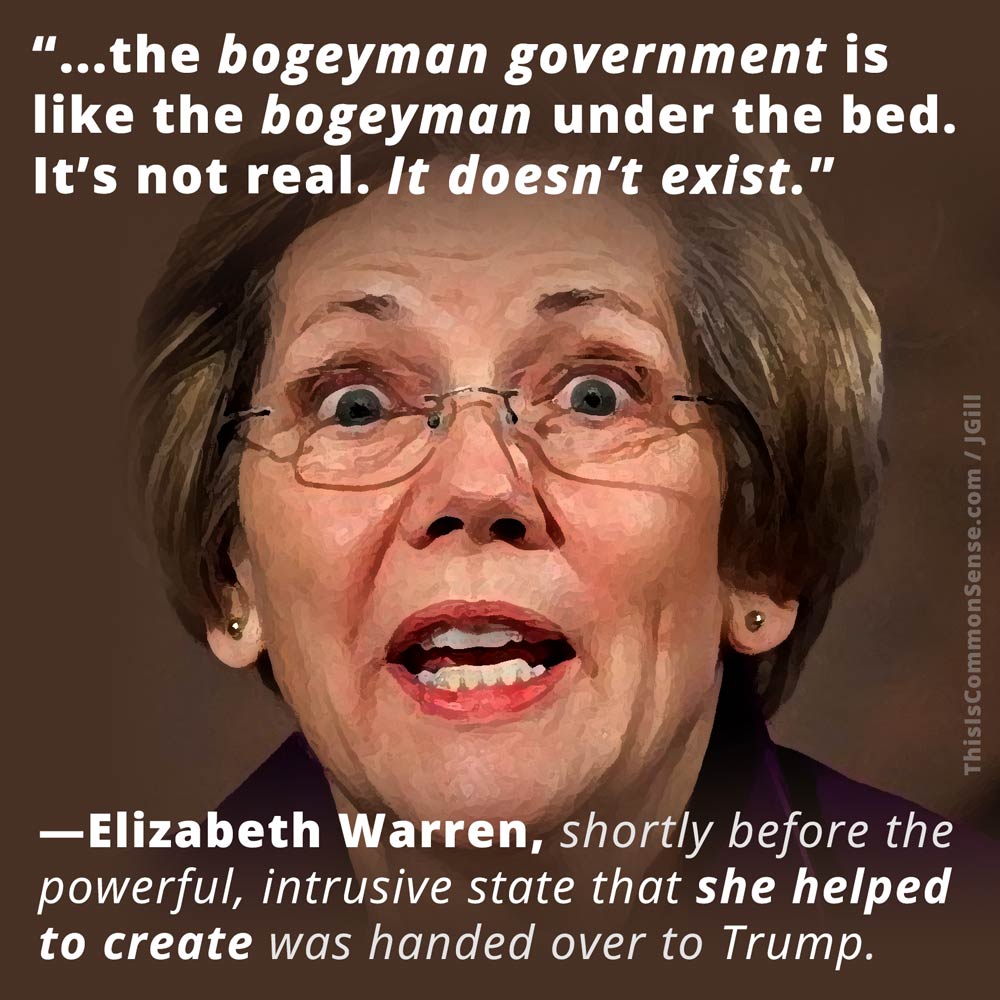
Elizabeth, Warren, bogeyman, government, anarchist, illustration, meme, Common Sense
Categories
Today

The Molinari Bicentennial

Belgian economist Gustave de Molinari was born on March 3, 1819. Associated with French laissez-faire economists Frédéric Bastiat and Yves Guyot, he was the longest-serving editor of Guillamin’s Journal des économistes. Today chiefly known in the English-speaking world for his authorship of one article, “The Production of Security” (1849), he was, as Ludwig von Mises described, the most productive economist in his school. Despite this, and his worldwide recognition, only one of his many books was translated from the French into English during his lifetime, The Society of To-morrow (1904), his final book. Molinari died on January 28, 1912.

Categories
video

Gatekeeper Platforms?

Social media is a jungle. The most popular platforms are engaged in gate-keeping practices we usually associate with edited publications, not open platforms. And now it is proven that Facebook is conspiring against some of its users for the benefit of an ideology. Proven? Well, there is this, courtesy of Project Veritas:

Facebook is rigging the deck, being very partisan in its platform.

Meanwhile, Andrew Torba of Gab.com fame — a platform committed to open and free speech — has introduced a new news comment service plugin, Dissenter. Here Dave Cullen of Computing Forever discusses it:

Styxhexenhammer666 talks it up, too:

Interestingly, the Southern Poverty Law Center is pushing a story that Gab founder Andrew Torba and his wife are “going to go to prison” for SEC violations. The story is being pushed also on Gab:

Caveats. It sure looks like the SPLC is very concerned . . . about Gab, or maybe Dissenter.

Categories
Thought

Gustave de Molinari

Man experiences a multitude of needs, on whose satisfaction his happiness depends, and whose non-satisfaction entails suffering. Alone and isolated, he could only provide in an incomplete, insufficient manner for these incessant needs. The instinct of sociability brings him together with similar persons, and drives him into communication with them. Therefore, impelled by the self-interest of the individuals thus brought together, a certain division of labor is established, necessarily followed by exchanges. In brief, we see an organization emerge, by means of which man can more completely satisfy his needs than he could living in isolation. This natural organization is called society.
The object of society is therefore the most complete satisfaction of man’s needs. The division of labor and exchange are the means by which this is accomplished.

Gustave de Molinari, “The Production of Security” (1849; J. Huston McCulloch, trans., 1977).

Categories
Today

Rothbard and Houston

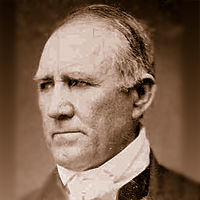
On March 2, 1793, Sam Houston was born.

On March 2, 1926, American economist and political theorist Murray N. Rothbard was born.

As President of the Republic of Texas, Houston (pictured above) cut the size of the Republic’s budget by a whopping amount, including selling the navy for scrap. Rothbard theorized about even more daring — and more permanent — cuts to (and limits upon) government.


On March 2, 1781, the Second Continental Congress convened as the new Congress of the Confederation, under the Articles of Confederation, ratified the day before. The congress elected no new president upon adoption of the Articles. This Confederation Congress oversaw the conclusion of the American Revolution.

Categories
ideological culture national politics & policies too much government

Warren’s No Socialist

Senator Elizabeth Warren knows that when people trade, both sides gain. She made that clear last year, in a fascinating interview in The Atlantic. But then she went blithely on, saying that she could fix markets by creating a “level playing field.”

Markets create value, but Mrs. Warren asserts that “when the markets are not level playing fields, all that wealth is scraped in one direction.” 

How? People are still trading, even in bumpy playing fields. 

She turns to the crisis of 2008, when many people discovered that they had entered into unsustainable mortgages. She explains how her shiny new regulatory program leveled that playing field.

But her scheme did not even out the bumps in the mortgage industry that existed before the crash:

  • the moral hazard of Fannie Mae and Freddie Mac, 
  • the previous congressional “fix” that pushed banks to accept poor people as good loan risks when they were not (in the name of racial justice, of course), 
  • the regulatory rule that created ratings agencies sans competitive market incentives, and
  • the Federal Reserve policies that fed the whole housing bubble mania.

She just added another burdensome layer of government.

Politicans sure love to pile on.

Now she offers a new scheme, a child-care program that Reihan Salam, this week again in The Atlantic, says “risks increasing the federal deficit, driving up the cost of child care, and squeezing stay-at-home parents.” 

And Mr. Salam says that last risk is one Warren should understand particularly well, since she had “made her reputation as a public intellectual by warning against it.”

Warren’s no socialist — she wants to “save capitalism”! Yet by only adding to government kludge, she might as well be one.

This is Common Sense. I’m Paul Jacob.


PDF for printing

Elizabeth Warren, housing bubble, crash, regulations, finance

See all recent commentary
(simplified and organized)
See recent popular posts

Categories
Thought

Thomas Mann

This fantastic state of mind, of a humanity that has outrun its ideas, is matched by a political scene in the grotesque style, with Salvation Army methods, hallelujahs and bell-ringing and dervishlike repetition of monotonous catchwords, until everybody foams at the mouth. Fanaticism turns into a means of salvation, enthusiasm into epileptic ecstasy, politics becomes an opiate for the masses, a proletarian eschatology; and reason veils her face.

On German fascism, in “An Appeal to Reason” [“Deutsche Ansprache. Ein Appell an die Vernunft”] in Berliner Tageblatt (18 October 1930); as translated by Helen T. Lowe-Porter in Order of the Day, Political Essays and Speeches of Two Decades (1942), p. 57