Nothing is so well calculated to produce a death-like torpor in the country as an extended system of taxation and a great national debt.
Letter (February 10, 1804).
Categories
William Cobbett
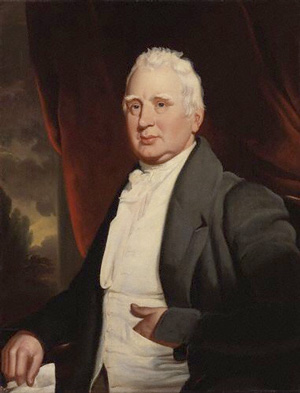
Nothing is so well calculated to produce a death-like torpor in the country as an extended system of taxation and a great national debt.
Letter (February 10, 1804).

The whole “Russia conspiracy” charge, relentlessly picked at and hyped since Donald Trump’s election in 2016 — and, more relevantly, since Hillary Clinton’s loss — suggests that Trump’s an evil mastermind. The infamous “dossier” that included tales of Russian harlots in a suite Barack Obama stayed in, suggests that Trump’s something of a madman as well as a narcissist.
Trump’s former fixer, Michael Cohen, Esq., in his testimony before Congress, has called Trump a racist, con-man and cheat. Cohen has publicly confessed his many grievous sins and technical crimes, re: bribery of hookers, etc., and generally repented of having served as the Evil Trump’s minion. Cohen has pleased Democrats by relentlessly castigating the president’s character, Igor finking on Frankenstein.
One important take-away, however, is that the biggest charge against Mr. Trump appears untrue. Cohen did not go to Prague to meet with Russians to advance some nefarious business-cum-political deal.
So this is the end?
Sure looks like it, but I am waiting for someone to notice that Cohen’s testimony could be a ruse.
Were Trump truly an evil mastermind, he would have figured that the only way to convince his enemies was to have the testimony of his innocence come from someone who hates him, who says all the right things against him.
In this scenario, Cohen still plays thrall to Trump. He has delivered the poison pill in the sweetest chewable form: his own public defection from Trump.
Is this psyop what’s going on?
Probably not.
But if one sees Trump as both an evil mastermind and a crummy, petty narcissist bordering on buffoon, then what would you believe? Were you right all along . . . but completely played?
This is Common Sense. I’m Paul Jacob.

See all recent commentary
(simplified and organized)
See recent popular posts

Nature having made men unequal, by giving stronger bodily and mental powers to one than to another, the end of government ought to be, to destroy this inequality by protecting the weak. Instead of which, it has always leaned to the opposite side, wearing itself out by disregarding the first principle of its organization.
On March 7, 1644, Massachusetts established the first two-chamber legislature in the American colonies.
One hundred thirty years later, to the day, British forces closed the port of Boston to all commerce.
When members of Congress run for the Presidency, they often talk a good game about acting within the boundaries set by the Constitution . . . but maybe we should roll our eyes, at least a bit, when senators like Elizabeth Warren and Corey Booker complain about President Trump’s Executive Order plan for building his infamous Wall.
A workaround like that seems like an overstepping of constitutional bounds, sure. But, as Peter J. Wallison wrote for the Wall Street Journal on Saturday, congressional protest suffers from a rather big problem.
Congress enacted the National Emergency Act in 1976. Since then, presidents have declared 57 emergencies . . . with nary a peep from Congress. And, since “Congress has provided no standard to judge whether an actual emergency exists,” congressional carpers have hardly a constitutional leg to stand upon.
But it gets worse.
Congress doesn’t even have much leverage in the “power of the purse” — for it has given much of that away, too.
For example, when “a Democratic Congress created the Consumer Financial Protection Bureau in the Dodd-Frank Act of 2010,” writes Wallison, “it provided that the agency would be funded entirely by the Federal Reserve, not through annual appropriations from Congress.”
This interests me, especially, since I quoted Senator Elizabeth Warren ballyhooing her support for this very program at Townhall last weekend. She thinks she did something smart in supporting that regulatory body.
But like so much other ultra-clever legislative conniving, she placed it outside of congressional control.
With genius moves like this, congressional Democrats may have great difficulty restraining President Trump.
Serves them right, of course. But not us — it does not serve the people at all.
We need constitutional limits.
This is Common Sense. I’m Paul Jacob.
See all recent commentary
(simplified and organized)
See recent popular posts

On March 6, 1967, Soviet Premiere Joseph Stalin’s only daughter, Svetlana Alliluyeva, defected to the United States. She later took the name Lana Peters, upon marriage to William Wesley Peters. The marriage was short-lived.
The March 6 date also marks term limits advocate and initiative organizer Paul Jacob’s birthday. He was born on the anniversary of the births of Michaelangelo, Cryano de Bergerac, and Alan Greenspan. He is also, obviously, the reason this site, ThisIsCommonSense.com, exists. (It continues, however, only through the continued support of readers like you.)

What is called the Progress of Civilization has been marked and conditioned at every step by an extension of the opportunities, a greater facility in the use of the means, a more eager searching for proper expedients, and a higher certainty in the securing of the returns, of mutual exchanges among men.

North Dakota faces a serious problem: The Mob.
“The point of being a republic is so that Mob doesn’t rule,” warned Chris Berg, host of Point of View on Fargo, North Dakota’s Valley News Live. “If you live in a true democracy that’s where Mob can rule.”
Berg called citizens petitioning issues onto the ballot for a vote “a mob-rule system . . . that allows us to change the actual constitution of our state.”
Not sure which constitution one might work to amend except for the “actual” constitution. But I do see a clearly articulated concern with mob rule.
“A republic, my folks, is what we live in,” continued Berg, juxtaposing the ballot initiative process as “a pure democratic system.”
But ballot measures are no more pure democracy than are acts enacted by the legislature. Both can be challenged and overturned if they violate constitutional rights.
The focus of Berg’s anti-initiative worry is Measure 1, an ethics amendment passed last November and derided by Berg as “a bunch of Hollywood money to change North Dakota.”
True, Measure 1 did receive support from folks outside North Dakota, including groups supported by Hollywood stars.
Those financial backers were well known to North Dakotans, 54 percent of whom voted for the measure.
And freedom means the right to associate with fellow Americans across state lines.
Responding to Berg, Dustin Gawrylow, managing director of the North Dakota Watchdog Network, said the citizen initiative process was “the best way to keep legislators honest and in tune with the people.”
After all, without “a way for the people to actually set the rules for lawmakers,” the people would be ruled by . . . the capitol mob.
This is Common Sense. I’m Paul Jacob.

See all recent commentary
(simplified and organized)
See recent popular posts
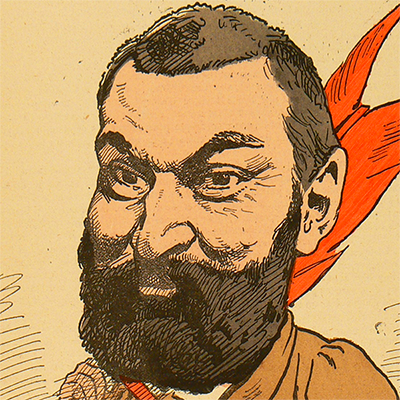
The effect of a protective duty on any commodity is to raise the price, not only of the amount imported, but of the whole quantity sold in the country; it is a private tax placed upon consumers for the benefit of producers.
Yves Guyot (September 6, 1843 – February 22, 1928) was a French politician and economist.

On March 5, 1616, Nicolaus Copernicus’s book, De revolutionibus orbium coelestium, was placed on the Catholic Church’s Index of Forbidden Books. This censorship notwithstanding, the Earth continued to revolve around the Sun. The book had been first published in 1543 in Nuremberg.
| In 1770, the Boston Massacre took place on March 5.
| Joseph Stalin, the longest serving leader of the Soviet Union, died at his Volynskoe dacha in Moscow on this date in 1953, after a cerebral hemorrhage.
| March 5 is magician Penn Jillette’s birthday. He turns 64 today, beginning his 65th year of life.