Categories
Thought

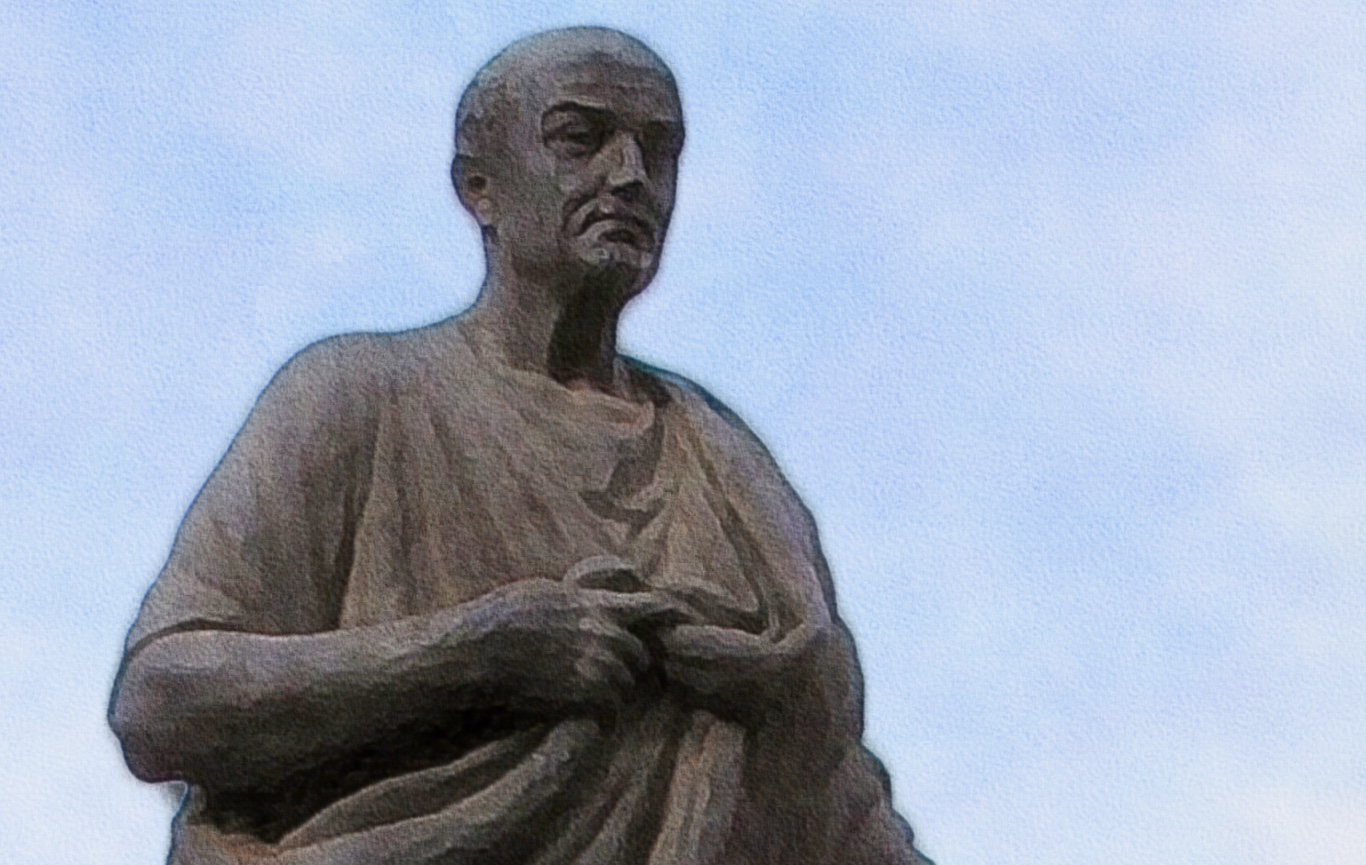
Seneca the Younger

We are mad, not only individually, but nationally. We check manslaughter and isolated murders; but what of war and the much-vaunted crime of slaughtering whole peoples? There are no limits to our greed, none to our cruelty. And as long as such crimes are committed by stealth and by individuals, they are less harmful and less portentous; but cruelties are practised in accordance with acts of senate and popular assembly, and the public is bidden to do that which is forbidden to the individual. Deeds that would be punished by loss of life when committed in secret, are praised by us because uniformed generals have carried them out. Man, naturally the gentlest class of being, is not ashamed to revel in the blood of others, to wage war, and to entrust the waging of war to his sons, when even dumb beasts and wild beasts keep the peace with one another. Against this overmastering and widespread madness philosophy has become a matter of greater effort, and has taken on strength in proportion to the strength which is gained by the opposition forces.

Seneca, Letter XCV: On the usefulness of basic principles, lines 30-32.
Categories
Accountability ideological culture initiative, referendum, and recall

March Sanity

“A public debate on the merits of a measure can reveal its flaws,” the Bismarck Tribune calmly and reasonably editorialized yesterday, “and then we have to trust voters to do the right thing.”

“Why are some legislators so afraid to allow North Dakota voters to decide what is in their constitution?” an earlier Fargo Forum editorial asked. The Forum dubbed one bill — giving the legislature a partial veto on voter-enacted constitutional amendments — “The Voter Nullification Act.” 

On the voter initiative, North Dakota’s elected representatives are of a much different mind than these newspapers or the people of North Dakota.

The Flickertail State is hardly alone on this. 

Michigan’s legislature made their ballot initiative process more difficult in last December’s lame-duck session. Arkansas politicians have been stabbing at the initiative with rules and regulations for years, and they’re back at it this session. On a recent trip to the Missouri capitol, I heard elected officials privately argue that voters deciding issues directly — without going through the legislature — was a “bastardization” of our republic. 

Take Idaho’s Senate Bill 1159, which would hike up the signature requirement from 6 to 10 percent of voters, a 67 percent increase, while also reducing by two-thirds the time allowed for petitioning. The legislation’s stated purpose? “[T]o increase voter involvement.”

“It is odd,” wrote former state Supreme Court Justice Jim Jones in the Idaho State Journal, “that some in the Legislature now wish to drive a stake into the heart of that people-driven legislative process.”

It’s not really very odd. Legislators routinely put their political self-interest before the people — especially when it comes to voters having a democratic check on their power. 

This is Common Sense. I’m Paul Jacob.


PDF for printing

North Dakota, initiative, citizen initiative, ballot initiative, democracy, suppression

See all recent commentary
(simplified and organized)
See recent popular posts


Categories
Today

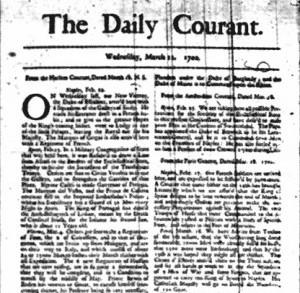
Daily Courant

On March 11, 1702, The Daily Courant, England’s first national daily newspaper, was published for the first time. It was a one-sheet, concentrated on foreign news, sans commentary. The reverse side sported advertising. It was produced by Elizabeth Mallet (1672–1706), a printer and bookseller who lived, and published the paper, next to the Kings Arms tavern at Fleet Bridge in London.

Categories
Thought

Harriet Beecher Stowe

The greater the interest involved in a truth the more careful, self-distrustful, and patient should be the inquiry.

I would not attack the faith of a heathen without being sure I had a better one to put in its place, because, such as it is, it is better than nothing.

Harriet Beecher Stowe, Letter to William Lloyd Garrison (1853).
Categories
by Paul Jacob Popular The Draft video

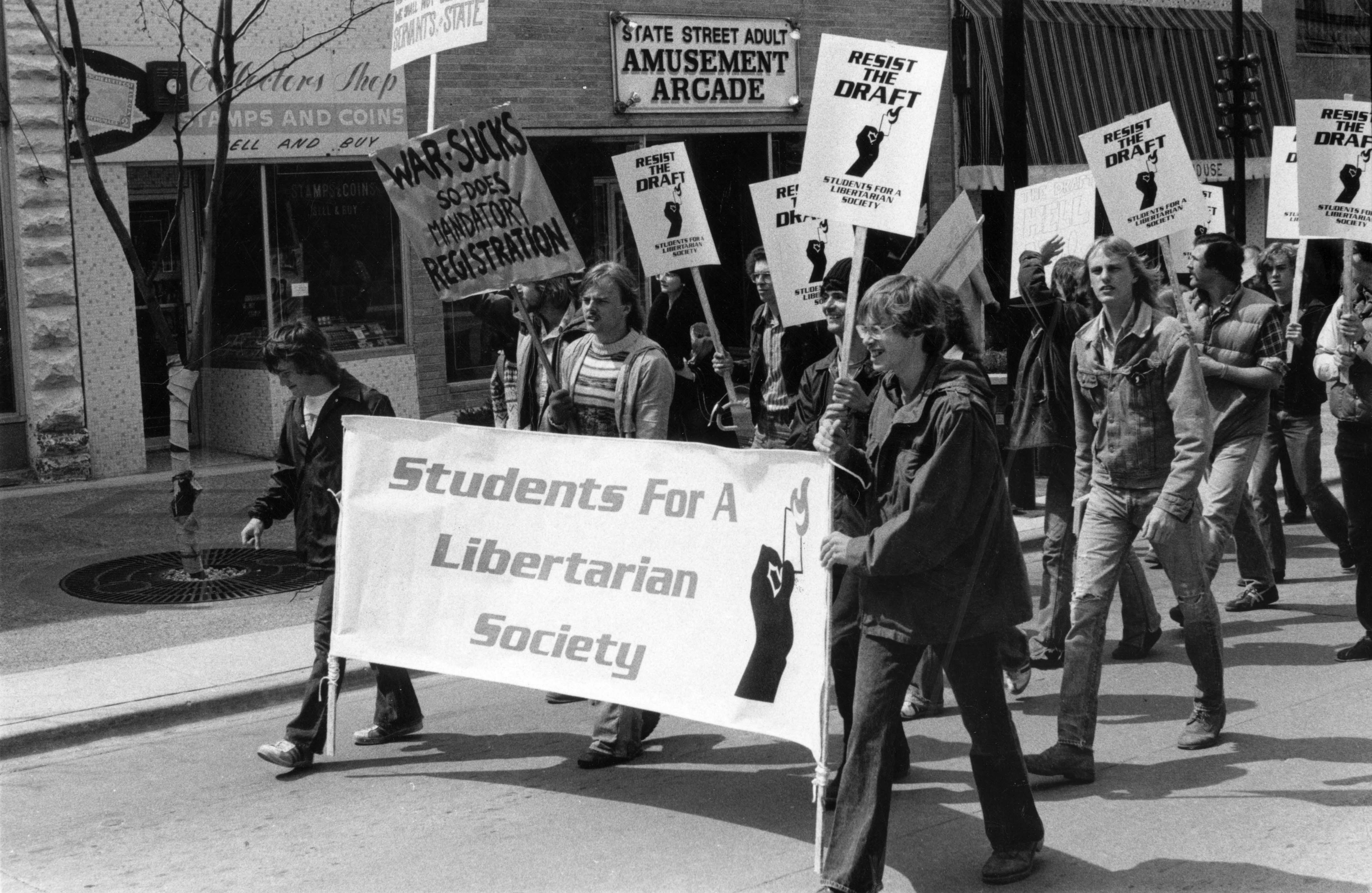
Congress Considers the Draft

Yes, “mandatory national service” is a live topic — again!

Mandatory National Service? on Vimeo.

But the situation is not hopeless. This is not a “done deal.” Indeed, there is something you can do to prevent universal, intersex/all-gender mandatory conscription. Click here to find out more.

Why not click right now?

Categories
Today

The Mahatma

On March 10, 1922, Mahatma Gandhi was arrested in India, tried for sedition, and sentenced to six years in prison, only to be released nearly two years later for an appendicitis operation.

Categories
Today

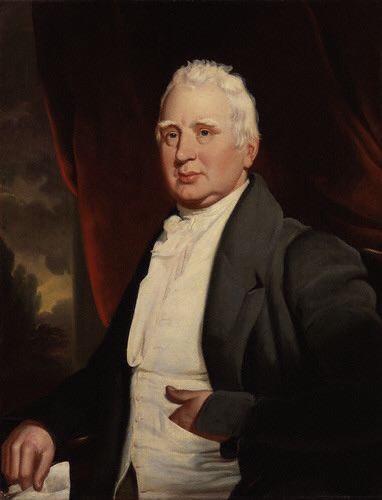
William Cobbett

March 9 marks the 1763 birthday of British pamphleteer and activist William Cobbett. Cobbett was known for his lifelong opposition to authority, and his later-in-life “radicalism,” which included his opposition to Britain’s protectionist Corn Laws as well as his support for Catholic Emancipation. Cobbett died in 1835.

In 1776 on this date, Scottish philosopher Adam Smith first published An Inquiry into the Nature and Causes of the Wealth of Nations, which became the first widely accepted landmark work in the field of economics. It was not the first general treatise on the subject, however; that designation almost certainly belongs to banker Richard Cantillon’s Essai sur la Nature du Commerce en Général, cited by Smith in his more famous book. It is also worth noting that Étienne Bonnot de Condillac’s systematic treatise, Le Commerce et le Gouvernement, also saw publication in 1776.

On March 9, 1862, the USS Monitor and CSS Virginia fought to a draw in the Battle of Hampton Roads, the first battle between two ironclad warships. The Virginia was built on the remains of the USS Merrimack, and the battle is often referred to as between “the Monitor and the Merrimack.”

Categories
Thought

Gene Wolfe

Some gain there must be, so this I decree: each time you gain your heart’s desire, your heart will reach for something higher.

An “old woman with too many teeth” in Gene Wolfe’s novel The Knight (2004), p. 22.
Categories
Fourth Amendment rights general freedom national politics & policies Popular too much government

Snowden Won?

“The phone records program” that Edward Snowden risked life, limb and freedom to expose “had never thwarted a terrorist attack,” the New York Times informs in a somewhat startling bit of reportage published on Monday.

But that isn’t the startling part. 

The National Security Administration’s unauthorized metadata phone-records collection program was a wish-list snoop system snuck into practice under cover of the Patriot Act. After the Snowden revelation, Congress halted it, replacing it with a similar operation in 2015, via the U.S.A. Freedom Act. But we have long known that U.S. spies could do most of what they “need” without pre- or post-Snowden versions.

What is startling in the Times article, “Disputed N.S.A. Phone Program Is Shut Down, Aide Says,” is there in the title: the federal government’s top spy agency has allegedly not used the program in its Freedom Act version in months, has even closed it.

And the Freedom Act, up for renewal, may just be allowed to die a quiet death.

Nick Gillespie, at Reason, cautions that “the possible end of the USA Freedom Act doesn’t mean the federal government doesn’t have access to all sorts of tools needed to secretly snoop on you, or that your personal data isn’t being collected in any number of ways you have little control over.” And he cites a recent Reason piece on how Patriot Act survellaince powers have been used to bust up a prostitution ring.

Which shows how terrorism is not the only government target. 

And why giving government vast surveillance powers could be used for anything.

Not to mention that niggly problem of abridging the Fourth Amendment rights that had so concerned Ed Snowden.

This is Common Sense. I’m Paul Jacob.


PDF for printing

surveillance, metadata, Snowden, Edward Snowden

See all recent commentary
(simplified and organized)
See recent popular posts

Categories
Today

Slavery and Anti-Slavery in America

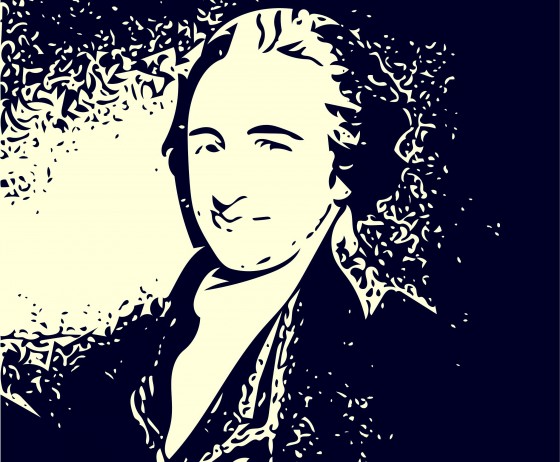
On March 8, 1775, “African Slavery In America,” the first known essay advocating the abolition of slavery in America, was published anonymously in the Pennsylvania Journal and the Weekly Advertiser. Thomas Paine (pictured) is believed to be the essay’s author.

The first anti-slavery society was formed in Philadelphia weeks after publication, and Paine was a founding member.

Exactly 120 years earlier, a court in Northampton County of the Virginia Colony ruled that John Casor, then working as an indentured servant to Robert Palmer, must be returned to Anthony Johnson as Johnson’s “lawful” slave for life. Ironically, Johnson was one of the original indentured servants brought to Jamestown, had completed his indenture to become a “free Negro” and the first African landowner in the colony. The case marked the first person of African descent to be legally-recognized as a lifelong slave in England‘s North American colonies. The first official chattel slave in English-speaking North America was of African descent, and was owned by a man also of African descent.