Categories
Accountability folly ideological culture partisanship

#YouToo?

“Will Democrats regret if they don’t open an impeachment investigation?” NBC Meet the Press host Chuck Todd asked Heather McGhee, a distinguished senior fellow at Demos.

“It’s important, right?” Ms. McGhee responded. “And we can have, you know, Bill Clinton impeached for obstruction of justice about a sexual affair,” she added dismissively, comparing that to Trump’s possible crimes, which “are things that could amount to treason against the United States.” 

“Treason” does seem more ominous than the affair President Bill Clinton had two-plus decades ago with 22-year-old White House intern Monica Lewinsky. 

But aren’t we missing a “teachable moment” for the #MeToo Movement?

President Clinton perjured himself about his sordid fling during a deposition in a lawsuit brought by Arkansas state employee Paula Jones. She alleged that he, while serving as governor, had exposed himself and sexually harassed her. An awfully serious charge, for which Clinton paid $850,000 to settle.

“Paula Jones spoke out against the most powerful man in the world, and when his lawyers argued that a sitting president couldn’t be subject to a civil suit, she took them all the way to the Supreme Court and won,” Amanda Hess wrote late last year in The New York Times, two decades after the fact. “In another world, she would be hailed as a feminist icon. But not in this world — not yet.”

Democrats, progressives and much of the popular media ridiculed and attacked Ms. Jones back then — and are still sweeping her story under the rug.

Treating sexual harassment, abuse and assault in a partisan manner, ignoring the sins of your side, is a slap in the face to the #MeToo Movement.

This is Common Sense. I’m Paul Jacob.


PDF for printing

Bill Clinton, impeachment, sexual, #metoo, sex, scandal

See all recent commentary
(simplified and organized)
See recent popular posts

Categories
Today

Grimke and Revels

February 25, 1805, saw the birth of Angelina Emily Grimké Weld, American abolitionist and feminist. She was the younger sister of the equally famed Sarah Moore Grimké. She died on October 26, 1879.

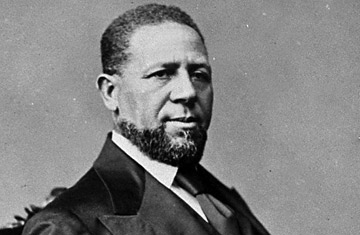
On February 25, 1870, the first African-American entered Congress to serve in the U. S. Senate. Hiram Rhodes Revels (Sep 27, 1827 – Jan 16, 1901) was a minister in the African Methodist Episcopal Church, a Republican politician, and college administrator. Born free in North Carolina, he later lived and worked in Ohio, where he voted before the Civil War. He was elected as the first African American to serve in the United States Senate, and was the first African American to serve in the U.S. Congress. He represented Mississippi in the Senate in 1870 and 1871 during the Reconstruction era.


In Law #46 of February 25, 1947, the Allied Control Council formally proclaimed the dissolution of Prussia.

Categories
Thought

Camille Paglia

Society is a system of inherited forms reducing our humiliating passivity to nature. We may alter these forms, slowly or suddenly, but no change in society will change nature.

Camille Paglia, Sexual Personae: Art and Decadence from Nefertiti to Emily Dickinson, p. 1.
Categories
links The Draft

Townhall: Uncle Sam Wants to Nationalize You!

…this weekend at Townhall….

Some folks cannot leave well enough alone. They want not only your money and access to your property. They want you. And seek to compel you. To do what they want.

And they see this because . . . freedom?

This weekend’s column will appear on this site mid-week.

Categories
Thought

Charles Ives

There is a moral in the ‘Nominalist and Realist’ that will prove all sums. It runs something like this: No matter how sincere and confidential men are in trying to know or assuming that they do know each other’s mood and habits of thought, the net result leaves a feeling that all is left unsaid; for the reason of their incapacity to know each other, though they use the same words. They go on from one explanation to another but things seem to stand about as they did in the beginning ‘because of that vicious assumption.’ But we would rather believe that music is beyond any analogy to word language and that the time is coming, but not in our lifetime, when it will develop possibilities unconceivable now, — a language, so transcendent, that its heights and depths will be common to all mankind.


Charles Ives, in Essays Before a Sonata (1920).

Categories
Today

A telegram, and a decision

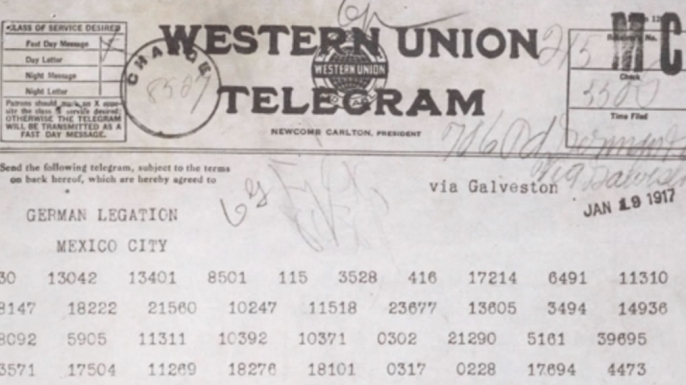
A century ago today, on February 24, 1917, United States ambassador to the United Kingdom, Walter Hines Page, was shown the intercepted Zimmermann Telegram, in which Germany offered to give the American Southwest back to Mexico if Mexico were to declare war on the United States.

On February 24, 1803, the Supreme Court, in Marbury v. Madison, established the principle of judicial review.

Categories
by Paul Jacob The Draft video

The Coming Draft?

With talk of forcing young people to provide a year of “national service” to the government, why was Paul Jacob offering this exalted congressionally-established Commission advice about their website address?
You must watch to discover.
Sure, Congress may not be quite on the verge of legislating a mandatory year of national service for those guilty of being young, but Congress is certainly looking into the idea through the National Commission on Military, National, and Public Service.
On Thursday, Paul Jacob traveled to American University to address the Commission, where for three minutes he implored them to recognize the not-so-subtle difference between inspiring citizens to serve and enslaving them, forcing citizens to serve. “Forswear any forced service whatsoever,” he urged. “That shouldn’t happen in America.”
Oh, and consider changing your website address. Just watch.

Event: National Commission Hearing on Mandatory Service Policy (second hearing) 
Date:
Thursday, February 21, 2019
Location: American University, Washington College of Law; Claudio Grossman Hall; 4300 Nebraska Ave NW, Washington, D.C., 20016

Make your voice heard: contact the commission here: https://thisiscommonsense.org////dont-draft-our-kids/

The full video can be viewed at the C-SPAN site: National Commission Hearing on Mandatory Service Policy.


Paul Jacob would like to thank two great young people (pictured above), Sophia and Marquis, for volunteering to travel with him into Washington. “May they never be robbed of one second of their lives to the enforced designs of Congress . . . much less a year or two.”

Categories
Thought

Georgia O’Keeffe

I do not like the idea of happyness — it is too momentary — I would say that I was always busy and interested in something — interest has more meaning to me than the idea of happyness.

Georgia O’Keeffe, a corrective note marked in Anita Pollitzer’s mss. biography of the artist.
Categories
Today

Zola and Menger

On February 23, 1898, Émile Zola was imprisoned in France after writing J’accuse, a letter accusing the French government of anti-Semitism and wrongfully imprisoning Captain Alfred Dreyfus. Zola was a leading force in extending realism to the novel.

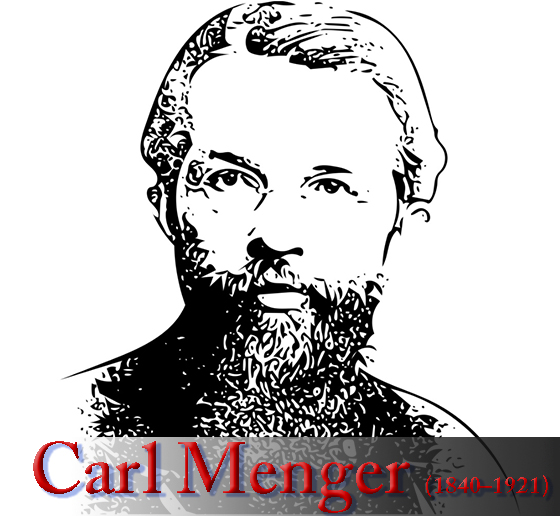
Fifty-eight years earlier, Austrian economist Carl Menger was born.

Menger would go on to contribute to the development of the theory of marginal utility, which supplanted cost-of-production theories of value in economics, in his first book, translated into English as Principles of Economics. Though expert in mathematics (he served as tutor in economics and statistics to Archduke Rudolf von Habsburg, the Crown Prince of Austria not long after the publication of the Principles), his approach to marginal theory was the least mathematical of his famous “co-discovers” of the principle, William Stanley Jevons and Leon Walras. Rooted in a subjective theory of value, it was the most realistic and least model-based of the marginalist revolutionaries, and he was most interested in price formation, not “price determination,” which focused almost exclusively on equilibrium conditions. He developed an evolutionary theory of money, as well. His second book expanded upon invisible hand processes in society.

Zola died in 1902; Menger died in 1921.

Categories
general freedom ideological culture Popular

Ever Again?

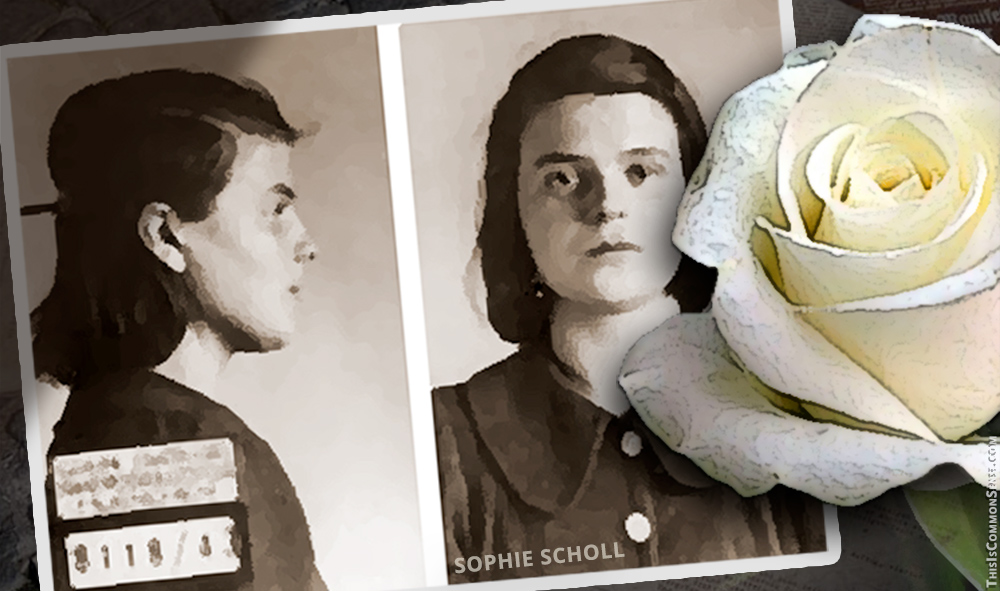
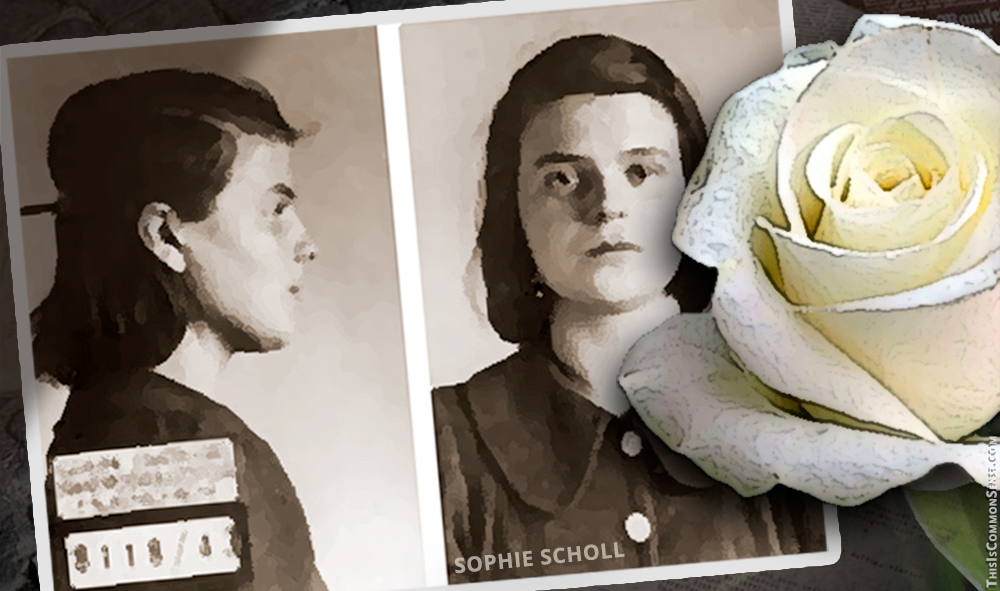
Today marks a solemn anniversary. Seventy-six years ago — on Feb. 22, 1943 — three German students at the University of Munich were tried for treason by the Nazis, convicted and then executed, all in one day.

The method of execution: guillotine.

Days earlier, Hans Scholl and his sister Sophie had been caught distributing a leaflet at the university. It was damning — of the Nazi regime; and, from the perspective of that Nazi regime, of the Scholls: “In the name of German youth, we demand restitution by Adolf Hitler’s state of our personal freedom, the most precious treasure we have, out of which he has swindled us in the most miserable way.”

Hans had in his pocket a draft of another leaflet, in Christoph Probst’s handwriting. That seventh leaflet, never distributed, led to the arrest and execution of Christoph, along with Hans and Sophie.

The three were part of a cadre of students who wrote and distributed leaflets under the name The White Rose — a symbol of purity standing against the monstrous evil of the Third Reich. The leaflets decried the crimes of National Socialism, including the mass murder of Jews. And they urged Germans to rise up.

Three more members were later executed: Willi Graf, Alex Schmorell and Professor Kurt Huber. Another eleven were imprisoned.

Their resistance was ultimately futile, unsuccessful . . . but not pointless. 

They would not remain cogs in the killing machine that had taken the most advanced society in the world to the depths of depravity. They took a stand against what George Orwell later characterized as “a boot stamping on a human face, forever.”

We often say, with earnest piety, “Never again.” But our dedication should be inspired by the White Rose. When we encounter tyranny, think of the Scholls and say “Again for Freedom.”

This is Common Sense. I’m Paul Jacob.


N.B. For an excellent account of The White Rose, consult the aptly titled A Noble Treason, by Richard Hanser. See also Jacob Hornberger’s The White Rose — A Lesson in Dissent. The Orwell quotation is from the dystopian novel 1984.

PDF for printing

Sophie Scholl, White Rose, Nazis, Germany, Third Reich

See all recent commentary
(simplified and organized)
See recent popular posts