The career of a politician mainly consists in making one part of the nation do what it does not want to do, in order to please and satisfy the other part of the nation.
Auberon Herbert, The Right and Wrong of Compulsion by the State, and Other Essays, “Salvation by Force.”
“Congress is less popular than traffic jams, root canals, and hemorrhoids,” U.S. Term Limits Executive Director Nick Tomboulides explained yesterday at a Senate Judiciary Subcommittee on the Constitution hearing.
“You’re beating head lice,” he added, “but the lice have asked for a recount.”
Mr. Tomboulides and U.S. Term Limits support Senate Joint Resolution 1, introduced by Sen. Ted Cruz (R-Texas), which calls for a three-term, six-year House limit and a two-term, 12-year Senate limit.
“Governing is incredibly hard,” argued R Street Institute Senior Fellow and term limits opponent Casey Burgat earlier on C-Span’s Washington Journal. “There is no school for this.”
The real world, perchance?
“Right now, we have the most experienced, professionalized, careerist Congress in American history,” Tomboulides countered, “and the results are a dumpster fire.”
“When I came to Congress, I supported term limits in theory,” former U.S. Representative and Senator Jim DeMint (R-South Carolina) testified. “Now I support it after seeing what really happens here.”
“Over 80 percent of Americans want term limits to happen,” Tomboulides offered. “Donald Trump and Barack Obama want it.”
“The only impediment,” as Sen. Cruz pointed out, “is the United States Congress.”
That’s why U.S. Term Limits is working to convince 34 state legislatures to bypass Congress by passing bills for a convention under Article V of the Constitution, which can consider and propose an amendment for congressional term limits.
It’s the people’s path to putting out the dumpster fire.
In 1941, Czech economist and politician Václav Klaus was born; other June 19 births include Salman Rushdie in 1947, Kathleen Turner in 1954, and Laura Ingraham in 1964.
Did Cuba and Brazil just prove Sen. Rand Paul right . . . about socialism?
Eight years ago, the ophthalmologist-turned-politician raised progressive ire in a subcommittee hearing.
“With regard to the idea of whether you have a right to health care, you have to realize what that implies,” the junior senator from the state of Kentucky said. “It’s not an abstraction. I’m a physician. That means you have a right to come to my house and conscript me. It means you believe in slavery. It means that you’re going to enslave not only me, but the janitor at my hospital, the person who cleans my office, the assistants who work in my office, the nurses.”
To many, this seemed preposterous. Doctors would be paid! They wouldn’t be forced to work.
Well, consider Brazil’s socialized medical service.
In his campaign for the presidency, Jair Bolsonaro promised to make “major changes to the Mais Médicos program, an initiative begun in 2013 when a leftist government was in power,” the New York Timesexplains. “The program sent doctors into Brazil’s small towns, indigenous villages and violent, low-income urban neighborhoods.”
But there was a catch: “About half of the Mais Médicos doctors were from Cuba.” Brazil paid a hefty price tag for those doctors — to the Cuban government, not the doctors.
None too pleased with Bolsonaro’s talk of “freeing” the doctors, the Communist dictatorship pulled them out.
Maybe Kentucky’s senatorial physician was right. When a government seizes the control of the means of production, as socialists want and communists demand, at some point somebody in charge will notice that labor is a means of production.
Slaves don’t set the terms of their own employment.
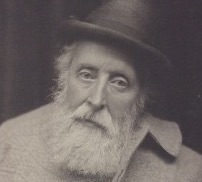
On June 18, 1838, Auberon Edward William Molyneux Herbert was born.
Auberon Herbert was a Liberal Member of Parliament who, after reading the writings of Herbert Spencer, became a radical individualist and author of essays such as “The Ethics of Dynamite,” “A Politician in Trouble About His Soul,” and “The Right and Wrong of Compulsion by the State.”
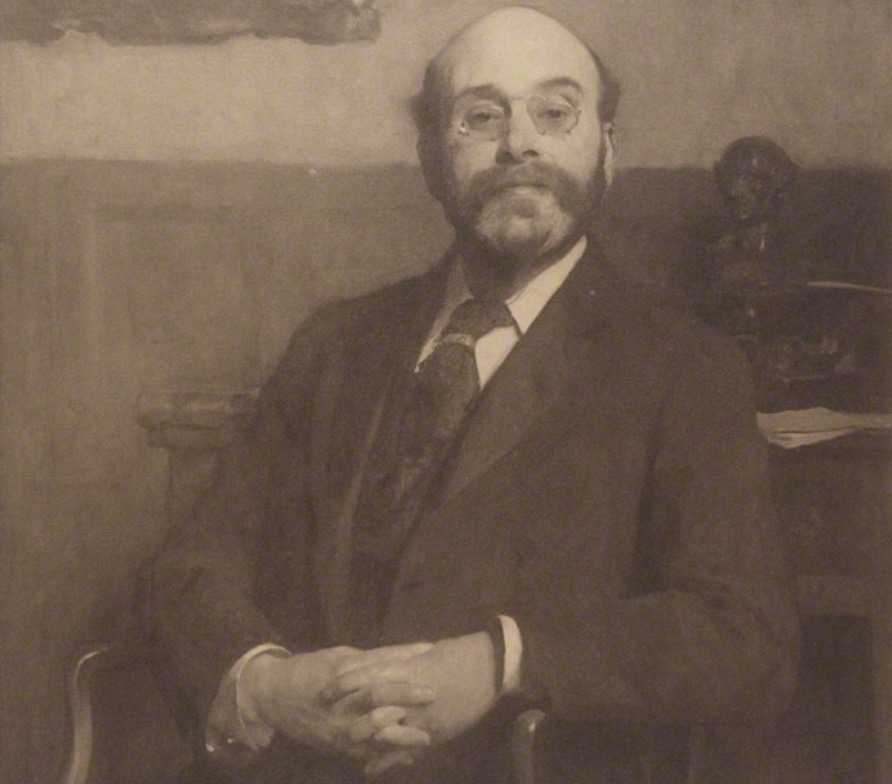
Socialism is essentially inimical to family life, which it regards as a bourgeois institution — to use its own favorite anathema. Socialism would make motherhood a State business or profession, would pay women for this sexual function, and deprive fathers of all status or recognition.
Joseph Hiam Levy, The Outcome of Individualism (Third Edition, 1892)
“Federal agents never wear body cameras,” The Washington Postreports, “and they prohibit local officers from wearing them on their joint operations.”
That’s why a growing number of local law enforcement agencies are doing what Atlanta’s police chief and mayor “decided late last month,” pulling “out of joint task forces with the Drug Enforcement Administration, the FBI and the U.S. Marshals Service.”
The Justice Department supplies the usual excuses for their lack of transparency: they are “protecting sensitive or tactical methods” and “concerned about privacy interests of third parties.” But as Houston Police Chief Art Acevedo reminds, “if there’s a legitimate need to redact any [footage], there’s a process available for that through the courts.”
It is the height of hypocrisy, for the use of body cams has been “what they’ve been preaching,” St. Paul (Minn.) Police Chief Todd Axtell argues, referring to the Justice Department’s funding and training of local police forces in body-camera usage. “It’s ironic they aren’t complying with what they preach to be so important in policing.”
Ironic? Sure.
Par for the course? Indeed.
The bad example federal police agencies set is hardly limited to body-camera use. In states where legislation has reduced or ended the outrageous practice of civil asset forfeiture — whereby police can take and keep cash and property from people never accused or convicted of any crime — the Feds are there again to facilitate the thievery known as “equitable sharing.”
“Federal forfeiture policies are more permissive than many state policies,” a 2016 Post report explains, “allowing police to keep up to 80 percent of assets they seize.”
Make sure your local and state police don’t follow the Feds.
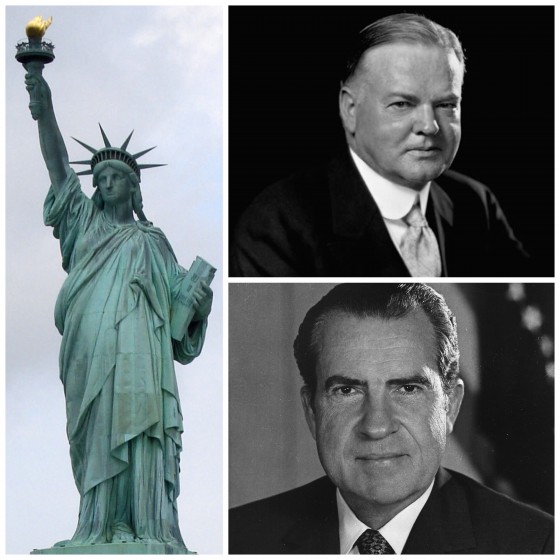
The Statue of Liberty arrived in New York Harbor on June 17, 1885. On the same day in 1930, progressive Republican President Herbert Hoover — eager to please agricultural states, and confident that protectionism would yield greater wealth — signed the Smoot-Hawley Tariff. The Great Depression deepened, ratcheting up as each provision of the bill took effect.
Three years later, investment author and two-time Libertarian Party presidential candidate Harry Browne was born.
On June 17, 1944, Iceland declared independence from Denmark.
On this day in 1971, President Richard Nixon declared a “War on Drugs,” which steadily decreased civil liberty and the rule of law in America.
Exactly one year later, five men were arrested for attempted burglary on the offices of the Democratic National Committee in the Watergate complex in Washington, D.C., igniting the Watergate scandal that ultimately led to the resignation of U.S. President Richard Nixon more than two years later.