Prosperity or egalitarianism — you have to choose. I favor freedom — you never achieve real equality anyway: you simply sacrifice prosperity for an illusion.
Categories
Mario Vargas Llosa

Prosperity or egalitarianism — you have to choose. I favor freedom — you never achieve real equality anyway: you simply sacrifice prosperity for an illusion.
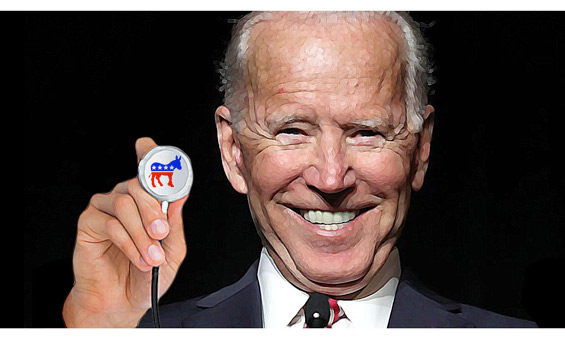
The second week of June 2019, in review:
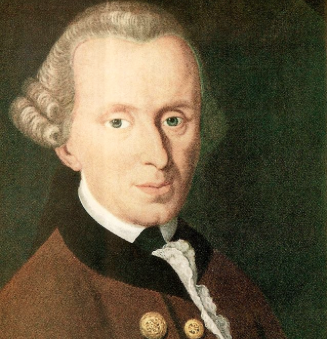
The problem of establishing a perfect civic constitution is dependent upon the problem of a lawful external relation among states and cannot be solved without a solution of the latter problem.
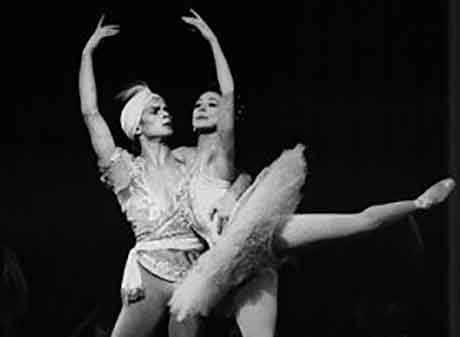
On June 16, 1961, dancer Rudolf Nureyev defected from the Soviet Union.
The great Scottish moral philosopher, political economy pioneer, and Enlightenment intelectual Adam Smith (1723-1790), best known for authoring the 1776 masterwork The Wealth of Nations, was born on June 16.

Government is its own faction and interest group.
George Will, as interviewed by Matt Welch, Reason
Anything whatever can be made ridiculous; to see this side of it, and nothing more, is to become the mere jester, whose claim to be regarded as the ideal moralist is cer tainly very slight. But between a too solemn sense of high importance, and that conviction of the intrinsic smallness of everything in particular which some of our satirists have displayed, there is a middle ground.
Arthur Kenyon Rogers, The Theory of Ethics (New York: The Macmillan Company, 1922).
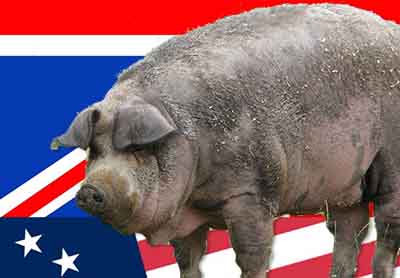
The Oregon Treaty, signed June 15, 1846, established the boundary between Great Britain’s Canadian territory and the United States of America, from the Rocky Mountains to the Strait of Juan de Fuca, using the 49th Parallel as the handy marker. However, the treaty was not exactly clear on the territorial status of the San Juan Islands, so exactly 13 years later, to the day, a war erupted . . . over a shot pig.
An American farmer shot a pig rooting through his garden. The pig belonged to an Irishman. The two did not agree upon compensation, and “the authorities” were called in, with infantry mustering from the south and the Governor of Vancouver Island instructing marines to land on San Juan Island — though the rear admiral in charge refused to comply with the order, on the reasonable grounds that war over a pig was not worth it. Local troops from both sides lined up against each other, but under command to defend themselves only and not shoot first. All that was exchanged in this war were insults. It turned out to be a bloodless war, discounting the pig, so it might qualify as the best war in American history.
On June 15, 1992, Vice President Dan Quayle incorrectly added an “e” to the end of a Trenton, N.J., sixth grader’s correctly spelled “potato.”
The Oregon Treaty, signed June 15, 1846, established the boundary between Great Britain’s Canadian territory and the United States of America, from the Rocky Mountains to the Strait of Juan de Fuca, using the 49th Parallel as the handy marker. However, the treaty was not exactly clear on the territorial status of the San Juan Islands, so exactly 13 years later, to the day, a war erupted . . . over a shot pig.
An American farmer shot a pig rooting through his garden. The pig belonged to an Irishman. The two did not agree upon compensation, and “the authorities” were called in, with infantry mustering from the south and the Governor of Vancouver Island instructing marines to land on San Juan Island — though the rear admiral in charge refused to comply with the order, on the reasonable grounds that war over a pig was not worth it. Local troops from both sides lined up against each other, but under command to defend themselves only and not shoot first. All that was exchanged in this war were insults. It turned out to be a bloodless war, discounting the pig, so it might qualify as the best war in American history.
On June 15, 1992, Vice President Dan Quayle incorrectly added an “e” to the end of a Trenton, N.J., sixth grader’s correctly spelled “potato.”
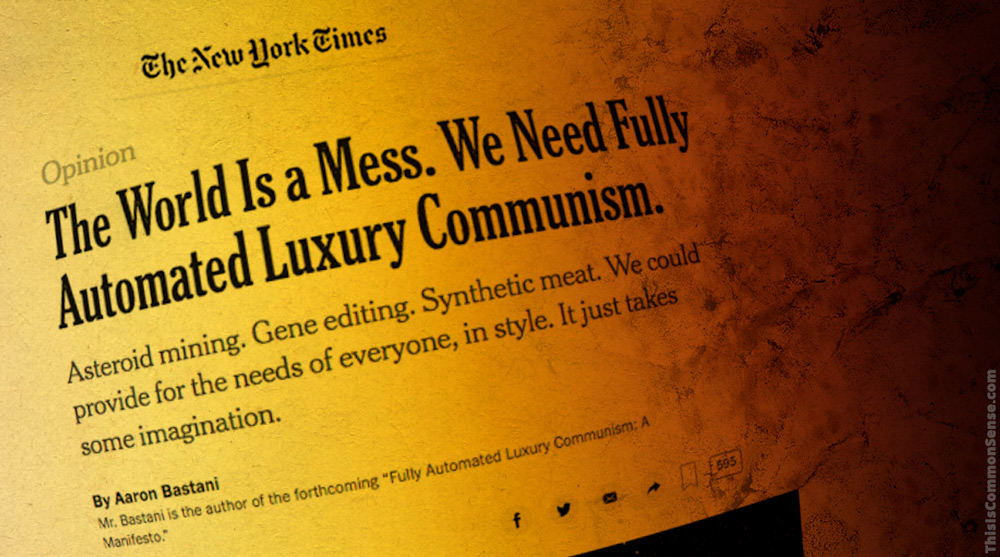
The New York Times has long leaned left. But is it really a stable Pisa-tower lean, at this point? It sure seems that, in recent years, the Gray Lady has gone extreme, abandoning its “respectable” center-left perch.
The change, economist Alex Tabarrok writes for FEE, appears to have happened “around 2010-2014,” when we can see “an inflection point” where phrases and buzzwords like “social justice” and “diversity and inclusion” increased in number in Times editorials and news stories.
Forget, for a moment, the why — is it demand side, with the paper trying to court Millennial readers; or supply side, a result of new hires out of journalism programs and other indoctrination factories; or a mixture of both? — and concern ourselves with how far will the Gray Lady go?
Communism, apparently.
Or, at least, “Automated Luxury Communism,” as identified in what may be the stupidest article to appear in any newspaper in years.
“The plummeting cost of information and advances in technology are providing the ground for a collective future of freedom and luxury for all,” the author asserts, upon the evidence of innovations he has identified as arising . . . in our capitalist mixed economy, chiefly in the market sector: lab-grown burgers and “molecular whiskey.”
It all smacks of a loafer’s Marxism, with robots and AI as the proles. I could explain this better had the author bothered to do any real work on his vision, but, unfortunately (?), he offers nothing but a “wouldn’t it be neat if” blog post.
That the Times’ placed on its front page.
I guess since Democratic pols are now calling themselves socialists, their lead thought organ must seize the advance guard position by going full commie.
This is Common Sense. I’m Paul Jacob.
See all recent commentary
(simplified and organized)
See recent popular posts
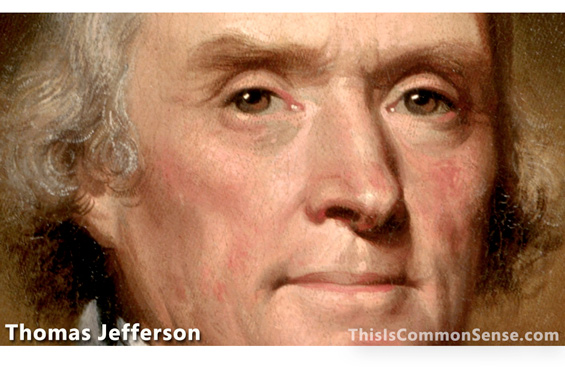
Every constitution…, and every law, naturally expires at the end of 19 years [a generation]. If it be enforced longer, it is an act of force, and not of right.
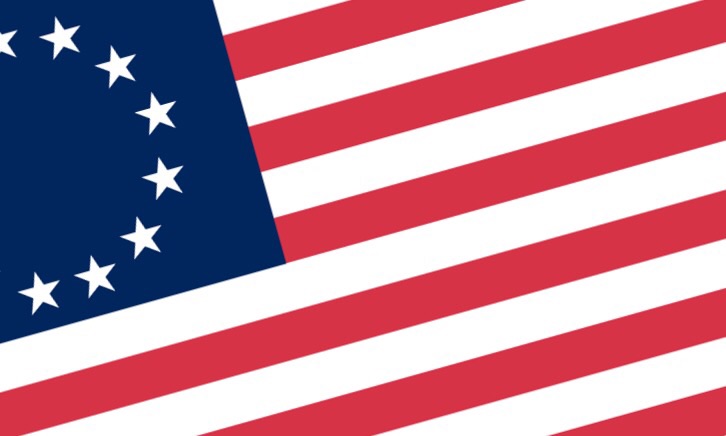
On June 14, 1777, U.S. Congress adopted the Stars and Stripes as the United States Flag.