Rational satisfaction is no dream of an undisturbed and impossibly complete felicity. It is not inconsistent with pain and sorrow, and the exclusion of many human delights. To have the least chance of success it must be weighted with a sober sense of reality, and an acceptance of the actual conditions of human living; to demand more than life can possibly give is to cut off our chance of satisfaction at the outset. We must be ready, if we are not to be always open to the inroads of discontent, to see and acquiesce in inevitable limitations, to make the best of necessarily imperfect attainment, to give up without repining what does not lend itself to our more dominant and insistent interests, to prefer defeat to success that degrades us in our own eyes.
There is a big problem with Delaware school districts asking voters for additional tax money via ballot referendums. You see, sometimes the people don’t vote the way school officials and politicians want.
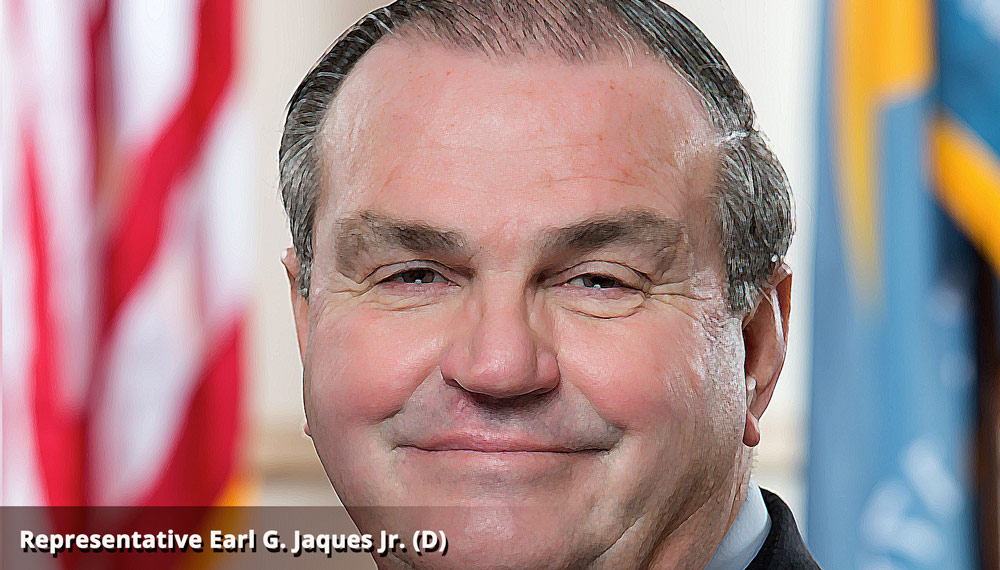
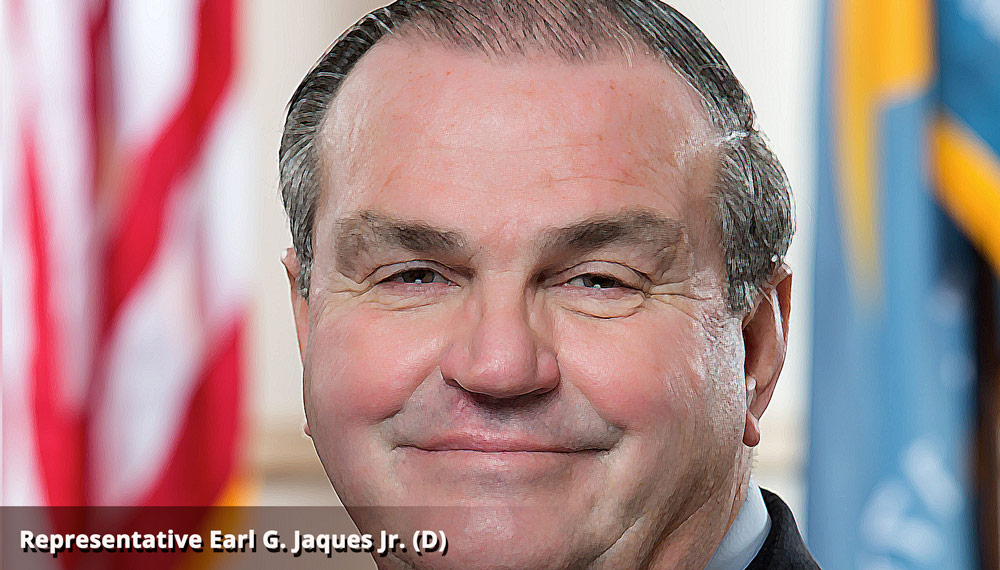
Have no fear: Rep. Earl Jaques (D-Glasgow) has authored House Bill 129 to solve this thorny problem.
“This bill creates a mechanism,” its official summary reads, “by which school boards may increase funds for a school district both with and without a referendum.”
Meaning, of course, without a referendum . . . since current law requires a public vote.
“That way, [school districts] know the money is there if they need it, and they don’t abuse it because they know it’s there,” explained Jaques. “The problem with the referendum system is that they have to ask for more than they actually need, because they know it’s going to be a long time before they can come back.”
“Despite his assurances that the system would not be abused,” the Dover Post reports, “technically, school districts could raise taxes by 2 percent each year.” Or by any increase in the Consumer Price Index, whichever is higher.
Inexplicably, three stories — in the Dover Post, Newark Post and Delmarva Now — told readers it was the “lower” of the two. The bill clearly says the “higher.” Odd that media outlets would not grasp the ever-so-subtle difference between the words “higher” and “lower.”
“Everybody’s in ‘Panicsville,’ but it’s really not that way at all,” offered Jaques. “We, my colleagues in the legislature and I, could raise your income tax right now, and what’s your recourse? Vote us out at the next election.”
Books constitute capital. A library book lasts as long as a house, for hundreds of years. It is not, then, an article of mere consumption but fairly of capital, and often in the case of professional men, setting out in life, it is their only capital.
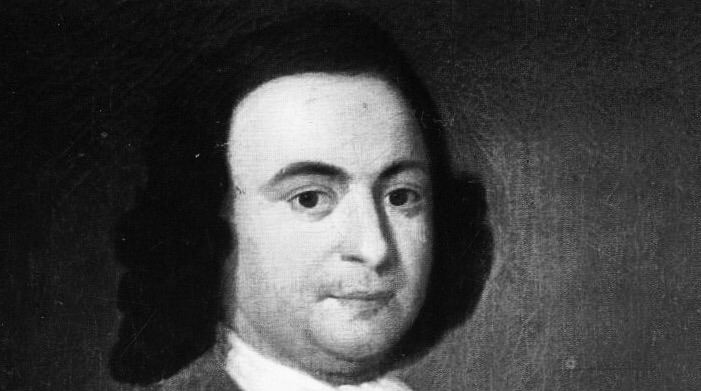
In 1776, on June 12, the Fifth Virginia Convention at Williamsburg, Virginia, unanimously adopted a Declaration of Rights, several weeks prior to the adoption of the state’s constitution. George Mason (pictured above), who drafted the document, stated clearly in the preamble that rights must be “the basis and foundation of Government.”
The first four planks run as follows:
I. That all men are by nature equally free and independent, and have certain inherent rights, of which, when they enter into a state of society, they cannot, by any compact, deprive or divest their posterity; namely, the enjoyment of life and liberty, with the means of acquiring and possessing property, and pursuing and obtaining happiness and safety.
II. That all power is vested in, and consequently derived from, the people; that magistrates are their trustees and servants, and at all times amenable to them.
III. That government is, or ought to be, instituted for the common benefit, protection, and security of the people, nation or community; of all the various modes and forms of government that is best, which is capable of producing the greatest degree of happiness and safety and is most effectually secured against the danger of maladministration; and that, whenever any government shall be found inadequate or contrary to these purposes, a majority of the community hath an indubitable, unalienable, and indefeasible right to reform, alter or abolish it, in such manner as shall be judged most conducive to the public weal.
IV. That no man, or set of men, are entitled to exclusive or separate emoluments or privileges from the community, but in consideration of public services; which, not being descendible, neither ought the offices of magistrate, legislator, or judge be hereditary.
In a recent Washington Postessay — “Is the individual obsolete?” — syndicated columnist George Will tackled the “you didn’t build that” theme that President Obama blurted out on the 2012 campaign trail, borrowed from a not-obscure-enough (and now former) Harvard Professor, Elizabeth Warren.
“What made Warren’s riff interesting, and Obama’s echo of it important,” wrote Will, “is that both spoke in order to advance the progressive project of diluting the concept of individualism.”
Mr. Will called it “a prerequisite for advancement of a collectivist political agenda,” adding “the more that any individual’s achievements can be considered as derivative from society . . . the more society is entitled to conscript — that is, to socialize — whatever portion of the individual’s wealth that it considers its fair share.”
Some fairness.
“This collectivist agenda,” he explained, “is antithetical to America’s premise, which is: Government — including such public goods as roads, schools and police — is instituted to facilitate individual striving, a.k.a. the pursuit of happiness.”
It’s a great read, but of course, George Will ‘didn’t produce that.’ Without the Post publishing it, without the police preventing progressive lynch mobs from stringing him up prior to typing it up, without the delivery person tossing it on my driveway or Al Gore’s amazing internet . . . I couldn’t have read it.
To some, these “unremarkable” facts diminish Mr. Will’s work product. To me, it shows just how crucial his contribution is — creating jobs for all these other folks.
After all, I don’t purchase the newspaper merely to provide jobs for paper boys, printers or the police. That’s simply a beneficial byproduct.
The fate of our times is characterized by rationalization and intellectualization and, above all, by the disenchantment of the world. Precisely the ultimate and most sublime values have retreated from public life either into the transcendental realm of mystic life or into the brotherliness of direct and personal human relations. It is not accidental that our greatest art is intimate and not monumental.
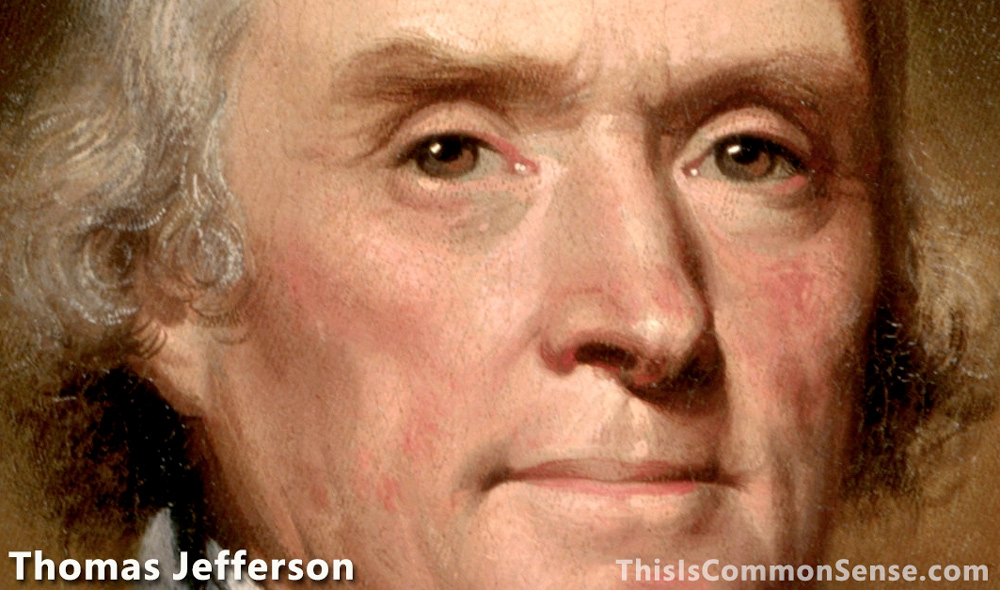
On June 11, 1776, the Continental Congress appointed John Adams, Benjamin Franklin, Thomas Jefferson, Robert R. Livingston, and Roger Sherman to draft a declaration of independence from Great Britain.
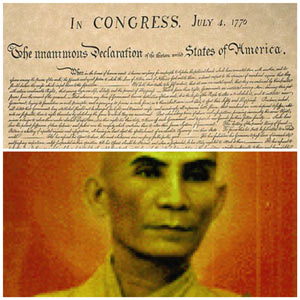
In 1963, Thich Quang Duc, a Buddhist monk, doused himself with gasoline and set himself aflame in a busy Saigon intersection as a protest against South Vietnam’s lack of religious freedom.
Larry Hogan, Maryland’s popular Republican governor, has vowed to “clean house” in the wake of the scandals rocking the “private” non-profit University of Maryland Medical System (UMMS), set up by the State of Maryland.
It isn’t just former Baltimore Mayor Catherine Pugh, who resigned from the UMMS board after it was disclosed the board had purchased $500,000 worth of her self-published children’s book, “Healthy Holly.” Yep, it’s always for the children. (Pugh also resigned as mayor after the FBI raided her home and office.)
In fact, nine of the 23 UMMS board members had money-making contracts with the system they “manage.” Not to mention that a recent Post exposé detailed how former state legislator and long-time board member, Francis Kelly, whose legislation established the system, had multi-million-dollar insurance contracts with UMMS.
Yet, as The Washington Postreports, “state law long has called for housecleaning . . . specifying that board members can’t serve more than two consecutive five-year terms.”
Gov. Hogan and his predecessors — both Republican and Democrat — simply ignored the law, reappointing board members beyond the limits.
“If members were allowed to essentially stay on the board in perpetuity,” former state senator, now U.S. Rep. Jamie Raskin (D-Md.) argued, “it’s a direct threat to the independence and accountability of the board.”
Abandoning term limits, State Senator Jill Carter (D-Baltimore City) told the Post, was “part of the problem,” resulting in self-dealing.
Hmmm, think they’ll ever apply this knowledge to establishing term limits on their own powerful legislative bodies?
There is no real paradox in the claim that satisfaction is open only to the man who stands prepared to give up pleasures. This only means, again, that satisfaction as a human goal is not an abstract ideal of limitless good, but presupposes a determinate human nature set to work out its destiny in determinate surroundings. That at which a sensible, human being aims is no unimaginable state of the intensest possible pleasure unaccompanied by pain, but the realization that he is making the very most of life that it is possible for him, with his particular interests and limita tions, to make, considering the means at his disposal. If one is not willing to accept these qualifications, he is not yet prepared to set out intelligently to secure satisfaction.
Arthur Kenyon Rogers, The Theory of Ethics (New York: The Macmillan Company, 1922).