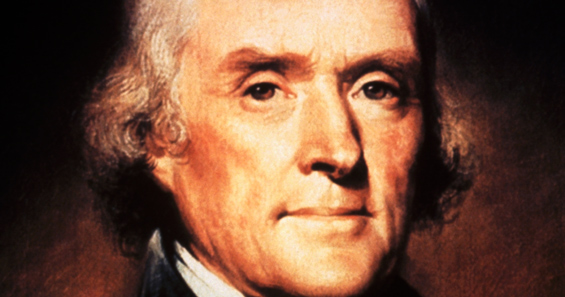
Roman Emperor Nero committed suicide on this day in June, 68 AD, ending Rome’s Julio-Claudian Dynasty, later written about with verve by Suetonius and Robert Graves.
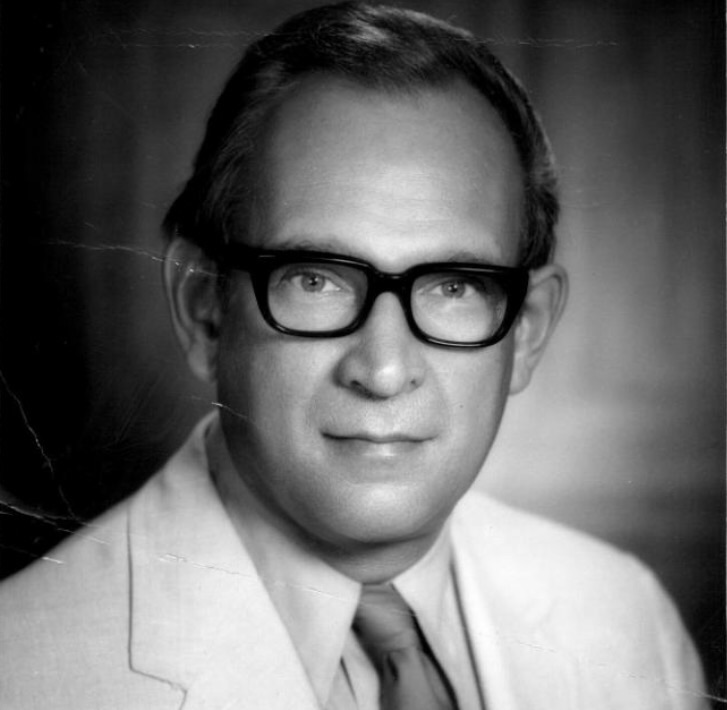
Also on June 9, James Oglethorpe received a charter from the British crown to start the Georgia colony (1732); William Jennings Bryan resigned his position as Secretary of State under Woodrow Wilson, disgusted over the handling of the sinking of the Lusitania (1915); philosopher John Hospers (pictured) — who would go on to run as a Libertarian candidate for the U.S. presidency in 1972 — was born in 1918.
Alaska, Washington, Oregon, Montana, Missouri, Oklahoma, Louisiana, New Hampshire — these are the states that have shouted a big NO to the Federal Bureau of Investigation’s citizen scanning agenda and its database of 640 million faces.
“As the FBI amasses hundreds of millions of photos for its facial recognition program (with little in the way of safeguards),” asks J. D. Tuccille in Reason, “is it also going to force us to bare our faces for cameras as we move through an increasingly surveilled country?”
Tuccille suggests wearing hats big enough to cover our faces from intrusive cameras.
Most states do not prohibit surveilling people en masse or at random. And though Kimberly J. Del Greco, deputy assistant director of the FBI’s Criminal Justice Information Services Division, assures us of the operation’s above-board character — “there have been no findings of non-compliance, and no observations of unauthorized requests” — the possibilities of abuse are precedented . . . by past government surveillance.
So, is it any solace that it has so far proved wildly inaccurate?
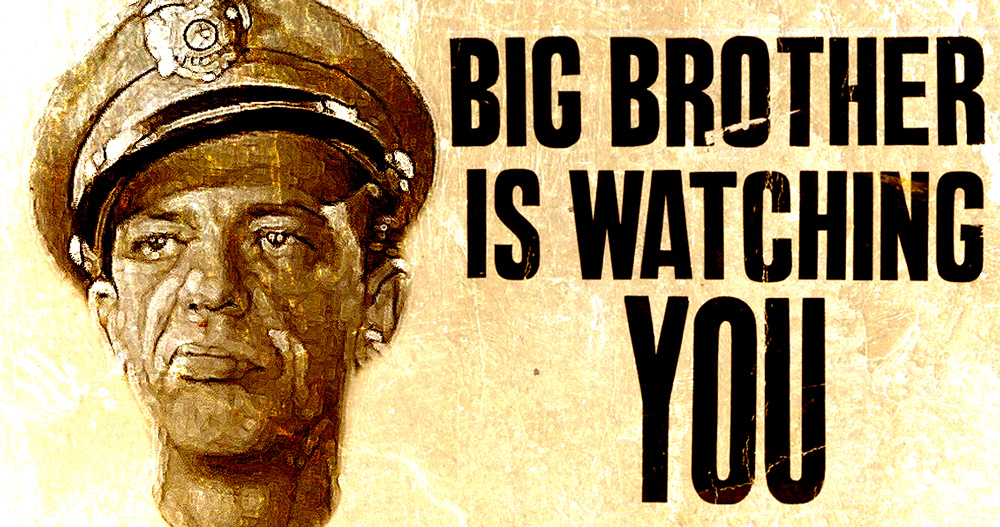
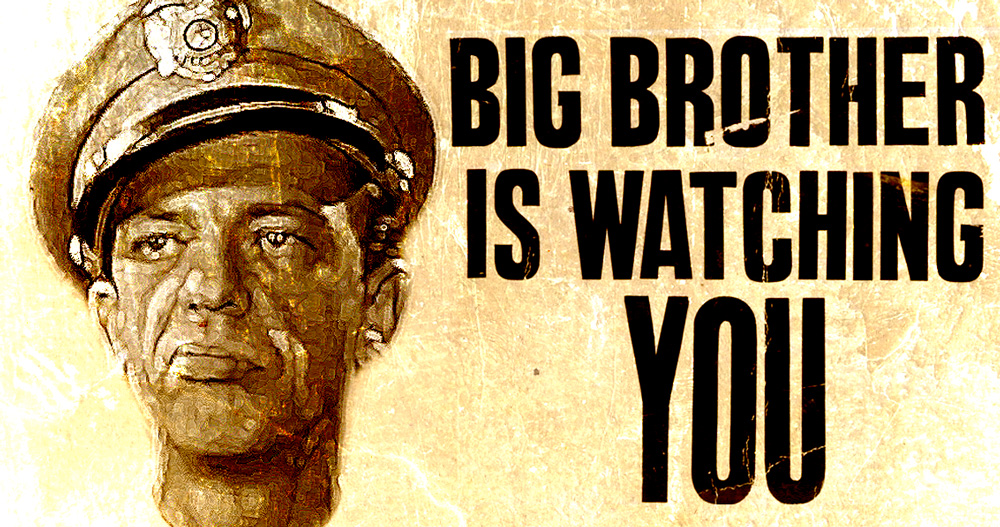
Sure, the aforementioned Del Greco claims the FBI’s algorithm is 99 percent accurate. But another study found one system in place with a sorry 98 percent inaccuracy rate. “It’s a creepy police state as administered by Barney Fife,” writes Tuccille. And while that is “pretty damned funny,” it would be not even a little bit funny if “you’re arrested based on a bad match.”
Constraining governments to forswear such practices on the streets, malls and public places of America is surely a good candidate for citizen use of initiative and referendum rights, where available — in states and cities around the U.S.
For these are not supposed to be the United States of Big Brother.
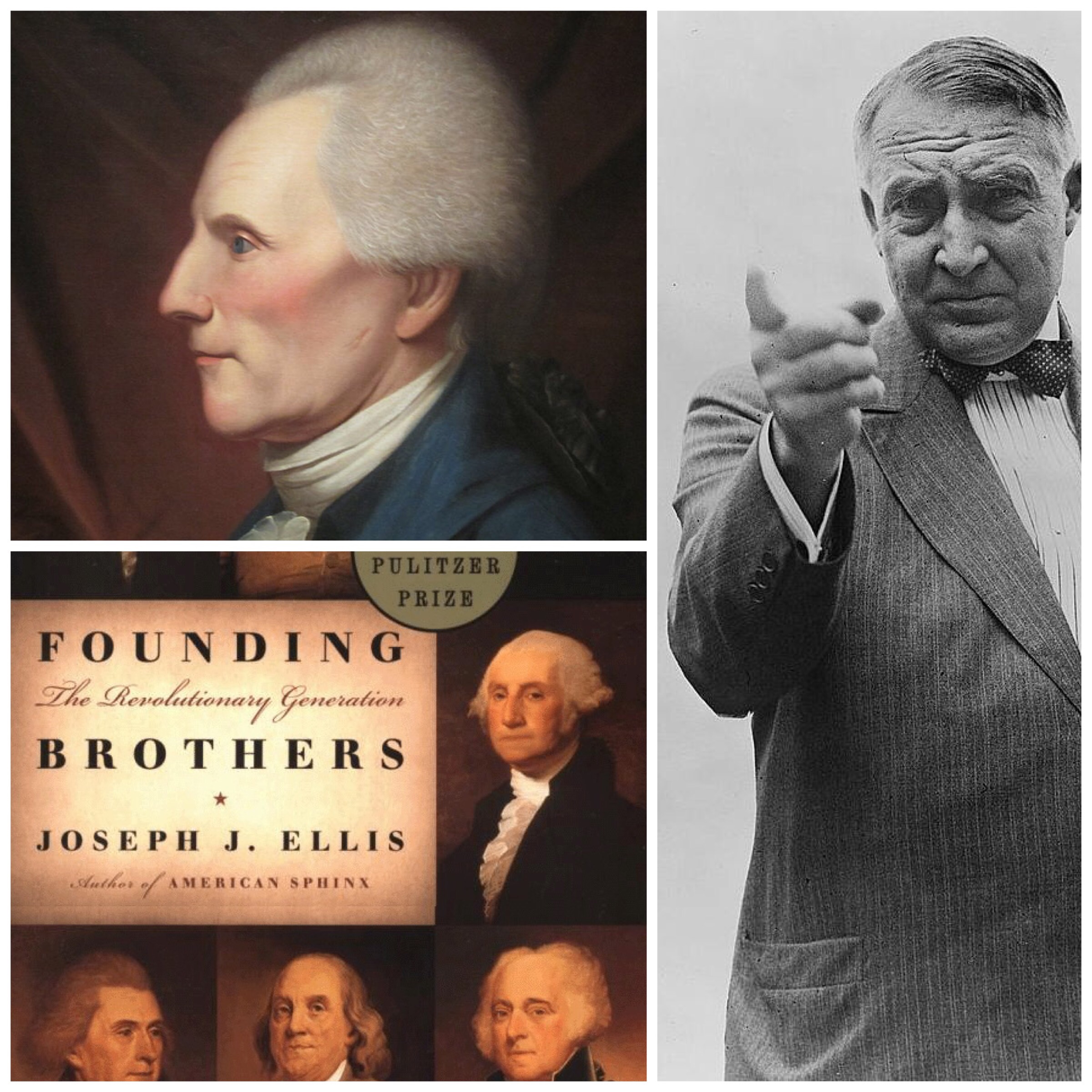
On June 7, 1776, Richard Henry Lee presented the “Lee Resolution” to the Continental Congress. The motion was seconded by John Adams, but was tabled for several weeks. The motion was finally passed on July 2, 1776.
During the 1916 Republican National Convention (June 7 – 10), Senator Warren G. Harding used the phrase “Founding Fathers” in his keynote address . . . and would go on using it in speeches thereafter. It caught on as a eulogistic way to refer to figures such as Thomas Jefferson and, yes, Richard Henry Lee, who orchestrated the American colonies’ break from England’s imperial monarchy.
I know no safe depositary of the ultimate powers of the society but the people themselves; and if we think them not enlightened enough to exercise their control with a wholesome discretion, the remedy is not to take it from them, but to inform their discretion by education.
“All too often politicians focus on their own re-election,” says Robert Francis ‘Beto’ O’Rourke, “at the expense of addressing the challenges our country faces.”
A supporter of term limits during his six years in Congress, in 2018 Beto left a safe House seat to challenge U.S. Senator Ted Cruz, also a term limits backer. In a very Republican state, Mr. O’Rourke fell just a smidgeon short of an upset, catching a ton of national attention — leading to his current candidacy for the Democratic presidential nomination.
His “Plan to Realize the Full Potential of Our Democracy” calls for 12-year congressional limits and 18-year limits on U.S. Supreme Court justices. Admittedly, both require amending the Constitution, but a president using his bully pulpit sure can help the effort.*
“The issue of term limits in Congress has some bipartisan support,” notes a BuzzFeed News story, “but . . . it starkly divides Democrats.”
The reporter is not talking about voters — a poll last year found a whopping 77 percent of Democrats favor “Establishing limits on the number of terms members of the U.S. Congress can serve.”
But as the BuzzFeed article explains, “Former vice president Joe Biden, Sen. Elizabeth Warren, and [Sen. Bernie] Sanders all oppose instituting them for members of Congress.”
Not surprising. Both Sanders and Warren are incumbents — with Sanders in Congress for the last 28 years and Warren in her second Senate term, while Biden spent 36 years in the Senate and eight more as Vice President.
“Limit permanent incumbency,” Beto’s website states, “to promote progress, reduce gridlock and inspire more to run for office.”
While Democrat politicians may not be pleased, O’Rourke’s term-limit push willregister with voters of all parties.
This is Common Sense. I’m Paul Jacob
* President Donald Trump endorsed term limits in the homestretch of the 2016 campaign. He would be wise to trumpet the issue again and again in order to keep pressure on Congress.
June 6 marks major life events of two eminent British philosophers, Jeremy Bentham’s death* (1832) and Isaiah Berlin’s birth (1909).
Bentham was known as a “philosophical radical” and a major influence on the British utilitarian tradition. He authored numerous books, including Defence of Usury (1787) and An Introduction to the Principles of Morals and Legislation (1789). Bentham started out advocating for laissez faire, became obsessed with his own specially designed prison design, the Panopticon, and argued for feminism and animal rights in public but kept his defense of homosexual rights private, to be published long after his death. His treatise on ethics, Deontology: Or, the Science of Morality, in Which the Harmony and Co-incidence of Duty and Self-Interest, Virtue and Felicity, Prudence and Benevolence, Are Explained and Exemplified, was published from his manuscripts two years after his death.
Berlin was best known for several dozen brilliant essays, including the famous, much-quoted “The Hedgehog and the Fox” (a study of Leo Tolstoy) and “Two Concepts of Liberty.”
* Pictured is his remains as housed in a special “closet” in the London Academy. Bentham specified this in his will, and he called this manner of posthumous presentation an “auto-icon.”
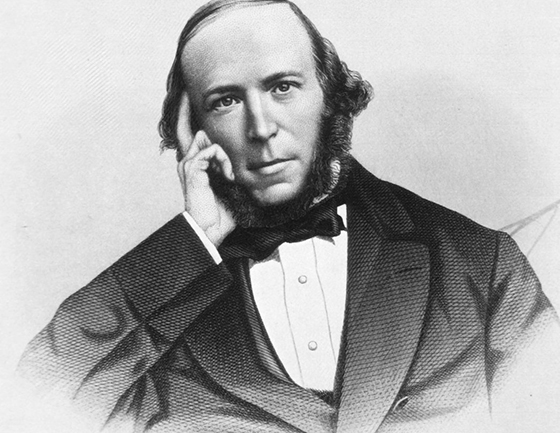
The fact disclosed by a survey of the past that majorities have usually been wrong, must not blind us to the complementary fact that majorities have usually not been entirely wrong.
Herbert Spencer, First Principles (1860), Pt. I, The Unknowable; Ch. I, Religion and Science.
In the poll, Labour and Conservatives trail behind the Liberal Democrats* and something called The Brexit Party. This is, says YouGov’s director of political research for Great Britain, the first time that two “third parties” have polled ahead of both Labour and the Tories.
“The Liberal Democrats held the support of 24 percent of voters, while the Labour and Conservative parties were tied at 19 percent each,” The Hillsummarizes. “The far-right Brexit Party came in second place, with 22 percent of voters’ support.”
What it means for Americans is unclear, but what it means for one American news outletapparently is crystal: the single-issue Brexit Party is “far right.”
Really?
While the traditionally left Labour and traditionally right Tory voters are split on Brexit, The Hill sees this as somehow a left/right issue. Not obvious.
Nevertheless, The Hill insists on having its American readers see the situation in a way designed to favor one position. Because “far right” is bad, and “far left” is never used** even to label Labour’s egregious, Castro/Chavez-loving, Cuba-Venezelua-apologetic leader Jeremy Corbyn.
With cues like that, insiders keep outsiders out.
And perhaps that’s the way to think about Brexit: as literally a matter of Insider/Outsider, with the outsiders still wanting out.
This is Common Sense. I’m Paul Jacob.
* The year was 1922 when last a Prime Minister was not a Tory or Labour.
** I did not see it in my Google search of The Hill, anyway!