On June 5, 1851, Harriet Beecher Stowe’s anti-slavery serial, Uncle Tom’s Cabin, or Life Among the Lowly, started its ten-month run in the National Era abolitionist newspaper.
Categories
Uncle Tom’s Cabin
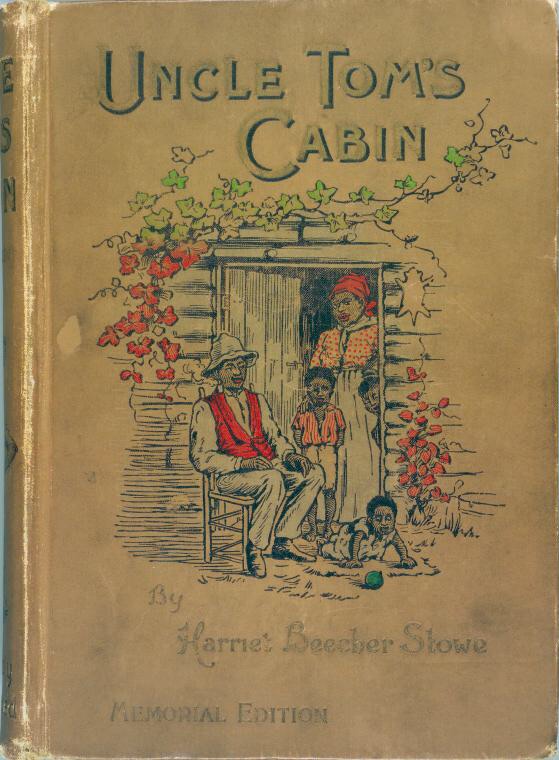
On June 5, 1851, Harriet Beecher Stowe’s anti-slavery serial, Uncle Tom’s Cabin, or Life Among the Lowly, started its ten-month run in the National Era abolitionist newspaper.

But more was involved in the Russian Revolution of 1991 than a change of institutions, however basic; at the heart of the transformation was a change in the defining ethos of life: viz., the abandonment of the Idea of
Socialism. To understand the significance of this, Aristotle is really more helpful than all the social science of the behavioral age. In the Politics, the economy and the polity are viewed as part of ethics. In other words, ethics gives purpose, the final cause, or what would now be called, in functional terms, the value system of a society, that which lends meaning to each of its institutions, and indeed makes it possible for them to function at all. And this ethical purpose must be transcendent to any one of its particular manifestations. nbsp;. .. . . the [socialist] system can be held together, in its ascending phase, only so long as the socialist Myth is credible, that is, while its realization still lies in the future. Once socialism has been built, however, the Myth is transformed by the results it has produced into the Lie. . . . it was only a question of time before the internal contradictions of the impossible enterprise of ‘building socialism’ worked themselves out in the total discrediting, and hence the brusque abandonment, of the system.
In short, there is no such thing as socialism, and the Soviet Union has built it. When a disastrously noncompetitive performance at last made this paradox apparent, the whole institutionalized fantasy of ‘really existing socialism’ vanished into thin air.
Martin Malia, “From Under The Rubble, What?” Problems of Communism, January-April 1992.
Why did term limits spring up in the 1990s?
Term limitation has a long history in America, of course — and all the way back to Aristotle — but why the resurgence? I remember opponents suggesting that Americans were frustrated with slow economic growth.
Not likely.
In “Restoring Faith in Congress,” a 1993 article in the Yale Law & Policy Review, authors Kimberly Coursen, Thomas Mann, Norman Ornstein and Todd Quinn recognized that “the 1990s are different” because “the climate for far-reaching political reform is ripe.”
But why?
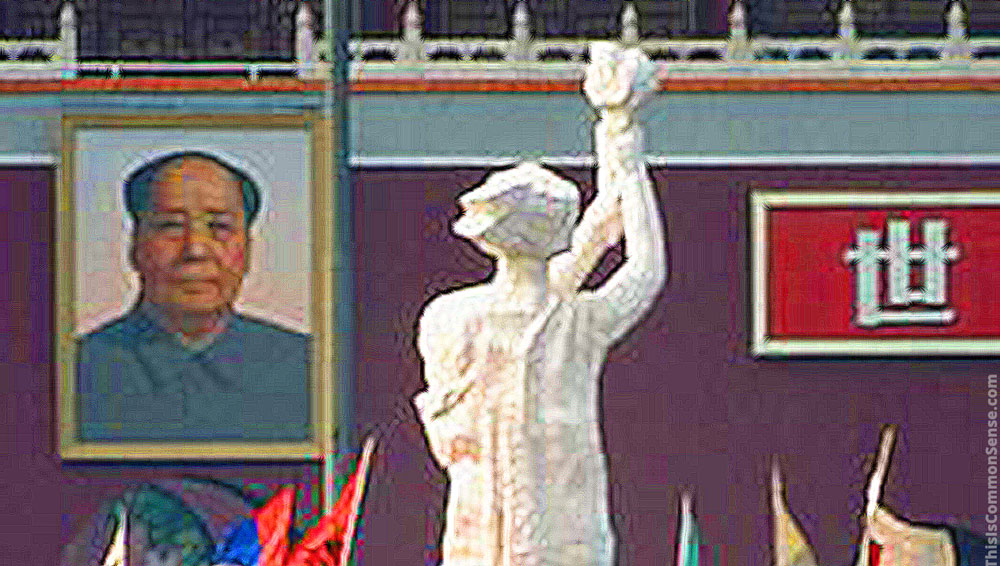
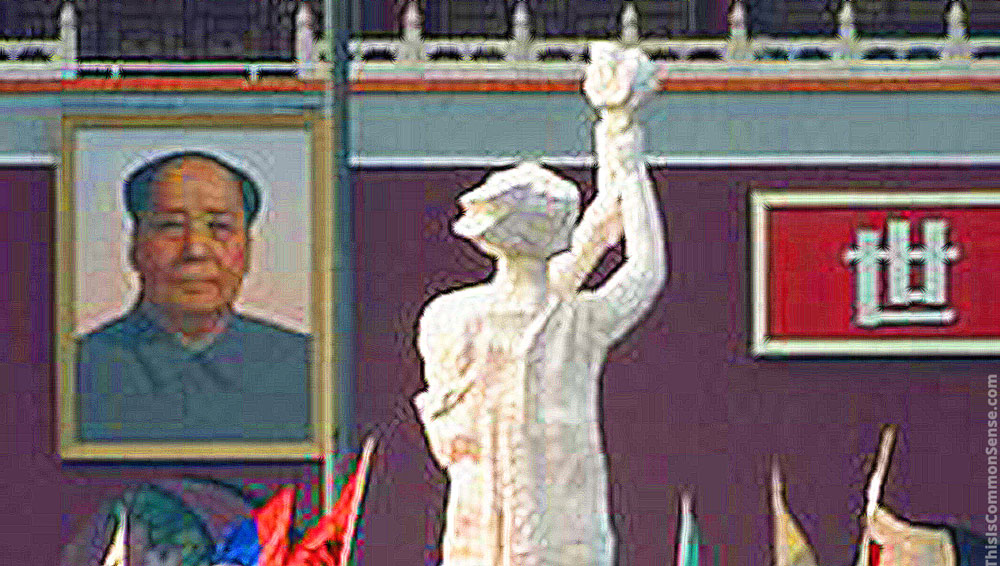
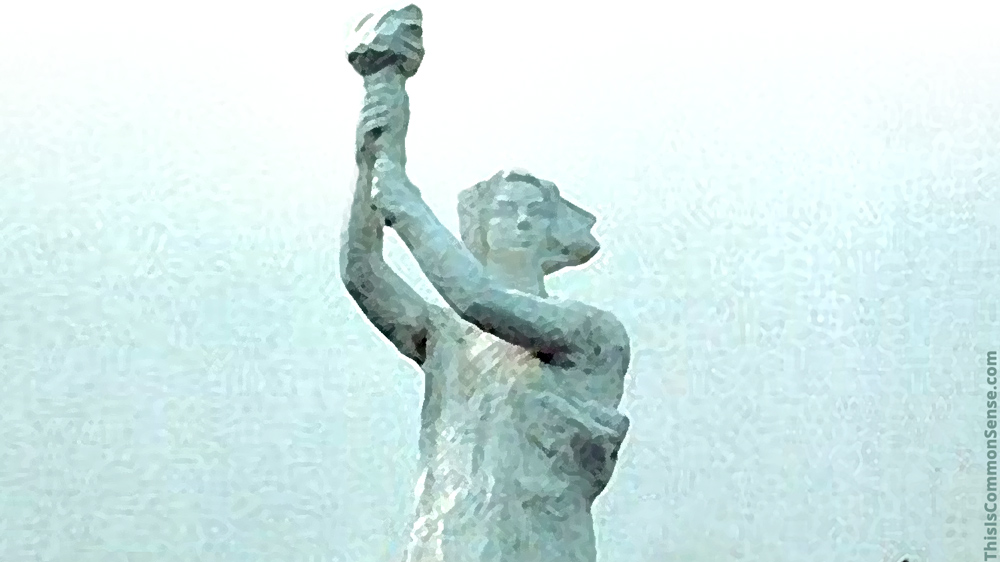
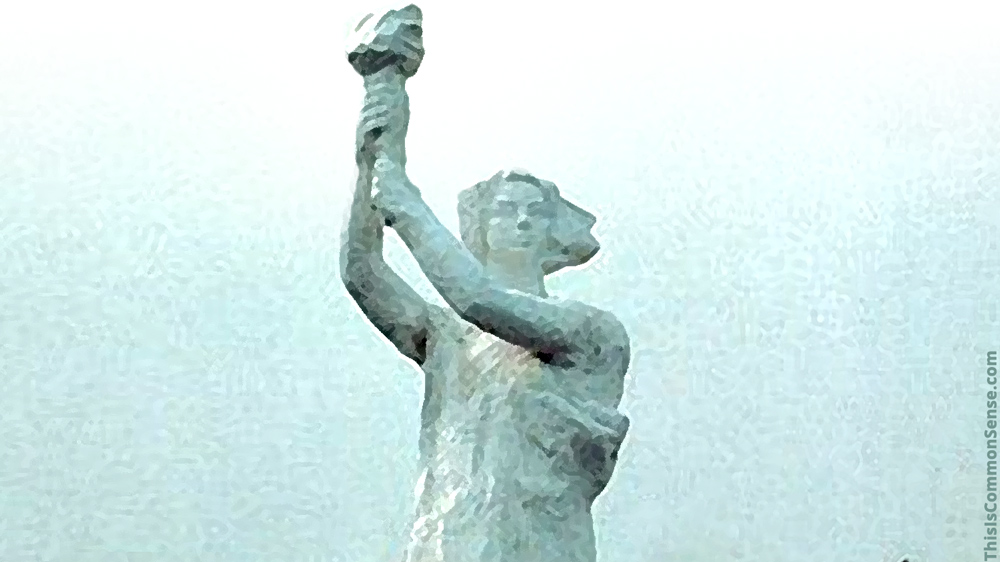
For seven weeks in 1989, Chinese students protested for freedom and greater democracy, joined by others until more than a million people filled Tiananmen Square. Americans were deeply moved by their makeshift Goddess of Democracy, resembling our Statute of Liberty, as well as by the students’ demands, which read much like our Declaration of Independence.
Then, all that hope was doused, courtesy the Butchers of Beijing.
Five months later, the Berlin Wall came down, followed by the overthrow of communism throughout Europe, then the fall of the Soviet Union in 1991.
No more Cold War.
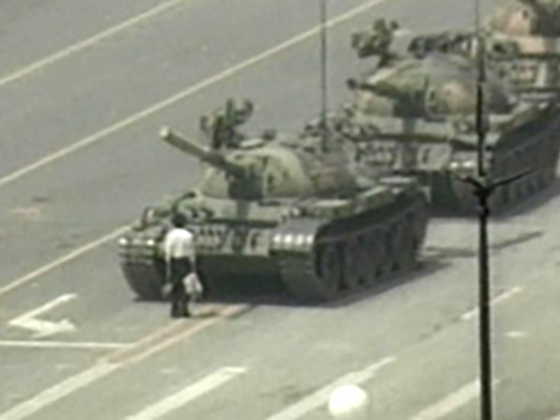
Americans, lacking an external enemy for the first time in decades, and with Tiananmen’s “tankman” fresh in our minds, could at last safely take a good look at our own government.
We did not like what we saw.
In 1990, Americans in three states — California, Colorado and Oklahoma — used direct democracy by petitioning term-limit initiatives onto the ballot. All three won. In 1992, U.S. Term Limits rallied voters to pass initiatives in a record 14 states.
Sadly, the 1989 Tiananmen Square protests did not usher in freedom for China. Yet, they lit fires in hearts across the globe.
Including mine.
This is Common Sense. I’m Paul Jacob.
See all recent commentary
(simplified and organized)
See recent popular posts
June 4 marks Finland’s Armed Forces Day, Tonga’s Emancipation [or Independence] Day (commemorating the abolition of serfdom in Tonga by King George Tupou in 1862, and the independence of Tonga from the British protectorate in 1970), Estonia’s Flag Day, and the international Tiananmen Square Protests of 1989 Memorial Day.
For human nature is strange: the less we are inclined to self-sacrifice, the more we insist on it in others.
The most inspiring political event of my six decades on this planet remains the pro-freedom and democracy protests of three decades ago, when for seven weeks first students and then other Chinese citizens occupied iconic, historic Tiananmen Square in Beijing.
“In the history of communist China,” said a CNN correspondent as a million people swelled into the square, “there has never been anything like this.”
The students’ demands were strikingly similar to those articulated in America’s Declaration of Independence, and their symbol was the Goddess of Democracy and Freedom, something of a replica of our Statue of Liberty.
Now, one might ask what the protestors knew of liberty and democracy. “To them,” offered Princeton Professor Perry Link, “democracy just meant ‘get off our back.’”
What, it doesn’t mean that?
“We probably don’t know what democracy is, living in China,” acknowledged student leader Wuer Kaixi, “but we have a pretty good idea what totalitarianism, what non-democracy, is.”
That totalitarian tyranny exploded late this very evening 30 years ago, when Chinese troops fired on unarmed protesters and tanks rolled; the massacre continued into the wee hours of June 4, 1989. Death counts range from 300 to several thousand, and there’s uncertainty as to whether the carnage took place in or out of the square, killing mostly workers or students. Regardless, it is all-too-typical behavior from an illegitimate regime.*
The saddest news is that, as a survivor told the South China Morning Post, “What happened [30] years ago in China . . . is still happening now in China.”
Over a million Uighur Muslims are, reportedly, confined in concentration camps right now.
What can we do? Remember, for starters.
This is Common Sense. I’m Paul Jacob.
*Firing on one’s own citizens is far too common, and delegitimizes any regime that practices it, as I have pointed out per Nicaragua, Venezuela, and U.S.-subsidized Egypt — the list goes on and on.
See all recent commentary
(simplified and organized)
See recent popular posts
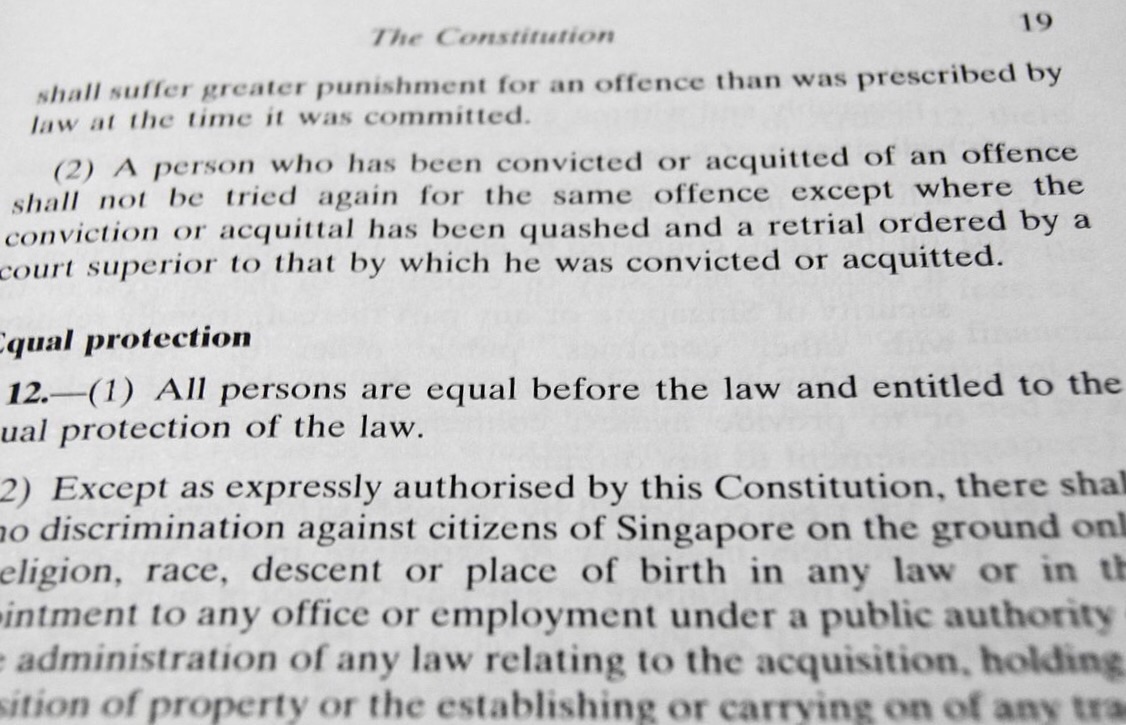
On June 3, 1959, Singapore adopted a constitution.
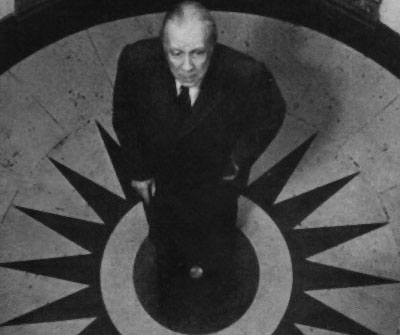
Dictatorships foster oppression, dictatorships foster servitude, dictatorships foster cruelty; more abominable is the fact that they foster idiocy.
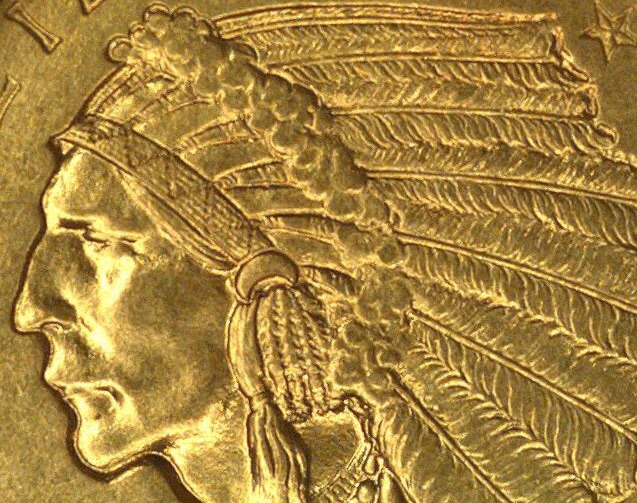
On June 2, 1924, President Calvin Coolidge signed the Indian Citizenship Act into law, granting citizenship to all Native Americans born within the territorial limits of the United States.