We have two ears and one mouth, so we should listen more than we say.
Categories
Zeno of Citium

We have two ears and one mouth, so we should listen more than we say.
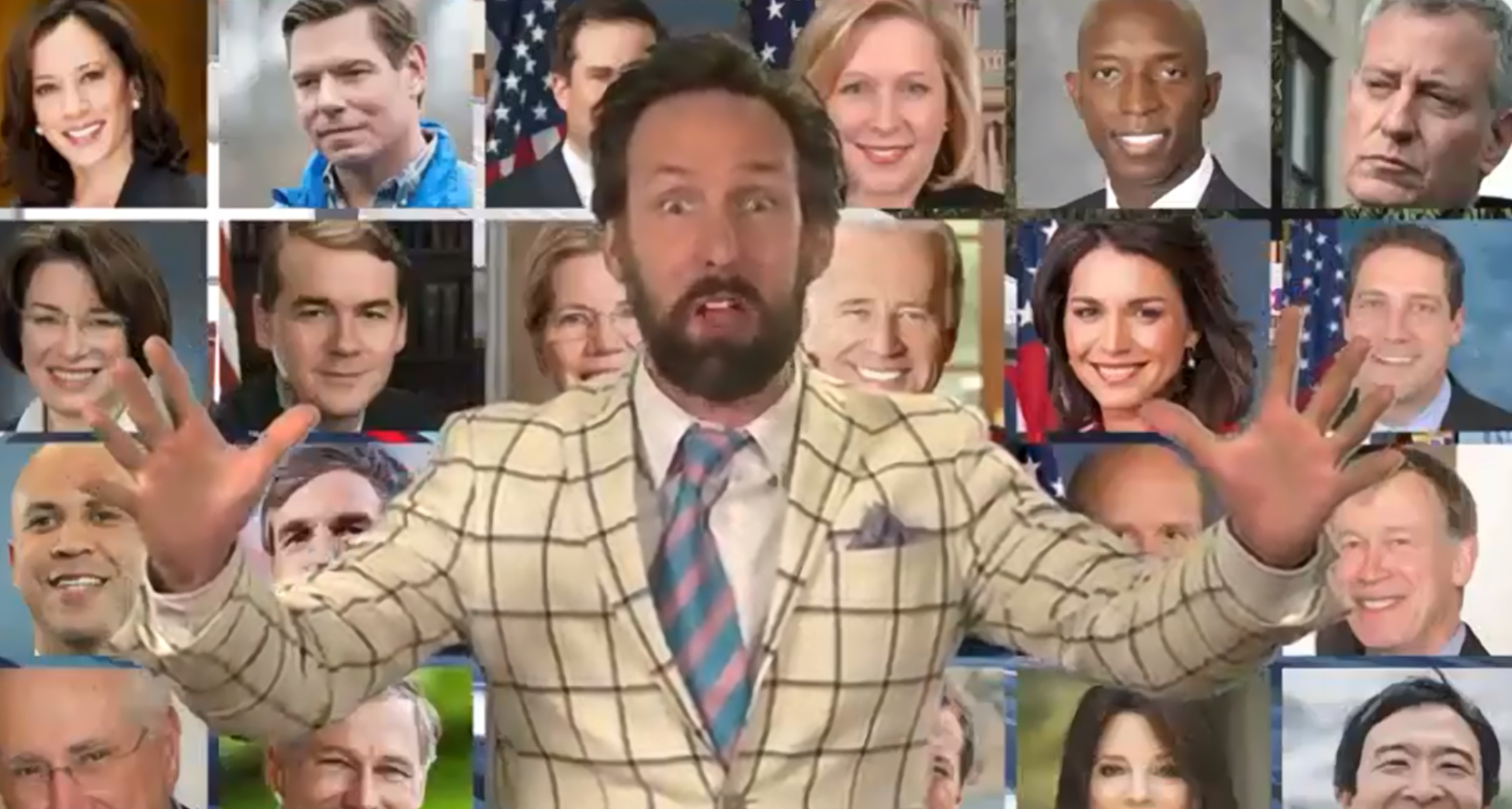
Effective satire from Reason:
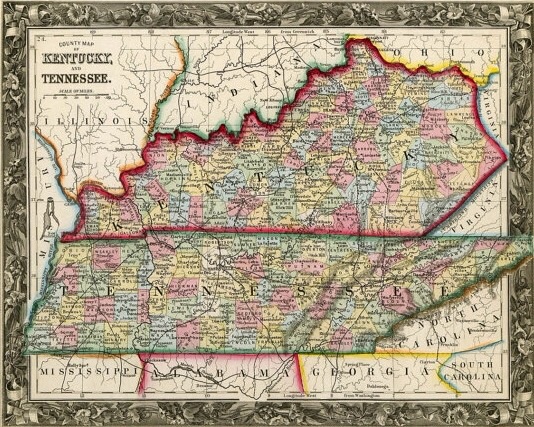
On June 1, 1792, Kentucky was admitted as the 15th state of the United States. Four years later, Tennessee became the 16th state.
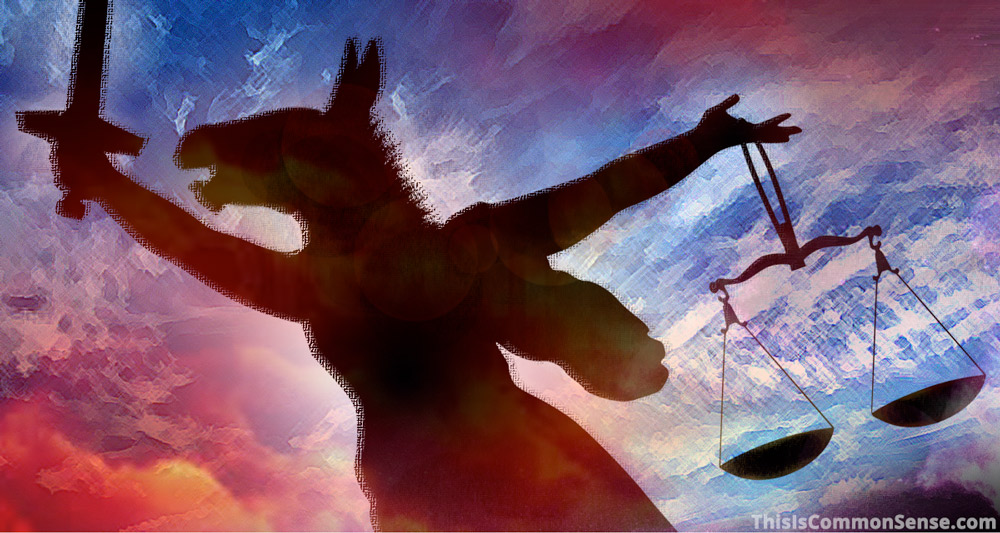
“No responsible prosecutor,” Alan Dershowitz writes in The Hill, “should ever suggest that the subject of his investigation might indeed be guilty even if there was insufficient evidence or other reasons not to indict.”
Don’t I know it.
The world-famous lawyer takes issue with the “statement by special counsel Robert Mueller in a Wednesday press conference that ‘if we had confidence that the president clearly did not commit a crime, we would have said that.’”* Dershowitz makes a good case that the ‘innocent until proven guilty’ principle requires the government not merely to refrain from imposing punishment before obtaining a lawful conviction, but also to hold back from punishing people by making loud public claims about their supposed guilt.
Which brings to mind my own experience at U.S. Term Limits. In 1994, we ran radio ads and sent mail to citizens in two Oklahoma congressional districts and one in Kentucky. We did not urge a vote for or against anyone, but merely provided information on where the candidates stood.
Yet, prompted by a complaint from the Democratic Congressional Campaign Committee, which prefers ignorant to knowledgeable voters, the Federal Election Commission (FEC) investigated.
As if to foreshadow current prosecutorial proclivities, the FEC abandoned its witch hunt after two long years. Relieved the agency’s harassment was finally over, I remember opening an Oklahoma newspaper and discovering a story headlined, “Term Limits Group Violated Law in State, U.S. Agency Charges.”
This problem goes well beyond Mr. Mueller and President Trump. Government agencies that cannot prosecute, should not persecute.
This is Common Sense. I’m Paul Jacob.
* Dershowitz calls Mueller’s comments “worse than the statement made by then-FBI Director James Comey regarding Hillary Clinton during the 2016 presidential campaign.”
See all recent commentary
(simplified and organized)
See recent popular posts
All the good are friends of one another.

On May 31, 455 A.D., Emperor Petronius Maximus was stoned to death by an angry mob while fleeing Rome.
On that date in 1578, King Henry III laid the first stone of the Pont Neuf (New Bridge), the oldest bridge of Paris, France.
In other rock history, May 31, 2013, marked the closest approach to Earth that the asteroid 1998 QE2 and its moon will get until two centuries hence.
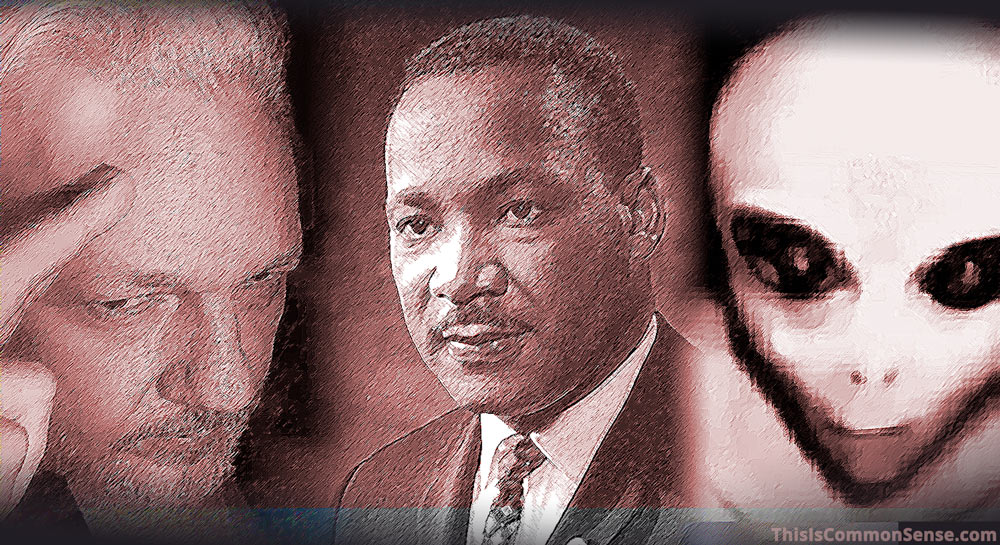
Why does corporate media report what it reports?
And neglect what it neglects?
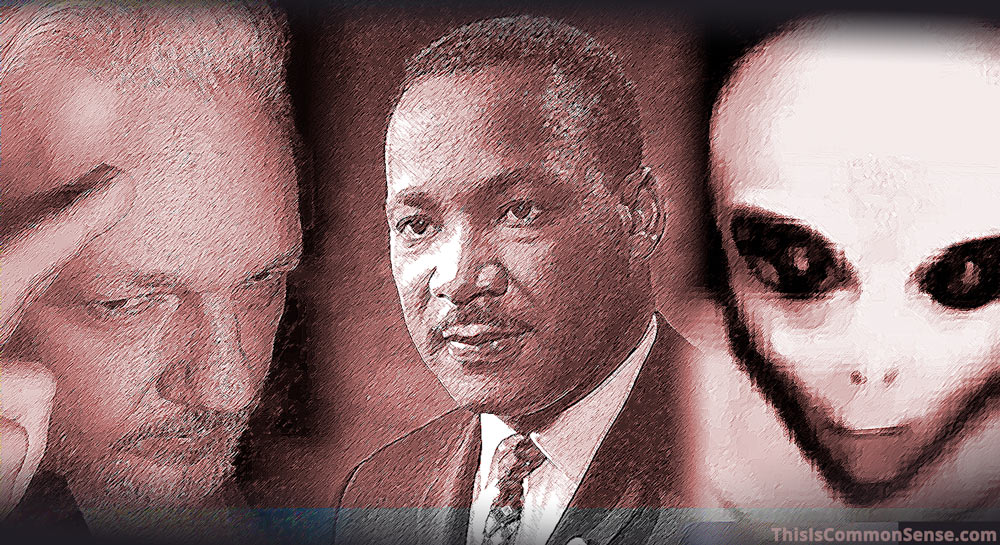
From an article, yesterday, by Caitlin Johnstone, “Julian Assange is Reportedly Gravely Ill, and Hardly Anyone’s Talking About It,” we learn that Mr. Assange is too ill to speak. Since the U.S. Government has indicted him for espionage, you might think that this would be big news in America.
From major sources: crickets.
A few days earlier, friends noted that the Martin Luther King story, brewing in Great Britain, has received little notice on this side of the pond. New revelations about FBI spying on the much-honored civil rights leader, and also about the information gleaned from that spying, that is Reverend King’s alleged profligate sexual misconduct, sure seem like big stories.
But you know what is being seriously covered?
UFOs.
Yes, the subject that was pooh-poohed and pilloried by major media sources for decades has recently been getting major coverage from the likes of the New York Times and the Washington Post and CNN and Fox News.
In the Post we are instructed that a “UFO is not necessarily an alien from another planet,” but by the end of that same Tuesday think piece, we read that we might have to consider that very bizarre possibility.
So, why is mainstream media mum about Assange and MLK but now so enthusiastic about UFOs?
Could it be because the Assange and King stories do not make our government look good, while the UFO story is part of a major plan* of “controlled disclosure”?
Of course, it might be just another round of disinformation.
This is Common Sense. I’m Paul Jacob.
* Dr. Hal Puthoff, in a lecture available on Vimeo, explains the plan in the course of discussing his work for the Department of Defense’s Advanced Aerospace Threat Identification Program, as well as the more recent work of the To the Stars Academy, which has apparently organized the current media blitz.
See all recent commentary
(simplified and organized)
See recent popular posts

The need for Government is the need for force; where force is unnecessary, there is no need for Government.

On May 30, 1989, student demonstrators unveiled a 33-foot high “Goddess of Democracy and Freedom” statue in Tiananmen Square.

The logic for drug prohibition is direct: to keep people from hurting themselves with recreational drugs, we must prevent them from accessing those drugs.
Voilà!
There are a number of things wrong with that, though, and one is this: governments cannot even keep illegal drugs out of prisons.
In California, nearly 1,000 men and women overdosed last year in “an alarming spike in opioid use by those behind bars,” reports the San Francisco Chronicle.
Steven Greenhut, writing in Reason, notes that confinement centers are “among the most tightly controlled environments on Earth, yet correction officials can’t figure out how to deal with dramatic spikes in the number of inmates who are dying from drug overdoses and alcohol poisoning.”
Doesn’t this make the prohibitionist “solution” absurd?
“If they can’t keep heroin off of death row,” Greenhut concludes, “then maybe they should rethink their ability to control the rest of us.”
There is a problem, here, though — it is easier to control “the rest of us.”
As with gun control laws, it is the law-abiding folks who fall in line. It is the edgier, less civic-minded people who tend to rebel.
But the two issues remain distinct: generally lawful and level-headed citizens still need to defend themselves from criminals, but do not feel a need to take drugs that can be deadly even in innocent hands. Thus the War on Drugs seems a bit less obviously tragic than gun control.
Which is why conceiving of the War on Drugs as unworkable prison policy writ large remains important.
Why would we want to make our society more like drug-ridden prisons?
This is Common Sense. I’m Paul Jacob.

Photo credit: Thomas Quine
See all recent commentary
(simplified and organized)
See recent popular posts