Every fool believes what his teachers tell him, and calls his credulity science or morality as confidently as his father called it divine revelation.
George Bernard Shaw, Maxims for Revolutionists (1903), #39.
Every fool believes what his teachers tell him, and calls his credulity science or morality as confidently as his father called it divine revelation.
George Bernard Shaw, Maxims for Revolutionists (1903), #39.
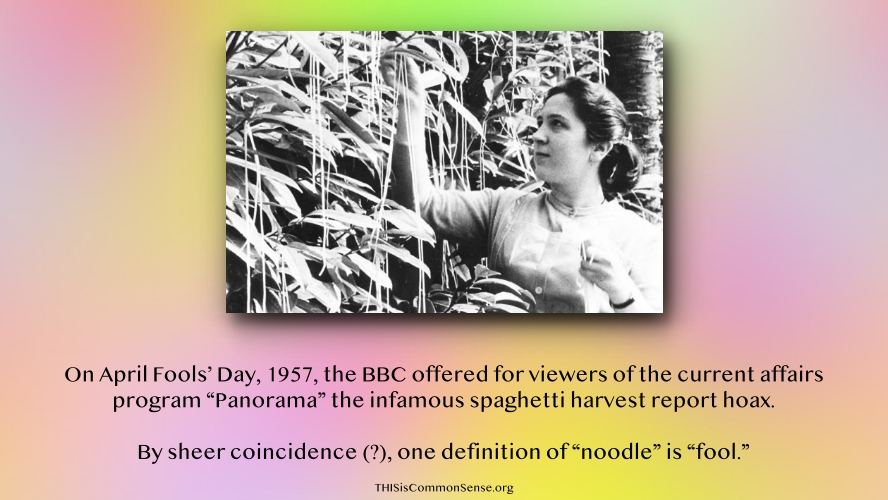
On April Fools’ Day, 1957, the BBC offered for viewers of the current affairs program “Panorama” the infamous spaghetti harvest report hoax.
By sheer coincidence (?), one definition of “noodle” is “fool.”
Watching CBS’s 60 Minutes two weeks ago, it became painfully obvious that “national security” are simply two words our past leaders spat out when politically convenient and not at all a concept to which they have paid serious attention.
The first story in the popular TV news magazine’s March 22nd episode concerned rare earth metals.
“Right now, China holds a near-monopoly over these strategic metals that are key components in so much that makes the modern world go: smartphones, robotics, EV’s; also fighter jets, drones and radar technology,” explained correspondent Jon Wertheim. “That is, China controls materials essential to America’s ability to wage war.”
Quite a problem, especially considering that China is our most powerful and aggressive adversary.
Shipbuilding, or the lack thereof, was the subject of the segment that followed.
“The war in Iran is highlighting the importance of ships — not just warships but cargo vessels — like those carrying oil or gas trapped near the Strait of Hormuz,” Lesley Stahl reported. “But American shipbuilding is in shambles, due to decades of shortsighted policies and neglect.
“Our submarine building program is sluggish. And our commercial shipbuilding is nearly extinct,” she continued. “China makes roughly 1,000 cargo ships a year. The U.S.? Maybe three. The Trump administration has called this a national security crisis.”
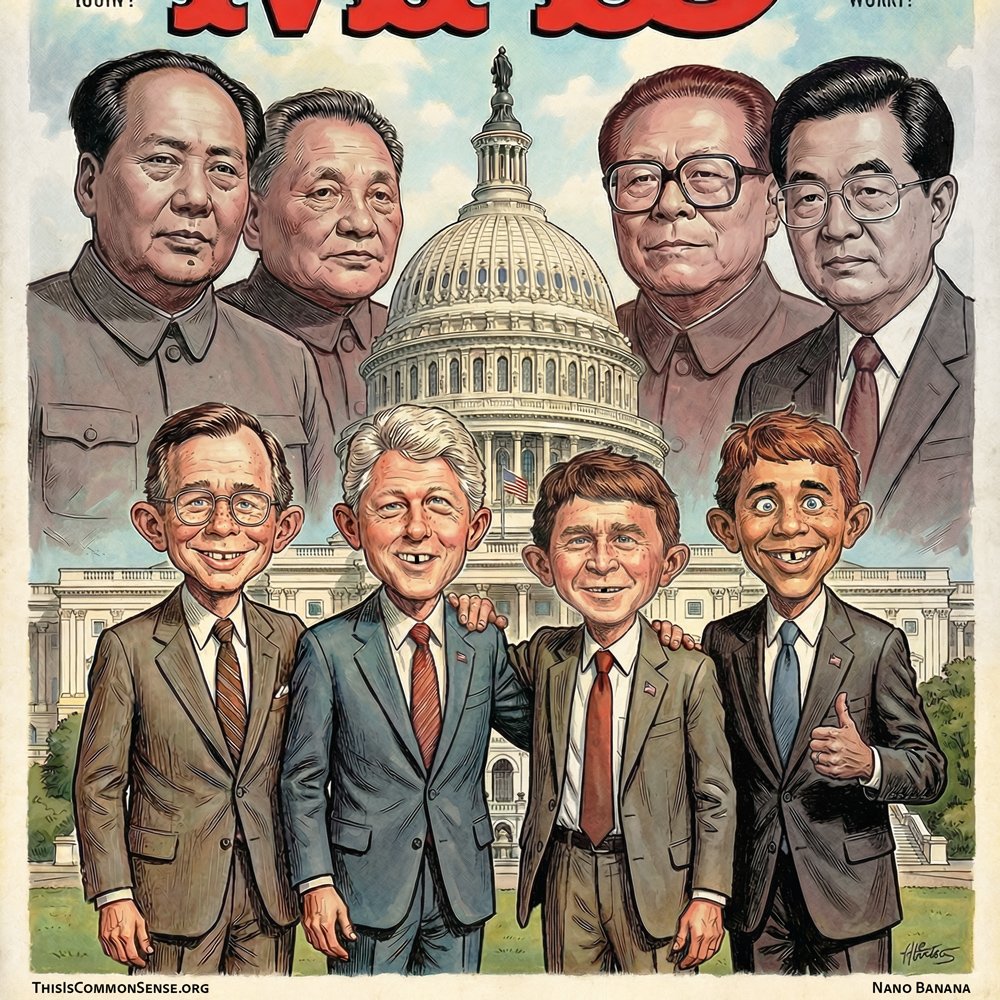
Had presidents George H.W. Bush, Bill Clinton, George W. Bush, and Barack Obama been awake and competent, and not lapdogs for Beijing, I wonder what they would have called it.
This is Common Sense. I’m Paul Jacob.
Illustration created with Nano Banana
See all recent commentary
(simplified and organized)
See recent popular posts

When the Truth deigns to come, her sister Liberty will not be far.
Thomas Paine, The Rights of Man (1795).

On March 31, 1717, a sermon on “The Nature of the Kingdom of Christ,” by Benjamin Hoadly, the Bishop of Bangor, provoked the Bangorian Controversy.
The sermon’s text was John 18:36, “My kingdom is not of this world,” and from that Hoadly deduced — supposedly at the request of King George I himself, who was present in the assembly — that there was no Biblical justification for any church government. Hoadly identified the church with the kingdom of Heaven, noting that Christ had not delegated His authority to any representative.
King George’s preference for the Whig Party, and for latitudinarianism in ecclesiastical policy, is widely thought to have been a strategic maneuver to degrade church power in political government.

The ruling holds that a service provider “is contributorily liable for a user’s infringement only if it intended that the provided service be used for infringement. . . .”
The plaintiff? Sony.
The defendant? Cox Communications.
According to the ruling, Sony “alleged that Cox contributed to its users’ infringement by continuing to provide Internet service to subscribers whose IP addresses Cox knew were associated with infringement.”
Of course, Cox cannot “know” that a user had infringed some copyright merely because it got an automated notice that a user had done so. Cox is just an Internet service provider, not a judge, jury, or hander-out of penalties for unestablished crimes.
Had the high court ruled otherwise, the consequences would have been dire.
“Under the legal standard the labels wanted,” Reclaim the Net observes, “an ISP that received enough of these automated complaints and didn’t disconnect the account could face catastrophic financial liability. A Virginia jury bought that theory in 2019 and hit Cox with a verdict of over $1 billion.”
The decision bodes well for rulings on other attempts to transform ISPs — or PC operating systems, satellites, or any other gateway to modern life — into instant wielders of crippling punishment . . . no trial, no judgment, no justice allowed.
This is Common Sense. I’m Paul Jacob.
Illustration created with Nano Banana
See all recent commentary
(simplified and organized)
See recent popular posts
Si 50 millions de personnes disent une bêtise, c’est quand même une bêtise.
If fifty million people say a foolish thing, it is still a foolish thing.
Anatole France, as quoted in Listening and Speaking : A Guide to Effective Oral Communication (1954) by Ralph G. Nichols and Thomas R. Lewis, p. 74.


Veronique de Rugy, at Reason, asks a good question: who will pay for the war? Or, how will it be paid for?
The Pentagon has requested $200 billion to fund the campaign. While circumstances could change the price tag, interest payments on that much debt would add $87 billion over 10 years. So that’s roughly $300 billion.
Defense Secretary Pete Hegseth, asked about this number, offered a memorable contribution to the fiscal debate: “Obviously, it takes money to kill bad guys.” That’s true. It’s also true that the money must come from somewhere.
Veronique de Rugy, “How Will Congress Fund a $300 Billion War With Iran?,” Reason (March 26, 2026).
De Rugy mentions two obvious tax-and-spend choices, a supplemental appropriations bill and a budget reconciliation bill. But she goes on to make an interesting point:
Congress used to offset its emergency spending. It doesn’t anymore. Research by Dominik Lett at the Cato Institute shows that since 1991, Congress has passed $12.5 trillion in emergency spending for wars, disasters, pandemics, financial crises, and in some cases things that were emergencies in name only, like $450 million for space exploration. Almost none of it was offset. If you add $2.5 trillion in interest to the spending, the total amounts to one-third of today’s debt.
Which brings to mind a recurring theme at ThisIsCommonSense.org: the federal debt. So here is a current update on the general government’s most obvious but least talked-about (elsewhere) problem:
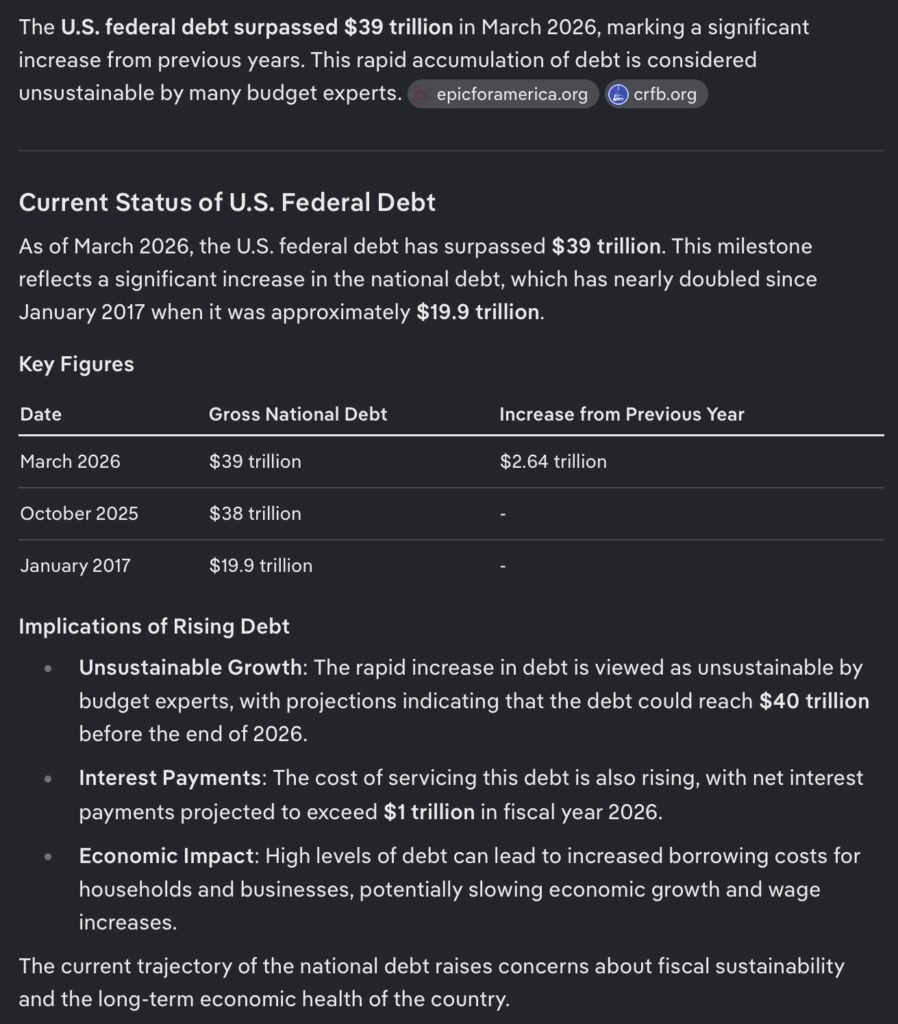
Note that, as reported here in November, the Congressional Budget Office had predicted hitting the $39 trillion level of debt some time after mid-year. Hey, we are ahead of schedule! Let’s celebrate?
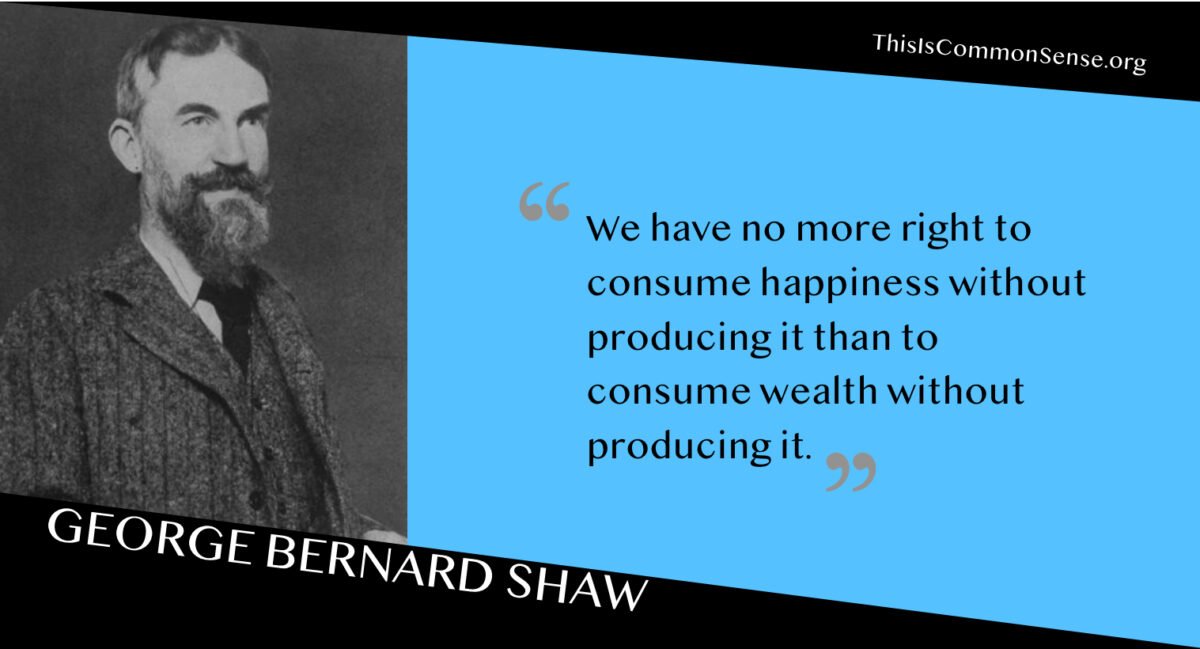
We have no more right to consume happiness without producing it than to consume wealth without producing it.
George Bernard Shaw, Candida (1894).