Categories
crime and punishment general freedom ideological culture

Planned Parenthood

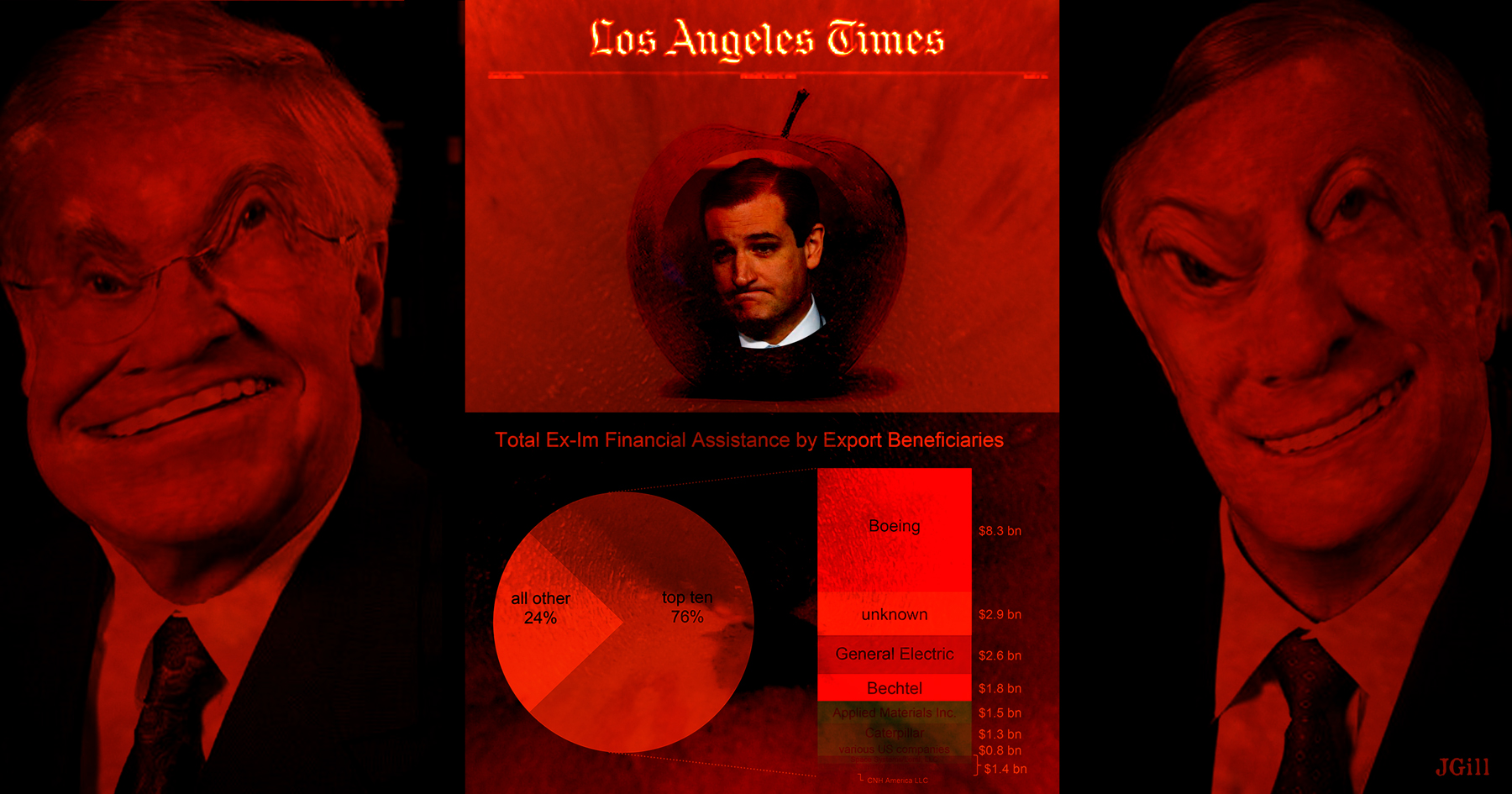
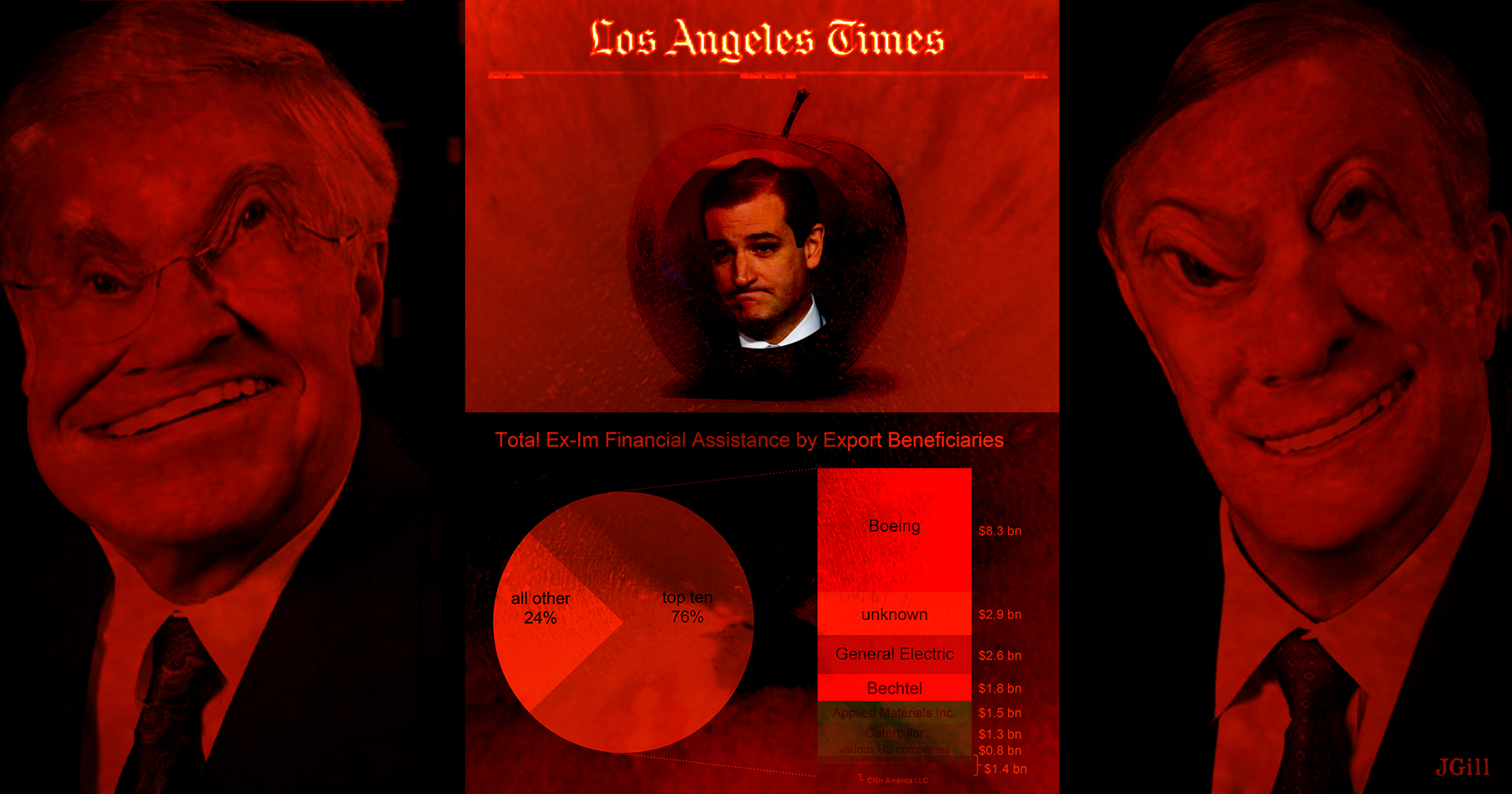
Planned Parenthood — Baby parts matter


Baby parts matter

Click this image for larger version


Categories
Common Sense general freedom national politics & policies too much government

Forget Frankenstein

Some proposals are so shocking and not common that, no matter how rational or sensible, we cannot legitimately call them “common sense.”

Could this be one?

You tell me.

Congress is right now struggling to pass a highway funding bill. Authorized funding by the federal government on roads ends with the passing of this month, July. So, blogs Scott Shackford at Reason, “the legislature has to pass something. Because the legislature has to pass something, people are trying to squeeze everything into it.”

And our illustrious president wants to revive the recently dead, the Export-Import Bank. “When he was a senator, Barack Obama knew the program was nothing but corporate welfare,” writes Shackford. “But now as president, he has flip-flopped and is trying to keep the institution alive.”

I don’t know if the prez will ultimately succeed, cajoling Congress to revive the monster by stuffing it into the roads bill, but at least “Sen. Marco Rubio has introduced an amendment to the highway bill that would kill the bank and unload its assets to the treasury.”

Go, Rubio! Getting rid of the Ex-Im Bank is just anti-crony common sense.

So what’s the “uncommon” sense? This out-of-the-mainstream notion: We don’t need a federal transportation bill at all. It’s not as if states cannot secure funding for roads. (They already do.) Devolve the whole Interstate system back onto the states!

Radical? Maybe. But the federal government just spends and spends without much sense. Distribute the responsibility for roads to the states; let Congress figure out how to manage its remaining tasks.

For a change.

I think this is . . . Common Sense. I’m Paul Jacob.


Printable PDF

Import Export


Categories
Common Sense folly free trade & free markets general freedom national politics & policies too much government

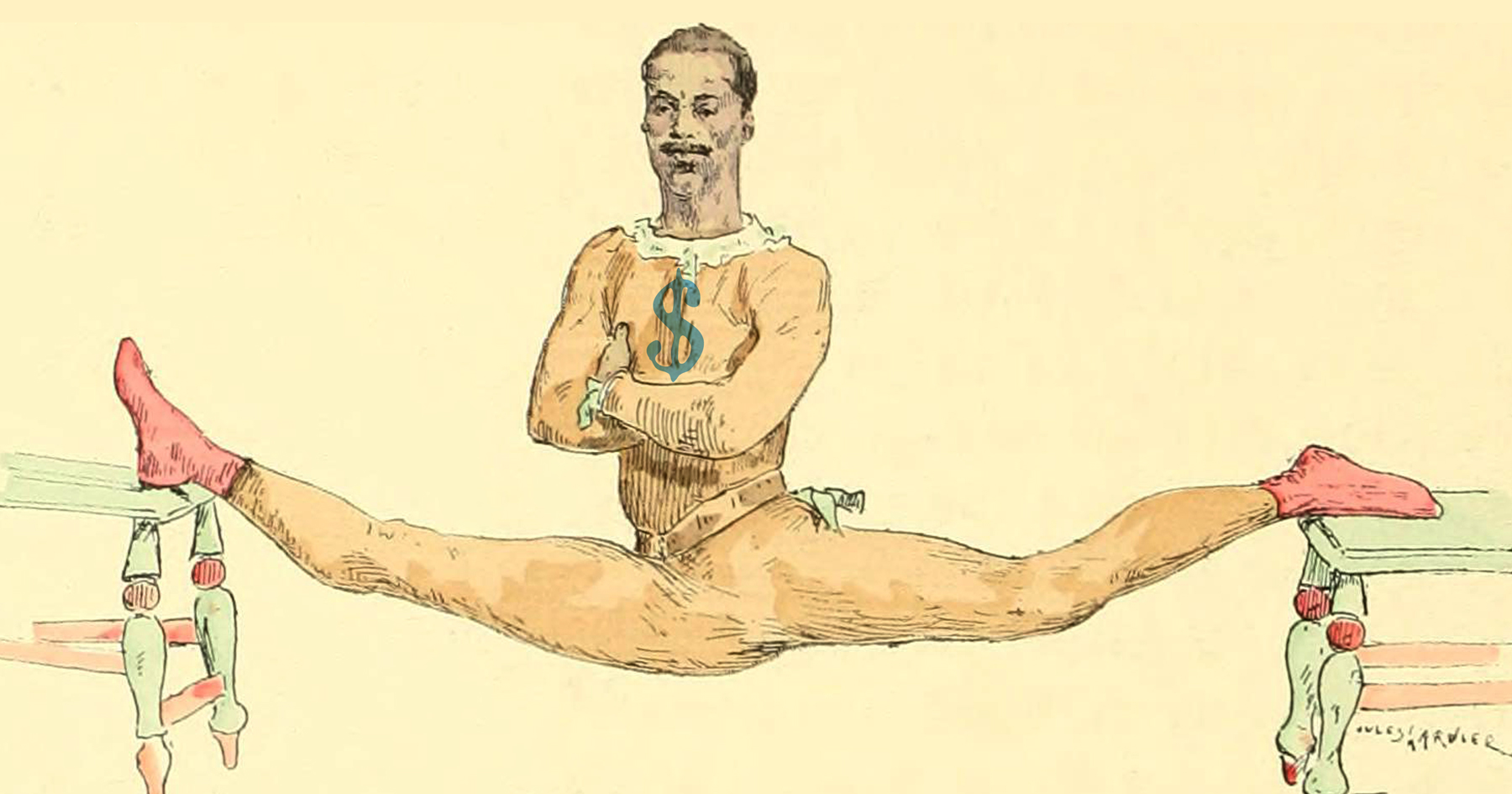
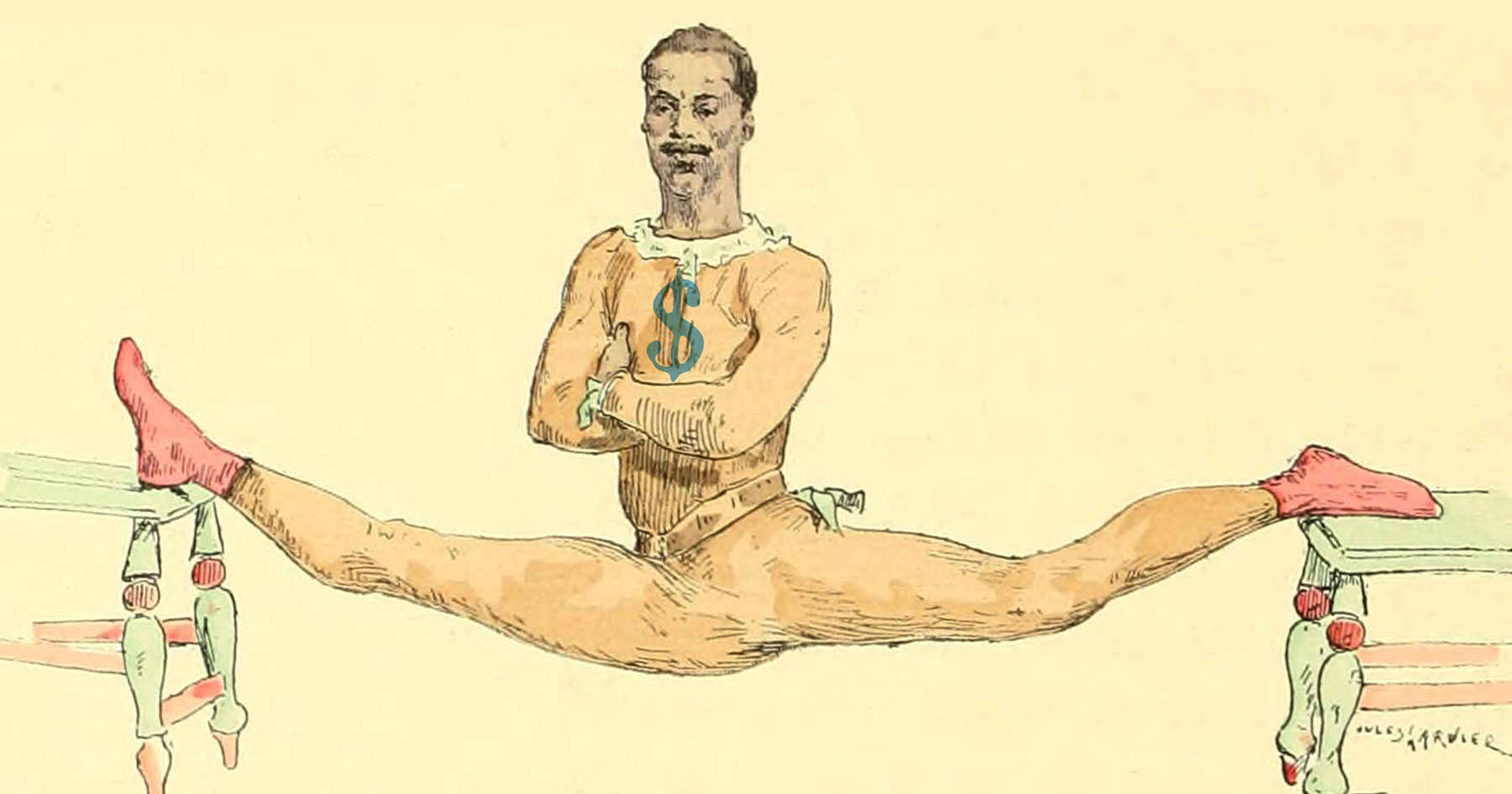
Fifteen or Fifty or Zero?

Washington Post columnist Catherine Rampell just stumbled into a truth. Raising minimum wages could be disastrous. Depending on the rate.

While “Bernie Sanders, Martin O’Malley and a host of other well-intentioned liberals want to hike the federal minimum wage to $15 an hour,” she calls the proposal “badly misguided.”

And yet she says that the current federal wage floor, at “just $7.25 an hour . . . is absurdly low.”

Why, this Friday, she notes, marks six years since the last minimum wage hike!

Rampell recognizes that raising the minimum wage to $50/hour would cause unemployment, massively. She also realizes that, in many low-wage states, the mere $15 rate would do the same. But raising “the federal minimum wage to $10.10”? Might work! “This is a trade-off . . .”

Yes. Stop right there. Trade-offs, indeed.

She wants us to think about getting the rates right.

Employers and job-seekers do that already, in the marketplace. If businesses don’t pay enough, the workers will move on to employers who will. Force businesses to hire workers for more than their productivity? Unemployment results.

A minimum wage rate helps some and hurts others. Rampell admits that, appearing to “accept” 500,000 people losing their jobs as collateral damage to boost wages for others.

Her proposed fine-tuning of rates supposes that politicians have greater knowledge about the “proper” price of labor than employers and job-seekers. Moreover, she ignores the inevitable political game, whereby politicians take credit for rewarding some, while hiding the costs imposed on others.

Finding the “right minimum wage” rate is mainly about hiding the victims . . . so voters won’t notice.

This is Common Sense. I’m Paul Jacob.


Printable PDF

Finding the Right Balance


Categories
crime and punishment general freedom ideological culture national politics & policies

Robert Reich Makes Common Cause With Police State

Common Cause says its job is “Holding Power Accountable.” Robert Reich is the pre-eminent “people’s progressive” propagandist of our time, promoting himself as on the side of underdogs and against corporate power structures.

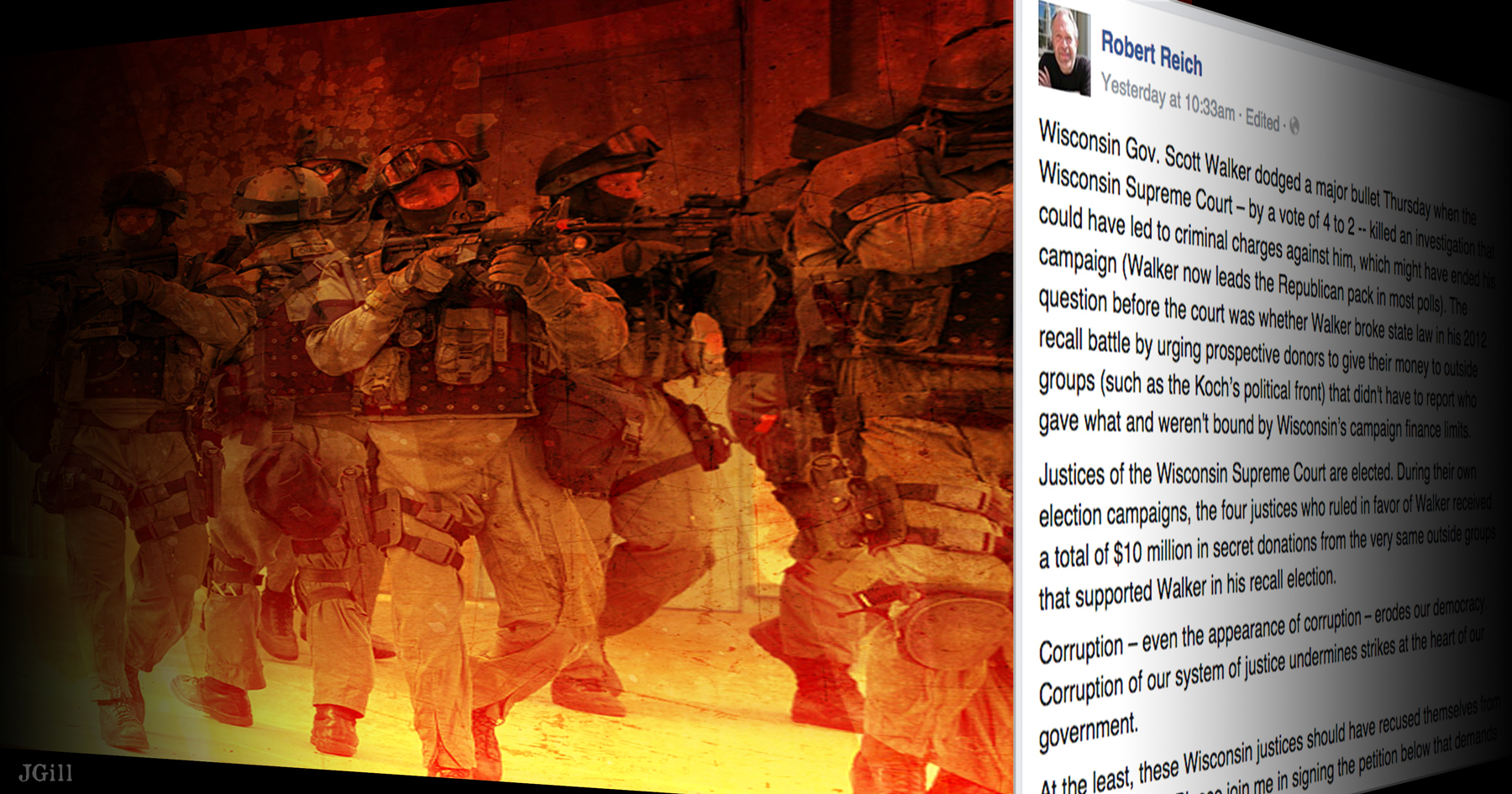
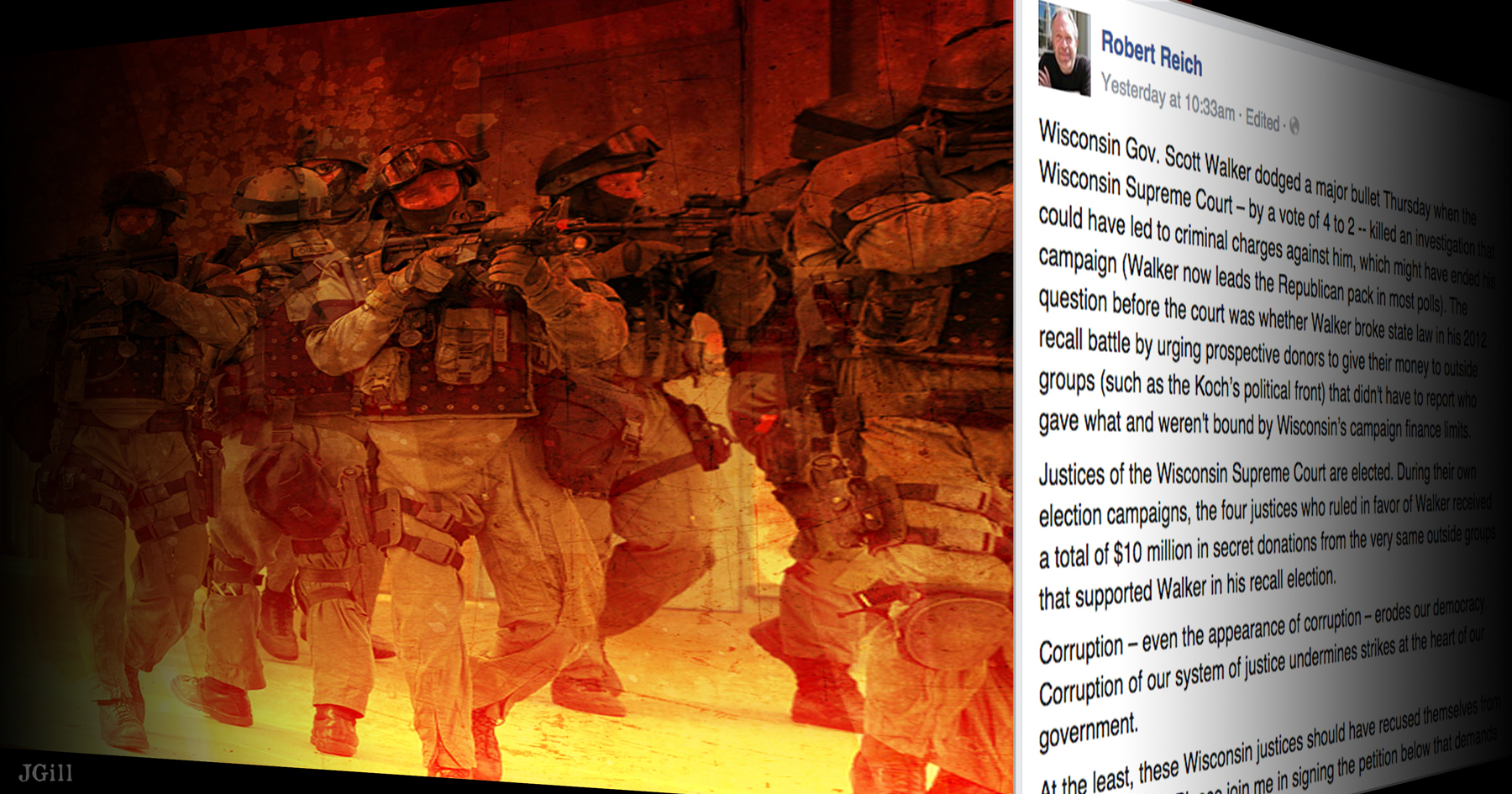
After the Wisconsin John Doe probe was judicially squelched, last week, Reich promoted Common Causes’s official reaction, insisting that “Corruption — even the appearance of corruption — erodes our democracy. Corruption of our system of justice undermines strikes at the heart of our government.”

This is the Common Cause take:

The Wisconsin Supreme Court recently ended the investigation of possible illegal activity between Scott Walker’s 2011-2012 recall campaign and outside special interest groups.

Four of the justices of the court were the beneficiaries of dark money spent in their behalf and which was the heart of this case. They should have recused themselves and did not.

Robert Reich enthusiastically reiterated Common Cause’s demand for adoption and practice of strict judicial “recusal rules.”

Hmmm. No mention that a federal judge had also ordered the investigation shut down, but that ruling was stayed awaiting state court resolution.

No mention, by either Reich or Common Cause, of the methods the prosecutors used in this case, the gag rules and secrecy, the official attempt to squelch public discussion.

Also no mention of the pre-dawn raids, complete with SWAT teams, barking dogs, and pointed guns, as if the political activists (targeted for unsubstantiated campaign finance rule breaches) were violent drug dealers or terrorists.

The lack of mention of those tactics suggests not merely a lack of interest in the real rule-of-law questions, but also an acceptance of those tactics . . . when applied to political enemies.

That is worse than mere corruption.

This is Common Sense. I’m Paul Jacob.

Printable PDF

Police State Apologist


Categories
Accountability term limits

A New Tammany?

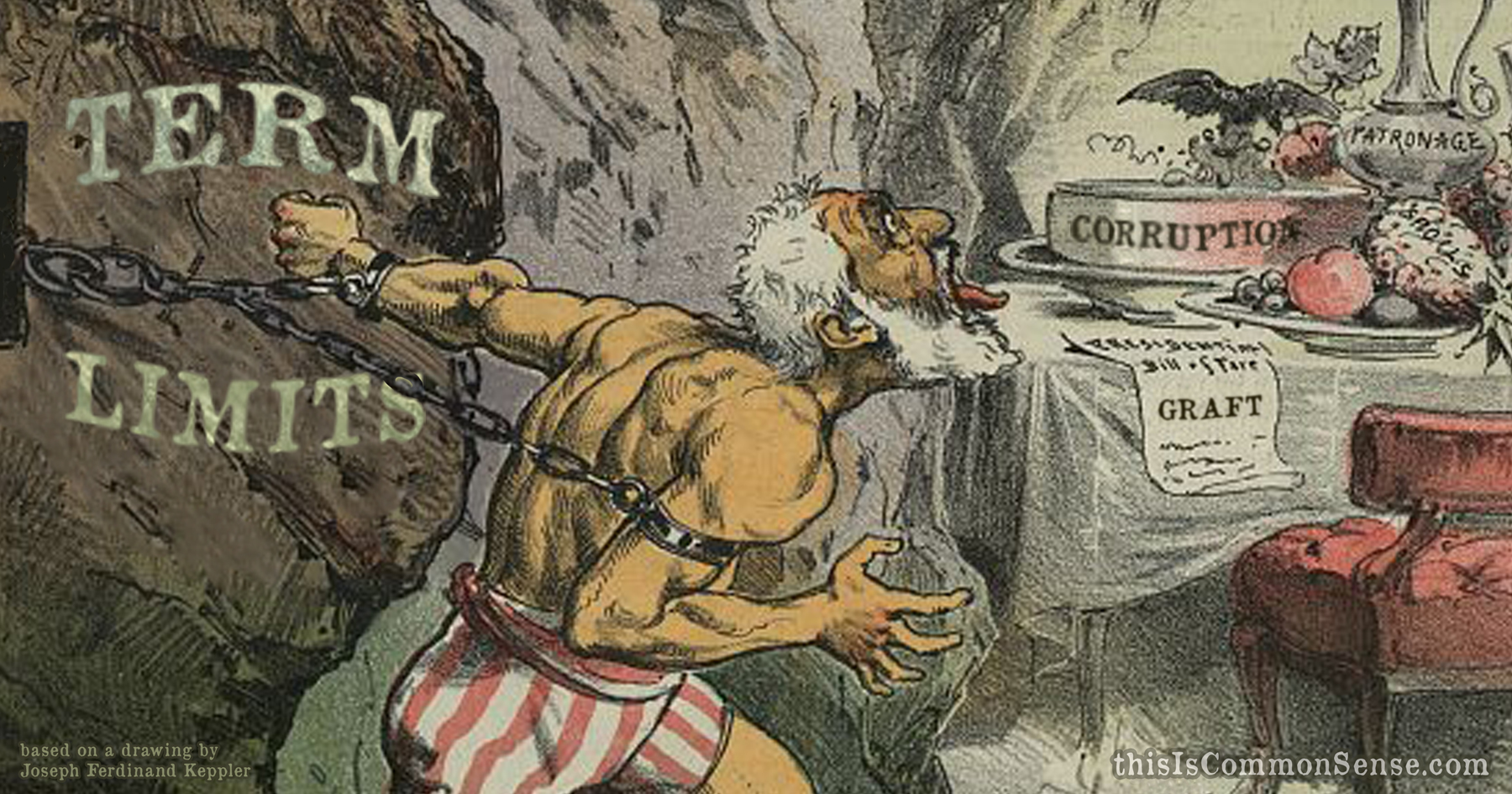
“We’ve been there and done that and voted not to do it,” St. Tammany Parish Council Chairman Richard Tanner explained last week. “I don’t know why we’d do it again.”

There’s a lot Tanner doesn’t know.

Like that his job is representing the people. You see, Tanner wasn’t one of the three members of the 14-member council who favored a public vote on enacting term limits.

“What are the other 11 worried will happen?” asked a New Orleans Times-Picayune editorial. “They must be afraid that voters will like the idea. What reason other than self-preservation could they have for refusing to even put the question on the ballot?”

According to a 2014 poll commissioned by Concerned Citizens of St. Tammany, a group that has long urged the council to put a term limits measure on the ballot, just a mere 92 percent of residents favor term limits.

The Home Rule Charter Committee and the St. Tammany West Chamber of Commerce have also implored the parish council to permit a democratic vote.

“Our members believe firmly that voters should be allowed their constitutional right to vote on this issue, rather than have this right outright denied,” read the Chamber’s resolution.

The old Tammany Hall political machine that once ruled New York City was corrupt. Criminally so. No one has suggested criminal wrongdoing by the gang running St. Tammany Parish.

No, theirs is an intellectual corruption, an embracing of power and self-interest and a rejection of republican and democratic principles.

Either form of corruption makes a strong case for term limits.

This is Common Sense. I’m Paul Jacob.

Printable PDF

Louisiana Term Limits


Categories
crime and punishment general freedom too much government

Why Police-State Tactics?

What do the War on Drugs, the War on Terror, and campaign finance law have in common?

Police-state tactics.

Most folks now understand how the War on Drugs and the War on Terror can erode civil liberties — but how does campaign finance law fit in with the other two?

My weekend Townhall column explains.

Several years ago, Wisconsin’s Republican Governor Scott Walker sought to tame public unions in his state, and against much opposition — quite a bit of it national — not only succeeded in changing law but beat back a recall vote as well.

So Democratic Milwaukee County District Attorney John Chisholm orchestrated a crack-down on conservative groups supportive of Walker’s reforms, complete with night-time SWAT-team raids on the homes of activists who were, they judged, “on the wrong side.”

The thin rationale was possible campaign finance violations, the idea that citizens and their organizations “coordinating” with the governor to advocate for public policies is somehow illegal.

The police state tactics were used because they were available. And obviously thought to be politically acceptable. That the courts have now ruled the means — indeed, the whole probe by prosecutors — unconstitutional doesn’t negate the terrifying fact that the state used such horrific methods to attack peaceful people.

Clearly, people in government have used understandable fears regarding drugs and terrorism to erode our liberties, even when the “crimes” they fight with such illiberal overkill have nothing — absolutely nothing — to do with drugs or terror.

Except the drug that is — and the terror wielded by — out-of-control government.

This is Common Sense. I’m Paul Jacob.


Printable PDF

Law Corrupted


Categories
Common Sense general freedom ideological culture national politics & policies too much government

C Is For Curmudgeon

Every writer can count among his loyal readers at least one curmudgeon. I have several. Today we consider the criticism of one special curmudgeon.

Let’s call him “Mr. C.”

Mr. C. agrees with my last several invokings of Common Sense. But he wonders, “Sure the [insert expletive here] of Republican presidential candidates are annoying, but never forget: the best Democratic candidate is worse than the worst Republican candidate.”

Mr. C. doesn’t mind ridiculing Trump, or questioning the savvy of Santorum. But, he tells me, “the very existence of a self-professed ‘socialist’ on the Democratic side suggests just how bad things have gotten.”

I don’t disagree. But should I agree with Mr. C. when he insists that “to call oneself a ‘socialist’ at this point in time is worse than calling oneself a ‘Ku Kluxer’”?

Further, Mr. C. informs me, it’s not just the candidate whose initials are “B.S.” who says outrageously commie, er, socialistic things.

“Hillary C.,” he insists, “trumps both Elizabeth Warren [who isn’t running] and B.S. with a whole wheelbarrow load of b.s. She just came out for ‘encouraging’ profit sharing by a business with its workers.”

What could be wrong with that?

Mr. C. has an answer: “All sorts of businesses engage in employee profit-sharing, aiming to encourage the proverbial ‘skin in the game.’ But forcing this is bad for many reasons.”

Again I agree. Mrs. Clinton’s proposal is just a sneaky way to play Robin Hood, without addressing the real issue behind all other issues, a lagging, red-tape bound economy.

Or, as was told to another Mr. C. years ago, “It’s the Economy, Stupid.”

This is Common Sense. I’m Paul Jacob.


Printable PDF

Curmudgeon


Categories
government transparency initiative, referendum, and recall

Temporal Redistricting

They must be proud of themselves, the Little Rock insiders who pushed through a vote on a bond measure in hot-as-Hades mid-July.

Less than 4 percent of eligible voters turned out for the off-cycle exercise in 100-degree democracy. The measure, which refinances previous library bonds and puts an influx of cash into Little Rock public library branches, passed with over four-fifths of the minuscule turnout.

Now, as bond measures go, this one sure seems like a dream; its advocates say it will reduce, not increase, taxes.

But that July 14 vote!

“There was no organized opposition to the bond refinancing campaign,” we read, courtesy of the Arkansas Democrat-Gazette. “Still, Pulaski County Election Commission Executive Director Bryan Poe expected a higher voter turnout.” He thought they would get at least 6,000 voters. Still, even that many votes would have amounted to less than 5 percent of the over 126,000 registered city voters.

It certainly wasn’t any surprise, then, that turnout would be tiny and democratic decision-making left to a tiny fraction of the public.

Detect a certain odor?

It stinks of redistricting. When politicians redistrict voters so that predictable partisan outcomes can be reached — somehow to the benefit of those doing the redistricting — the insiders are not really trying to provide representation to voters. They are trying to continue their business as usual.

“Insiders know best”?

By selecting a summer date for the vote, insiders in effect redistrict the voters using time as the gerrymandering boundary. Call it temporal redistricting, advantaging those with the most at stake in the vote’s outcome.

Call it democracy for the 1 (or 3½) percent.

This is Common Sense. I’m Paul Jacob.

Printable PDF

Sneaky Democracy


Categories
Accountability folly national politics & policies responsibility

Failing in the Future Biz

If you can’t sell us the future, you’re doing it wrong. We all want to get there in one piece.

Right now, a horde of Republican presidential candidates and a small cohort of Democrats vie to present themselves as visionaries, leaders.

Yet, what they all have in common is that they ignore the most serious issue facing us. Bigger than borders and terror and ISIS and gay marriage and all that, is the financial stability of the United States. Our future is in peril because of the continual Washington stalemate of never-ending deficit spending and continual debt growth — total debt being around $100 trillion.

The reason for this enormity? Politicians like to promise things, lots of things, very expensive things like wars and entitlements, to win our votes. But these same promiscuous over-promisers have more than a little difficulty agreeing on the taxes that would pay for all those “things.”

Why the difficulty? Because Americans already pay plenty in taxes and very few of us non-Omaha-based non-billionaires care to fork over even more of our hard-earned pay to a wasteful leviathan.

Any respectable vision of the future must acknowledge the current predicament, and provide a way out — before it’s too late, like it may very well already be . . . for Greece.

Wanting something for nothing isn’t Greek to any of us, unfortunately. That’s why we need leaders with the honesty and courage to present a vision more real than government providing ever more goodies on credit ad infinitum.

Credit just doesn’t add up, infinitely. The more you rack up debt, the more finite your future.

This is Common Sense. I’m Paul Jacob.

Printable PDF

Future Fail


Categories
term limits

Universal Bull

“We have term limits, they’re called elections.”

So goes one argument, famously paraphrased by President Robert Mugabe of Zimbabwe for an African Union summit: “It is a democracy. If people want a leader to continue, let him continue.”

“All over the world,” Owen Bennett-Jones writes at BBC.com, “leaders…are reluctant to give up power.” He points to a number of cases, mainly in nations struggling for democratic stability:

  • “The most striking current example,” according to Bennett-Jones, “is Burundi’s President Pierre Nkurunziza who, amidst violent opposition, is campaigning for a third term in office despite the constitution saying he can only have two.” The president’s spokesman acknowledged, “ Nkurunziza indeed believes he is president by divine will.”
  • In Burkina Faso, thousands clogged the streets after the 27-year presidential incumbent, Blaise Compaore, schemed to evade a constitutional term limit on his office. But facing unrelenting pressure, Compaore soon stepped down.
  • Speaking about his campaign to have the parliament eliminate term limits so he can run for re-election, Ecuador’s socialist President Rafael Correa told reporters, “The easiest thing would be for me to retire in 2017 as one of the best presidents in our history, as the people refer to me.” Correa’s decision to reluctantly remain in power has sparked protests across the country.

It is easy to recognize the sad abuse of power by these “third world” strongmen. Yet, we are continually fighting politicians in “first world” America.

When will politicians ever learn?

When the people are organized enough to assert power over those politicians . . . in Ecuador . . . Burundi . . . and the good ol’ US of A.

This is Common Sense. I’m Paul Jacob.


Printable PDF

Term Limits