Categories
Accountability crime and punishment folly general freedom media and media people moral hazard nannyism responsibility too much government

Another Push for Censorship

It’s almost as if politicians are hell-bent on expanding government at the expense of our freedoms . . . and grandstanding to ‘look like they are doing something.’

The two proclivities are not unrelated.

Take Theresa May, Great Britain’s Tory Prime Minister. After yet another terrorist attack in her country, this time on the London Bridge, she re-iterated her party’s intent to censor the Internet.

“We cannot allow this ideology the safe space it needs to breed,” May said on Sunday. But this “safe space,” she went on, “is precisely what the Internet, and the big companies that provide Internet-based services, provide.”

Now, blaming ISPs and social platforms is a crude form of business scapegoating—something I would expect from her opponent in the upcoming elections, Jeremy Corbyn, the much-loathed (but inching ahead in the polls) top banana of Labour.

As a conservative, May should understand markets and the limitations of government interventionism a bit better than a near–communist. She might recall that previous attempts to regulate the means of communication almost never to work, and, in those few cases when they do, never stay scaled to the original target issue.

They expand. To cover more than just terrorism, as in this case.

What’s more, Jim Killock of the Open Rights Group makes the case that such a move would likely “push these vile networks into even darker corners of the web, where they will be even harder to observe” — scuttling the alleged purpose of the Conservative Party’s longed-for censorship.

May knows this. But she is a politician. She has power, and she wants to keep it.

It’s almost as if power corrupts or something.

This is Common Sense. I’m Paul Jacob.


Printable PDF


Categories
general freedom initiative, referendum, and recall local leaders nannyism political challengers Regulating Protest

Delivering a Double Standard

Former State Representative Matt Lynch got right to the point in his Cleveland Plain Dealer op-ed: “The people’s right to amend the Ohio Constitution through the ballot initiative is under attack.”

Created by the Ohio Legislature to consider constitutional amendments, the Ohio Constitutional Modernization Commission (OCMC) has a hidden purpose: provide cover for that same legislative body. As Lynch aptly notes, the OCMC “is filled with politicians and lobbyists. Thus, commission recommendations must be scrutinized for fidelity to the public good versus the special interests of political insiders.”

This Thursday at the capitol in Columbus, OCMC will consider whether to recommend that state legislators propose an amendment to the state constitution to make future amendments more difficult. That’s an awfully bad idea in itself. But, bizarrely, the greater difficulty would depend entirely on who proposes the amendment.

The working OCMC recommendation makes no change to the legislature’s ability to propose and pass constitutional amendments. What it would do is make it tougher for citizen-initiated amendments. Most unhelpfully, the recommendation would require only citizen-proposed amendments to garner a supermajority of 55 percent of the vote.

Consequence? Suppose a measure proposed by citizens — term limits, ethics reform, government transparency — was massively outspent by powerful interests, and yet still won 54.9 percent of the vote. It would lose.

Yes, the 45.1 percent of voters would defeat the 54.9 percent of voters.

Call it “New Math.”

The very same issue proposed by legislators would win . . . and be added to the state constitution.

“The double standards are breathtaking,” writes Lynch,* adding, “and no other state has such unfair rules.”

This is Common Sense. I’m Paul Jacob.

 

* Sunday at Townhall, I also discussed this double standard. And the word may be getting out. Townhall always adorns my column with a photograph — this time featuring Ohio Attorney General Mike DeWine, also a Republican candidate for governor in 2018. DeWine’s campaign objected to being pictured, arguing they have no involvement with the OCMC. DeWine’s picture has been removed.


Printable PDF


Categories
general freedom moral hazard nannyism responsibility too much government

The $659,000 Non-Question

The so-called “Motor Voter” law of 1993 created a national mandate: when people obtain their drivers’ licenses at the Department of Motor Vehicles, ask them if they’d also like to register to vote.

The federal mandate is perhaps heavy-handed, but the underlying idea has merit.

Now a new idea is gaining ground, taking the notion (nudge, nudge) a step further. Let’s not bother asking people if they want to sign up to vote, the proposal runs. Government should simply register them. Without asking.

It is a form of paternalism.

“It flips the presumption, where right now they ask you if want to be registered,” argues D.C. Council member Charles Allen. “Instead of that, we’re just going to go ahead and get you registered, and that absolutely helps enfranchise voters.”

“Lawmakers in 32 states have introduced measures in the last year to automatically register drivers to vote,” reports the Washington Post.

Some folks contend there isn’t much difference between asking if someone wants to register and registering them without asking. Well, if there isn’t much difference, why spend the $659,000 that Washington, D.C. officials estimate it will cost over the next four years for their new “don’t-ask” program.

Of course, there is a difference in the two policies: sort of like between offering people something to eat and force-feeding them.

Some Americans have no desire to vote or be registered. It is surely no business of any state or local government to act as if their preferences don’t count.

And what good are a bunch of names on a voter list if they aren’t interested? Is someone going to vote for them?

This is Common Sense. I’m Paul Jacob.


Printable PDF


Categories
Accountability First Amendment rights incumbents local leaders Regulating Protest U.S. Constitution

Homer’s Recall Odyssey

Freedom of speech isn’t a free pass to avoid the consequences of what one says. Or does. Tell that to three members of the Homer, Alaska, city council — Donna Aderhold, David Lewis and Catriona Reynolds — who are the subject of a recall petition.

Well, a superior court judge just did.

Represented by the ACLU, the trio sued to block a recall petition with more than enough voter signatures. Their lawsuit challenged the city attorney’s acceptance of the legal rationale for the recall, claiming the recall attempt punishes the politicians for their speech.

“To conclude that anytime a recall petition is based in part or in whole on what a politician said is protected by the First Amendment,” Superior Court Judge Erin Marston ruled, “would be to eviscerate the recall statute to such an extent that the populace would almost never be able to seek recall of any of their elected officials.”

Now the recall moves forward.

In most of this Land of the Free, citizens lack the ability to recall their elected officials. In places that do have the process, it is rarely used. When it is used, it is often portrayed as voters throwing a temper tantrum.

Or an unfair election do-over.

Or mean-spirited ‘vendetta politics.’

Not so. The petition requirements make recalls very difficult. Recalls don’t happen without some serious problems with the current officeholder(s). And once a recall is triggered, there follows a democratic vote to decide whether citizens want to keep the sitting hireling or find someone new.

Seems pretty reasonable.

When politicians are recalled and removed, they deserve it.*

This is Common Sense. I’m Paul Jacob.

 

* The problem seems never to be that good politicians are being recalled, but that too many politicians who should be recalled are not. Back in 2003, the governor of California was recalled. He deserved it. In 2011, a whopping 88 percent of Miami-Dade County voted to recall Mayor Carlos Alvarez. He earned it, too.


Printable PDF


Categories
Accountability education and schooling folly general freedom ideological culture moral hazard nannyism responsibility

Quanta of Nonsense

Last month, two academics wrote a hoax paper. Their preferred journal didn’t accept it, but did suggest an alternative publication. They sent the paper to the recommended outlet, and it was published.

The paper? “The conceptual penis as a social construct.” The Skeptic provided an overview; Professor Gad Saad chortled over its sheer genius. Though a brilliant parody, as a send-up of postmodern academic insanity it fell a tad flat: it was merely published online, and probably not peer-reviewed.

But before you could say “Western civilization is in the toilet and circling the drain,” an equally idiotic paper came to light, published in The Minnesota Review, and apparently offered in earnest by an academic working in “women’s and gender studies.” Entitled “Assembled Bodies: Reconfiguring Quantum Identities,” the abstract (worth reading in full*) does not mention truth, predictive power, or evidence to advance knowledge of physics. Instead, it pushes the “combining” of “intersectionality and quantum physics” to “provide for differing perspectives on organizing practices long used by marginalized people,” etcetera. Basically, the problem of physics is not that it is hard, but that it is “oppressive.”

Meanwhile, historian Tom Woods** discovered a University of Hawaii math teacher who admits to not finding math interesting. She blogged her confession about wanting white cis-male mathematicians to quit their jobs “or at least take a demotion” and — if in a “position of power” — resign.

None of this is about the advancement of learning. What we see here is

  1. a new racism — from non-whites directed against white people — and
  2. a new sexism — from women and others who are not heterosexual males directed against, you guessed it, heterosexual males

. . . all packaged in cryptic, pretentious, prolix nonsense.

This is Common Sense. I’m Paul Jacob.

 

* I found it quoted on the Powerline blog: “In this semimanifesto, I approach how understandings of quantum physics and cyborgian bodies can (or always already do) ally with feminist anti-oppression practices long in use. The idea of the body (whether biological, social, or of work) is not stagnant, and new materialist feminisms help to recognize how multiple phenomena work together to behave in what can become legible at any given moment as a body. By utilizing the materiality of conceptions about connectivity often thought to be merely theoretical, by taking a critical look at the noncentralized and multiple movements of quantum physics, and by dehierarchizing the necessity of linear bodies through time, it becomes possible to reconfigure structures of value, longevity, and subjectivity in ways explicitly aligned with anti-oppression practices and identity politics. Combining intersectionality and quantum physics can provide for differing perspectives on organizing practices long used by marginalized people, for enabling apparatuses that allow for new possibilities of safer spaces, and for practices of accountability.”

** In his daily email for Tuesday this week.


Printable PDF


Categories
Accountability general freedom national politics & policies responsibility

A Threat We Can’t Refuse

“Recent days have shown me that the times when we could rely completely on others are over to a certain extent,” German Chancellor Angela Merkel told folks in a Munich beer hall last Sunday. “We also know that we Europeans must really take our destiny,” she said, on the heels of the NATO and G7 meetings, “into our own hands.”

Merkel may have designed her comments to elicit shock and dismay among the inhabitants of America. But my shock is that anyone would find anything shocking, at all.*

Merkel’s responding, of course, to President Donald Trump’s censure of European NATO members for not ponying up to their treaty obligations.** This is widely whispered as . . . rude. Mustn’t upset Germany and other allies, even if only five of NATO’s 28 nations have reached the agreed-upon two-percent of GDP goal.

The received wisdom seems to be: don’t embarrass the freeloaders.

I’m often not copacetic with Mr. Trump’s demeanor. But the “threat” that U.S. soldiers might somehow not be permitted to shed their blood to defend deadbeat countries against a feared Russian attack is . . . just not all that threatening.

What’s so scary about self-reliance?

It was also announced that German security agencies won’t share intelligence with the U.S. regarding alleged Russian interference in their upcoming election.

This, too, we can survive.

But, gee whiz, I hope we aren’t banned from the cool countries’ lunch table at the cafeteria in the brand new $1.23 billion NATO headquarters — for which the U.S. pays a disproportionately high 22 percent.

This is Common Sense. I’m Paul Jacob. 

 

* In my judgment, Merkel should have jettisoned “to a certain extent” and put a period after “over.”
** It’s worth noting that Trump is not the first president to marshal this complaint.


Printable PDF


Categories
Common Sense crime and punishment ideological culture media and media people responsibility

Vinland?

Agreeing with a murderer is . . . uncomfortable. Even if the agreement is only in part.

Over the weekend, the news hit that one Jeremy Joseph Christian was in custody for a stabbing spree on one of Portland, Oregon’s MAX trains. According to reports, Christian had been yelling religious slurs at two hijab-wearing women when three men intervened in defense. Christian then stabbed the men . . . two to death.

The next day, quadrennial Green Party presidential candidate Jill Stein politicized it in the now-de rigueur point-scoring manner: “Another heartbreaking tragedy in Trump’s America, as a white nationalist shouting anti-Islam slurs murders 2 on Portland, OR subway.”*

Immediately, other Twitterers (tweeters?) rushed to point the finger back at her. It turns out (investigation courtesy of BuzzFeed) the accused’s Facebook page showed the knife-wielder as supporting first Bernie Sanders and then . . . Dr. Stein herself.

But that is just the side story. Christian appears to have a long criminal record. It seems likely that he took to white nationalism as well as free speech — he brought a baseball bat to the recent Portland free speech rally I wrote about a few weeks ago, the police say, to “attack left-wing protestors” — and even progressive politics simply to fill his personal rage quota. The fact that he saluted Nazi-style, shouted “Hail Vinland,” and called himself a “nihilist” strongly suggest that he’s mostly unhinged.

You and I support free speech; he said he supported free speech. But free speech doesn’t include stabbing people. We can all agree that Stein is off the hook.

As is President Trump.

As are we.

We, after all, don’t support murder, heiling Hitler, or . . . Vinland?

This is Common Sense. I’m Paul Jacob.

 

* Portland has no subway; MAX is an on-the-surface light rail system.


Printable PDF


Categories
Accountability crime and punishment folly local leaders media and media people national politics & policies responsibility

The Early Vote Worm

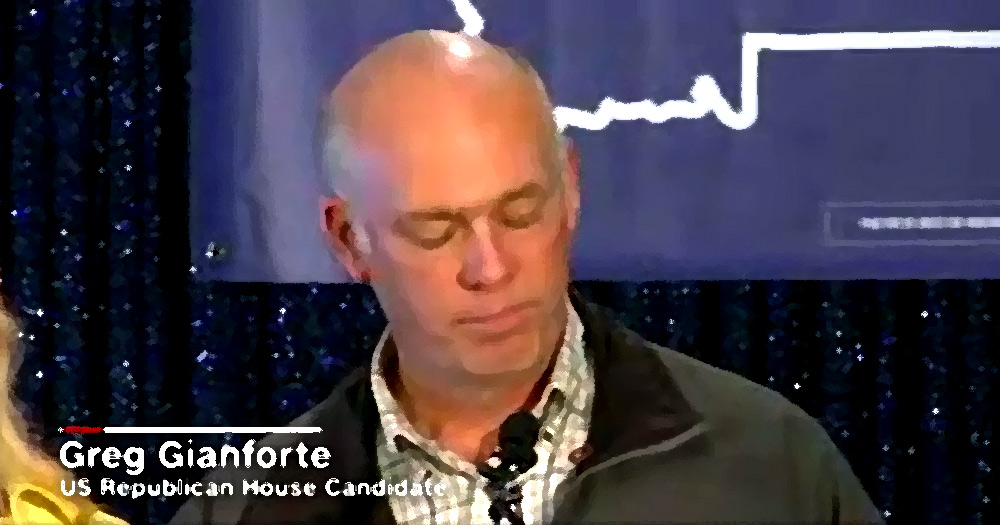
Last week was consequential for Greg Gianforte. Awfully.

The Republican businessman won the special election for Montana’s lone seat in the U.S. House of Representatives. He also body-slammed a reporter. He now faces misdemeanor assault charges.

For which Gianforte apologized publicly . . . as he was declaring victory. Welcome to modern American politics.

Democrats claimed victory, nonetheless — with media cover to boot. “Republicans’ 7-point win in last night’s Montana election is great news for Democrats,” the progressive Vox headlined their report.

At Townhall.com on Sunday, I explained why that claim misses both the forest and the trees. Yes, Trump won Montana by 20 percentage points against Hillary Clinton’s mere 35.4 percent back in November, while Gianforte won last week by only 7 points. But Trump was lucky to be opposed by a very unpopular Hillary.

Moreover, at that same election wherein Trump trounced Secretary Clinton, Gianforte lost the governor’s race to a Democrat. Indeed, Gianforte performed 11 points better last week than back in November — winning, instead of losing.

How does that show Republican support slipping?

The message from the Montana special election is that early voting periods are far too long. Montana’s early voting began nearly four weeks before Election Day. The assault by Gianforte, with criminal charges, hardly mattered, because roughly two-thirds of Montanans had already voted when it occurred.*

Rather than a nearly month-long process, whereby a candidate can bank a majority of the vote before the campaign is over, let’s make Election Day a three or five-day period. Make it easy to vote, but let’s all vote together, with the same information.  

This is Common Sense. I’m Paul Jacob.

 

* This means not only that Gianforte may have “gotten away” with his violent outburst, but that those voters did not have time to adequately appraise Gianforte on information they would have possessed and been able to act upon, with a shorter voting period.


Printable PDF


Categories
Accountability folly free trade & free markets general freedom initiative, referendum, and recall nannyism national politics & policies property rights responsibility too much government

Minimum Shock

“Three restaurants vacated the Bay this week, with Berkeley’s Bistro Liaison getting the most attention,” the San Francisco edition of Eater informs us. “It’s a bittersweet exit for the owners, who plan to start new careers.”

The week in question was in February. But this was not an isolated event. Sixty-four Bay-area restaurants and fast food joints closed their doors this last winter.

That is a lot of closures.

Why?

Every eatery has a different story, but the entry December 17* provides a big clue: minimum wage hikes.

Citizens should hardly be surprised. They got what they asked for. The minimum wage went up to $13.00 per hour last July, and will go up another two bucks next year. And this was the result of a citizen initiative. “On November 4, 2014, San Francisco voters passed Proposition J, raising the minimum wage to $15.00 by 2018,” the City Office of Labor Standards and Enforcement tells us.

And the thing about minimum wage laws is that they do not — either by magic or by law — directly raise any wages. They, by law and quite directly, prohibit wage contracts below the minimum established.

Businesses then react, struggling to accommodate the newly imposed costs. Sometimes they keep all their employees and economize on other inputs, but often they must re-arrange hours and workers and whole production schemes.

If hemmed in elsewhere, they just go out of business.

Just as one should expect, according to the law of supply and demand.**

Citizens might wish to reconsider. That is, initiate a measure to repeal a previously successful initiative . . . that gave us this unsuccessful policy.

This is Common Sense. I’m Paul Jacob.

 

* The entry reads thusly: “OAKLAND — alaMar Kitchen and Bar as you know it is shuttering on December 17, but will reopen in the new year with a fast casual format. The owner points to minimum wage raises and the cost of doing business in the Bay Area as the reasons cited for the closure/change.”

** It is often said that businesses just “raise prices” and “pass along the costs” to consumers in general, but, for reasons of supply and demand, they cannot do this without decreasing sales and thus revenue.


Printable PDF


Categories
Accountability initiative, referendum, and recall local leaders responsibility

The Maine Thing

Ranked Choice Voting (RCV) allows voters to rank electoral candidates and not “waste” their vote in cases where their most favored candidate is* unlikely to win. RCV also requires a majority for election, not merely a plurality of the vote.

Last November, Mainers passed Question 5 to begin using this voting system for statewide races, state legislative races and congressional contests. Voters in Portland, the state’s largest city, already use ranked choice voting for several city offices.

Nonetheless, Gov. Paul LePage, who has won twice for governor without ever capturing a majority, opposes RCV, as do many state legislators, also elected under a different first-past-the-post plurality system.

Because Maine’s state constitution specifically mentions plurality winners for statewide officials and state legislators (in the General Election), legislative leaders asked the Maine Supreme Court for an advisory opinion on the constitutionality of the ballot measure. Earlier this week, the court ruled that Question 5 was not constitutional when applied to those specific offices and elections.

However, the constitutionality of RCV was not challenged regarding congressional elections or primary elections for the state legislature.

Now some legislators are proposing a constitutional amendment to enact the RCV that voters supported. Others are urging that the entire law be repealed — even the parts not ruled unconstitutional. They claim the new system is too confusing if not used for every office.

But Portland city voters use RCV for some offices and not others, without confusion.

Legislators should follow the court’s decision, sure, but also respect the vote of the people for every part of the measure not addressed by the court.

This is Common Sense. I’m Paul Jacob.

 

* Ranked Choice Voting also prevents wasted votes in cases where a voter merely expects or fears (even inaccurately) that his or her favorite candidate does not have enough support to get elected.


Printable PDF


Original cc Photo by Tim Evanson on Flickr