Categories
ballot access national politics & policies

The Incumbency Fraud

“There’s nothing that shortening the period by which people can vote early does to combat any perceived fraud,” Democratic Party attorney Marc Elias said Sunday on NBC’s Meet the Press. “It’s really just a cover for what they’re really trying to do, which is to make it harder to vote.”

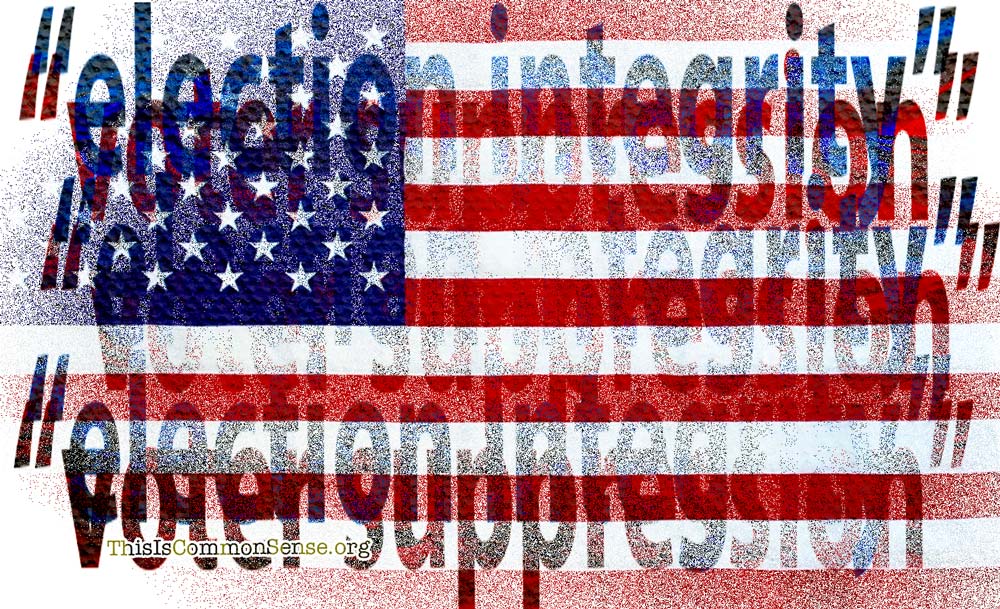
At issue is a new law courtesy of Iowa Republicans, along with numerous bills pending in other states, addressing what Republicans call “election integrity” and Democrats call “voter suppression.”

Host Chuck Todd informed viewers that a poll found two-thirds of Floridians wanted more early voting days. Not fewer.

Hardly surprising, since that’s easiest for voters. And while voting should be easy, ease is not the only consideration.

The Iowa “law shortens the early voting period to 20 days from the current 29,” the Associated Press reported, “just three years after Republicans reduced the period from 40 days.”

Here’s why I support that change, though it would be better even shorter*:

  • We should vote together. Not weeks apart. With three, four, six weeks of early voting, election day ballots can be cast with a different set of facts than those cast so many weeks earlier. 
  • The longer the time during which ballots are cast, the greater the expense in running for office. Candidates must be in touch when voters make their decisions. Since incumbents hold an average four-to-one spending advantage over challengers, more expensive campaigns give incumbents an even greater advantage.  

So, while early voting doesn’t cause fraud, by making elections more expensive it fosters what we might call “the incumbency fraud.”

This is Common Sense. I’m Paul Jacob.


* One provision in H.R. 1, which passed the U.S. House on a party-line vote, requires that states allow at least 15 days of early voting. The overall bill is terrible; plus, we are better off with the states as laboratories of democracy, rather than marionettes of Washington. But my preference would be not more than 15 days.

PDF for printing

See all recent commentary
(simplified and organized)
See recent popular posts

Categories
Thought

Alexis de Tocqueville

AFTER the general idea of virtue, I know no higher principle than that of right; or rather these two ideas are united in one. The idea of right is simply that of virtue introduced into the political world. It was the idea of right that enabled men to define anarchy and tyranny, and that taught them how to be independent without arrogance, and to obey without servility. The man who submits to violence is debased by his compliance; but when he submits to that right of authority that he acknowledges in a fellow creature, he rises in some measure above the person who gives the command.

Alexis de Tocqueville, Democracy in America, Volume 1.

Categories
by Paul Jacob video

Watch: Plague Year Progressives

This Week in Common Sense, March 13, 2021. (Also in audio-only.)

Categories
Thought

George Orwell

All the war-propaganda, all the screaming and lies and hatred, comes invariably from people who are not fighting.

Categories
Thought

President Merkin Muffley

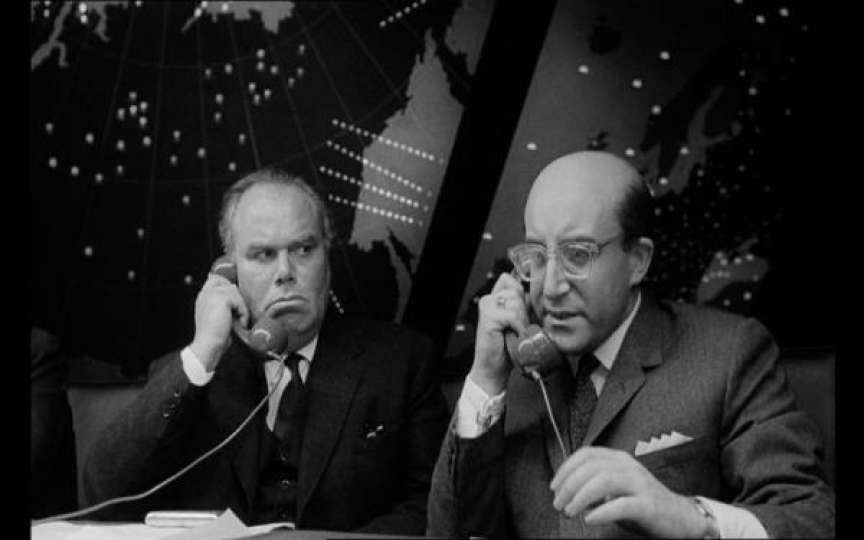
Hello? Uh, hello? Hello, Dmitri? Listen, I can’t hear too well, do you suppose you could turn the music down just a little? [pause] Oh, that’s much better. . . . Now then, Dmitri, you know how we’ve always talked about the possibility of something going wrong with the bomb. [pause] The BOMB, Dmitri! The hydrogen bomb! Well now, what happened is, uh, one of our base commanders, he had a sort of, well, he went a little funny in the head. You know. Just a little . . . funny. And uh, he went and did a silly thing. Well, I’ll tell you what he did, he ordered his planes . . . to attack your country. Well, let me finish, Dmitri. Let me finish, Dmitri. Well, listen, how do you think I feel about it? Can you imagine how I feel about it, Dmitri? . . . I’m just calling up to tell you something terrible has happened. It’s a friendly call. Of course it’s a friendly call. Listen, if it wasn’t friendly, you probably wouldn’t have even got it. They will not reach their targets for at least another hour. [pause] I’m sorry too, Dmitri. I’m very sorry. All right! You’re sorrier than I am! But I am sorry as well. I am as sorry as you are Dmitri. Don’t say that you are more sorry than I am, because I am capable of being just as sorry as you are. So we’re both sorry, all right? All right.

President Merkin Muffley, as played by Peter Sellers, speaking to the Soviet premier in Stanley Kubrick’s classic dark comedy, Dr. Strangelove or: How I Learned to Stop Worrying and Love the Bomb (1964), written by Terry Southern and Stanley Kubrick, based on the novel Red Alert (1958) by Peter George.
Categories
general freedom national politics & policies

Zero Risk!

Stop trying to create a zero-risk society.

That’s the sensible advice — indeed, the title — of a Reason think-piece by Veronique de Rugy.

Every action has costs, at the very least in opportunities forgone, and all solutions to problems are better expressed as “trade-offs,” as Thomas Sowell put it. But, specific to this historic moment, “we will suffer many tragic effects from the pandemic-induced changes long after lockdowns are lifted,” Ms. de Rugy argues. First, the lockdowns themselves were a bust, “when all costs are considered, such as the short- and long-term health, educational and psychological harms the lockdowns caused, their costs far exceed[ed] their benefits.”

One humungous tragic effect of the pandemic is what she dubs “the utterly insane expansion of federal spending.” Acknowledging that it is now “traditional for the federal government to expand during emergencies,” de Rugy contends that “the size of the response this time around is both unprecedented and unwarranted.”

Well, hardly unprecedented . . . but it was the biggest over-reaction yet, and definitely unwarranted.

I wonder, though, if Veronique de Rugy may not have missed the biggest thing: the quickness with which we accepted a rushed-to-market-and-subsidized quasi-vaccine. 

I say “quasi,” because the Pfizer vaccine is not a normal vaccine . . . it is gene therapy. Experimental gene therapy. But hey: people should be able to try an experimental medicine.

But no one should be forced to take such a thing.

Why? The risk!

Oh, and our rights to medical freedom.

While people line up to take the “jabs” as they become available, surely de Rugy is right to caution that “Americans believing that governments can and must do anything to achieve a zero-risk society” is the riskiest notion of all.

This is Common Sense. I’m Paul Jacob.


PDF for printing

See all recent commentary
(simplified and organized)
See recent popular posts
Categories
media and media people

HCQ Blackout

“The race to find vaccines for COVID-19 has dominated the headlines,” runs the opening of a CBS News story, “but there’s been less news about how to keep people with COVID out of the hospital.”

Accurate, so far as it goes, but something is missing.

The story that follows is about an anti-depressant developed decades ago, and “a small but ingenious clinical trial and a series of coincidences [that] have led scientists to look closely at fluvoxamine as a possible tool to keep newly diagnosed COVID-19 patients from becoming severely ill.”

The drug, the story tells, may do what has been claimed for a number of treatments (vitamins, minerals, and the infamous hydroxychloroquine, or HCQ): that is, prevent patients from developing COVID’s severe, deadly respiratory distress.

Yet, in a time of crisis, discussion of such treatments were regarded as “fake news” by social media; doctors and researchers who discussed them online had their videos removed and their posts suppressed. Neil Cavuto and others raised alarms. But now the American Journal of Medicine recommends HCQ, along with “Azithromycin, and Zinc for the treatment of Covid 19 outpatients.” 

So when CBS tells us that there has “been great caution about recommending repurposed drugs for COVID after the malaria drug hydroxychloroquine was promoted as a potential ‘game-changer’ by former President Trump — before it was tested in a large clinical trial on COVID patients,” let’s not forget what they are still hiding: that major media along with several governors and many “influencers” suppressed information about drugs that saved some lives and could have saved more.

All while seeking to eradicate the disease they feared most, Trump.

This is Common Sense. I’m Paul Jacob.


PDF for printing

See all recent commentary
(simplified and organized)
See recent popular posts

Categories
education and schooling

Suspended for Dissent

Don’t state the “wrong” opinion while studying at SUNY-Geneseo.

That is, if you want smoothly to sail through your academic career.

Owen Stevens violated the school’s “inclusivity” creed, according to which “a diverse campus community [is] marked by mutual respect for the unique talents and contributions of each individual.”

Would-be future teachers like Stevens, the university contends, must respect “all forms” of gender identity. But he has argued publicly that there are only two sexes or genders (male, female).

“A man is not a woman and a woman is not a man,” said Stevens in one un-inclusive Instagram video. “The biology is clear.”

So, faster than we have time to remember that “academic freedom” was once a hallowed standard of university conduct, he was suspended from the field teaching programs that are a requirement for all education students at the school. Stevens has refused to cooperate with the school’s plan to rehabilitate him.

The toleration and respect promoted by SUNY-Geneseo apparently does not include tolerating and respecting the right of others to express opinions about politics, society, and biology with which a university censor might disagree.

Of course, what constitutes “official” acceptable doctrine keeps changing. One can never know which once obviously untenable claims — about biology or anything else — will suddenly be upgraded to sacred dogma by persons with the power to penalize disagreement.

Regardless of one’s views of transgender contentions, though, Americans should judge a policy of forcing people to salute certain government- (or administrator-) approved conclusions intolerable.

It’s the school administrators responsible for suspending Stevens who should be suspended — or fired — for their conduct.

This is Common Sense. I’m Paul Jacob.


PDF for printing

See all recent commentary
(simplified and organized)
See recent popular posts
Categories
Today

Slavery and Anti-Slavery in America

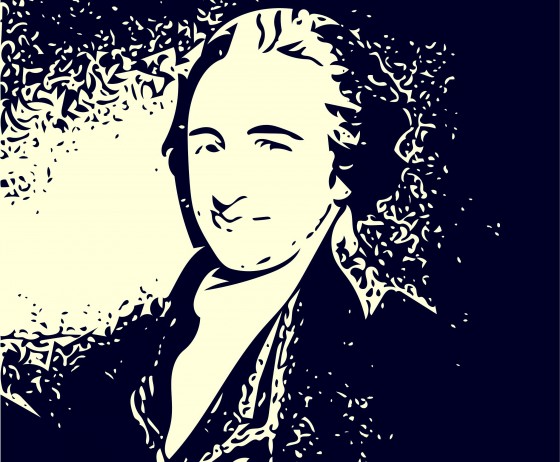
On March 8, 1775, “African Slavery In America,” often described as the first known essay advocating the abolition of slavery in America, was published anonymously in the Pennsylvania Journal and the Weekly Advertiser. Thomas Paine (pictured) is believed to be the essay’s author.

The first anti-slavery society was formed in Philadelphia weeks after publication, and Paine was a founding member.

Exactly 120 years earlier, a court in Northampton County of the Virginia Colony ruled that John Casor, then working as an indentured servant to Robert Palmer, must be returned to Anthony Johnson as Johnson’s “lawful” slave for life. Ironically, Johnson was one of the original indentured servants brought to Jamestown, had completed his indenture to become a “free Negro” and the first African landowner in the colony. The case marked the first person of African descent to be legally-recognized as a lifelong slave in England‘s North American colonies. The first official chattel slave in English-speaking North America was of African descent, and was owned by a man also of African descent.

Categories
by Paul Jacob video

Watch: If [sane people] Ran the Zoo!

This Week in Common Sense, March 6, 2021.