Categories
Thought

Martin Luther King, Jr.

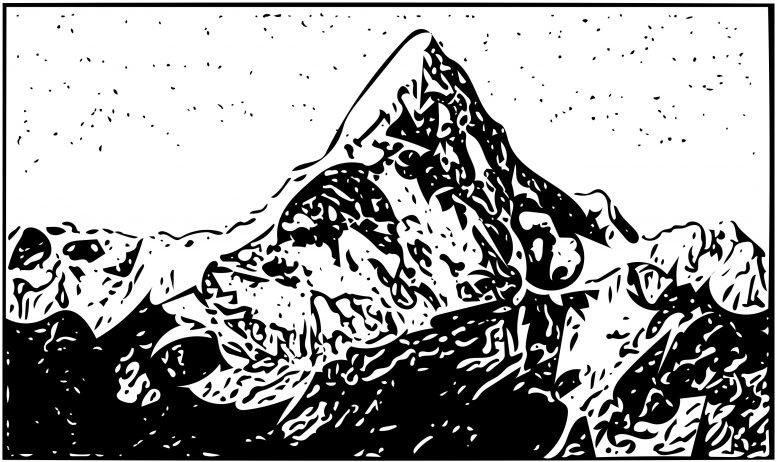
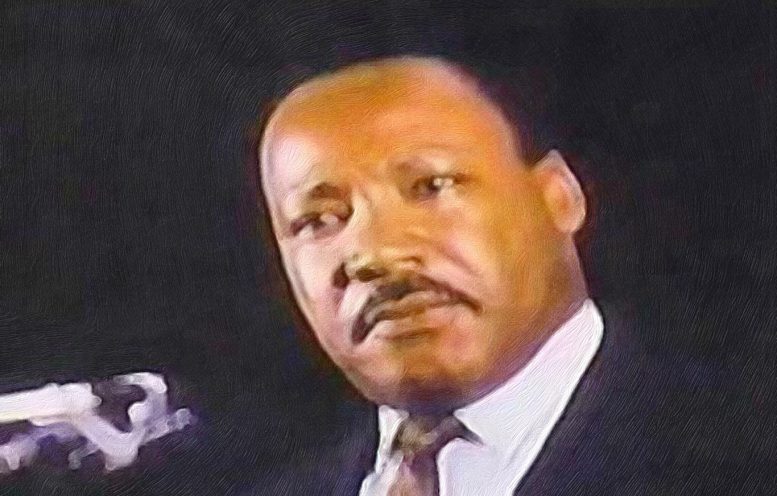
“Well, I don’t know what will happen now. We’ve got some difficult days ahead. But it doesn’t really matter with me now. Because I’ve been to the mountaintop. I don’t mind. Like anybody, I would like to live a long life; longevity has its place. But I’m not concerned about that now. I just want to do God’s will. And He’s allowed me to go up to the mountain. And I’ve looked over. And I’ve seen the Promised Land. I may not get there with you. But I want you to know tonight, that we, as a people, will get to the Promised Land. So I’m happy, tonight. I’m not worried about anything. I’m not fearing any man. Mine eyes have seen the glory of the coming of the Lord.”

Martin Luther King, Jr., the conclusion of his “Mountaintop” speech (April 3, 1968).
Categories
Today

Mountaintop

On April 3, 1968, Martin Luther King, Jr., delivered his “I’ve Been to the Mountaintop” speech.

Categories
Thought

Jules Verne

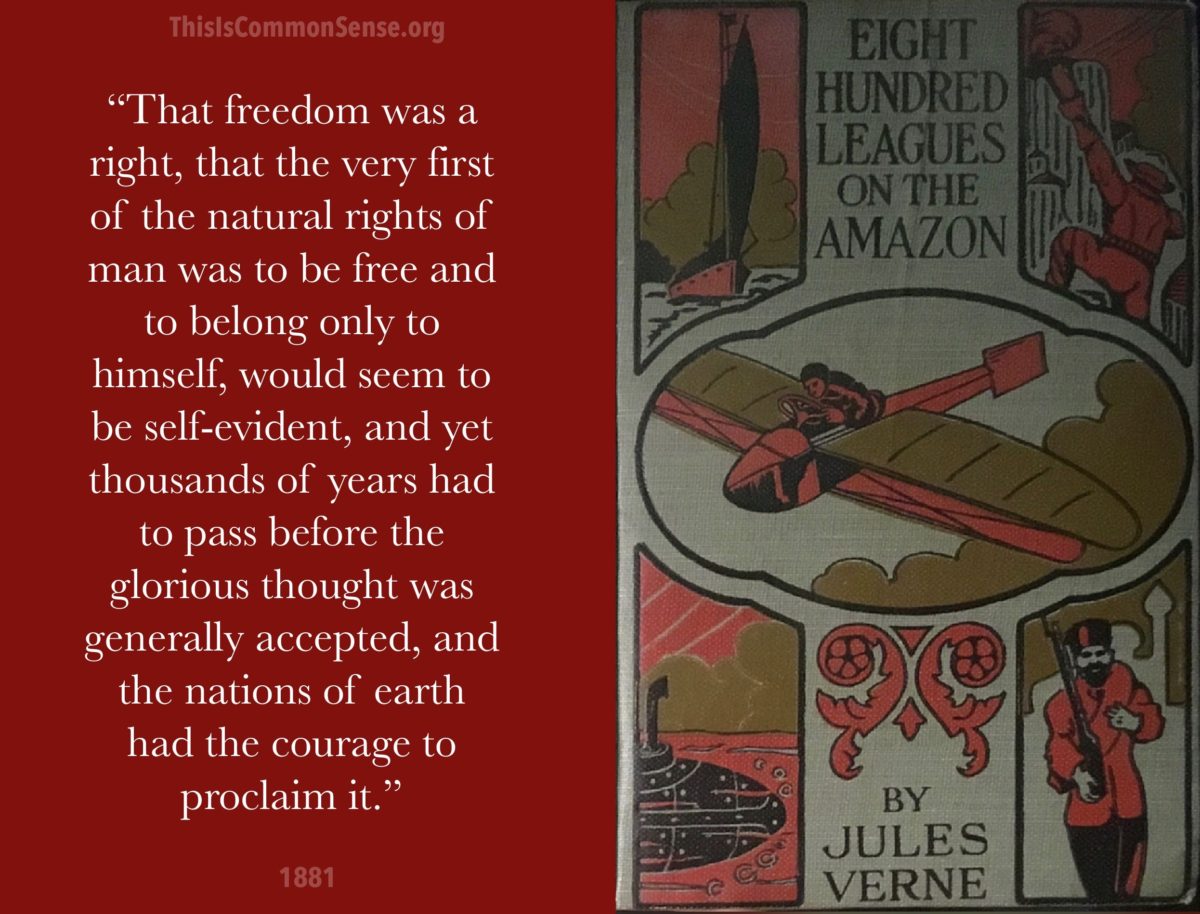
That freedom was a right, that the very first of the natural rights of man was to be free and to belong only to himself, would seem to be self-evident, and yet thousands of years had to pass before the glorious thought was generally accepted, and the nations of earth had the courage to proclaim it.

Jules Verne, Eight Hundred Leagues on the Amazon (1881), p. 2.
Categories
Today

Déchéance

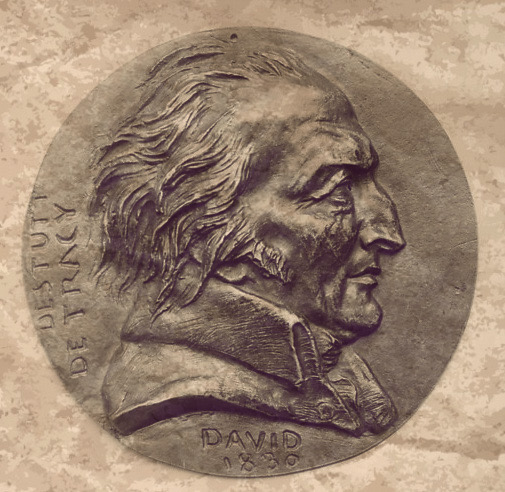
With the Acte de déchéance de l’Empereur (“Emperor’s Demise Act”) of April 2, 1814, France’s Sénat conservateur officially recognized the downfall of Napoléon I of France. The original resolution to remove the Emperor was moved on the legislative body’s floor, by Thomas Jefferson’s friend Destutt de Tracy (according to Tracy himself — official records do not name the member), and was drawn up by Charles Lambrechts. The final paragraph summarized the new reality concisely:

The Senate declares and decrees as follows: 1. Napoleon Buonaparte is cast down from the throne, and the right of succession in his family is abolished. 2. The French people and army are absolved from their oath of fidelity to him. 3. The present decree shall be transmitted to the departments and armies, and proclaimed immediately in all the quarters of the capital.

Nine days later, after attempting to put his son on the throne, Napoléon abdicated unconditionally. The Allies exiled him to Elba, which was to be the whole extent of this reign as “Emperor.”

This arrangement proved unstable, with Napoléon staging a comeback, eventually leading to more war, his defeat at Waterloo, and his exile to an island in the South Atlantic.


American author, art critic, and commentator Camille Paglia was born April 2, 1947.

Categories
initiative, referendum, and recall

Shanghaied in Tallahassee

How to prevent citizen control of government?

The democracy-loathing Chinese Communist Party (CCP) is not merely wiping out Hong Kong’s civil liberties, but also aggressively undercutting the limited democratic input citizens previously had. You see, in December of 2019, in the last local elections before the pandemic proscribed the city’s protest movement, fledgling pro-democracy candidates won an incredible 87 percent of the seats

So the Chinazis postponed the next election, just to be safe.*

Never a full-fledged one-person/one-vote democracy, Hongkongers only voted for 35 of the 70 Legislative Council seats. But now the CCP is increasing legislative seats to 90 while reducing to just 20 those that voters choose.**

While tyranny may seem another growth industry where China outpaces us, don’t count out our politicians just yet.

Last November, Florida voters decided four citizen initiatives, passing two and defeating two others — including one to make it tougher to pass constitutional amendments. Such “direct democracy” isn’t easy — almost 900,000 Sunshine State voters must sign. Then to pass, Florida amendments require a 60-percent vote.

Yet for the third consecutive session the unfriendly Florida Legislature, dominated by Republicans, wants to make it even more difficult for regular people to communicate, associate, organize and petition an amendment onto the ballot, bypassing the pols:

♦ House Joint Resolution 61 would hike that 60-percent supermajority for passage to 66.7-percent. Should a measure that receives 66.5 percent of the vote lose

♦ Senate Bill 1890 would outlaw contributions of greater than $3,000 to the petition phase of the campaign, which usually costs upwards of $5 million. It’s campaign finance “reform” specifically designed to silence citizens by blocking their ability to successfully place an issue before fellow voters.

“[I]t should not be an impossible process,” offered Trish Neely with the League of Women Voters . . .

. . . of Florida, that is. Not Hong Kong.

This is Common Sense. I’m Paul Jacob.


* Not to mention the police arresting aspiring pro-democracy candidates.

** The police must now first approve all candidates as being sufficiently pro-China, as well.

PDF for printing

Photo by Elizabeth Jenkins

See all recent commentary
(simplified and organized)
See recent popular posts
Categories
Thought

Cato

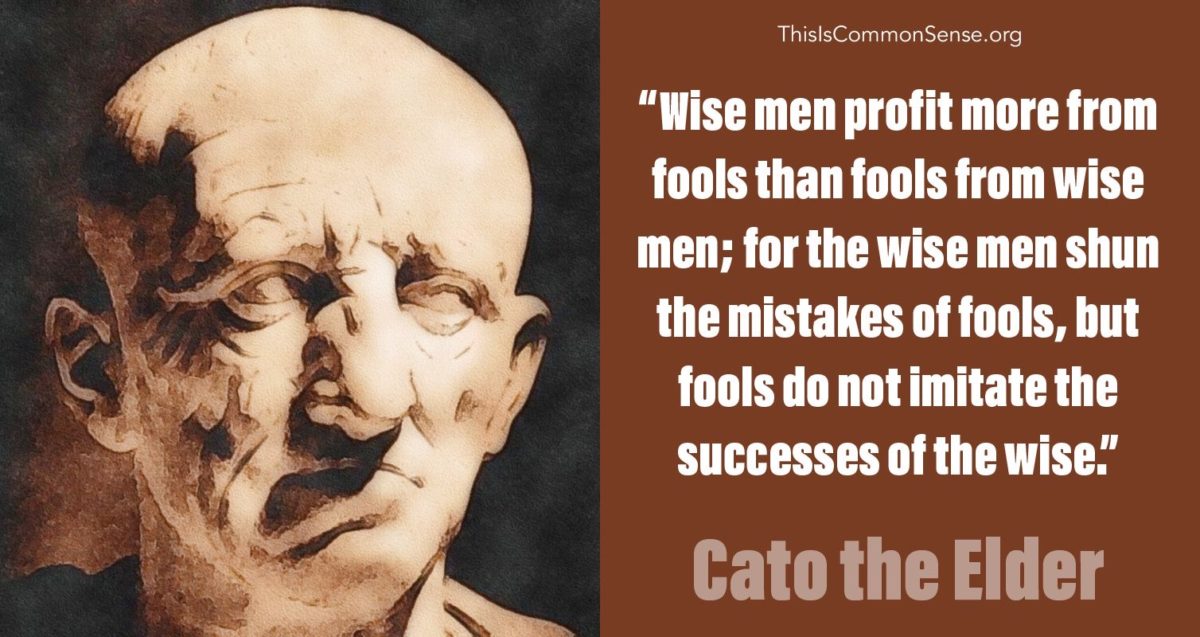
Wise men profit more from fools than fools from wise men; for the wise men shun the mistakes of fools, but fools do not imitate the successes of the wise.

Cato the Elder, as quoted in Plutarch’s Life of Cato.

Categories
Today

April Fool’s Day

On April Fools’ Day, 1957, the BBC offered for viewers of the current affairs program “Panorama” the infamous spaghetti harvest report hoax.

By sheer coincidence, one definition of “noodle” is “fool.”

Categories
Thought

Arthur Schopenhauer

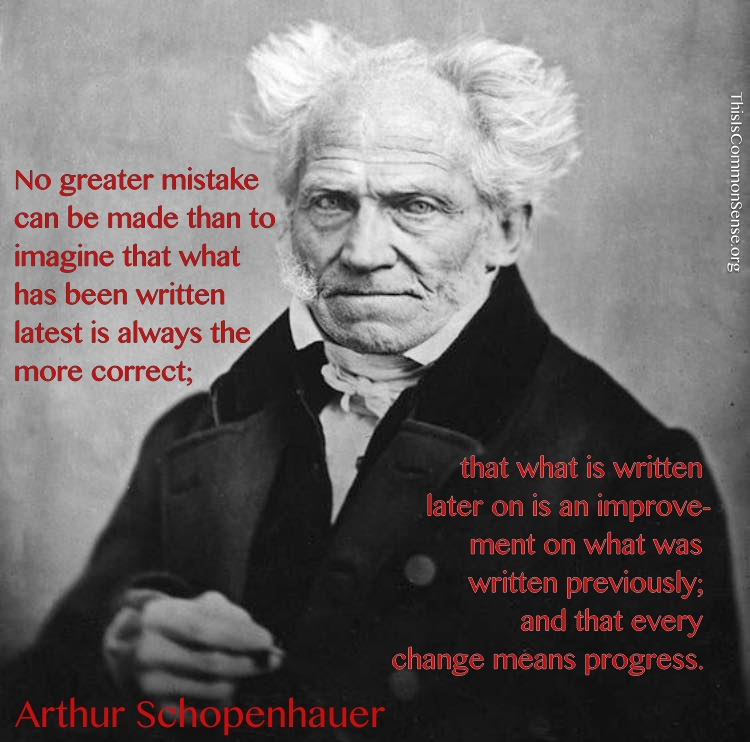
No greater mistake can be made than to imagine that what has been written latest is always the more correct; that what is written later on is an improvement on what was written previously; and that every change means progress.

Arthur Schopenhauer, “On Authorship” in The Essays of Arthur Schopenhauer (T. Bailey Saunders, translator).

Categories
Today

Bangorian Controversy

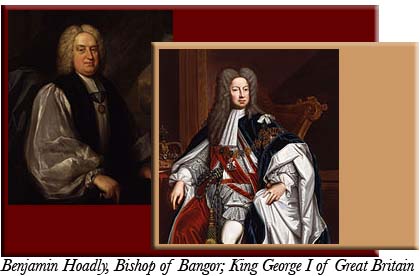
On March 31, 1717, a sermon on “The Nature of the Kingdom of Christ,” by Benjamin Hoadly, the Bishop of Bangor, provoked the Bangorian Controversy.

The sermon’s text was John 18:36, “My kingdom is not of this world,” and from that Hoadly deduced — supposedly at the request of King George I himself, who was present in the assembly — that there was no Biblical justification for any church government. Hoadly identified the church with the kingdom of Heaven, noting that Christ had not delegated His authority to any representative.

King George’s preference for the Whig Party, and for latitudinarianism in ecclesiastical policy, is widely thought to have been a strategic maneuver to degrade church power in political government.

Categories
Today

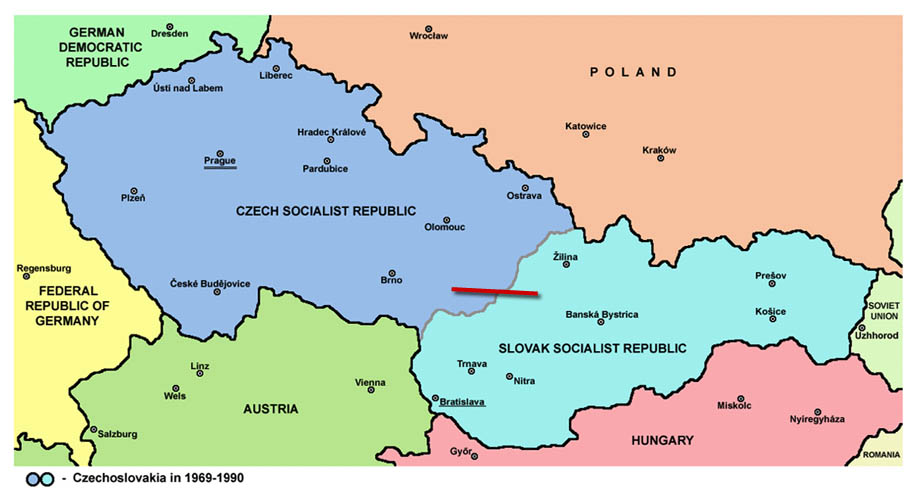
Hyphen War

On March 29, 1990, the Czechoslovak parliament proved unable to reach an agreement on what to call the country after the “Velvet Revolution” — in which the Communist Party was booted from sole power. This sparked the “Hyphen War,” a tongue-in-cheek moniker for the dispute between Czechs and Slovaks about official recognition of the two nations’ equal status. (The Slovak representatives wanted to insert a hyphen into the name, to make the Slovak part stand out.) Eventually, the dispute was resolved with the “Velvet Divorce,” in which the two countries split up, on New Year’s Day, 1993.