Categories
Accountability crime and punishment government transparency media and media people national politics & policies responsibility

A Handy Evasion

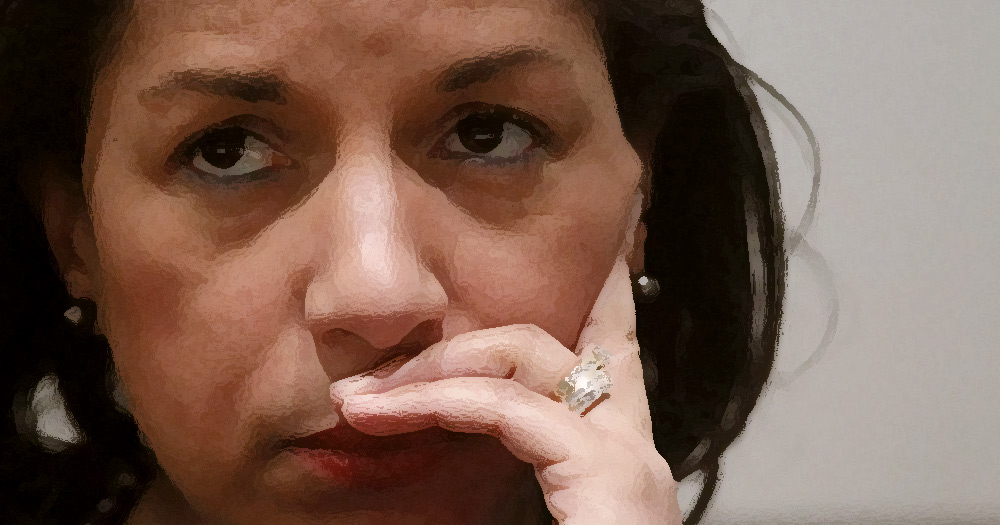
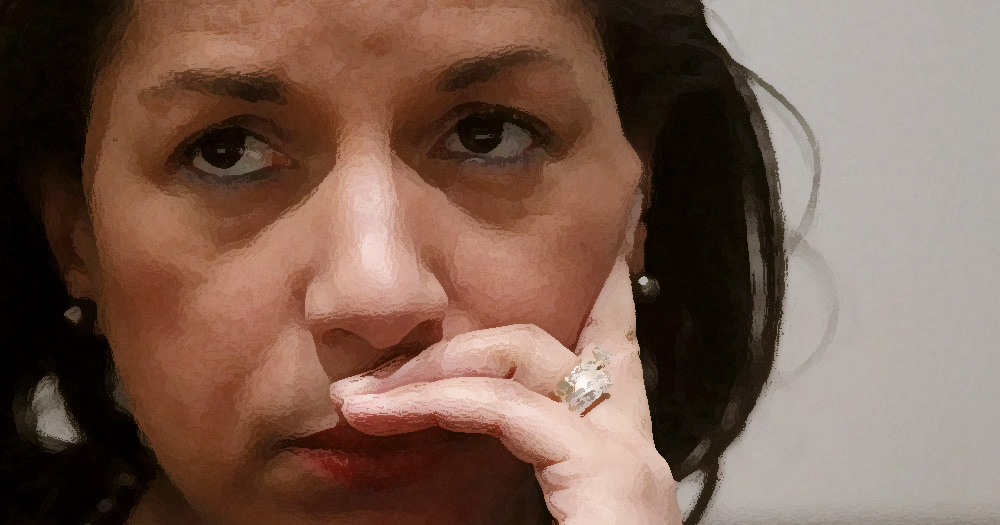
Susan Rice, National Security Advisor in President Barack Obama’s administration (2013 – 2017), is being picked on, she speculates, for reasons pertaining to her race and gender.

Handy evasion.

At issue is not her infamous prevarication in the Benghazi affair. We are used to being lied to about foreign policy, so that was barely a shock.

What is news now? The Trump-Russia story.

Background: Ever since her defeat to Donald Trump, former Secretary of State Hillary Clinton has provided the very model of how to deflect attention from one’s own defects. She’s blamed FBI Director James Comey, the vast right wing conspiracy, and, of course, Russia.*

Amusingly, the Russia biz still boils down to how Russian hackers, apparently directed from high in the hierarchy of the Eastern warlord state, illegally liberated information from private servers. Those revealed emails showed Mrs. Clinton and her campaign in a negative light. Excuse-makers call this “hacking the election.”**

It turns out, the biggest crimes committed during the campaign, and somewhat regarding Russia, were engaged in by the Obama Administration, perhaps especially by Rice herself. She is accused of illegally surveilling the Trump campaign and those around it by “unmasking” their identities in the course of surveillance reports, which are legally required to be anonymous . . . when catching in the net folks tangential to the target.

The law requires FISA court go-aheads for such identifications. And the Obama administration was roundly reprimanded by a FISA court for not following protocols.

In any case, the idea that only women and African-Americans are hounded by opposition parties and the press does not hold up to scrutiny.

Nixon, anyone?

This is Common Sense. I’m Paul Jacob.


* Her team has also blamed President Barack Obama

** A private server was hacked, not an election.

Printable PDF


Categories
First Amendment rights national politics & policies

How to Protect Yourself from Spying

We value our privacy.

No wonder we’re nervous. The National Security Agency, in blithe disregard of our constitutional right against unwarranted search and seizure, has been indiscriminately scooping up data (“meta” data) about our communications (among other covert acts that have compromised the security of our transactions).

However the controversies triggered by the scandals play out, it’s clearer than ever that you can’t trust the government to respect your right to privacy. Your line of first defense has to be you.

Even before the NSA scandal broke, the Electronic Frontier Foundation (EFF) was on the case, explaining how to reduce your risk when saving data to your computer, sending the data elsewhere, and entrusting it to third parties. Their Surveillance Self-Defense site spells out what the government can legally do to spy on you and what you can legally do to protect yourself. The discussion includes nitty-gritty stuff like advice on the proper use of passwords and encryption, protecting yourself against malware, and lowering the risk of eavesdropping on confidential conversations.

That’s right, SSD talks about “what the government can legally do” to breach your data or listen in on your life, not so much about what it can do illegally. A banner atop the home page notes that the site “has not yet been updated to reflect the 2013 revelations about the NSA. . . .”

Updates are coming. Meanwhile, we can fill in some of the blanks ourselves. . . .

This is Common Sense. I’m Paul Jacob.

Illustration by ocularinvasion used under a Creative Commons license.