Categories
Accountability privacy tax policy

Stay On Call 

Backlash can be good. Against lousy ideas, for example. Sometimes, the response to the backlash is to relinquish the lousy idea, at least temporarily.

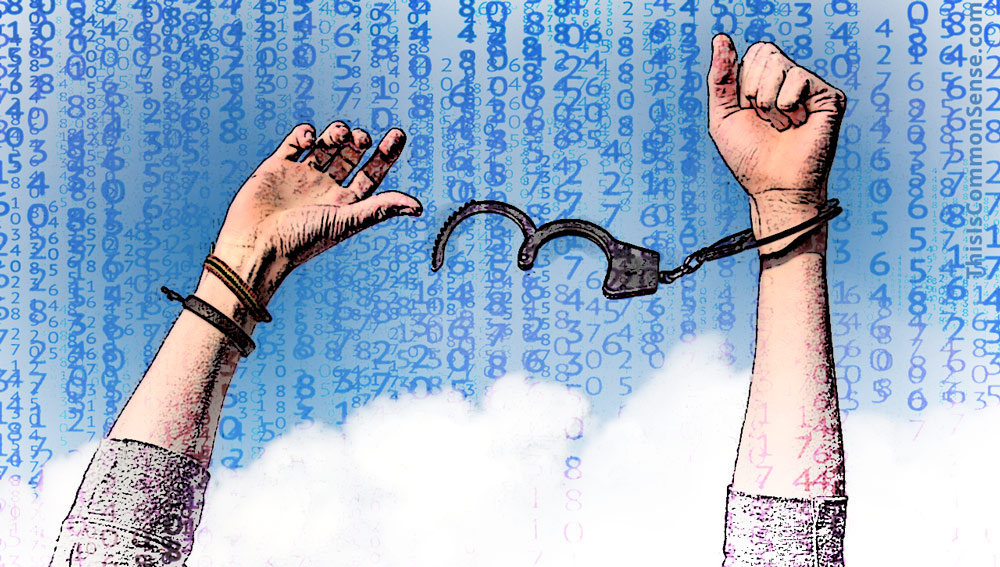
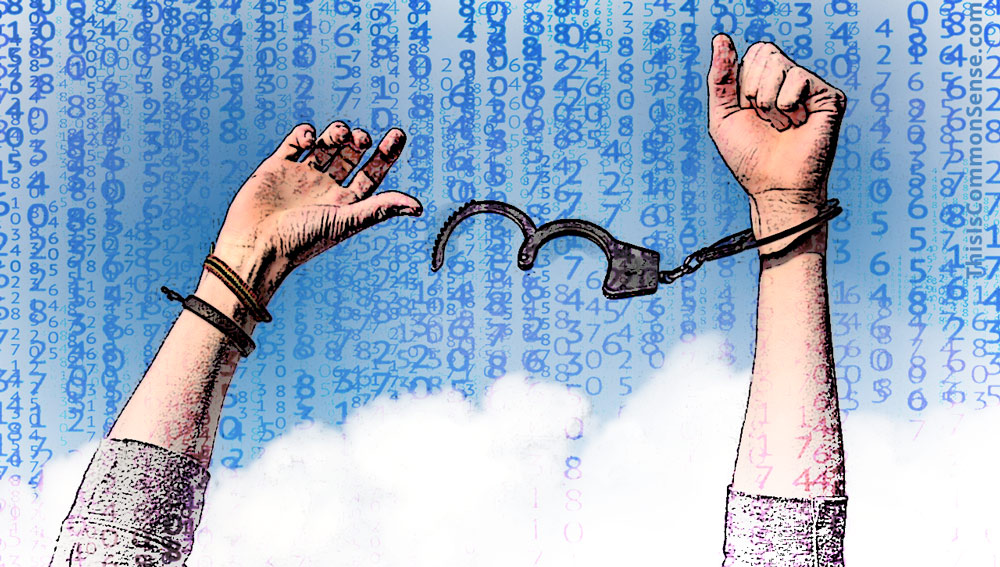
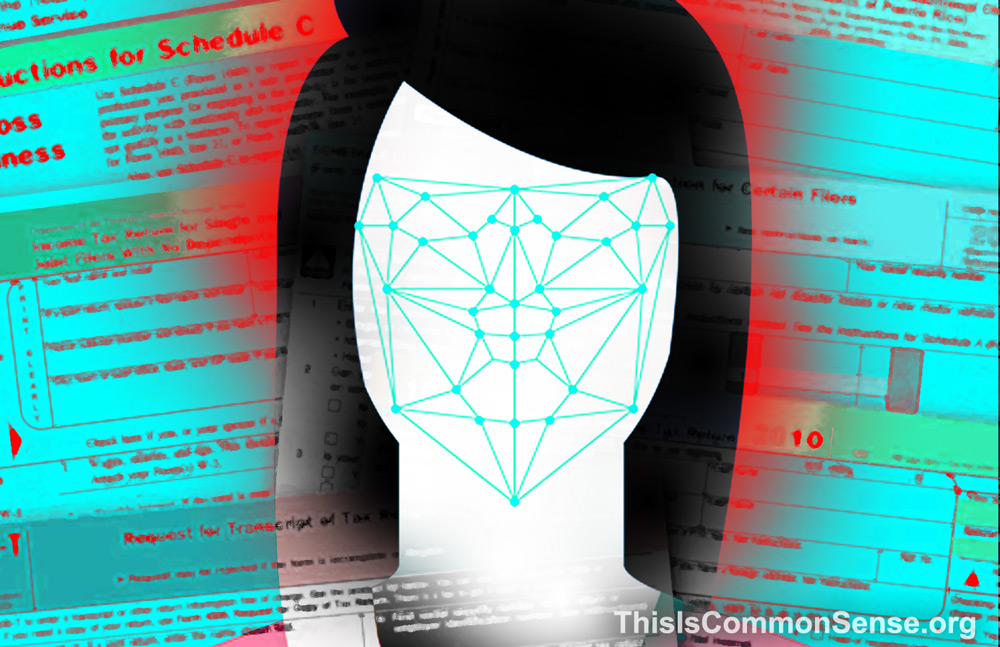
We must hope for more than a moment of reprieve from the Internal Revenue Service’s plan to require facial ID recognition of persons who use certain functions of its website.

Both Republican and Democratic congressmen, among many others, were outraged.

It’s good that many congressmen regard some forms of surveillance as beyond the pale. (Meanwhile, legislation to promote scanning of everybody’s online messages at will, Lindsey Graham’s EARN IT Act, is back in Congress. Bipartisan Backlash, can you take a look at this?)

The IRS said that it wanted to use facial recognition technology to help prevent scammers from posing as taxpayers.

But a database of such facial info would itself pose a huge security risk. For decades now, we have been inundated with stories about major databases being hacked.

Nor would legal access have been restricted to the less-than-trustworthy IRS. A third-party vendor would have been involved.

So the IRS has retreated, saying they grasp “the concerns that have been raised” and pledging to pursue “short-term options that do not involve facial recognition.”

The Biden administration has also proposed expanding IRS staff by 80,000+ personnel and permitting minute governmental monitoring of the bank accounts of millions of Americans — notions now in abeyance but undead. And who knows what other innovations in overseeing us are coming up?

Stay on call, Bipartisan Backlash.

This is Common Sense. I’m Paul Jacob.


PDF for printing

See all recent commentary
(simplified and organized)
See recent popular posts
Categories
Fourth Amendment rights

Marks of Tyranny

It pays to contest petty (as well as major) civil and criminal charges that your local and state governments lay against you. Sometimes you get off.

People have used some pretty “out there” arguments in their own defense. Example? Risk homeostasis in a speeding case. That was a stretch.

But this Michigan case, though it may seem odd, is as American as Apple pie.

Alison Taylor sued the city of Saginaw over her parking violation citations. Her argument? The Fourth Amendment.

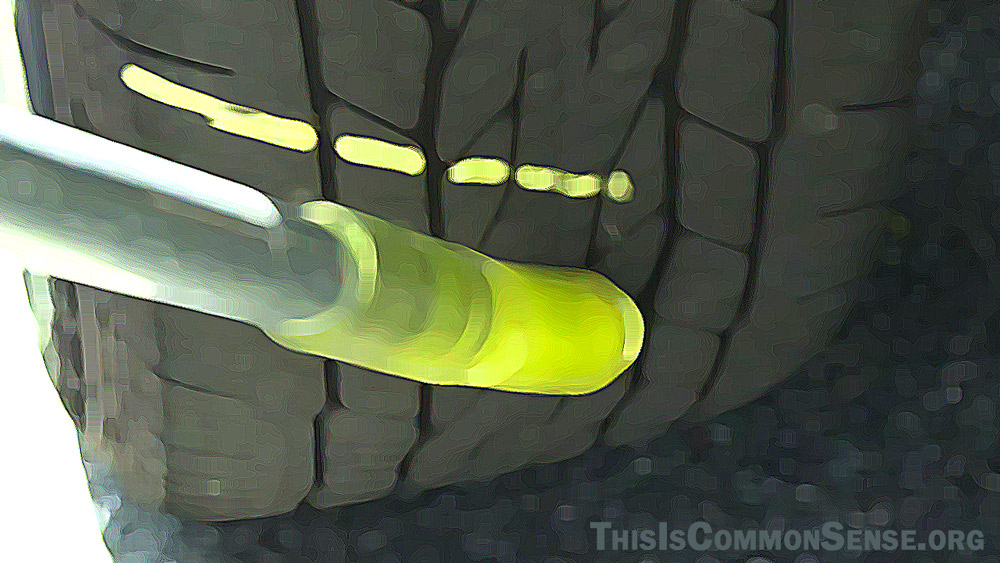
You see, the municipality’s parking officer had used chalk to mark her (and others’) tires. If on a second round the officer sees a car with the mark at the right spot, showing that it had not moved in the allowed period — write up a ticket!

Ms. Taylor had accumulated 14.

So she and her lawyer argued that “using the chalk to mark her tires constituted an unreasonable search without a warrant.”

The U.S. Sixth Circuit Court of Appeals agreed. This traditional method of enforcing parking rules was recognized as an infringement of the right of the people “to be secure in their persons, houses, papers, and effects.”

Trivial? The consequences may not be, as my source for this case, Greg Rasa of Autoblog, points out.

Dubious? Imagine a non-legal way to fight the chalk-mark method — non-officers chalking car tires with multiple marks indistinguishable from the officers’. Cities would object, of course, but their best case against such a practice would be the car owners’ case: defacement of private property. 

Yes, if the saboteurs’ marks are defacement, so are the city’s.

Justifying the appellate court’s ruling.

Chalk one up for constitutionally guaranteed rights?

This is Common Sense. It’s Friday! I’m Paul Jacob.


PDF for printing

See all recent commentary
(simplified and organized)
See recent popular posts
Categories
general freedom media and media people

Trust the Spies?

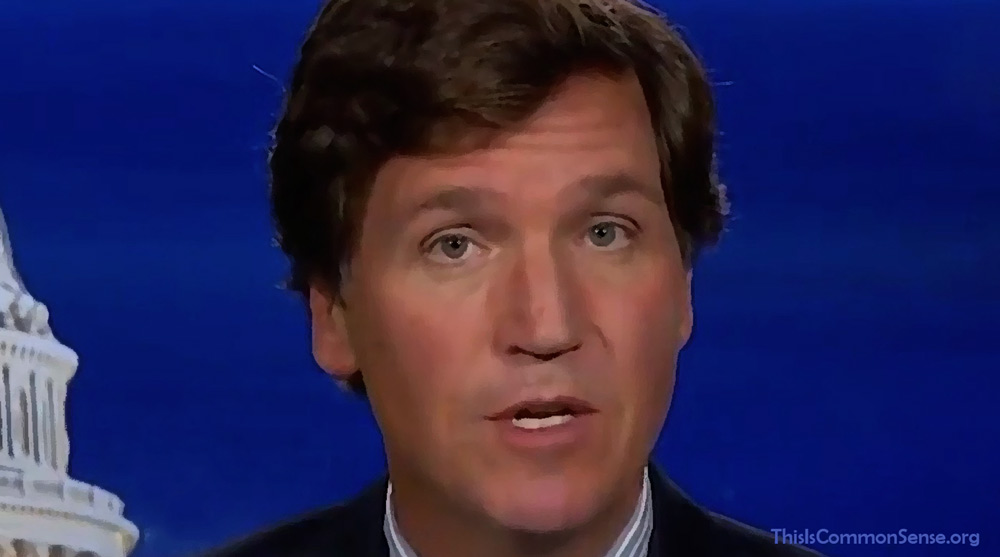
“The Biden administration is spying on us,” Fox News host Tucker Carlson told his Monday night audience. 

“On Sunday, we heard from a whistleblower within the U.S. government, someone with direct knowledge, who warned us the NSA was reading our electronic communications, our emails and texts,” he explained, “and was planning to leak them selectively in an effort to hurt us.”

Quite an explosive allegation.

“[T]he evidence for this claim is lacking,” a Vox story argued, adding that “on Tuesday the NSA took the unusual step of releasing a carefully worded statement denying it.” 

Carlson quickly responded that there was no actual denial in the NSA’s verbiage. Huh? Referring directly to Carlson’s charge, the National Security Agency’s statement read, in part: “This allegation is untrue.”

Awfully clear to me. In fact, so straight-forwardly worded that I wonder if the writer is new to Washington, D.C.

Of course, the problem isn’t really one of language.

The problem? Trust

Back in 2013, James Clapper, then-President Barack Obama’s Director of National Intelligence, was asked under oath if the NSA “collected any data at all on million of Americans.” Clapper lied to Congress. He has never been held accountable for making that knowingly false statement.

Carlson showed viewers 2006 footage of then-Senator Joe Biden voicing concerns about NSA spying. “And we’re going to trust the president and the vice-president of the United States that they’re doing the right thing?” inquired Biden. “Don’t count me in on that.”

On Tuesday, Carlson contended “the NSA does routinely spy on Americans. It won’t call it spying — that’s exactly what it is. Millions of Americans. And sometimes it does it for political reasons. And everyone knows this. Everyone.”

But many still deny it.

This is Common Sense. I’m Paul Jacob.


Note: Today’s Thought about lying in the old Soviet Union is relevant to the “everybody knows”/“everybody denies” mentality. Share it far and wide. This wasn’t a feature of America three decades ago, was it?

PDF for printing

See all recent commentary
(simplified and organized)
See recent popular posts
Categories
Fourth Amendment rights initiative, referendum, and recall

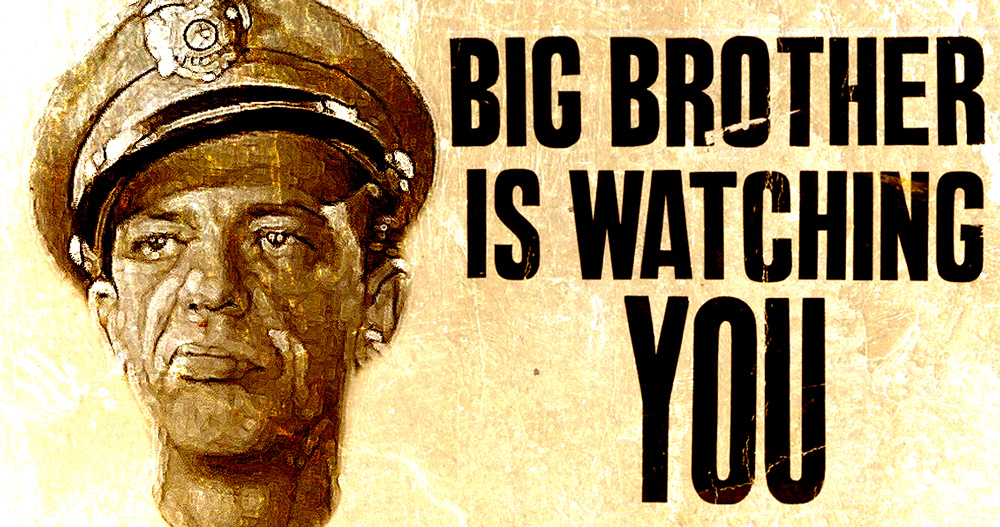
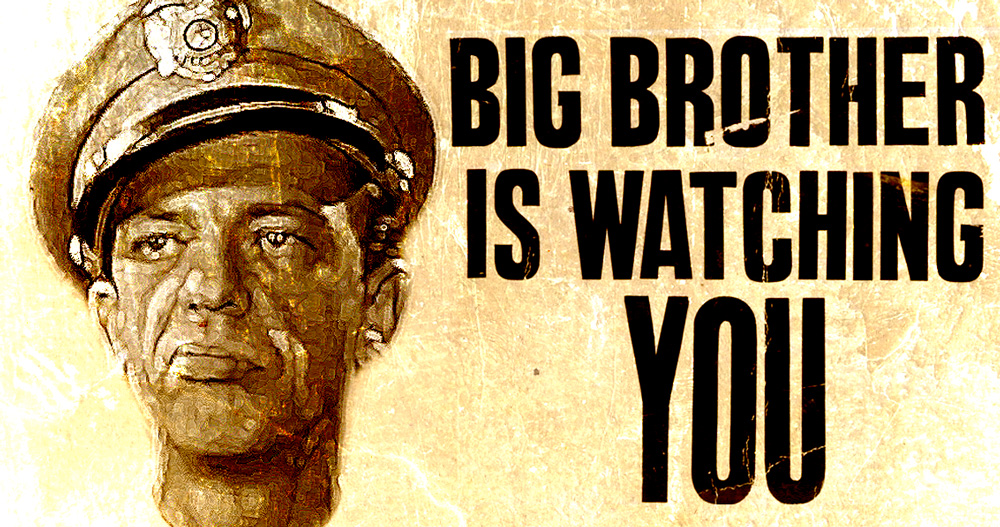
Big Brother or Barney Fife?

Alaska, Washington, Oregon, Montana, Missouri, Oklahoma, Louisiana, New Hampshire — these are the states that have shouted a big NO to the Federal Bureau of Investigation’s citizen scanning agenda and its database of 640 million faces. 

“As the FBI amasses hundreds of millions of photos for its facial recognition program (with little in the way of safeguards),” asks J. D. Tuccille in Reason, “is it also going to force us to bare our faces for cameras as we move through an increasingly surveilled country?”

Tuccille suggests wearing hats big enough to cover our faces from intrusive cameras. 

Most states do not prohibit surveilling people en masse or at random. And though Kimberly J. Del Greco, deputy assistant director of the FBI’s Criminal Justice Information Services Division, assures us of the operation’s above-board character — “there have been no findings of non-compliance, and no observations of unauthorized requests” — the possibilities of abuse are precedented . . . by past government surveillance.

So, is it any solace that it has so far proved wildly inaccurate? 

Sure, the aforementioned Del Greco claims the FBI’s algorithm is 99 percent accurate. But another study found one system in place with a sorry 98 percent inaccuracy rate. “It’s a creepy police state as administered by Barney Fife,” writes Tuccille. And while that is “pretty damned funny,” it would be not even a little bit funny if “you’re arrested based on a bad match.”

Constraining governments to forswear such practices on the streets, malls and public places of America is surely a good candidate for citizen use of initiative and referendum rights, where available — in states and cities around the U.S.

For these are not supposed to be the United States of Big Brother.

This is Common Sense. I’m Paul Jacob.


PDF for printing

big brother, Barnie Fife, surveillance, face recognition,

See all recent commentary
(simplified and organized)
See recent popular posts

Categories
free trade & free markets political economy

Bitcoin to the Rescue

I own no Bitcoin; it’s not my thing. The blockchain concept Bitcoin is based upon seems clever, sure, but I often curse at my “devices,” so only my politics prevents me from full-blown Luddism. 

Besides, when I think “the people’s money” I don’t think “private fiat currency.” Which is what Bitcoin sure looks like to me.

But to quote from these very pages, “When times get tough, the tough . . . switch currencies.”

And times cannot get much tougher than in Venezuela right now. No wonder “many are turning to digital assets such as Bitcoin as an alternative to the Venezuelan bolivar,” writes Matthew Di Salvo for the BBC.

“Critics say Bitcoin and other cryptos — there are more than 1,600 globally — are unstable, use too much energy, and are used by money launderers or those wanting to buy illicit goods on the web,” Di Salvo explains.

These points need addressing. I’ll try:

  1. A wannabe money will be as unstable as investor demand. When actually used as money, though, we may expect more stability. And Bitcoin is deflationary, so it should be more stable than government money.
  2. As if our banks and ATMs don’t use energy!
  3. Used by bad people? Well, you can say that about cash. But if we get rid of cash — as many experts want to — you can kiss any hope for freedom goodbye.

Venezuelans, by turning to keeping “their money in a digital wallet in the form of Bitcoin, Litecoin, Dash or any of the others,” are grabbing at something much better than what their malign inflation-happy government provides.

It is a pity that the “free-market” alternative is called “crypto” — meaning secret.

Freedom is the world’s best-kept secret?

This is Common Sense. I’m Paul Jacob.


PDF for printing

Bitcoin, cryptocurrency, Venezuella, freedom, privacy, cash, money

See all recent commentary
(simplified and organized)
See recent popular posts
Categories
Accountability crime and punishment

TSA Abuse

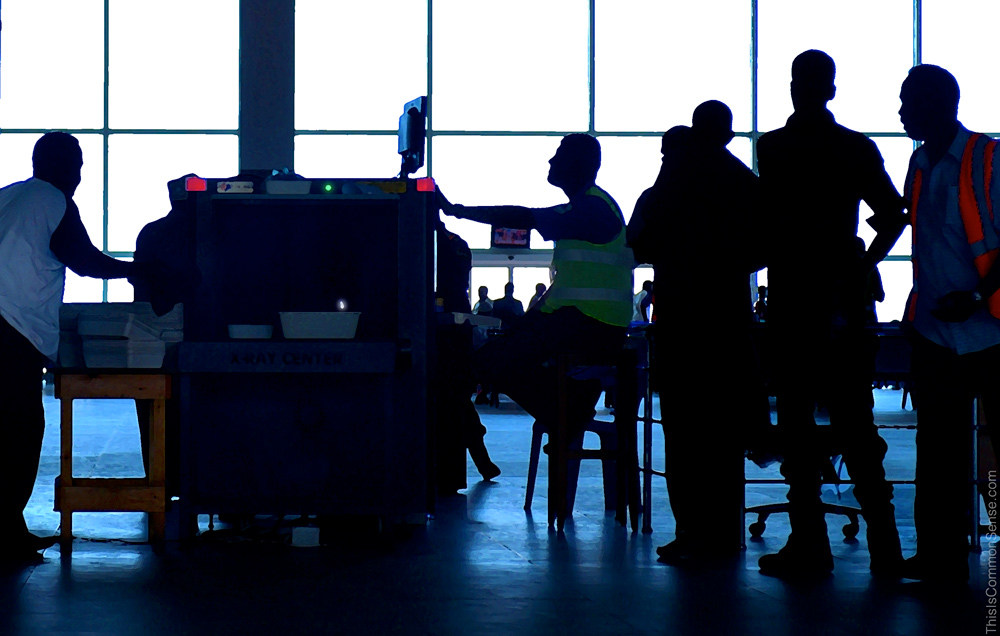
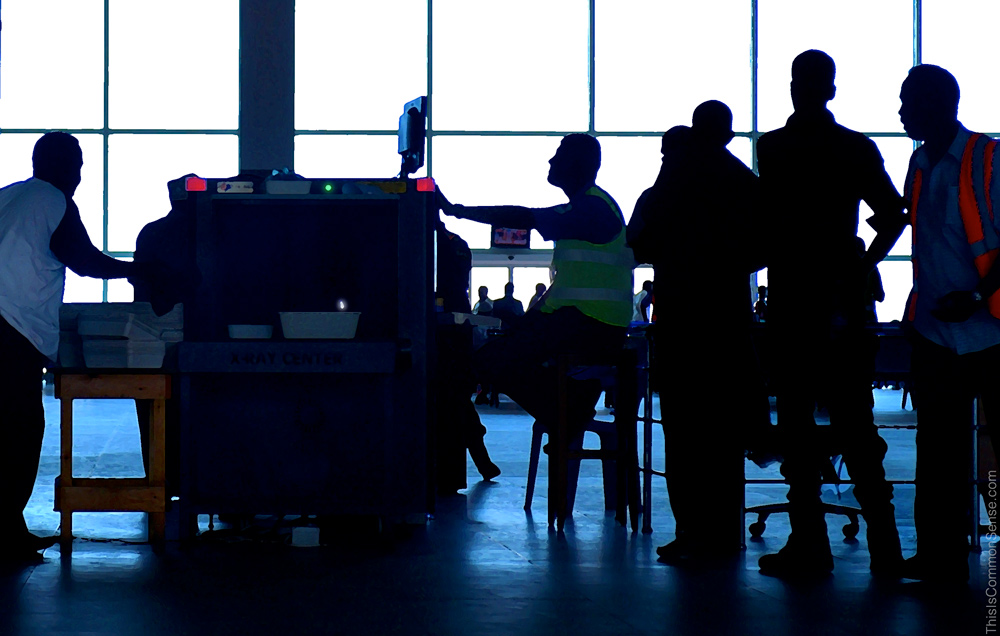
Among the rights-trampling bureaucracies, many and various, the Transportation Security Administration is far from the most beloved.

Millions of Americans, in the course of trying to catch flights, experience TSA agents up close and personal. 

Some of these official gropers are way too “handsy.”

One report comes to our attention from Charlotte Ann Kimbrough, former law enforcement officer. 

When she told TSA agents that she had had two metal hip replacements, she expected to be wanded. Instead, “The woman groped my crotch — twice. She went underneath my dress. I knew I had to be calm for the man I was traveling with. . . . But he could see the look on my face. He started yelling. They got the woman who was groping me out of the way and brought in a boss, who tried to stop the situation from escalating. I do have anger at myself, that I let her do it to to me. . . . I keep getting feelings of guilt.”

Some TSA workers may be uncomfortable with what they are “forced” to do to innocents. Others enjoy the power they have to humiliate people. Still others — whistleblowers — do speak out against abuses.

But they face retaliation from higher-ups for doing so. All of these employees are subject to abuse by TSA bosses. 

A government report details alleged misconduct that includes sexual harassment, verbal abuse of employees, and obstructing investigations into misconduct. 

We should not be surprised. As Reason magazine puts it, “this isn’t an agency with a great track record when it comes to treating people well.”

This is Common Sense. I’m Paul Jacob. 


PDF for printing


Categories
crime and punishment general freedom ideological culture moral hazard nannyism political challengers privacy Regulating Protest too much government

Don’t Enable Tyrants

If I deliberately help somebody to do evil things — and nobody is holding a gun to my head — I am thereby doing evil myself.

A person should not let himself be in that position. Not even if he’s “just doing my job” and looking for a non-evil job would be demonstrably inconvenient. To have a motive for doing a bad thing is not by itself exculpatory.

What provokes this observation is a newly amplified assault by the Venezuelan government on the rights of its citizens. The government is seeking to violate the right to peacefully read stuff on the Web by blocking Tor software, which allows users to elude government surveillance and reach banned websites.

Venezuelan dictators Chavez, now dead, and Maduro, still there, have never hesitated to stomp freedom in the name of a spurious greater good. Somebody like Maduro is certainly unscrupulous enough to go after Tor for thwarting censorship. So he fulfills that requirement. I doubt that he possesses very extensive programming ability.

Tor may not be perfect, but it’s pretty robust. You need substantial resources, such as those at the disposal of a government, to stop it. You also need to know what you’re doing. The coders on Venezuela’s stop-Tor team are probably smart enough to grasp the purpose of their work.

They and all other such collaborators should defect to the other side: that of programmers working to protect innocent people from government-sponsored cyber-assault.

This is Common Sense. I’m Paul Jacob.


PDF for printing


Categories
Accountability crime and punishment general freedom moral hazard national politics & policies privacy responsibility

In Plain Sight

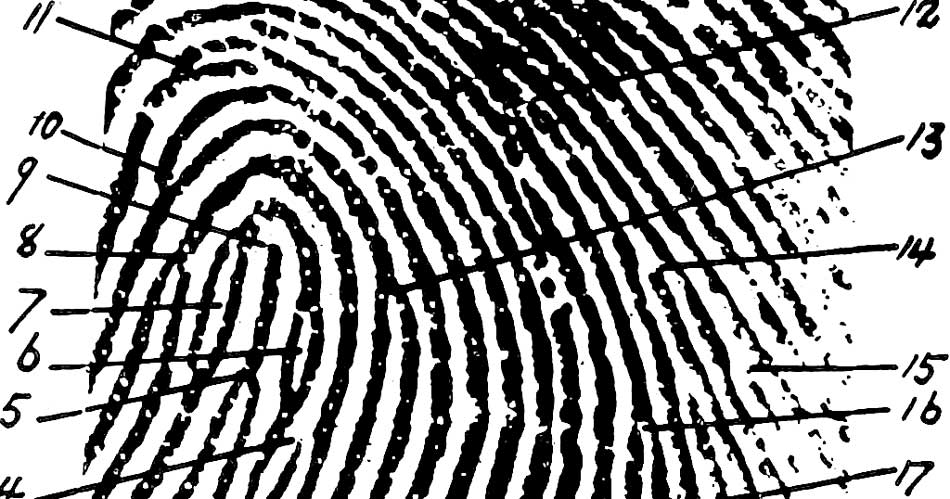
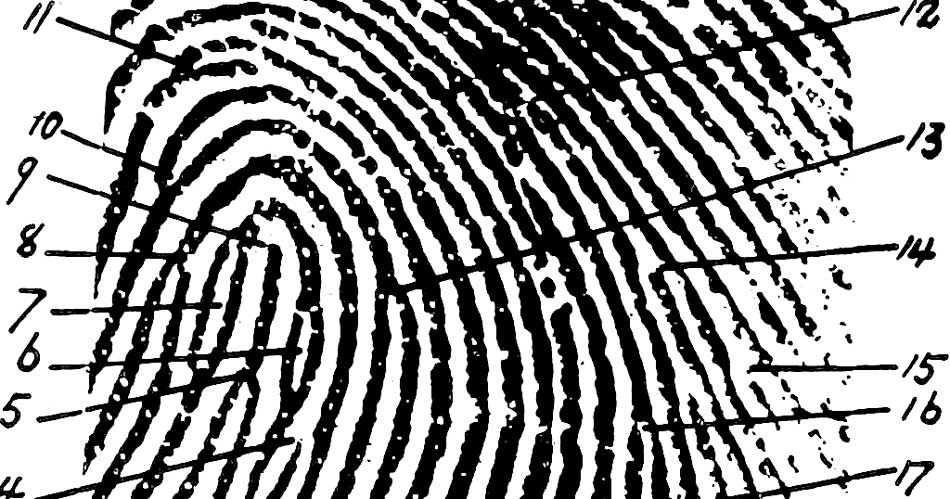
The Berlin terrorist attack just a little over a week ago fit a noteworthy pattern. German authorities had investigated Anis Amri — the Tunisian man who drove that large truck into a crowded Christmas market, killing 12 and wounding 56 others — and found “links with Islamic extremists.”

Later killed in Milan, Italy, Amri had been wanted in Tunisia for “hijacking a van” and jailed in Italy for arson and a “violent assault at his migrant reception center.” And yet with all that known or easily knowable, the German authorities couldn’t prevent him from killing innocent Germans.

It’s not just a European phenomenon, either.

Consider Omar Mateen, this country’s worst mass shooter, having massacred 49 people in Orlando’s Pulse nightclub. The FBI had spent ten months looking into Mateen.

Years before the Boston Marathon bombing, the FBI had tracked Tamerlan Tsarnaev, one of the bombers.*

“In case after case . . . authorities have come forward after the fact to say that they had enough cause to place the suspect under surveillance well before the violence,” the Washington Post recently noted. This was the case with the majority of recent lone-wolf terrorism plots.

“If any lesson can be learned from studying the perpetrators of recent attacks,” a report in The Intercept concluded, “it is that there needs to be a greater investment in conducting targeted surveillance of known terror suspects and a move away from the constant knee-jerk expansion of dragnet surveillance . . .”

Yet intelligence agencies are still grabbing our metadata in violation of the Fourth Amendment. That needs to stop.

The fact that known threats are consistently not being stopped suggests curtailing mass surveillance won’t hurt our security, but improve it.

This is Common Sense. I’m Paul Jacob.


* The same is true regarding the Ft. Hood (work-place) shooter, Nidal Hasan. Likewise, Abdulhakim Mujahid Muhammad (formerly Carlos Bledsoe), who was under the active eye of the FBI after returning from Yemen . . . until he opened fire on a Little Rock, Arkansas, recruiting station killing one soldier and wounding another. Ditto Ahmad Khan Rahami, the less deadly bomber in New York City and New Jersey.


Printable PDF

terrorism, surveillance, privacy, fingerprint, targeted, illustration


Categories
crime and punishment First Amendment rights general freedom moral hazard national politics & policies Snowden

Structurally Opinionated B. S.

Edward Snowden, the infamous American whistleblower now exiled in Russia, says the FBI’s claim that it cannot decode the infamous San Bernardino terrorist’s iPhone is, and I quote, “Bernie Sanders.”

Oops.

He used another word-set, also sporting the initials B. S.

I got confused because, though the press has been fretting endlessly about the B.S. coming from Donald Trump, the real corkers of late have come from Bernie Sanders, who seems to think that white people cannot be poor or oppressed* and that the successes of free markets elsewhere serve perfectly as excuses for Big Government interference here in America.**

Mr. Snowden, who knows a lot more about encryption and decryption than I do, has given more weight to my suspicion that the whole FBI case against Apple — demanding that Apple create software to decrypt the company’s customers’ iPhones, and supply (on an allegedly case-by-case basis) the decrypted private information to the government — is a sham.

Snowden insists that there are multiple ways to do the job.

“Other technologists have explained how the FBI could have easily accessed the phone’s latest iCloud backup,” a report on Snowden’s judgment elaborated, “if agents working with San Bernardino County had not reset the iCloud password.”

Once again, a government failure leads to another push by government to correct for its failure, burdening citizens.

In this case: folks at Apple.

Interestingly, Apple’s legal defense appears to rest heavily on the First Amendment’s free speech guarantees, arguing that the demanded software is value-laden speech, is literally made up of such.

The exact term is “structurally opinionated,” which I nominate for the jargon phrase of the year.

This is Common Sense. I’m Paul Jacob.


* Sanders has recently said, in one of those interminable debates that I can no longer watch in full, “When you are white, you don’t know what it’s like to be living in a ghetto, you don’t know what it’s like to be poor, you don’t know what it’s like to be hassled when you are walking down a street or dragged out of a car.” As if “white privilege” amounts to immunity from poverty or oppression.

** Sanders, whose Tweets are as insane as his spoken pronouncements, recently lamented how Romanians in Bucharest have faster Internet speeds than Americans — without realizing they’d achieved these levels of access by wide-open, unrelenting, and wild competition. That is, Laissez Faire capitalism.


Printable PDF

Edward Snowden, iPhone, First Amendment, privacy, Apple, illustration


Common Sense Needs Your Help!

Please consider showing your appreciation by dropping something in our tip jar  (this link will take you to the Citizens in Charge donation page… and your contribution will go to the support of the Common Sense website). Maintaining this site takes time and money. Your help in spreading the message of common sense and liberty is very much appreciated!


Categories
Accountability crime and punishment general freedom moral hazard nannyism national politics & policies privacy too much government

Breaking the Safe

As we tromp repeatedly to the polling booth this year, we should wonder: are we being played?

The answer: yes . . . at least on the issue of Apple’s iPhone security.

I’ve written about this before. Our politicians and government officials are playing demagogue, trying to convert (too successfully?) the electorate into a mob bent on destroying privacy and private property — out of unwarranted fear.

The case for terrorist worries in this case is not even plausible: the FBI waited too long to be convincing, and the NSA supposedly has the metadata anyway. The government doesn’t need the info. It’s after something else.

As former congressman Bob Barr put it, the government’s case is “pure applesauce . . . simply the latest chapter in a decades-long push by Uncle Sam to gain access to Americans’ digital technology and place this booming sector of our economy under its thumb.” He goes on:

[T]he government is for the first time demanding that a company actually invent a way to defeat the very encryption safeguards it builds into the devices it sells. Attorney General Lynch has taken to citing an obscure law, the All Writs Act of 1789, to justify this unprecedented exercise of power to compel companies to do the government’s work for it.

To my knowledge, the government has never demanded that Allied Safe and Vault, or any of its competitors, go out of its way to cook up “a way in” to its security systems.

Government is just trying to retain its old relevance. Folks in power see it slipping. And it is, as Americans outsource their privacy and security not to governments, but, increasingly, to private providers.

That’s a good thing.

This is Common Sense. I’m Paul Jacob.


Printable PDF

surveillance, privacy, iphone, security, NSA, CIA, FBI, terrorism, illustration


A healthy democracy depends on the spreading of good ideas. If you found this article useful,  please share it with friends by clicking on any of the social media icons below.

Common Sense Needs Your Help!

Also, please consider showing your appreciation by dropping something in our tip jar  (this link will take you to the Citizens in Charge donation page… and your contribution will go to the support of the Common Sense website). Maintaining this site takes time and money. Your help in spreading the message of common sense and liberty is very much appreciated!