Categories
Accountability crime and punishment folly general freedom ideological culture media and media people moral hazard nannyism privacy property rights responsibility tax policy too much government U.S. Constitution

Brave New Paternalism

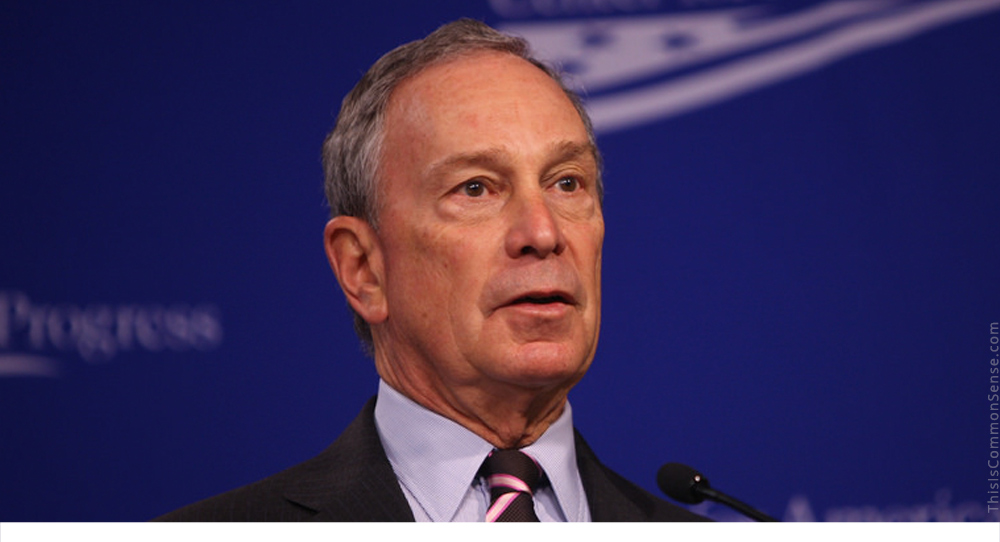
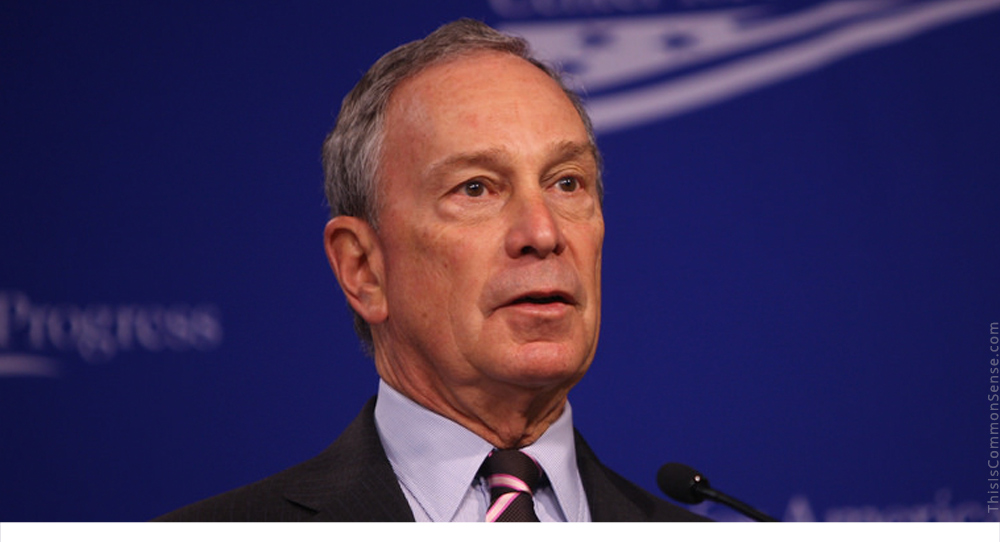
Michael Bloomberg is rich. He’s also in politics — a public health crusader.

And, for years, he “has personally funded and promoted all sorts of regressive taxes and regulations in an attempt to push people around,” the folks at Americans for Tax Reform tell us. “He uses the coercive power of the government to force people to live their lives as he sees fit.”

Onstage at a globalist event, One-on-One with Christine Lagarde — who is managing director of the International Monetary Fund — Bloomberg blurts out his approach to government policy regarding what he calls “those people.”

“If you raise taxes on full sugary drinks,” he says, “they will drink less and there’s just no question that full sugar drinks are one of the major contributors to obesity and obesity is one of the major contributors to heart disease and cancer and a variety of other things.”

Against the charge often made that such taxes fall heaviest upon the poor, he is forthright. Regressive? “That’s the good thing about them because the problem is in people that don’t have a lot of money.”

Notice that he is not talking about a public service campaign to help people learn how to drink (and eat) better. And he is not talking about removing all the government policies that have encouraged bad eating and drinking habits (as well as lethargy) — the government programs to encourage the overuse of high fructose corn syrup; the welfare state’s poverty trap that stifles life at the lower incomes; the subsidized consumption of food and drink — he wants to add another government program.

He can only see betterment by increased governmental bullying.

This is Common Sense. I’m Paul Jacob.


PDF for printing

Michael Bloomberg, tax, policy, nanny state, vice, social engineering, statist, technocrat

Photo by Center for American Progress

Categories
Accountability crime and punishment folly general freedom local leaders moral hazard nannyism national politics & policies Popular privacy Regulating Protest too much government

The Last Straw

How much should we fine waiters who destroy our planet?

For how long should they go to jail?

I don’t know where you would hold such an evildoer after the earth has been destroyed. Or where he’d go when released. But we’re speaking hypothetically. Assume that planet-destroyers can be imprisoned on the moon, which let’s just say still orbits the earth’s decimated remains. Or assume that after being destroyed, the planet can be reconstructed. After serving his sentence, then, the waiter would be released to a reconstructed earth.

In that case, a maximum $1,000 fine as suggested by Ian Calderon, Democratic majority leader of the California State Assembly, seems only fair. However, a maximum of six months in jail is excessive. In my opinion, planet-destroying waiters should suffer no more than 100 days in jail.

Calderon has proposed a bill, AB-1884, to fine and/or imprison waiters who offer unsolicited plastic straws to restaurant patrons. In response to criticism of his silly and vicious bill, Calderon says hey, it’s “NOT a ban” on straws! Oh, okay. Anyway, “Penalties are based on the code section the bill is currently in, which it will be amended out of,” which sounds like Calderon was prior to the uproar . . . what, joking?

As long as we’re amending, let me amend my own implication that people who offer, use, make or sell plastic straws* are in fact helping destroy earth. Just kidding!

The earth will survive plastic straws. Will it survive the Calderons of the world?

Open question.

This is Common Sense. I’m Paul Jacob.

 

* Not that I’m confirming or denying ever using one myself.


PDF for printing


Categories
folly free trade & free markets general freedom moral hazard nannyism responsibility too much government

Signature Nonsense

Did anyone really need this?

Last year, California’s Governor Jerry Brown signed into law Assembly Bill No. 1570, which concerns collectibles, particularly signed-by-author or artist books. But it doesn’t mention books, and is confusingly written. What a mess.

Who asked for it?

It certainly wasn’t the struggling booksellers who have come to depend on signed authors’ copies. In the Age of Amazon.com, book vendors need to add value to stay afloat.* Author-signed copies help.

The law says that for signed-by-creator collectibles sold for more than $5 — yes, a mere five smackers — sellers must provide customers a Certificate of Authentication. The law specifies nine “helpful” directions for said certificates. So imagine an edition of Brian Doherty’s Radicals for Capitalism, signed by the author at, say, a non-profit dinner, or at a bookstore signing, or even a late-night bar —discounted to not much over five bucks.** The bookseller must not only provide a certificate, but list the book’s provenance. Talk about an added cost of doing business.

I mention Mr. Doherty not merely because of his excellent book, but because he has not unreasonably confessed that “my own interests could be harmed by any attempt to actually enforce the letter of this law.”

This week on EconTalk, economist Mike Munger mentioned the market’s built-in regulatory features — reputation being the most obvious — for helping consumers avoid getting ripped off buying books . . . and paintings . . . and anything else improved by creator signature.

But, really, can’t we make do with a little caveat emptor as well as caveat lector? Better than regulations this dense.

This is Common Sense. I’m Paul Jacob.

 

* The number of independent bookstores plummeted (down a thousand) around the country between 2000 and 2007. But there seems to be an increase since then, despite (or because of?) Abebooks and Alibris and other dot coms.

** I found a signed copy of Doherty’s history at Abebooks for $10.


Printable PDF


Categories
crime and punishment free trade & free markets general freedom moral hazard nannyism too much government

Sin, Soda and Say

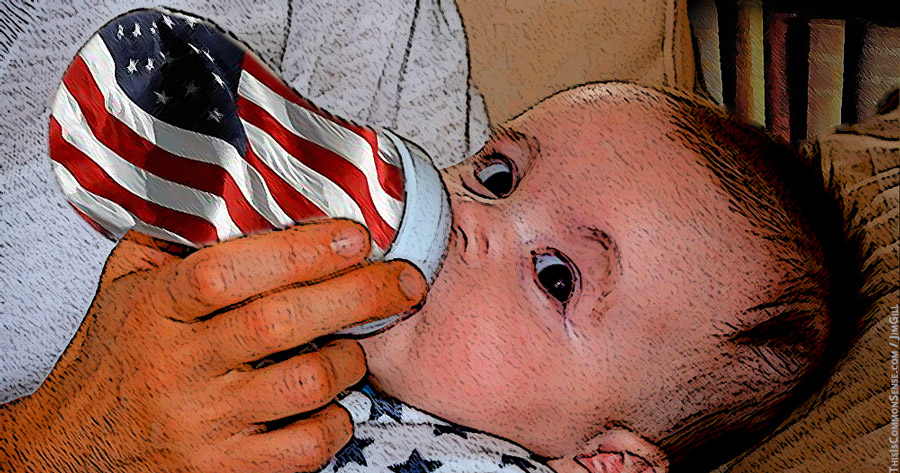
Government policy in Seattle, Washington, is being driven by an outright socialist on the city council. The mayor, apparently starving for attention, proposed a goofy new sin tax last year.

Now, writes Reason’s Baylen Linnekin, “Seattle lawmakers are expected to vote early next week on a citywide soda tax that would add more than $2.50 to the cost of a twelve-pack of soda.”

The tax’s proponents’ rationale is too familiar: sugary sodas are bad for us, so we must be discouraged from drinking them.

Besides, politicians want to spend our money.

The problem, of course, is that the more successful they are at the first task, discouraging the ‘sin’ itself, the less revenue for them to throw at voters to prove their ‘caring’ nature . . . and buy votes.

But it is not as if those are the only competing factors involved. “The tax would undoubtedly drive consumers,” writes Linnekin, “to buy more groceries in the city’s suburbs.” Bellevue and Kirkland are nice towns. And nearby.

Arguing for a tax like this — as a social engineering mechanism — is not only crude, but flies in the face of the very best wisdom, that of Jean-Baptiste Say:

A tax can never be favorable to the public welfare, except by the good use that is made of its proceeds.

But elitist nannyism corrupts politicians, who make it their job to steer our consumption.* And they tend to be resistant to the “best scheme of finance,” which is, as J.-B. Say put it, “to spend as little as possible; and the best tax is always the lightest.”

If the tax goes in, Seattleites, drive to out-of-town Costco or Walmart.

Then drive your greedy nannies out of office.

This is Common Sense. I’m Paul Jacob.
 

* Considering the mayor’s push to include diet sodas in the sin tax, how competent at this are they? It’s the sugary drinks that are known killers, but the diet drinks are mainly imbibed by wealthier folks. The mayor wants to appease the socialist on the council, and pointedly not favor the “privileged.”


Printable PDF


Categories
general freedom moral hazard nannyism responsibility too much government

The $659,000 Non-Question

The so-called “Motor Voter” law of 1993 created a national mandate: when people obtain their drivers’ licenses at the Department of Motor Vehicles, ask them if they’d also like to register to vote.

The federal mandate is perhaps heavy-handed, but the underlying idea has merit.

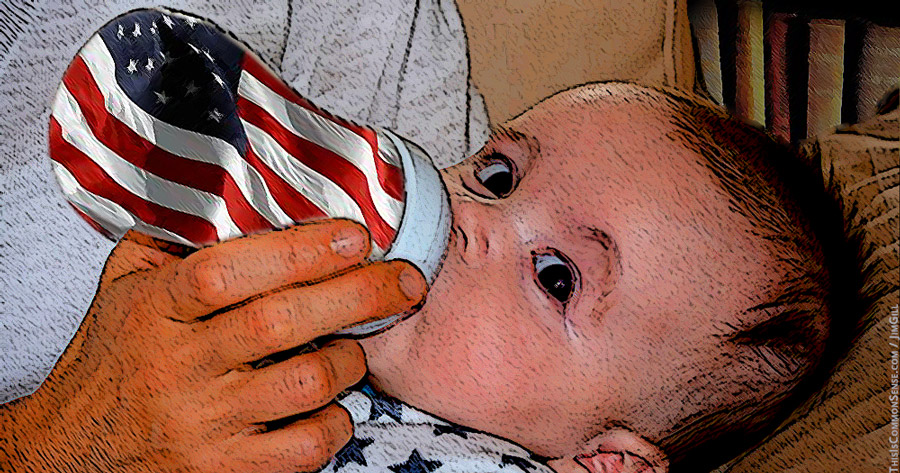
Now a new idea is gaining ground, taking the notion (nudge, nudge) a step further. Let’s not bother asking people if they want to sign up to vote, the proposal runs. Government should simply register them. Without asking.

It is a form of paternalism.

“It flips the presumption, where right now they ask you if want to be registered,” argues D.C. Council member Charles Allen. “Instead of that, we’re just going to go ahead and get you registered, and that absolutely helps enfranchise voters.”

“Lawmakers in 32 states have introduced measures in the last year to automatically register drivers to vote,” reports the Washington Post.

Some folks contend there isn’t much difference between asking if someone wants to register and registering them without asking. Well, if there isn’t much difference, why spend the $659,000 that Washington, D.C. officials estimate it will cost over the next four years for their new “don’t-ask” program.

Of course, there is a difference in the two policies: sort of like between offering people something to eat and force-feeding them.

Some Americans have no desire to vote or be registered. It is surely no business of any state or local government to act as if their preferences don’t count.

And what good are a bunch of names on a voter list if they aren’t interested? Is someone going to vote for them?

This is Common Sense. I’m Paul Jacob.

Printable PDF


Categories
general freedom nannyism national politics & policies too much government

A Federalist Prescription

California has become the 32nd state to stand up for the dying.

Gov. Jerry Brown just signed the “right to try” law that the Goldwater Institute has been pushing. It allows diagnosed terminally ill patients with only a few months left to live to try “experimental” medications.

These are drugs that haven’t passed through all the Food and Drug Administration’s many hoops.

The rationale for the law is that the FDA’s decade-long, costly process is ostensibly designed to prevent “dangerous” drugs from being regularly prescribed and sold and used in the United States. To save lives, you see. But it is simply cruel to hold patients in the process of dying to the strict standards of the slow, bureaucratic federal bureaucracy. Cruel because purposeless.

The Goldwater Institute’s press release clarifies the law like this: “Right To Try is limited to patients with a terminal disease that have exhausted all approved treatment options and cannot enroll in a clinical trial. All medications available under the law must have successfully completed basic safety testing and be part of the FDA’s on-going approval process.”

Hardly radical. Indeed, it seems such a meek and mild move, to me. If you are dying, and your doctor is obliging, who is harmed?

Two things, though:

  1. Had Americans a right to self-medicate — like we did before the Progressive Era nanny state bureaucracies were set up — this issue would not even come up. These reforms are necessary because we are not Once upon a time, all Americans could choose any medication.
  2. This is yet another example of states effectively nullifying federal law.

More please.

This is Common Sense. I’m Paul Jacob.


Printable PDF

FDA, self medication, drugs, medicine, death, illustration


Categories
folly general freedom moral hazard nannyism

A More Perfect Turkey

Let’s talk Turkey. Not the bird, the country. America has fallen behind in yet another category: preposterous promises by politicians.

It’s becoming clear that Bernie Sanders, Vermont’s independent “democratic socialist” U.S. Senator and now Democratic Party presidential contender, is a piker, a penny pincher, a cheapskate, a tightwad, a Scrooge. At least, by comparison.

It’s one thing to promise free stuff — say, zero-priced college for everyone! — but is the generous senator willing to give entrepreneurs $100,000 to start a business?

Turkish Prime Minister Ahmet Davutoğlu is.

Well, 100,000 Liras anyway.

In the run-up to Sunday’s Turkish election, the fearless leader of the Justice and Development Party announced his plan to subsidize new businesses.

And so much more. And why not? “Once you have a job, salary and food. What is left?” Davutoğlu rhetorically asked last week, answering, “A wife.” He told male citizens: “first consult your parents and, God willing, they will find you a suitable one. If they don’t, you can come to us.”

Meanwhile, no U.S. candidate proposes any government support whatsoever for men seeking wives. Or women seeking husbands . . . or wives. Or men seeking husbands. Etcetera.

No dating subsidy, either, or help with high wedding costs — not even a Costanza regulation to protect brides from the dangers of deadly wedding invitation envelopes.

Of course, government big enough to give folks everything they desire is also big enough to take everything — including free speech — away. This week, Turkish police stormed two “opposition” TV stations taking them off the air days before the vote.

That could never happen here, though . . . could it?

This is Common Sense. I’m Paul Jacob.


Printable PDF

turkey, Ahmet Davutoğlu, free stuff, Bernie Sanders, illustration, Paul Jacob, Common Sense


Categories
Common Sense folly general freedom ideological culture nannyism too much government

I Prefer Plastic

When I go to the supermarket, and get asked “paper or plastic?” — about which bag the checker should wrap my purchases in — I almost always say “plastic.” They are lighter than paper bags, are easily re-usable for a wide variety of home purposes, and resist water — thus less apt to self-destruct on the trip from store to car, car to kitchen.

Of course, anything plastic and mega-popular makes a perfect target for environmentalist critics. Hundreds of cities, particularly on the West Coast — but throughout the world — now outlaw plastic bags or restrict their use.

We are encouraged to buy and re-use cloth shopping bags — which in my experience get stinky pretty quickly.

On many issues (say, pollution) my heart is with the environmentalists. But on the bag issue, I’m skeptical. Thankfully, Katherine Mangu-Ward has a great piece at Reason, showing that the scientific case against the plastic bag is weak — weaker than a paper bag holding wet veggies, an exploded Coke, and frozen meat.

Plastic bags are not the litter problem they’ve been cracked up to be, she says, citing one study figuring that “all plastic bags, of which plastic retail bags are only a subset, are just 0.6 percent of visible litter nationwide.”

And, as for harm to wildlife, she quotes a Greenpeace biologist to good effect: “It’s very unlikely that many animals are killed by plastic bags. The evidence shows just the opposite. We are not going to solve the problem of waste by focusing on plastic bags. . . . On a global basis plastic bags aren’t an issue.”

What is at issue is their utility, reusability, and . . . our freedom.

This is Common Sense. I’m Paul Jacob.


Printable PDF

Paper or Plastic, collage, photomontage, Paul Jacob, James Gill, illustration, politics


Categories
Common Sense crime and punishment general freedom nannyism privacy responsibility

Pain Economies

Looking for a new doctor, a colleague of mine called his friend’s primary care clinic, and was told, “We are taking all patients except pain management cases.”

He was thankful his health issues were not pain-related.

After reading Leslie Kendall Dye’s Salon piece, “But what if I actually need my painkillers?” you will easily understand: America doesn’t make it easy for those who must fight constant pain.

Ms. Dye’s story is harrowing. Her chronic pain, the residue of a ballet injury, makes her personal, day-to-day experience not primarily about economizing pleasures, but economizing pains.

So she takes Tramadol. Regularly. Even with the drug, her agony too often returns. What she tries to do is carry on with as little relief as possible while living an active, normal life, always risking excruciating pain levels.

And she’s constantly harassed and inconvenienced and probed and lectured. “Each time I take my painkiller prescription to a pharmacy, I can’t help feeling suspected of a crime.”

She’s not paranoid.

The government is out to get her. And her doctors.

All to “save” the lives of people who “abuse” the drugs.

I read about cases of lost souls, overdoses, suicides, black market pills, portions of towns laid waste by narcotic abuse, and I worry. I worry for the addicts, but I also worry for those of us who would not be able to carry on without responsible pain management.

She admits to feeling “conflicted” about this.

My prescription? Feel less conflicted. Were today’s standard individual responsibility, not societal responsibility, responsible patients would suffer less.

This is Common Sense. I’m Paul Jacob.


Printable PDF

Pain Medicine Police


Categories
general freedom nannyism property rights responsibility too much government

Why the Tiny Domicile

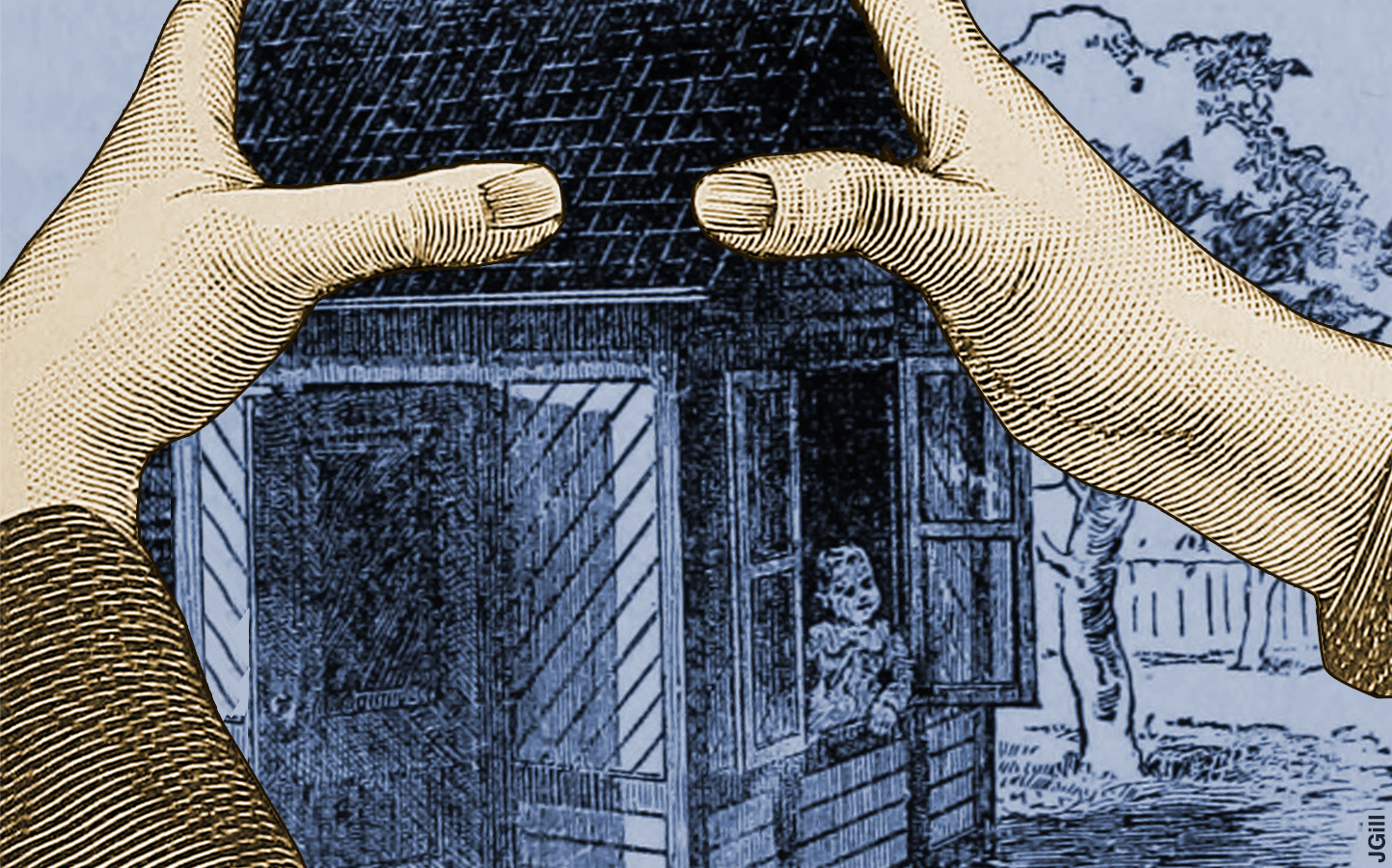
[mks_dropcap style=”letter” size=”60″ bg_color=”#ffffff” txt_color=”#000000″]T[/mks_dropcap]he “tiny house” movement has gained momentum. More and more people — especially young people and childless people — see the virtue of very small houses. They are cheaper, can be made energy-efficient, have an almost necessarily smaller “environmental footprint,” and are mobile.

And I can see the attraction. For one thing, a tiny house would be easier to clean than what I have. For another? Snug. Many of the efforts are very cleverly designed and built. And certainly for young singles, they make a great deal of sense.

But, wouldn’t you know it, there is a problem here. Government.

Urban housing authorities, zoning boards, and the like, have not exactly been accommodating to this new development.

Which is, in its way, typical, and typically frustrating. After all, many of the reasons folks are looking to tiny houses result from government regulation in the first place. City, metro and county governments have been so poorly accommodating to diversity in housing demands that costs have risen horribly.

This is all explained over at Reason, which draws the bureaucratic environment of the nation’s capital in relation to tiny homes: “they’re illegal, in violation of several codes in Washington D.C.’s Zoning Ordinance. Among the many requirements in the 34 chapters and 600 pages of code are mandates defining minimum lot size, room sizes, alleyway widths, and ‘accessory dwelling units’ that prevent tiny houses from being anything more than a part-time residence.”

This leaves Reason’s featured tiny home owner in yet another bad-government-induced limbo: “allowed to build the home of his dreams — he just can’t live there.”

We need tiny government. Or at least tiny-accommodating government. Really… both.

This is Common Sense. I’m Paul Jacob.