Categories
ideological culture international affairs

The Culture of Genocide

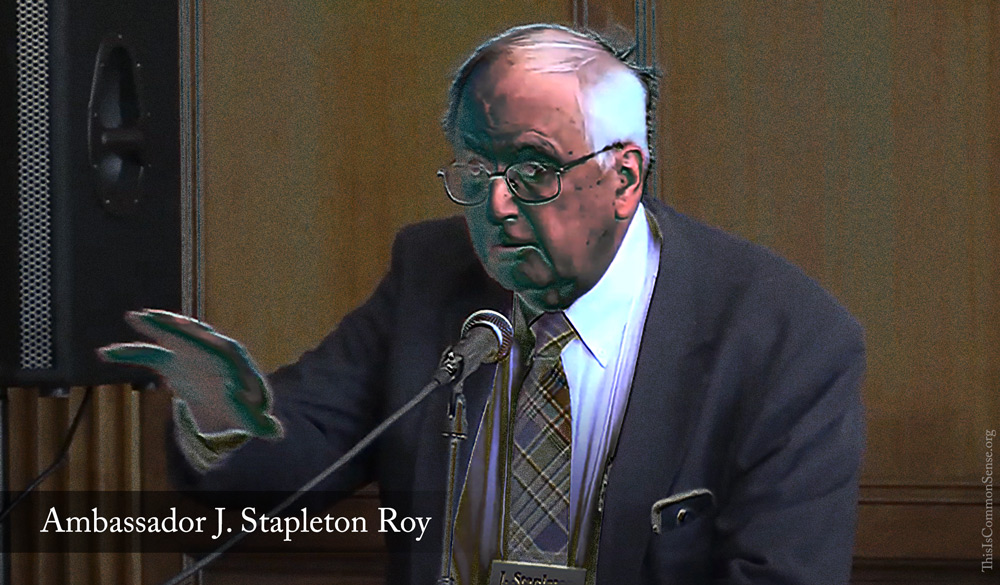
“Let’s be careful with our language,” advises Stapleton Roy, former U.S. Ambassador to the People’s Republic of China. 

Very careful. Totally careful. Totalitarian-ly careful.

Speaking to students earlier this month in a Zoom meeting as part of Pomona University’s Model United Nations, Roy took issue with Hong Kong students and protesters for “provoking mainland intervention,” arguing the millions who marched for basic democracy “went too far” and should have used more “self-restraint.”

The U.S. foreign affairs veteran even decries the 1989 Tiananmen Square protests, which he also concludes “set back the cause of reform in China for decades.”

And here I was thinking that the massacre of an estimated 3,000 to 10,000 unarmed Chinese civilians by the People’s Liberation Army is what detoured that noble cause.

“China has come under criticism from U.S. officials following revelations of mass forced sterilization of Uyghur women, as well as the internment of over one million Uyghurs in camps where detainees are forced to learn Communist Party ideology. Reports of torture, rape, and other abuses have emerged from these camps,” writes National Review’s Zachary Evans.

“Genocide is generally used to refer to the extermination of a people or nation,” Ambassador Roy explains. “Genocide is not taking place in Xinjiang.” 

Yet according to the United Nations, the Chinese Communist Party’s manner of oppression does constitute “genocide.” 

“More accurately,” even Roy acknowledges, “there is what can be called ‘cultural genocide.’”*

That is merely the extermination of a people’s customs, religion, ethnicity and, imperatively, their freedom . . . but kindheartedly not murdering all of them. 

Okay, Mr. Ambassador, let’s choose our terms precisely. Protesters in Hong Kong have a word for the Beijing government: “ChiNazis.” 

This is Common Sense. I’m Paul Jacob.


* What a coincidence! “China seized control over Tibet in 1950 in what it describes as a ‘peaceful liberation’ that helped the remote Himalayan region throw off its ‘feudalist’ past,” notes a recent Al Jazeera report. “But critics, led by exiled spiritual leader the Dalai Lama, say Beijing’s rule amounts to ‘cultural genocide.’”

PDF for printing

See all recent commentary
(simplified and organized)
See recent popular posts
Categories
international affairs media and media people

Defying China . . . for Now

According to a New York Times report, “American Internet giants are struggling to respond” to China’s recent crackdown on Hong Kong.

For now, the outcome of the struggle is that Facebook, Twitter, and Google have stopped sharing data with Hong Kong officials. Doing so has become tantamount to sharing data with the Chinese government.

If this wasn’t clear before China’s repressive new “national security” laws in Hong Kong, it’s clear now. The Chinese government is systematically working to muzzle and punish anyone who threatens “national security” by openly criticizing the Chinese government.

Yahoo has changed its policies as well, so that users are now governed in their dealings with Yahoo by American law, not local Hong Kong law (rapidly becoming synonymous with the mainland’s edicts).

So far, so good. 

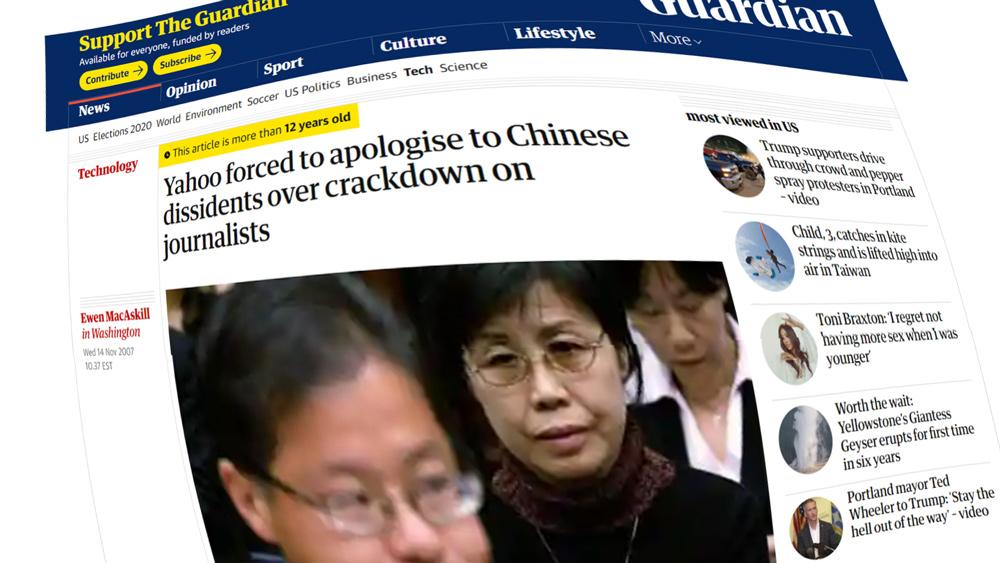
Worrying, though, is how inconsistent the tech giants have been. Yahoo once helped the Chinese government to identify and imprison two dissidents, claiming it had “no choice” but to turn over the info. Google and others have worked with China to censor information that the Chinese government doesn’t want its citizens to see.

These companies should never — in no way, shape, or form — help China go after dissidents. 

They should never cooperate, rationalize, compromise. 

It would be better to pack up their services and leave Hong Kong altogether than to “struggle” to find a middle way that “sort of” cooperates with China’s repression — and “sort of” leaves Hong Kongers in the lurch.

To bolster these companies’ new backbones, we had best leverage our power as customers.

This is Common Sense. I’m Paul Jacob.


PDF for printing

See all recent commentary
(simplified and organized)
See recent popular posts
Categories
First Amendment rights Second Amendment rights

Students Fight Back

Everywhere, assaults on freedom and free speech are going full blast. Violent True Believers are on the march as others, even if less overtly barbaric, provide cover, an excuse.

For example, the State University of New York at Binghamton has cooperated with left-wing thugs to suppress conservatives.

The mob stole or destroyed posters and the table students were using to promote an appearance by Arthur Laffer, the noted supply-side economist. The same mob also disrupted the lecture itself. A lawsuit brought by the victimized students accuses officials of failing “to take action to defend College Republicans’ constitutional rights” and supporting the “physically abusive actions of the College Progressives.”

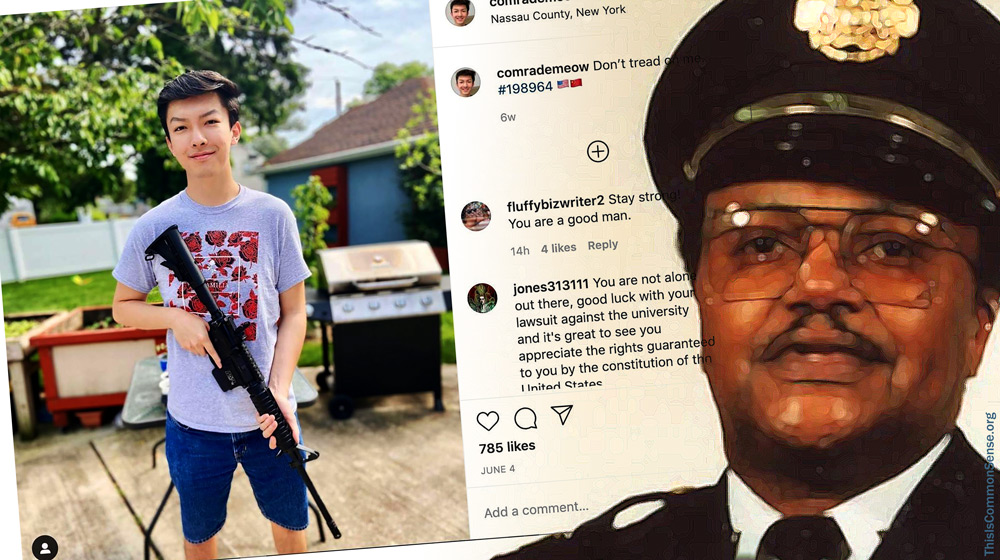
Another student under attack is Austin Tong. Recently, the Foundation for Individual Rights in Education (FIRE) has been going to bat for Tong, a Fordham University student suspended for social media posts.

One is a picture of Tong holding (not pointing) a legally owned rifle, intended to draw attention to the Tiananmen Square massacre. The other shows black police captain David Dorn, who was murdered by looters. Its caption chastises members of the Black Lives Matter movement for apparent indifference to Dorn’s fate.

Before suspending him for “bias” and “threats,” university personnel showed up at Tong’s house to interrogate him about the posts.

Tong is unapologetic, and FIRE says that Fordham has “acted more like the Chinese government than an American university, placing severe sanctions on a student solely because of off-campus political speech.”

Far from isolated cases, unfortunately.

This is Common Sense. I’m Paul Jacob.


PDF for printing

See all recent commentary
(simplified and organized)
See recent popular posts

Categories
international affairs

All Together Now

Chinese Communist Party-controlled Hong Kong — under the National Security Law — has issued arrest warrants for six democracy activists.

I was not honored with inclusion.

“But Paul,” you sputter, “you do not live in China!”

Well, neither do those activists — all six now live outside the territory. 

Passed in secret in Beijing and imposed on Hong Kong, the new law basically criminalizes opposition to the CCP. 

ALL opposition. Anywhere. Anytime. Ex post facto

“The law criminalizes secession, subversion, terrorism and foreign interference,” CNN explains, “and it applies to offenses committed ‘outside the region’ by foreigners who are not residents of Hong Kong or China.”

One fugitive from injustice is Nathan Law, a former Hong Kong lawmaker and a leader of 2014’s Umbrella Movement. “I was prepared when I left Hong Kong to be in exile,” Mr. Law said on social media, explaining his departure when the draconian new law took effect, “but . . . who can enjoy freedom from fear in the face of China’s powerful political machine?”

Hong Kong officials maintain that there is “no retrospective effect” to the law, but that seems obviously untrue in Law’s case, and others’.* 

Samuel Chu with the Washington-based Hong Kong Democracy Council, a U.S. citizen for two decades, also graces the list. “I might be the 1st non-Chinese citizen to be targeted, but I will not be the last,” tweeted Chu. “If I am targeted, any American/any citizen of any nation who speaks out for HK can-and will be-too.”

Last year, when the protests first began, I wrote “I Am Hong Kong.” A year later? Even the CCP ominously agrees with Mr. Chu’s conclusion: “We are all Hong Kongers now.”

This is Common Sense. I’m Paul Jacob.


* “Other activists targeted include Simon Cheng, a former employee of the British consulate in Hong Kong who was granted asylum in the United Kingdom after alleging that he was tortured in China and interrogated by secret police about the city’s pro-democracy protests,” according to CNN, “and Hong Kong pro-independence activists Ray Wong, Honcques Laus and Wayne Chan.”


Note: Before these indictments, Hong Kong authorities tossed a dozen pro-democracy candidates off the ballot for September’s election. And then suspended the election for a year citing the pandemic — obviously wanting to avoid another massive election defeat for the CCP-puppet government. 

PDF for printing

Photo by Warren R.M. Stuart

See all recent commentary
(simplified and organized)
See recent popular posts
Categories
general freedom international affairs

Last Bit of Freedom

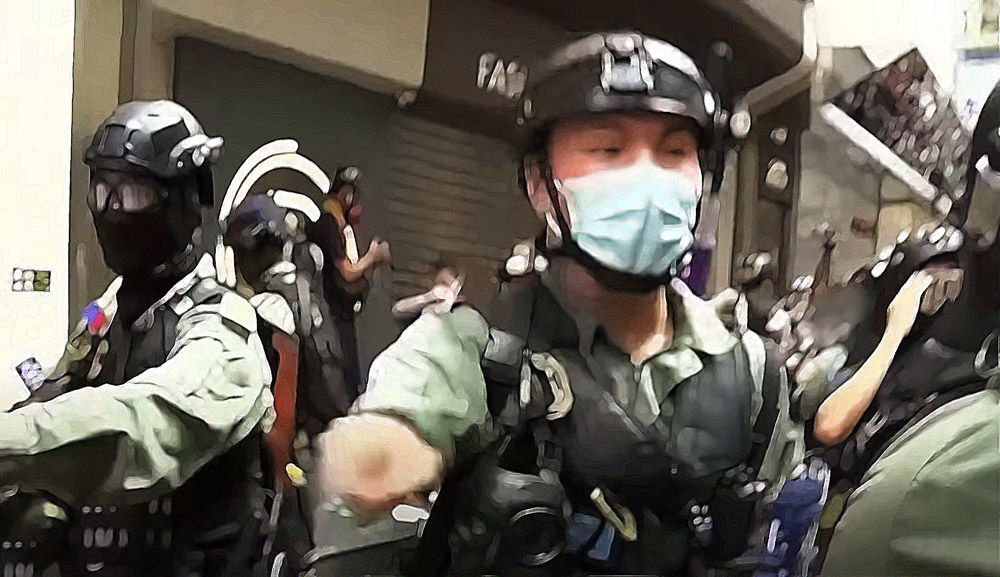
Yesterday, on the 23rd anniversary of Britain’s 1997 handover of Hong Kong to China, the Chinese Communist Party (CCP) imposed a draconian national security measure on the previously semi-autonomous territory.

“The law effectively ends the long-cherished freedom of speech that Hong Kong residents have had,” reported The Washington Post, “putting them under the same threat of life imprisonment if they criticize Beijing’s government, as other Chinese nationals face.”  

Supersizing police powers to “intercept communications and covertly surveil people” are also part of the CCP clampdown.

“In the past,” a pro-Beijing council member explained, “Hong Kong has been too free.”

In keeping with that sentiment, protests planned for yesterday were banned. 

“They still came out,” however, noted a reporter with UK’s Sky News, “even though the cost of protest had been raised significantly on the first full day of the new law.” 

“We are on street,” tweeted Joshua Wong, the young pro-democracy activist, “against national security law. We shall never surrender. Now is not the time to give up.”

“China is Hong Kong, Hong Kong is China, as of today, the first of July. It’s a sad day, but that’s what it is,” offered a woman protester. “I’ll still take to the streets. I’ll still say what I think. Because it is my right as a human being.”

More than 300 protesters were arrested yesterday. 

Wong called on the “international community” to “continue to speak up for Hong Kong” and help protect its “last bit of freedom.”

This is Common Sense. I’m Paul Jacob.


PDF for printing

See all recent commentary
(simplified and organized)
See recent popular posts
Categories
First Amendment rights general freedom international affairs

Too Many Tiananmens

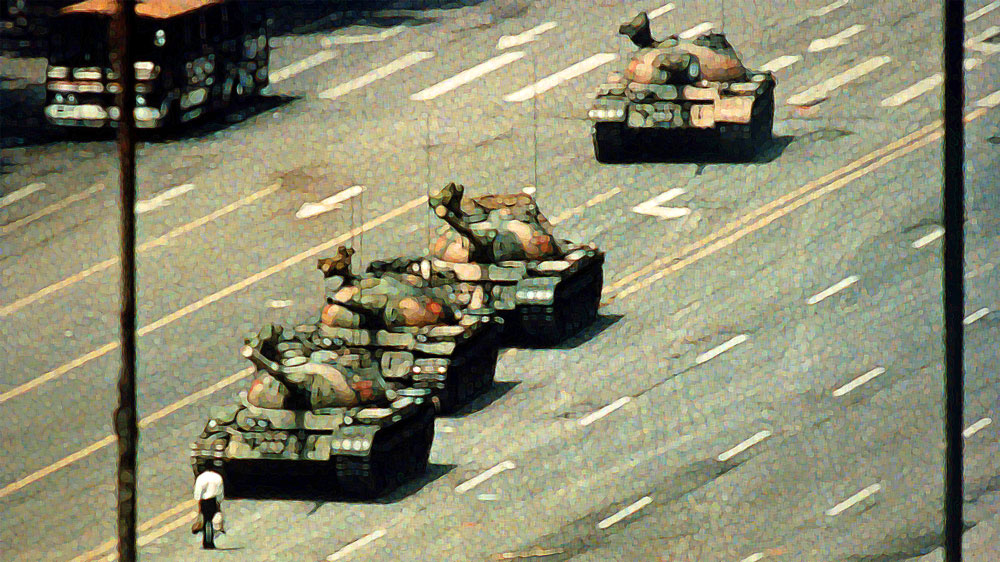
Chinese students suddenly occupied Beijing’s Tiananmen Square for seven beautiful weeks in the Spring of 1989. 

Millions more from all walks of life joined them.

Protesting tyranny, they demanded democracy and freedom of speech.

Then, 31 years ago to this very day, the Chinese government sent in tanks and soldiers, opening fire on citizens outside the square, killing thousands. The Chinese Communist Party (CCP) followed up the massacre with arrests and lengthy prison terms for those committing the unspeakable crime of speaking out for freedom.

Fast-forward three decades and the ChiNazis in Beijing are currently engaged in snuffing out the civil liberties and democratic aspirations of the people in Hong Kong.*

In mainland China, the CCP has always squelched any mention of the Tiananmen Square massacre, but every year Hongkongers have held a vigil. Not this year. It has been banned.

The world should have learned two obvious lessons: (1) the Chinese people want freedom and democracy, and (2) the ‘Butchers of Beijing’ will brutalize to prevent it.

Far more powerful than in 1989, CCP tyrants now wield a much more effective police state against Chinese citizens. 

Now is the time to honor the Tiananmen demonstrators, but clearing Lafayette Park of protesters so President Trump can walk to a church seems . . . disquieting.

Not a memorial. 

And suggesting he might invoke the Insurrection Act of 1807 to engage the military in domestic policing? Trump’s defense secretary rightly opposes. 

Comparisons to Tiananmen Square have not unreasonably been drawn

The difference? Americans can revolt . . . peacefully, which our government cannot put down. 

For the sake of the free world and all those — including 1.4 billion Chinese — in the unfree world, now is no time to abandon peaceful protest and political action for insurrection, riot, and military suppression.

This is Common Sense. I’m Paul Jacob.


 * This is brazen violation of the 1997 turnover agreement made with Britain, of course.

Additional Reading:

What It Means

What Tiananmen Inspired

Tiananmen & Term Limits

All the Tyranny in China

I Am Hong Kong

PDF for printing

See all recent commentary
(simplified and organized)
See recent popular posts
Categories
general freedom international affairs

Totalitarianized

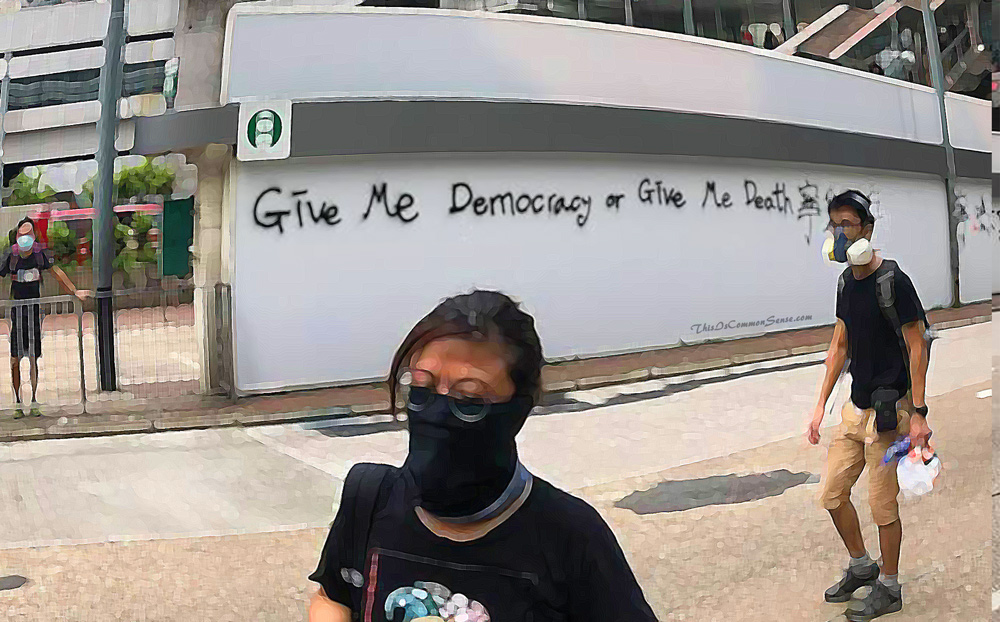
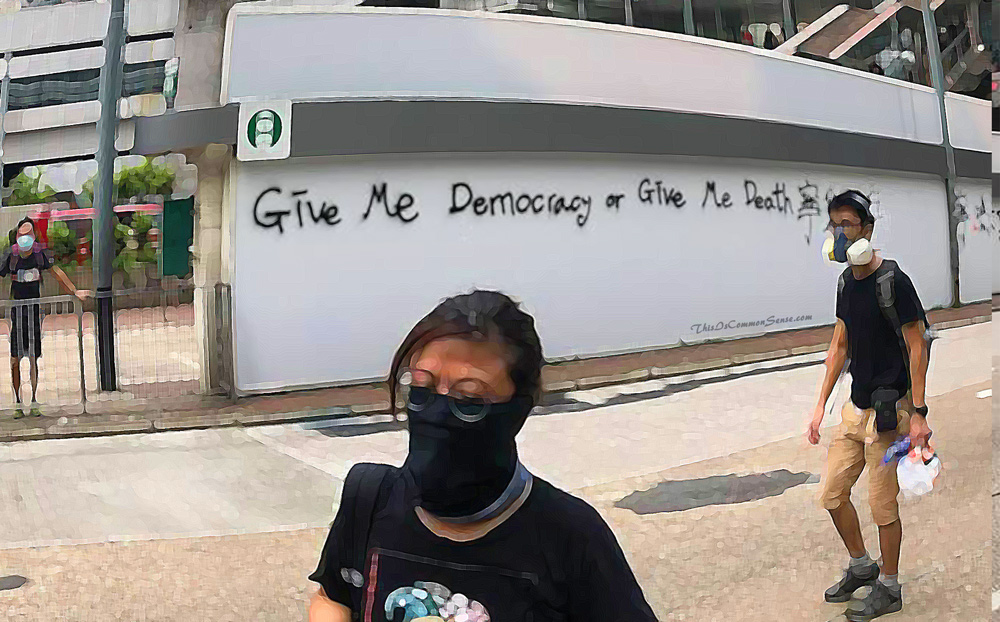
Legislation introduced last April to allow the extradition of criminal suspects from Hong Kong to mainland China motivated millions into the streets in protests that have not yet ended . . . 

. . . including a major pro-democracy rally scheduled for tomorrow in Causeway Bay.

Traveling to Hong Kong and Taiwan months ago, the glimpse I caught of Hongkongers’ courageous struggle spurs me to applaud George Will’s judgment in Sunday’s Washington Post: “Nothing more momentous happened” in 2019. 

The extradition bill has been withdrawn, sure, but Hongkongers know well that without real democracy they have no long-term hope of avoiding the repressive rule of the Chinese Communist Party . . . which may no longer be “communist,” but remains totally totalitarian.

Ask a million Uighurs

Carrie Lam, the city’s Beijing-installed chief executive, has long labeled the protesters “selfish rioters.” But new pro-democracy candidates won nearly 90 percent of seats in last month’s local elections, demonstrating which side the public is on. 

This year began with newly un-term-limited Chinese President Xi Jinping threatening military action against Taiwan. The island nation of 24 million, some 100 miles off the coast of the mainland, has been offered the same “one country, two systems” arrangement China has with Hong Kong . . . what Mr. Will dubbed “a formula for the incremental suffocation of freedom.”

Taiwan’s president, Tsai Ing-wen, is “loathed by Beijing,” reports the South China Morning Post, “because her party refuses to accept the idea that Taiwan is part of the so-called one-China principle which denies the island’s independence.” 

Her opponent in the upcoming national election on the 11th, like some in the NBA, “favours much warmer relations with mainland China.”

The Taiwanese, however — like Hongkongers — appear increasingly resistant to being totalitarianized.

This is Common Sense. I’m Paul Jacob.


2019 Commentaries on Hong Kong and Taiwan

PDF for printing

Hong Kong, China, Taiwan, democracy, freedom,

See all recent commentary
(simplified and organized)
See recent popular posts
Categories
international affairs Popular

Beacon of Liberty

What part should we play in terror, torture, oppression?

Asking for a friend. 

Well, friends . . . some three-hundred-and-thirty million of them.

Egypt. The government of President Abdel Fattah el-Sisi just stormed the newsroom of one of Egypt’s few remaining independent media outlets, Mada Masr

“Mada has shown nothing but courage in reporting the news against all odds,” a representative of the Committee to Protect Journalists (CPJ) offered bitterly, “and in the face of brutal repression.” 

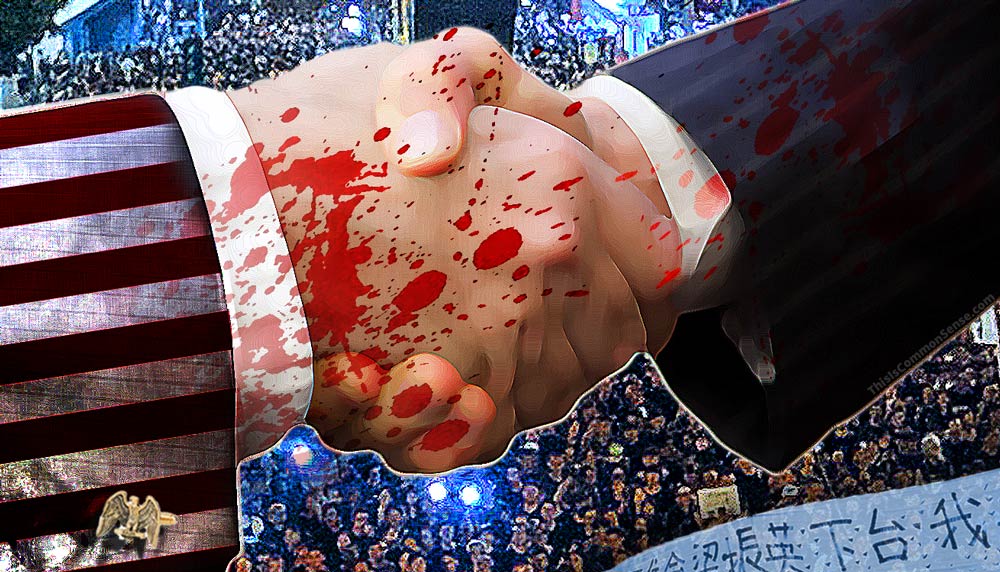
According to the CPJ, Egypt is the world’s top jailer of journalists. And that repression is not just well-documented, it is also well-funded. By . . . well . . . Sisi’s state receives roughly $1.5 billion in annual U.S. military and economic assistance, while Egyptians must “forgo democratic liberties” as “authorities” maintain “a constant crackdown . . . encompassing anyone criticizing the government,” informs a Congressional Research Service report updated last week. 

Iraq. Anti-government protests are in full swing, with Iraqis “demanding an end to corruption, more jobs and better public services,” the BBC informs. More than 300 people have been killed by the government the American military set up, and nearly 15,000 injured as Iraqi Security forces have used tear gas and live bullets against protesters.

Hong Kong. The smashing victory for pro-democracy candidates in the former British colony, who “won almost 90 percent of the seats” in local elections, was the weekend’s bright spot. Voters sent an unequivocal message.

Now on President Trump’s desk is the Hong Kong Human Rights and Democracy Act (H.R.3289), which puts the territory’s special trading status at risk should China impinge on its autonomy.

Will our president sign the legislation or exchange it with Chinese leader Xi Jinping for a better trade deal?

Funding, facilitating oppression is no way to serve as a beacon of liberty to the world.

This is Common Sense. I’m Paul Jacob.


PDF for printing

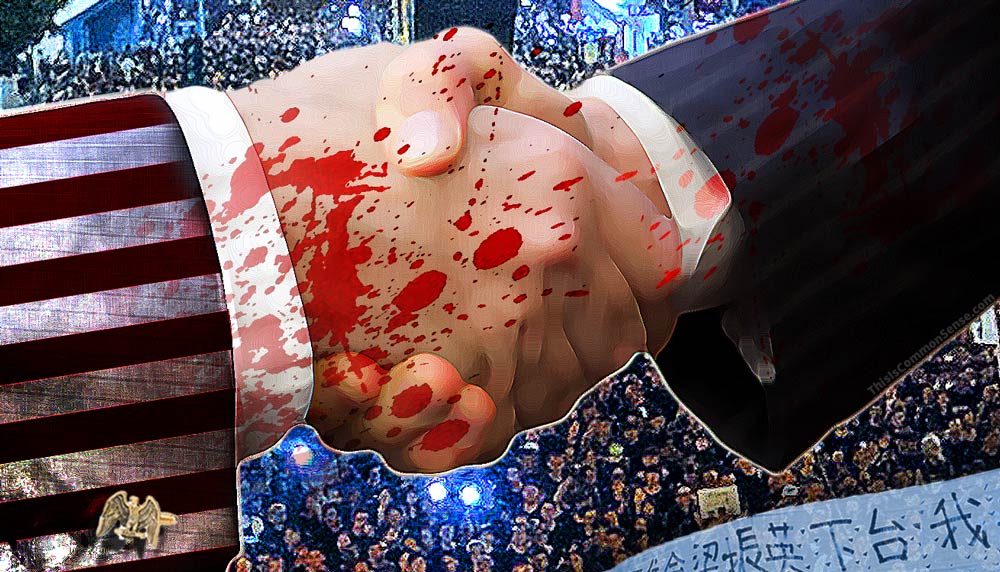
handshake, China, US, foreign policy, China, Hong Kong,

Photo: Studio Incendo / Photo: Flazingo Photos

See all recent commentary
(simplified and organized)
See recent popular posts

Categories
First Amendment rights general freedom ideological culture

The King’s Airball

“The thing is, LeBron, we’ve come to expect more of you,” writes Dan Wolken in USA Today, taking the National Basketball Association star to task for his comments taking Houston Rockets executive Daryl Morey to task for having tweeted “Fight for freedom, stand with Hong Kong.”

Morey’s pro-protester statement had caused a backlash against the NBA from the totalitarian Chinese government, threatening the league’s — and LeBron’s — continued access to China’s large and lucrative market of basketball fans.

LeBron James told reporters that Morey was “misinformed, not really educated” about the Hong Kong situation, before adding, witlessly, “I have no idea but that’s just my belief.”

“Yes, we all do have freedom of speech,” acknowledged James, “but at times there are ramifications for the negative that can happen, when you’re not thinking of others and you’re only thinking about yourself.”

Ramifications for whom? The people of Hong Kong yearning for freedom and democracy? Or was Mr. James . . . only thinking about himself?

Criticism came fast and furious. “@KingJames — you’re parroting communist propaganda. China is running torture camps and you know it,” tweeted Nebraska Senator Ben Sasse. 

“Let me clear up the confusion,” responded the King of Basketball, if not public relations. “I do not believe there was any consideration for the consequences and ramifications of the tweet.  I’m not discussing the substance.”

And then LeBron further clarified, “My team and this league just went through a difficult week. I think people need to understand what a tweet or statement can do to others. . . . Could have waited a week to send it.”

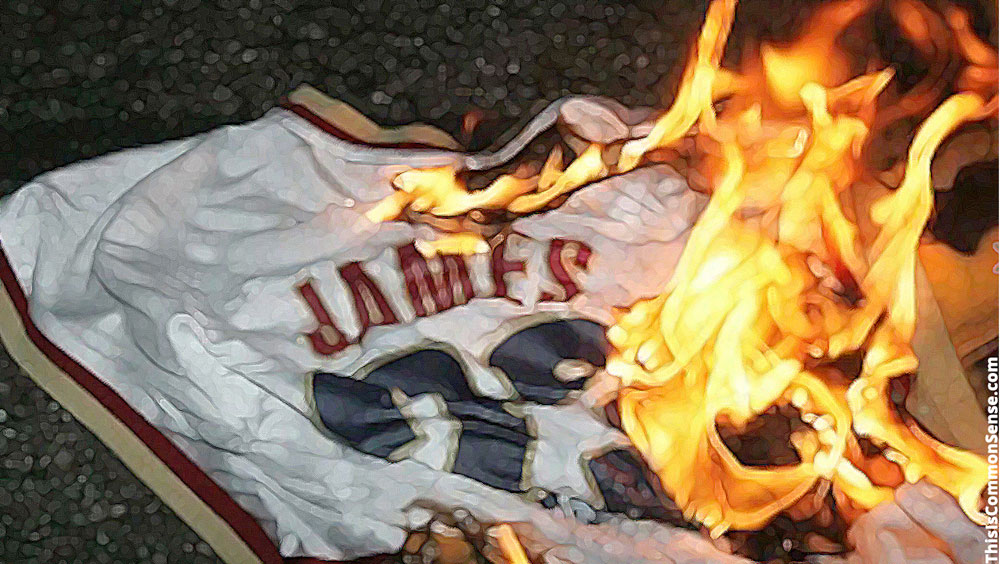
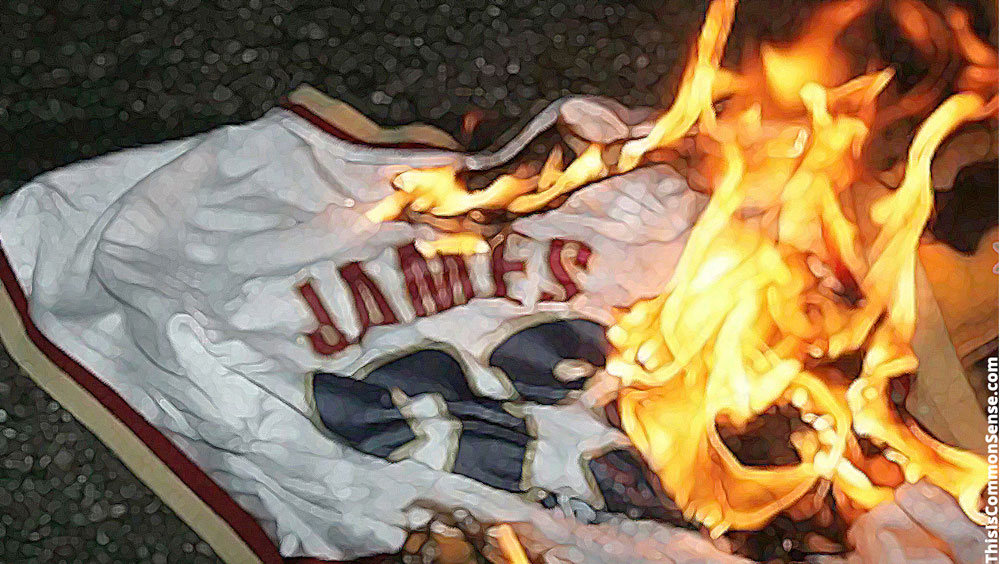
Hong Kong protesters are now burning LeBron’s No. 23 jersey. 

Apparently, their freedom can’t wait a week.

This is Common Sense. I’m Paul Jacob.


PDF for printing

LeBron James, Hong Kong, China, freedom, free speech,

See all recent commentary
(simplified and organized)
See recent popular posts

Categories
general freedom international affairs

Blizzard Fallout

“I’ve already deleted my Blizzard account,” offered the young man while taking my Starbucks order. 

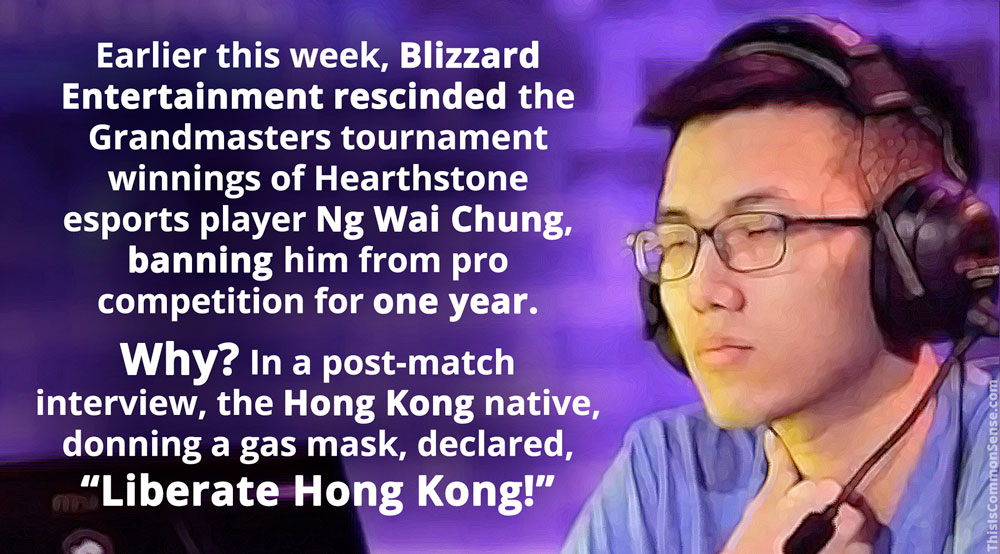
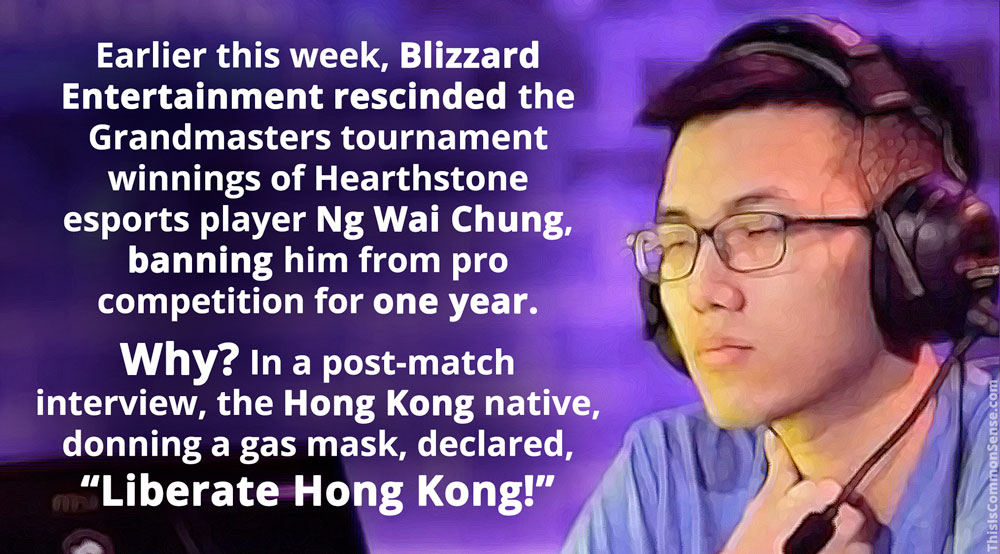
Blizzard Entertainment is a video game developer based in Irvine, California. Earlier this week, the company rescinded the Grandmasters tournament winnings of Hearthstone esports player Ng Wai Chung, whose professional name is “Blitzchung,” banning him from pro competition for one year. 

Why? In a post-match interview, the Hong Kong native, donning a gas mask, declared, “Liberate Hong Kong!”

The company claims Blitzchung violated tournament rules disallowing “any act that, in Blizzard’s sole discretion, brings you into public disrepute, offends a portion or group of the public, or otherwise damages Blizzard.” More likely, the censorship comes from Tencent Games, a large Chinese company, with a 5 percent ownership stake in Blizzard’s parent company.

“I can’t just sit there doing nothing,” Chung told reporters, “watching our freedom being destroyed bit by bit.”

Blitzchung’s courageous stand has, thankfully, received rewards, too, for he is receiving offers from other, more politically conscious gaming outfits. 

And Blizzard faces a serious customer backlash, along with employee walkouts and dissent.

On Wednesday, I bemoaned the fickle stand taken by Houston Rockets GM Daryl Morey, who tweeted, “Fight for freedom! Stand with Hong Kong!” but then deleted the tweet under pressure from the Chinese government. Then, yesterday, an NBA spokesperson apologized that a CNN reporter was blocked from asking Rocket players a question about the controversy.

The NBA may be scared of totalitarian China’s economic bullying, but fans are speaking out. At exhibition games between NBA and Chinese Basketball Association teams, in both Philadelphia and Washington, D.C., fans wore shirts and held signs saying, “Free Hong Kong.” 

Speaking truth to power across the globe.

This is Common Sense. I’m Paul Jacob.


PDF for printing

Ng, Activision, Blizzard, games

See all recent commentary
(simplified and organized)
See recent popular posts