Categories
Accountability free trade & free markets insider corruption national politics & policies responsibility

United States of Corruption

When Hillary Clinton assured her insider sponsors (as we learned through WikiLeaks) that there would be a crucial difference between what she tells the people and what her actual policies would be, she was not merely admitting to a private and a public face.

The President is legally, and by honor, bound to serve the American people, not Goldman-Sachs. What she was confessing to was more than the mere appearance of a conflict of interests.

She boasted a plan of betrayal.

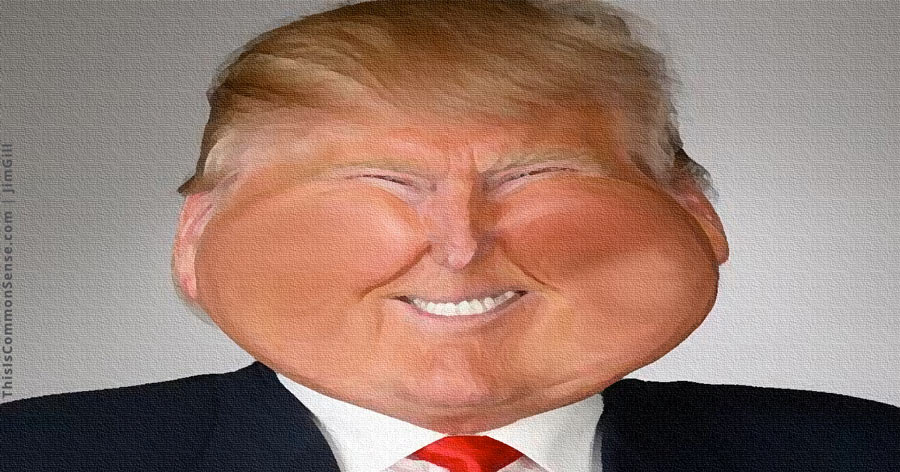
In that light, President-elect Donald Trump’s international business deals seem . . . what? His first diplomatic meeting — with Japanese Prime Minister Shinzo Abe — included his daughter and partner-in-business Ivanka.

It seems to at least wander into conflict-of-interest territory, if not stake claim and hoist up a flag proclaiming Trumpistan America!

So I was very pleased, yesterday, when the President-elect vowed to step out from the running of his global business and branding empire.

Earlier, he had brushed off conflict-of-interest concerns, saying he could run his empire and . . . ours.

Apparently, his new White House appointees have convinced him that this business dealing while President was a huge problem. “I feel it is visually important,” he explained Wednesday morning, “as president, to in no way have a conflict of interest with my various businesses.”

Thanks, Steve Bannon?

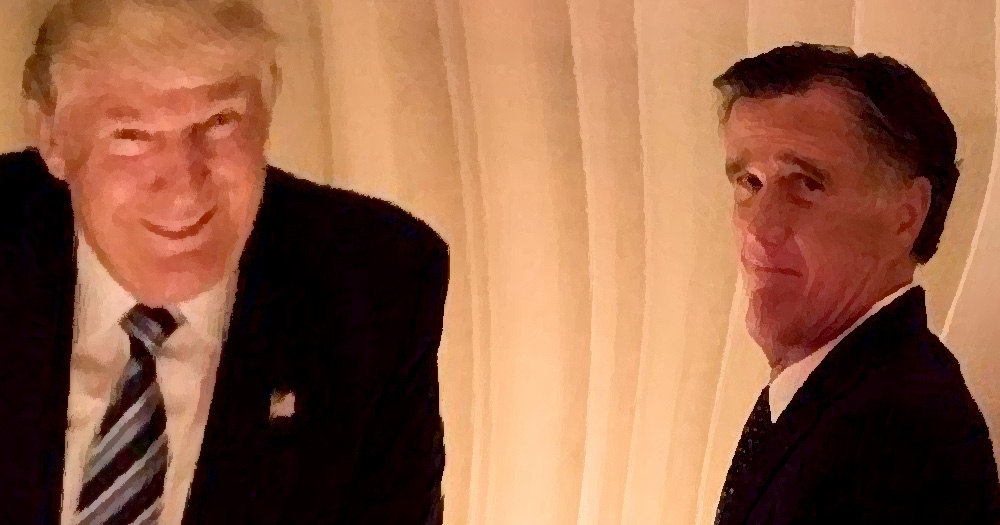
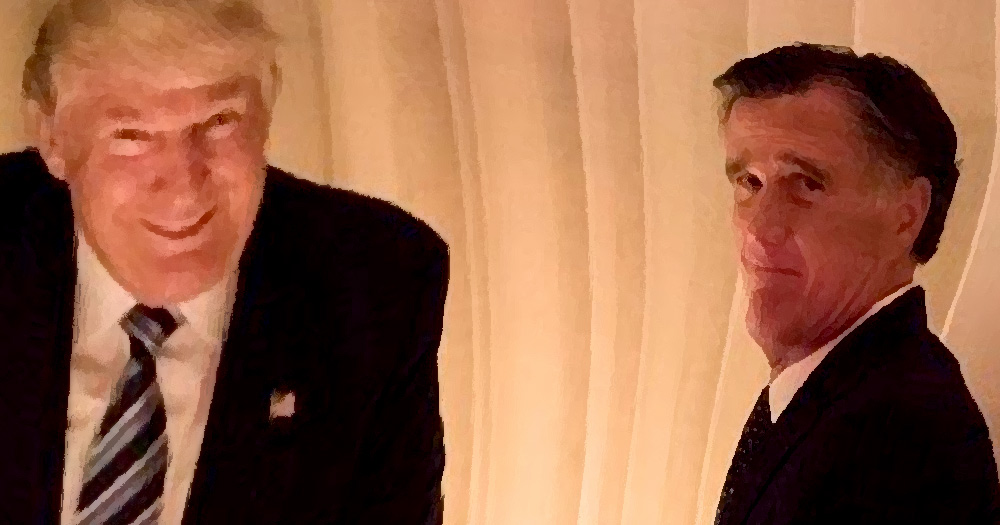
Or, maybe, Mitt Romney, with whom he dined* the night before?

I hope Mr. Trump follows through with this, as well as distance himself from business partner Ivanka as unofficial policy advisor.

Americans did not reject Corrupt Hillary only to wind up with a Corrupt Trump set.

This is Common Sense. I’m Paul Jacob.

Printable PDF

Romney, Trump, crow, corruption, dinner, illustration


Categories
Accountability First Amendment rights government transparency media and media people national politics & policies

Prestige, Trump & the Media

“Donald Trump’s election has really undermined America’s democratic prestige in China,” offered Claremont McKenna College Professor Minxin Pei on a recent hour of The Diane Rehm Show, public radio from our nation’s capital. When Pei added that it has “set back the prospect of democracy in China for years,” Mrs. Rehm let out an audible moan.

Then Diane asked her guests, “as members of the press” what they “make” of President-Elect Trump’s “rejection of his meeting with The New York Times.”

“It seems,” bemoaned James Fallows, the Atlantic’s national correspondent, “a continuation of his not having any normal press conferences, dealing entirely outside normal press channels and seeming not to recognize the legitimacy of this part of the democratic fabric.”

“I don’t know anything about the specific details about the New York Times meeting,” admitted the Financial Times’ Geoff Dyer. Still, that didn’t stop Dyer from announcing that, “But it’s part of a pattern . . . to a much more conflict-ual, antagonistic, almost bullying relationship with the media.”

Elizabeth Economy, with the Council on Foreign Relations, found it “disturbing” that Donald Trump thinks “he can be his own media, he can simply tweet out whatever he wants, he can make his homegrown videos and sort of impart his information directly to the American public, without the mediating influence of the media.”

Let’s welcome Elizabeth to America.

“We are all recognizing we’re on new terrain now and need to find some way to keep telling the truth, or our best approximation of it, in very different circumstances,” concluded Fallows ominously.

Trump, as you’ll recall, did wind up attending that meeting at The Times.

This is Common Sense. I’m Paul Jacob.

Printable PDF

Donald Trump, media, journalism, twitter, tweet, direct, illustration


Categories
ideological culture national politics & policies political challengers

Double Bubble America

The “unexpected” Donald Trump presidential victory has put the folks at The Gray Lady a bit out of sorts.

Heather Wilhelm at the National Review pokes and prods at the absurdities of the New York Times’s cultural cluelessness. And ably enough. So I’ll stick to The Times’s recent “six views” of America’s ideological divide:

Julie Turkewitz recognizes two well-insulated informational bubbles at play. Nothing too controversial — or very deep.

Campbell Robertson muses upon the dominance of the “elites” against which Trump’s insurgents rebel, noting that “the elites are the still the ones who get to decide who gets to be elite.”

Laurie Goodstein takes on religious culture, making much of divergent spiritual outlooks, left and right.

Julia Preston peers at immigration and the prospect of sending a message by building a “wall.”

In the manner of the other five, Sheryl Gay Stolberg digs up real-world people — as does our speechifier-in-chief, Barack Obama — to lightly probe questions of assimilation versus multiculturalism.

Manny Fernandez concludes with a (yawn) discussion of giving and taking offense.

They all miss the underlying structural basis for the divide.

On one side: folks working in the private sector — or local governments and charities, or at home — who have seen the world pass them by in terms of income and security.

On the other: government workers and consultants (and other college grads) who make more, on average, than their “real world” counterparts.

The latter has advanced as a class; the former remain in stasis . . . at best.

A mystery?

No — it’s the predictable result of what Thomas Jefferson called “the parasite institutions now consuming us.”

This is Common Sense. I’m Paul Jacob.


Printable PDF

bubble, Trump, election, reasons, explanations, illustration


Original (cc) photo by diana MĂRGĂRIT at Flickr


Categories
Accountability moral hazard nannyism national politics & policies political challengers too much government U.S. Constitution

Term Limits Trump

Entering his campaign’s homestretch, underdog Donald J. Trump gave an important speech at Gettysburg, Pennsylvania. He emphasized his support for term limits in what he called his “100-day action plan to Make America Great Again.”

“[R]estoring honesty, accountability and change to Washington” is the top item on Trump’s agenda, along with a pledge to begin the drive for “a Constitutional Amendment to impose term limits on all members of Congress” on his very first day in the Oval Office.

Public disgust with the corrupt status quo in Washington — and the hope that he will shake things up — drove Trump’s victory.

Yet, today, the Elections Committee of Michigan’s House of Representatives hears testimony on several bills to weaken or repeal term limits. Have the limits lost public support? Not on your life.

Politicians simply want to stay ensconced in power, reaping the many benefits they’ve bestowed upon themselves. They want to stay in power longer.

Just look to California. Back in 2012, a dishonest ballot explanation tricked voters into thinking they were tightening their term limits law. But what they were actually doing was voting to weaken it.

Now, Golden State legislators can stay in the same seat for a dozen years. And special interests have noticed. They’re “investing” more heavily than ever before.

The Los Angeles Times summarized the result in its headline: “Longer terms for California’s Legislature mean a flood of cash from interest groups . . .”

Here’s for enacting real term limits at every level of government. And if the politicians and special interests don’t like it — good!

This is Common Sense. I’m Paul Jacob.

Printable PDF

Donald Trump, term limits, president, first, illustration


Categories
Accountability media and media people moral hazard national politics & policies

Indecency Abounds

The most indecent aspect of this bizarre election year? The “grab them” comment . . . from a decade ago? The lies about lies about lies? The “debates”?

Maybe not. Maybe it’s the infamous “mainstream media.”

Last week I wrote about the most obvious case, that of Donna Brazile and her helping hand emails to the Clinton campaign, accomplishing what years of mere induction and analysis could not: justifying, totally, the epithet for CNN as the “Clinton News Network.”

But it was nearly the whole media that was in the tank, as we say nowadays, for Mrs. Clinton. This has been obvious for some time. Even mainstream media mavens have noticed it, as I wrote not too long ago.

Will more journalists and TV faux-journalists notice?

They certainly have now noticed that they did not see a Trump victory coming.

Delusional about Hillary Clinton’s likability, and about how normal folks react to her history of corruption and scandal, TV talking heads and powerful newspapers doubled down in her favor . . . which may have actually helped precipitate a result against their intention.

The mainstream media triggers much of America, you see, especially the parts of the country that revolted against the prospect of a Clinton Dynasty.

Not that I place myself above journalists as objective, either. I’m not a journalist. I’m an activist. I am for liberty. Responsibility. Accountability. Limited government. I’m no more a fan of major party messiahs than I am of their rah-rah boys in the journalist biz.

I’m not exactly shouting about Trump’s win. I’m just happy that Hillary — and her vast Democratic-partisan media conspiracy — lost.

If this be indecency, make the most of it.

This is Common Sense. I’m Paul Jacob.

Printable PDF

Donald, Trump wins, media, failure, illustration


Categories
ballot access general freedom government transparency media and media people national politics & policies political challengers

A Brexit Effect?

Before the Brexit vote, the likelihood of British secession from the European Union garnered a mere 25 percent chance. That was according to European betting markets, which are usually more accurate. In June, the Brits voted Brexit.

Donald Trump has made much hay of this, understandably.

On Tuesday, the odds of a Trump victory hit the same mark: 25 percent.

Gwynn Guilford’s report on this was drolly titled “Donald Trump has the same odds of winning as Jon Snow ruling Westeros, according to betting markets.”

On June 11, Business Insider had reported that Hillary was increasing her lead; on October 18, it exulted that the Irish betting markets had “already declared a winner” — not Trump. On November 1, the news aggregator merely noted that Moody’s is calling the election a landslide for Clinton.

But BI is also covering the scandal that has disturbed the Clinton camp. There’s no love lost between the Federal Bureau of Investigation and the Department of Justice, explains Natasha Bertrand in “‘The Antichrist personified’: ‘Open warfare’ and antipathy toward Clinton is reportedly fueling the FBI leaks.” The meat of her representation is that “much of the agents’ frustration . . . may boil down to partisanship”; the FBI is “Trumpland.”

Yet the article ends quoting another FBI official insisting that both Trump and Clinton are awful candidates.

A plausible judgment.

Whether late-in-the-game revelations of Clinton corruption and FBI probing can defy current odds and produce a Clinton defeat remains to be seen. As of Thursday evening, polls-only forecasts placed the odds of winning at 67/33 in favor of Mrs. Clinton, while electionbettingodds.com placed them at 70.2/29.2.

This is Common Sense. I’m Paul Jacob.

 

N.B. Late-breaking Brexit news: The United Kingdom’s high court ruled yesterday that Parliament must vote to approve Brexit before the secession can proceed.


Printable PDF

gamble, betting, HIllary Clinton, Donald Trump, president, presidency, election, voting, illustration, creative commons


Categories
ideological culture media and media people moral hazard national politics & policies responsibility too much government U.S. Constitution

Pigs in Pokes

On Tuesday, Former Massachusetts Governor William Weld exhorted Americans to stop Donald Trump at all cost.

The Donald, he asserted, is dangerous because too touchy, too childish in his egoism, to withstand the pressures of the presidency of these United States. “In the statement, Weld made no mention of Clinton,” writes the AP. He focused on Trump and the GOP, instead.

Both progressive and conservative outlets interpreted this as a de facto endorsement of voting for Democrat Hillary Clinton — an uncomfortable conclusion, considering that Weld is Libertarian Party presidential nominee Gov. Gary Johnson’s VP running mate.

Looking at the statement itself, it is apparent that Gov. Weld prefers The Devil We Know to The Devil He Fears.

Which is where he loses me.

One need not like Trump to understand his appeal. Trump is a smoking sack of Who Knows What placed upon the doorstep of the Establishment, the insider classes running the federal government and the Fourth Estate. By taking offense at Trump but not Clinton, Weld sides with the insiders. My longtime respect for Weld aside, how can one plausibly do that?

We know what the Establishment wants most: perpetual war, permanent debt, and secure power.

Meanwhile, the ostensible Republican has been awfully vague on policy. Voting for Trump is buying a pig in a poke.*

The Democratic poke is fairly well known. But Hillary, the war-monger who accuses Trump of being Putin’s “puppet” and repeatedly plays chicken with the world’s other great nuclear power, puts her own policies in a poke by proclaiming her personal prerogative of telling the voters one thing and her insider crowd another.

Neither sack of . . .  uh, please.

This is Common Sense. I’m Paul Jacob.

 

* Old idiom: synonym for swine in a sack.


Printable PDF

Hillary Clinton, Donald Trump, war, danger, president, illustration


Questions Answered:
Who is Gov. William Weld most fearful of this election year?
How plausible is a preference of Hillary over The Donald?
What can we make of Hillary’s and Donald’s foreign policies?

Ask the next question. --Theodore SturgeonThe Next Question:
If pigs could fly, which one would you vote for?

Categories
Accountability crime and punishment general freedom ideological culture judiciary national politics & policies U.S. Constitution

The Best Case for Trump Isn’t

I support neither Hillary Clinton nor Donald Trump for the presidency. Still, I do understand several reasons to vote for Trump, including, most obviously, “he’s not a Clinton.”

The most persuasive strategic reason given for voting for the man, however, and the one that has most purchase with me, is that he would appoint better Supreme Court justices than would Mrs. Clinton.

Note: if the Democrats gain hold of the U.S. Senate, an elected Donald Trump would “negotiate.” And the next set of Supremes might be quite bad.

But is all this irrelevant? It does not look like Trump will be elected, so any vote thrown at him will be just as “wasted” as a vote for Johnson, Stein, or Mickey Mouse.

More importantly, if Hillary wins, no biggie on the Supreme Court front IF (a big “if”?) the Republicans maintain congressional dominance.

Why?

Our Senators are not required to vote for any of a president’s appointees. But, alas, that is not what Democrats are saying now! Forget such self-serving nonsense. The Constitution does not specify the number of justices on the Supreme Court. It is nine now, sure, but the Highest court in the land was first manned by five justices, then seven.

So, after the election, unpack the court.* Back down to seven, at least.

And then let’s talk terms for the currently “serving for life” justices, and term limits.

In any case, the best case for Trump isn’t so much a case for him, as a plan of action no matter who is elected.

This is Common Sense. I’m Paul Jacob.
 

*This notion is more doable, I think, than Franklin Delano Roosevelt’s infamous court packing scheme, in which he threatened to put more justices in to over-rule those justices who thought his “New Deal” program unconstitutional. Congress, not required to vote in any proposed Supreme Court candidate, could balk at all and then, by law, reduce the number, even removing one justice from office if need be.


Printable PDF

Supreme Court, Congress, Hillary Clinton, Donald Trump, election, illustration


Questions Answered:
Does the best reason to vote for Donald Trump really hold water?
Does the Constitution specify the number of justices that should be on the Court?
Is Congress really at the mercy of any bully who occupies the Oval Office?

Ask the next question. --Theodore SturgeonThe Next Question:
Will voting for someone other than Trump be more of a “wasted vote” than voting for Trump himself, if, as polls indicate, he loses?


Categories
meme

There must be. . .

There must be a less excruciating way to find the least qualified person in the country.

Categories
general freedom insider corruption media and media people national politics & policies political challengers responsibility too much government

We Take the Bullet

“[I]f someone puts a gun to your head,” argues David Boaz of the Cato Institute, “and says you have to choose between Clinton and Trump, the correct answer is, take the bullet.”

Then, proving the axiom “it can always get worse,” came Friday’s twin revelations: the Washington Post broke the story of Donald Trump caught on a hot microphone bragging about groping women, and WikiLeaks released hacked emails with unflattering revelations about Hillary Clinton “principled” duplicity.

The Clinton camp huffs about the hack of campaign chairman John Podesta’s emails, but denies nothing.

In those speeches for which Wall Street firms paid her millions, Clinton’s progressivism evaporates. She suggests Goldman Sachs and other large financial firms should regulate themselves, because they “know the industry better than anybody.”

While publicly bashing the rich, she privately complains before her wealthy audience about the “bias against people who have led successful . . . lives.” Moreover, Hillary explains that it’s bad “if everybody is watching” public policy being made, adding: “[Y]ou need both a public and a private position.”

And to think some folks don’t trust her.

Mr. Trump likewise confirmed our worst fears. During a 2005 taping of a television soap, he boasted that “when you’re a star, they let you do it. You can do anything.”

And then gave a “rapey” example of what “anything” means.

This man deserves political power?

Forget which is worse. Note how much alike they are. Both seem to think they can say — even do — anything. Without consequences.

Without caring one whit about the rest of us.

This is Common Sense. I’m Paul Jacob.

Printable PDF

debate, Hillary, Donald Trump, the scream, bullet, illustration