Categories
incumbents political challengers Popular term limits

The Incumbency vs. Progressives

“The Democratic Party leadership is choosing machine politics,” charged Alexandra Rojas, the young executive director of Justice Democrats, “over ushering in a new generation of leaders and the fundamental idea of democracy.”

She specifically assails the DCCC’s blacklist of political professionals working for Democratic Party candidates who dare to challenge Democratic incumbents in next year’s Democratic primaries. 

The Intercept reports that “at least four consultants dropped” challenger Marie Newman’s campaign “under pressure from the Democratic Congressional Campaign Committee’s new policy to cut off vendors working with primary challengers.” 

Newman is formidable, having come within 2 percentage points of Rep. Dan Lipinski in the 2018 Illinois Democratic Primary. The National Abortion Rights Action League, Democracy for America and other progressive groups are decrying a DCCC “blacklist policy that protects anti-choice, anti-LGBTQ, corporate Democrats like Dan Lipinski.”

And progressives have reason for disgust. Lipinski is a protected insider.

For the last 36 years, there has been a Lipinski in Congress. Bill Lipinski, the current congressman’s father, held the seat for 22 years before giving it to his son. And yes, “giving” is correct. 

In 2004, two months before the November election, while running unopposed for a 12th term, the incumbent resigned — too late to trigger a special election wherein voters could make a choice. Instead, Bill’s replacement was hand-picked by the Illinois district’s Democratic Party Committee.

Controlled by — you guessed it! — Bill Lipinski. 

That insider group chose Bill’s son, Daniel, who was then living in Kentucky.

“It was an open process,” claimed the father. 

Today, per the blacklist, “[t]he DCCC says the policy doesn’t discourage primary challengers.”

Well, I guess no one expects truth from a political machine.

This is Common Sense. I’m Paul Jacob.


PDF for printing

democratic party, Democratic Congressional Campaign Committee, DCCC, Bill Lipinski, primary challenger,

See all recent commentary
(simplified and organized)
See recent popular posts

Categories
Accountability government transparency insider corruption local leaders media and media people nannyism national politics & policies political challengers Regulating Protest responsibility

Not Fine with Feinstein?

Could it be that Sen. Dianne Feinstein, Democrat of California, may not be liberal enough?

The San Francisco Democrat has ostensibly represented the Golden State in the United States Senate for the last 26 years. Before that, Feinstein spent eight years on San Francisco’s Board of Supervisors and then a decade as mayor.

Now, after 44 consecutive years as a public official, what does the 85-year-old Feinstein seek? More. That is, another six-year lease on her powerful perch in the U.S. Senate.

But the Executive Board of the California Democratic Party — Feinstein’s Party — just said, “No way!”

A whopping 65 percent of the 333-member board opted for State Sen. Kevin de León, a fellow Democrat seen as more “progressive.” Only seven percent supported endorsing Feinstein.

Keep in mind that Feinstein is already on the November ballot. She was the leading vote-getter in California’s primary last month. Yet, she received only 44 percent of the vote: a majority does favor someone else.

In February, 2,700 activists at the State Democratic Party Convention in San Diego voted 54 to 37 percent for State Sen. De León over U.S. Sen. Feinstein.

“Feinstein, who spends much of her time in Washington, has had a distant relationship with party activists for years,” noted the Los Angeles Times report.

Still, what Democratic Party activists want may not matter so much. Mrs. Feinstein enjoys tremendous name recognition and, according to the Times, has “$7 million in campaign cash socked away as of May, ten times what De León had.”

That money seems to be Sen. Feinstein’s real base of support.

This is Common Sense. I’m Paul Jacob.


PDF for printing


Categories
Accountability government transparency insider corruption local leaders moral hazard national politics & policies political challengers responsibility

Omission of Character

One downside to jumping to the wrong conclusion is that the failure to even look for the correct, accurate conclusion inevitably follows. 

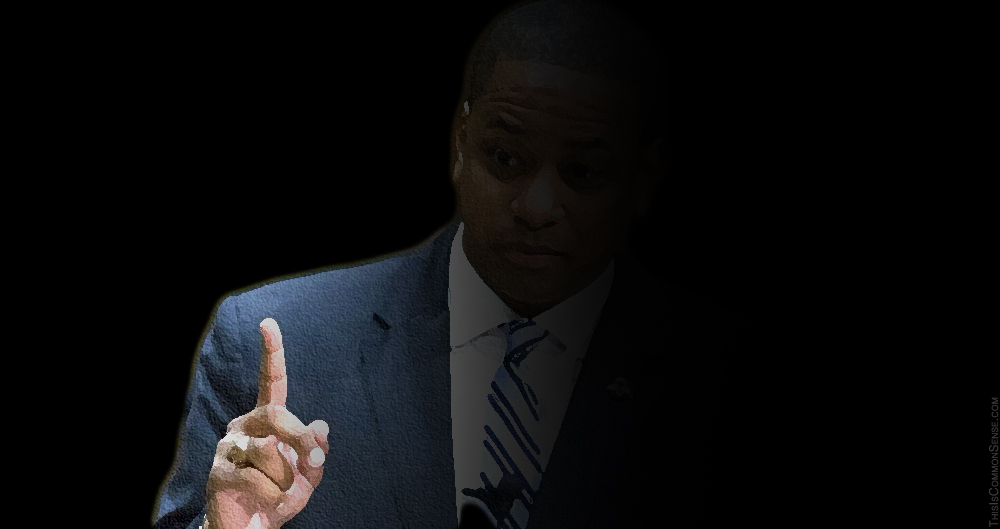
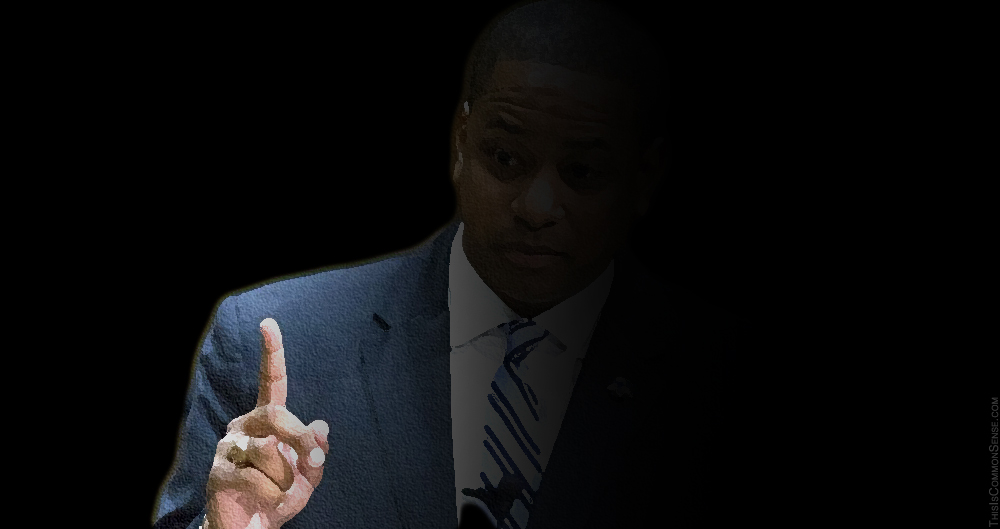
This sleepy odd-year campaign for governor of Virginia has recently been riled by charges of racism. Democratic Party gubernatorial nominee Frank Northam made the “mistake” of “omitting the party’s candidate for Lt. Governor, Justin Fairfax, from a small printing of literature for union members about the Democrats’ statewide slate. 

Northam is white and Fairfax is black. 

“[A] slap in the face to Justin and to black voters,” is what Quentin James, who runs a PAC working to elect black candidates, called the removal of Fairfax from the literature. He added that it “reeks of subtle racism” and “sends a signal across the state, that we, as black voters, are expendable.”

Noting that black voters make up 20 percent of the state’s electorate, Think Progress dubbed Fairfax’s deletion: “mindboggling.”  

Was this a “dis” and did it really have anything to do with Fairfax being black?

Well, Fairfax labeled it a “mistake,” but his exclusion from the flyer was certainly not inadvertent. It was by clear-eyed design.

The Laborers’ International Union of North America (LiUNA), a $600,000 donor to the coordinated state Democratic campaign, requested that Fairfax be removed from literature their members will distribute. The union is at odds with Fairfax over his opposition to two state pipeline projects the union favors.

So, Northam didn’t throw Fairfax under the bus because Fairfax is black. No sirree. Northam threw Fairfax under the bus to placate a powerful, well-heeled special interest group.

Northam isn’t a racist. He’s just a self-interested, disloyal politician.

This is Common Sense. I’m Paul Jacob.


PDF for printing


Categories
Accountability folly free trade & free markets general freedom ideological culture media and media people nannyism national politics & policies too much government

Political Regroupings

What’s true for hurricanes is true for the Democratic Party.

After a disaster, it takes a while to regroup, really get a handle on what went wrong. Men and women take some time to absorb new realities.

A few interesting think pieces have come out of the left and center-left, recently, trying to digest what is wrong with the Democrats that they lost so much ground last year — even to someone like Donald Trump. To serious people, the “Russians did it” and “the Deplorables!” are not exactly winners.

Hillary Clinton may be stuck in that mode, but the Democratic Party needn’t be.

The more radical response came from John B. Judis, whose name was big in lefty magazines when I was young. His article “The Socialism America Needs Now,” in his old stomping grounds, The New Republic, tried to make the case for a vague leftism that could be called socialism, if you stretch the term, emphasizing bigger government without seeming too . . . Marxist.

Meanwhile, Mark Lilla has a new book of a somewhat more perceptive nature. Interviewed in Salon, Lilla makes much of the fact that while “smack in the middle” of the GOP’s website “is a list of 11 principles” . . . the Democratic Party could sport “no such statement.” Just a bunch of interest groups.

Interesting. Because, today, I went to GOP.com and saw no such principles list. But I did find a lot of Trump stuff . . . and a bunch of links to “identity groups.”

Talk about regrouping!

This is Common Sense. I’m Paul Jacob.


PDF for printing


Categories
Accountability ideological culture insider corruption media and media people national politics & policies

Sorry Not Sorry

Today, the Democratic National Convention begins in Philadelphia.

Yesterday, Debbie Wasserman Schultz, chairwoman of the Democratic National Committee, announced her resignation amidst a growing controversy over the DNC’s favoritism toward Hillary Clinton over Bernie Sanders during this year’s presidential contest.

Months ago, Sen. Sanders called for Wasserman Schultz to step down, noting her closeness to the Clinton campaign and angered by what his campaign perceived as unfair treatment. To which, Wasserman Schultz had smugly responded, “Spoken like someone who has never been a member of the Democratic Party and has no understanding of what we do.”

It seems Sanders had a lot better understanding of what the DNC does than she thought.

Thanks to WikiLeaks, the American people have also gotten in the know. Last Friday, WikiLeaks released 20,000 emails from top DNC officials, reportedly snatched by Russian hackers. In the emails, one can read the DNC’s top financial officer suggesting a smear against Sanders over his religion. “AMEN,” responded the DNC’s CEO.

Yes, indeed, the Democratic Party establishment was rigging the process. “The release provides further evidence,” Michael Sainato wrote in The Observer, that “the DNC broke its own charter . . . by favoring Clinton as the Democratic presidential nominee, long before any votes were cast.”

Caught breaking the rules, Wasserman Schultz is out!

Sorta. She’s out after the convention, not before.

Furthermore, Debbie Wasserman Schultz is still “in.” Mrs. Clinton just offered her a position on the campaign, and said she was “grateful to Debbie for getting the Democratic Party to this year’s historic convention in Philadelphia.”

By hook and by crook.

This is Common Sense. I’m Paul Jacob.  


Printable PDF

Debbie Wasserman Schultz, democrat, democratic party, Hillary Clinton, Bernie Sanders


Photo credit: Medill DC on Flickr (Creative Commons)


Categories
Common Sense general freedom ideological culture media and media people national politics & policies too much government

Debbie Does Democracy

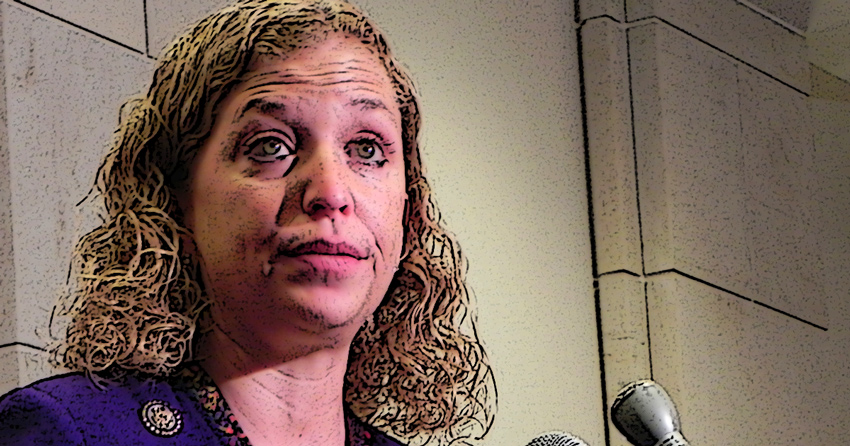
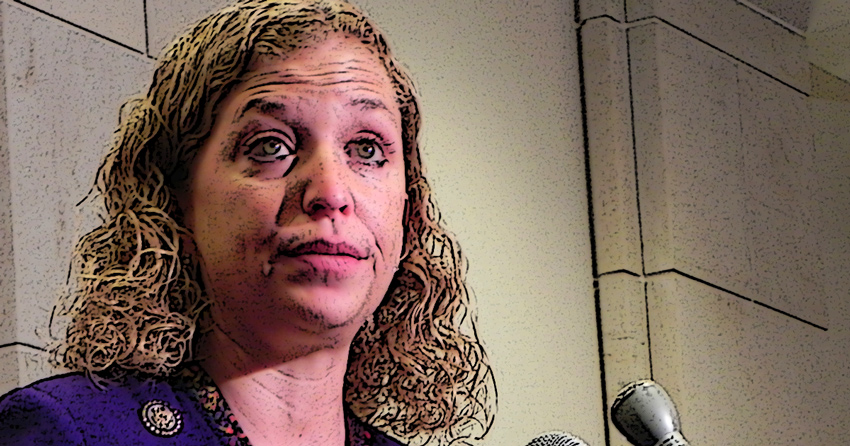
“Republicans in Congress are dead-set on rolling back the progress that Democrats like you and I [sic] have worked so hard to achieve,” wrote Democratic Party Committee Chair Debbie Wasserman Schultz, in a bizarre pitch letter last week.

They’ve already said that they’re going to try to repeal Obamacare, after more than 50 unsuccessful attempts (and two Supreme Court rulings in the law’s favor). They want to completely defund Planned Parenthood, an organization that provides necessary health services to women across the country. And if they don’t get their way, they’re just fine with shutting down the government — again!

Well, GOP strategists shouldn’t be fine with the brinksmanship of a government shutdown. That ploy has backfired before. But why? Because everyone seems to think that the Democrats’ “blame Republicans” strategy makes sense.

But it doesn’t.

Say the Republicans in Congress want to defund Planned Parenthood. Democrats want to keep funding it, but . . . the whole federal government spends over revenue — by nearly half a trillion this past year.

So if Republicans fight the spending and Democrats defend it and the government shuts down because of lack of agreement, it’s obvious: both parties shut down the government. Both refuse to compromise.

But for some reason, it’s only those who want to cut spending who get tarred with responsibility for the lack of a budget.

Debbie titled her email letter “This pisses me off.” But those who deserve to be so irked are her opponents, the Republicans, discriminated against in the double standard she perpetuates.

This is Common Sense. I’m Paul Jacob.


Printable PDF

Debbie Wasserman Schultz, collage, photomontage, Paul Jacob, James Gill, illustration


Categories
Common Sense general freedom ideological culture media and media people national politics & policies Popular

Are Democrats Socialists?

Does it matter that the chair of the Democratic National Committee doesn’t know if her party is socialist?

MSNBC’s Chris Matthews was grilling Debbie Wasserman-Schultz on the meaning of Sen. Bernie Sanders’s popularity within the Democratic Party. Mrs. Wasserman-Schultz responded by boasting that the Democrats “really are a Big Tent Party.” Then Matthews veered out her comfort zone of horse-race politics and self-congratulatory posturing.

“What is the difference between a Democrat and a Socialist?” he asked.

Mrs. W-S chuckled. Uncomfortably.

“I used to think there was a big difference,” Matthews went on. “What do you think it is?” Mrs. W-S evaded, blathering on how it is that the difference between Democrats and Republicans is what will really count in the upcoming election.

Karl Dickey, at the Examiner, holds that Democrats, today, are socialists: “one only needs to look at the Democratic Party’s platform to understand that it is a socialistic political party.”

Meanwhile, Juan Williams, discussing the issue on Fox News’s The Five, argues that there is a big difference between Democrats and socialists: Dems just like regulation and redistributing wealth; socialists want to nationalize industry and run everything through a central bureau.

And that is the definition that anti-socialist economists Yves Guyot and Ludwig von Mises settled on. Technically, Williams is right.

But the fact that the head of the Democratic Party waffled on the distinction says more about the party than a definitive answer would have.

This is Common Sense. I’m Paul Jacob.


Printable PDF

Deer in the Headlights


Categories
ballot access political challengers

The Logic of the Instant Runoff

Reid Wilson, at the Washington Post, regales us with seven U.S. senatorial races where Libertarian Party candidates could swing elections, and thus control of the Senate. Last weekend at Townhall, I exhorted readers to work for transpartisan reforms “like term limits . . . and other measures aimed at greater representation, [such as] establishing ranked choice voting.”

The two articles are not unrelated.

Conservatives and libertarians are often united in wanting to replace progressive Democrats with small-government contenders. But they are not united in how to do this. Many libertarians balk at voting for hardline social conservative candidates like Rick Santorum and middle-of-the-road statists like John McCain.

So the Libertarian Party runs candidates that have in recent elections gained traction with voters — enough to pull independent voters away from Republicans and sometimes enabling Democrats to win.

Republican entreaties to libertarians (“you’re killing us out here!”) appear to be no more effective than libertarian entreaties to Republicans (“want our support? try taking your limited government stances seriously!”).

What to do? Republican partisans should support Instant Runoff Voting, which would

  1. Allow people to rank their choices for office, and
  2. Instruct vote-counters to take the votes of those who selected a No. 1 pick of, say, a Libertarian who garnered the smallest number of votes,  and add those ballots’ second ranked vote (either for a D or an R) as the vote to count in the “instant runoff.”

This would allow for better expression of voter preference, solving the “wasted vote” problem and ceasing to make the “best the enemy of the good.”

Alternately, Republicans could continue their course, trying to limit ballot access, thereby alienating more of the electorate and ensuring that Libertarian votes can’t also be Republican votes.

This is Common Sense. I’m Paul Jacob.

Categories
video

Video: That Sense of Belonging

Democrats have it — do you?

Credits: h/t Krys Walker … Thanks, Krys!

Categories
media and media people national politics & policies too much government

What a Deal!

David Brooks, writing in the New York Times on Independence Day, cajoles Republicans to accept the deal that allegedly now faces them: Raise a few taxes (just a few!) in exchange for the Democrats going along with “a debt reduction measure of $3 trillion or even $4 trillion.” After all, he writes,

If the Republican Party were a normal party, it would take advantage of this amazing moment. It is being offered the deal of the century: trillions of dollars in spending cuts in exchange for a few hundred million dollars of revenue increases.

And then Brooks goes off on how unreasonable the Republicans have become, how abnormal.

Well, we can only hope.

There’s good reason for recalcitrance in the Republican party. Our beloved congressfolk do not have a revenue problem, they have a spending problem. They keep increasing spending, year by year, no matter what the revenue actually is.

Increasing revenue — which is still not certain even if marginal tax rates get upped or “loopholes” get closed — does not solve the base problem, which is spendaholic politicians.

Besides, the “trillions” in cuts are in the future, while the taxes would be immediate. We’ve been burned on such deals before, like Lucy and Charlie Brown’s football.

There was a reason the New York Times chose Brooks for its “conservative.” He can always be counted to chatter “kick the ball.”

Don’t fall for it, Charlie Brown.

This is Common Sense. I’m Paul Jacob.