Categories
Accountability general freedom ideological culture national politics & policies

A Broken Fix

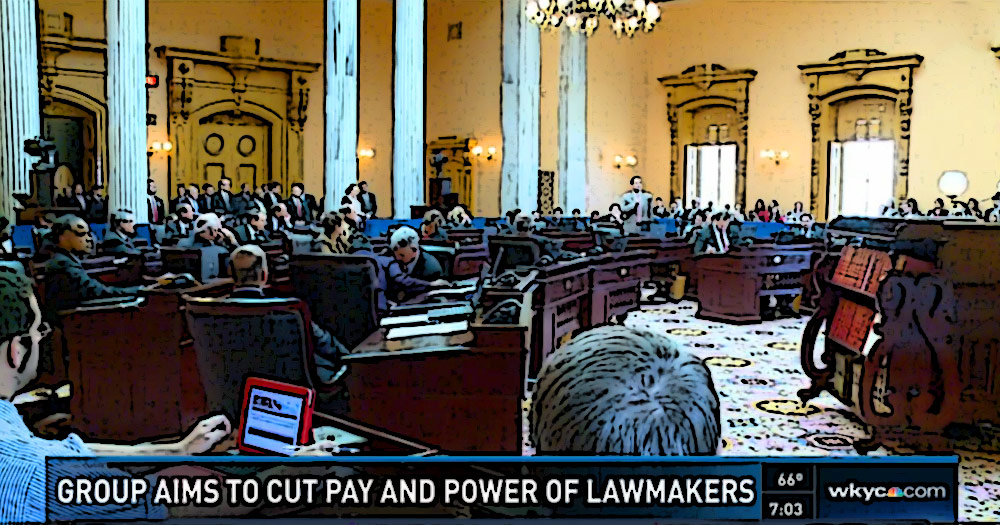
It is universally acknowledged that Congress is all screwed up, but ideas differ on how to reform it.

Representative Paul Ryan (R-Wisc.), in accepting the Speaker of the House position, admitted, “The House is broken. We are not solving problems. We are adding to them.”

But how to fix what is broken?

In my opinion — and according to virtually every survey of Americans for the last 20 years — term limits would be the best first step.

Speaker Ryan, sadly, is no term limits fan. But at least he calls for “opening the process up” and a “new spirit of transparency.” Ryan promises “not [to] duck tough issues,” while seeking “concrete results.”

Chris Cillizza, writing “The Fix” blog for The Washington Post, predicts Ryan will “probably not” succeed.

Cillizza cites four big problems, the last two are obvious, though undefined: “3. Polarization in the country” that results in “4. Polarization in Congress.”

His No. 1 reason for the dysfunction in the House? The ban on earmarks. “Without a carrot to offer wavering members on contentious legislation,” Cillizza complains, “leadership had to rely almost exclusively on relationships and goodwill.”

Forget persuasion on the merits; apparently, congressional leadership should bribe members for their votes.

Next, Cillizza bemoans the “rise of outside conservative groups” able to speak against incumbents they oppose and for those they support. This means “the party leadership could no longer choke off campaign funds to those who refused to fall in line.”

“Falling in line” isn’t the right reform goal.

Meet another member of the Washington press corps with a strange hankering for boss rule.

This is Common Sense. I’m Paul Jacob.


Printable PDF

carrot, sticks, congress, compromise, influence, illustration, Common Sense


Categories
Accountability Common Sense term limits

Coming to Terms with A Logical Fallacy

Good people can disagree about term limits.

It’s not a moral issue, but about practical governance.

I love term limits, while my friend Lew Rockwell, the former Ron Paul aide who started the Mises Institute and runs the popular website LewRockwell.com, isn’t a fan.

In a brief post to his site, entitled “The Term Limit Hoax,” Rockwell lamented that “Term limits apply only to the institutionally weakest branch of government, the legislature, to further weaken it, and never to the presidential bureaucracy, which actually runs the government, nor to the judges. It’s why neocons, those ultimate presidential supremacists, love term limits.”

This is the classic logical fallacy of guilt by association. Neoconservatives breathe air, too. Should the rest of us turn blue?

Usually if politicians — neocon or otherwise — claim amorous feelings for limits, as the late Bob Novak warned, “They’re lying.” Yet, most regular folks — all races, genders, political parties, levels of neocon-ness, you-name-it — actually do want term limits.

Lew’s correct: Congress is weak. It was designed to be the strongest branch, holding the all-important purse strings and a law-making monopoly. Yet, career politicians have shrunk from fulfilling the First Branch’s constitutional role, consistently handing more and more power to the executive branch and the courts.

That’s not the result of term limits, but a lack thereof.

Why is there “never” a push for term limits on the “presidential bureaucracy”? Well, those bureaucrats don’t even have terms as such. And any limits would have to be legislated by Congress. Congress enacted that bureaucracy, every cubicle of it, and the longer congressmen stay in Washington, the more they champion it.

Limit judges? A term-limited Congress might help there, too.

This is Common Sense. I’m Paul Jacob.


Printable PDF

Neocon, Neo Conservative, Photomontage, collage, Paul Jacob, Common Sense, JGill, Jim Gill


Categories
Accountability national politics & policies

Stupid Before Congress

MIT economist Jonathan Gruber has had a big influence on American life, much of it “behind the scenes.” He helped put together RomneyCare in Massachusetts, then Obamacare at the federal level. And he made a curious case for abortion that was picked up by Steven Levitt and made famous in Freakonomics.

But he wasn’t summoned before the U.S. House of Representatives’ Oversight Committee, yesterday, to talk about abortion. His boastings, in public, that the Affordable Care Act had been designed to deceive caught congressional attention.

And referring to voters as “stupid” doesn’t sit well with politicians — maybe because they’re living evidence.

Gruber started with some newfound humility. He had been bragging. In truth, he wasn’t that important to the process.

None of this was very convincing.

His explanations for his too-honest statements? Less than satisfactory: he chalked it all up to a spoken “typo.”

More entertainingly, when repeatedly asked whether he would give the committee his work product relating to his Health and Human Services contracts, he reiterated one simple answer: the committee should “take it up with my council.”

“You’ve been paid by the American taxpayer,” stated Rep. Jason Chaffetz, with escalating frustration. “Will you or will you not provide that information to this committee?”

But what was the Utah representative expecting?

Full disclosure?

Transparency?

Responsibility?

A straight answer?

Yeah, yeah, I know . . . talk to Gruber’s lawyer.

Even with the stonewalling, I think we’ve already seen enough of Mr. Gruber’s “work product.”

This is Common Sense. I’m Paul Jacob.

Categories
media and media people national politics & policies

Border Problems, Solutions?

Bill Maher began the panel segment of his latest Real Time with Bill Maher episode taking on the “children at the border” problem. He identified the underlying cause: drug cartels.

His solution? Legalize all psychoactive drugs, particularly cocaine.

Wait a minute. The best response to a border crisis is to legalize drugs?

Seems orthogonal to the issue. “Out of left field.”

Which is not to say I don’t support legalizing drugs. But I try not to bring it up every discussion. Could Maher have drugs a tad too much on his brain?

Be that as it may or may not, for the facts I then turned to . . . Cato Institute.

Only to have the good folks at Cato back up Maher’s assertions.

On July 8, Ted Galen Carpenter, a Cato senior fellow, pinpointed the growth in drug cartels’ power in Central America as central to the whole issue. The drug cartels are “driving vulnerable populations northward to the United States to enhance their own profits.”

But the whole picture is more complicated.

A month earlier, Alex Nowrasteh, Cato’s immigration policy analyst, focused on two American border policies that “likely” and “unintentionally” incentivized “some of the migration and the smugglers that carry many of the migrants,” leading to the current debacle of thousands of unaccompanied minors now being housed — in poor conditions — in detainee centers.

True to form, Nowrasteh notes that “some American politicians who blame American law for the surge actually voted for that American law in the past.”

Which is more horrifying: The idea that politicians make things worse? Or that comedians make more sense than our elected representatives?

This is Common Sense. I’m Paul Jacob.
Categories
ideological culture too much government

We Can Do With Less When Less Is More

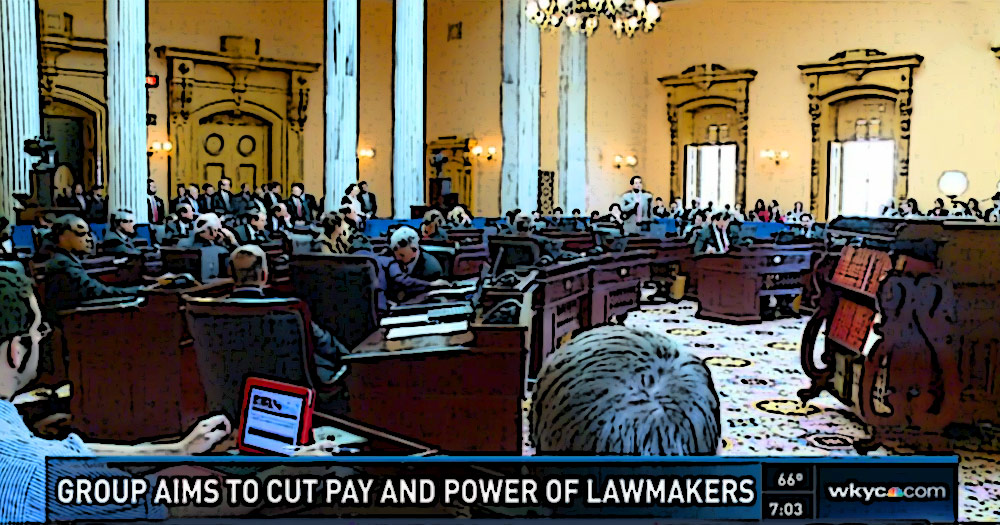
With congressional approval ratings at the lowest ever, it’s evident: the sclerotic old institution needs new blood.

But note what I’m not saying — that “Congress doesn’t do enough.”

As A. Barton Hinkle points out in a column, yesterday, complaints about the 113th Congress hail from “CNN to McClatchy to NPR to the L.A. Times,” one lamentation dominating: “the 113th makes ‘the infamous “do-nothing Congress” of the late 1940s look downright prolific.’”

But, as he makes clear, the complaint is witless.

Producing more bad legislation is certainly no improvement. And, as Hinkle observed, the most talked-about recent congressional responses to apparently real problems have been widely judged worse than the problems themselves. Almost everybody was glad that SOPA — the “Stop Online Piracy Act” — didn’t pass; vast majorities opposed and now regret Obamacare.

So, why is most new legislation bad? The reasons are legion, but one stands out: Congress doesn’t even have time to read the laws it debates and passes. 

A British economist explained it like this:

[E]ven Members of Parliament find the burthen of reading through the multitudinous and mazy provisions of the Bills issued day by day . . . too heavy to be borne by mortal man.

That was over a hundred years ago. It’s worse in this new year of 2014, both in Britain and America. Today’s laws are cooked up in back rooms by legislative assistants and lobbyists. When such is “more,” less is better.

This is Common Sense. I’m Paul Jacob.

Categories
Accountability

Boots on the Ground

Our congressional representatives, as well as each and every mouthpiece sent forth to speak for the Obama Administration, all repeat, ad nauseam, the “no boots on the ground” mantra regarding a U.S. military intervention in Syria.

Give them their due: politicians can recite poll-tested phrases better than the best-trained kangaroos.

But I’m decidedly not reassured. Saying “no boots on the ground” while advocating military actions that might trigger the need for ground-stomping boots simply suggests a dangerous naivety about the nature of war among policymakers.

If the situation in Syria is so serious that the United States should launch a military attack, is it really so unthinkable that at some point after intervening directly in an evolving civil war — say if things don’t go so swimmingly — that the circumstances could arise for U.S. soldiers to be placed on the ground in this devastated country?

War isn’t always easy-going and reasonable — or predictable. And firing missiles to blow up things in Syria, almost certainly killing people, is very much an act of war.

Granted, the U.S. can fire Tomahawk missiles destroying targets in Syria from Navy ships sitting safely far away in the Mediterranean Sea. But what if the Syrian government found a way to respond militarily or via a terrorist attack killing large numbers of American soldiers or civilians?

Wouldn’t that lead to a major military response, including the distinct possibility of boots on the ground?

Of course.

Politicians have long needed remedial instruction. Whatever your view on intervening in Syria, shouldn’t we begin with a lesson on actions having consequences?

This is Common Sense. I’m Paul Jacob.

Categories
general freedom ideological culture insider corruption national politics & policies

Non-Reciprocity

There’s a basic rule that folks who seek power tend to forget and those in power flout outright: the principles we foist on others must apply also to ourselves.

Notoriously, Congress piles regulation over regulation upon the American people, but absolves itself from those very same laws. This became an issue, recently, when our moral exemplars on Capitol Hill began to speak loftily for a higher minimum wage and against modern internship programs.

“A new study,” Bill McMorris wrote last month, “found that 97 percent of lawmakers backing the minimum wage are relying on unpaid interns to help get the bill passed.” McMorris used the H-word in his title, as have many similar reports before him: hypocrites.

The program requirements of the Democrats’ “ObamaCare” have proven to be more burdensome than Nancy Pelosi promised. So President Obama now declares, unilaterally, to postpone applying the employer mandate in the law. Consider, too, the many waivers granted to other groups for various rules and regulations rules. None of this was done to better implement a carefully thought-out policy, but not to aggrieve certain influential groups.

And here we get to the heart of today’s weakness on principles.

You see, it’s not individuals who matter to our leaders, it’s powerful groups . . . groups that fund or swing re-elections.

And that’s the principal reason government policy works at cross-purposes, to our general detriment. Instead of insisting on broad rules that apply to all, our leaders pit group against group, favoring one, then another, then later still another.

Madness for us; method for them.

This is Common Sense. I’m Paul Jacob.

Categories
ideological culture national politics & policies

We the Congress

Grumpy. Nervous. Fearful.

That’s not how members of Congress look in TV interviews.

But if their attitudes matched their job approval ratings that’s how they should look, right?

A recent Rasmussen Reports poll found that a mere 7 percent of likely U.S. voters “think Congress is doing a good or excellent job.” The national telephone survey shows 65 percent of American voters marking Congress as doing a poor job. Real Clear Politics, averaging out the polling of a number of different researchers, asking slightly different questions, places the job approval by Congress at 13.6 percent, with disapproval at a whopping 78 percent.

And yet, Congress remains unfazed.

A joint study by the Congressional Management Foundation and the Society for Human Resource Management, “Life in Congress: The Member Perspective,” shows how unfazed folks in Congress are.  We learn how these public servants spend their time, how they prioritize their activities, what they see as their challenges, and, indeed, how they feel about their job performance.

They think they’re doing a bang-up job.

So why the differing evaluations? The report hands us the general view of the membership: Congress blames the media — because of the media, We, the People, misperceive what Congress does.

Another possible explanation, not aired by the report, goes like this: Congress and the citizenry have radically different views of what “doing a good job” is, and these differences may be the result of that most ancient of class divides, between the rulers and the ruled.

We modern folk tell ourselves that this ancient divide is passé, in a democracy. Not possible. “We are the government.”

But we certainly aren’t Congress.

This is Common Sense. I’m Paul Jacob.

Categories
links too much government

Townhall: Want Milk?

This weekend’s contribution to Townhall.com by Yours Truly concerns another one of those automated congressional time bombs. You know, like the “fiscal cliff” but less cliffy and more bomby. Head on over, and then back here, for a few links:

  • Thomas Jefferson’s pithy contribution to the socialist calculation debate, here.
  • The Washington Post’s “dairy cliff” article, here.
  • What Jia Lynn Yang said, here.


Categories
national politics & policies too much government

Wanting Too Much

An old joke runs something like this:

    “We lose a dollar on every widget sold.”
    “So how do you stay in business?”
    “We make up for it in volume.”

The lesson? Mere numerical productivity is not key to the success of any human enterprise. Adding value is key. Quality counts. And profit.

Tell that to Ezra Klein. He measures Congress by how many laws it makes. The current Congress has made very few laws compared to previous ones — Klein has a very nifty graph of this, see at right — so Klein blasts Congress: “there’s no session of Congress with such a poor record of productivity.”

But it’s not gross-weight productivity that counts. As economist David Henderson perceptively noted, what matters is whether the laws are good or not.

The more laws we’re encumbered with, the less their quality. Or as Cicero once put it: “The more laws, the less justice.”

Laws carry the weight of force, and force is the opposite of freedom, so the more the laws, the less the freedom. Further, it’s almost impossible to manage the huge bulk of the legal code, leading to bureaucratic drudgery both in and out of government, and mismanagement of resources everywhere. At best, we wind up with only piecemeal enforcement, which is itself a temptation for a common sort of tyranny, the prosecution of folks someone in power doesn’t like.

Note that graph. Each session adds to existing law. And unlike spending feeding debt, which is at least somewhat offset by revenues, these laws tend not to be the repeal of old laws. Graph the accumulation of laws, and it goes only one direction.

The wrong direction.

This is Common Sense. I’m Paul Jacob.