Categories
First Amendment rights national politics & policies political challengers

Dem Noodles

Though skipping Iowa and New Hampshire, Michael Bloomberg’s advertisements are ubiquitous on television and YouTube seemingly everywhere in America.

“New Hampshire voters to Steyer: Make it stop!” reads a Politico headline sparked by that taller, poorer billionaire’s unbearable barrage of spots.

At Reason, Eric Boehm notes that Bloomberg and Tom Steyer — both very rich and both running for the Democratic nomination for the presidency — are proving that money cannot buy elections. “Given how Bloomberg and Steyer have struggled to gain traction despite their willingness to set fire to their respective campaign war chests, it’s a bit ironic to hear some of their Democratic primary opponents repeatedly bemoaning the influence of money in politics.”

But Senator Elizabeth Warren’s complaints about the two billionaires are almost certainly just playing to partisan prejudice, which has been seeded for years by the left’s relentless complaints about the Citizens United decision.

Eric Boehm argues that the reality is the opposite of the propaganda: overturning Citizens United would make it easier, not harder, for rich folks to game the system. 

But in Free Speech America, the Bloomberg and Steyer advertising efforts are proving unimpressive. “While it is foolish to rule out any electoral outcome in a world where Donald Trump is president,” Mr. Boehm writes, “voters have responded to both Democratic billionaires with a resounding meh, and there seems to be little reason to think that will change next year, no matter how much money the two candidates pour into the race.”

You don’t eat spaghetti by pushing wet noodles. You gotta entice voters to slurp down your message.

Bloomberg and Steyer, the very soggiest of noodles, are living proof..

This is Common Sense. I’m Paul Jacob.


PDF for printing

Tom Steyer, Michael Bloomberg, Citizens United, free speech, money,

See all recent commentary
(simplified and organized)
See recent popular posts

Categories
First Amendment rights general freedom media and media people moral hazard nannyism national politics & policies too much government

Why They Hate the First Amendment

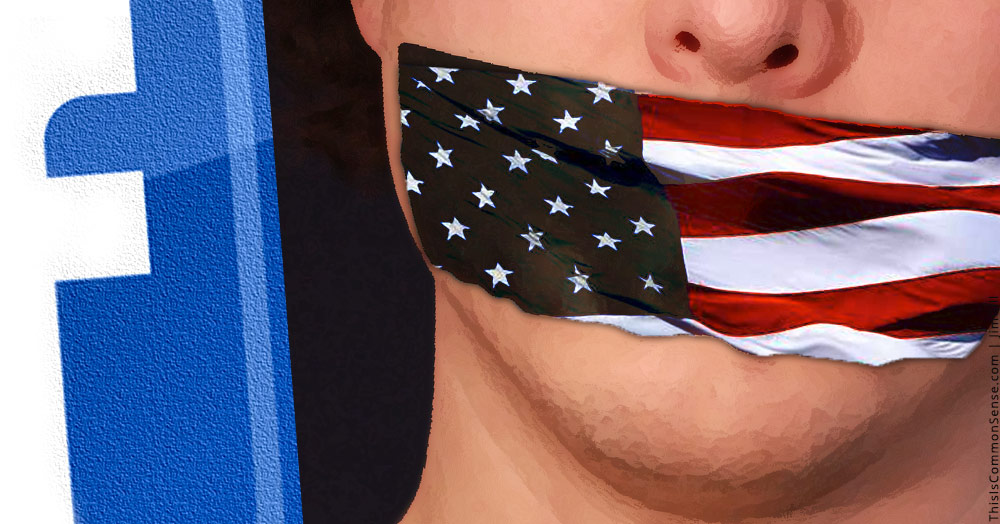
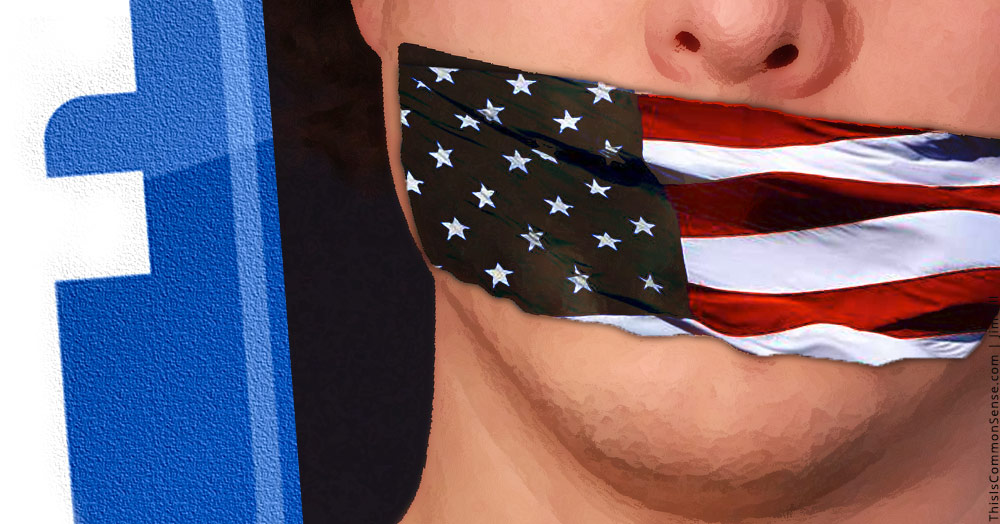
Does banning Facebook in the weeks leading up to an election sound like freedom?

“The corrosive effect of social media on democratic life,” writes The New Republic’s Jeet Heer, “has led both French President Emmanuel Macron and Canadian Prime Minister Justin Trudeau to make the same threat to Facebook: self-regulate or be regulated.”

But Macron doesn’t go far enough. “If fake news truly poses a crisis for democracy, then it calls for a radical response,” Heer insists.

“Many countries have election silence laws, which limit or prohibit political campaigning for varying periods of time ranging from election day alone to as early as three days before the election.” And Heer sees little reason not to apply such regulations to social media.

“What if you weren’t allowed to post anything political on Facebook in the two weeks before an election?”

This exactly parallels the prohibition of political spending “by corporations” before an election, as in the McCain-Feingold campaign finance regulation. Except here we have it directly affecting normal citizens.

The current excuse, “fake news,” appears to be defined by partisans almost entirely as the errors and lies and spin of their opponents’ side(s).

But since lying about one’s political enemies is at least as old as the Election of 1800, why is this different now?

Because, I submit, Facebook is just another area the folks pushing such obvious breaches of the First Amendment — politicians and most of the media — do not yet control.

Competition mustn’t be tolerated.  

This is Common Sense. I’m Paul Jacob.


PDF for printing


Photo credit: by John Nakamura Remy


Categories
ideological culture media and media people nannyism national politics & policies Regulating Protest too much government U.S. Constitution

The Long Road to Citizens United

Everybody is familiar with the standard theory regarding the Citizens United decision. Former comedian and current earnest socialist Sarah Silverman puts it this way: “Every politician takes money from Big Money, ever since it was made legal with Citizens United.”

Like most folks who talk this way, she doesn’t give a squeak of context. She barely even indicates that it was a Supreme Court case, 2010’s Citizens United v. Federal Election Commission. She does not mention at all that the ruling overturned the FEC’s act of suppressing a political movie.

But there is a much wider context than such bare facts — and if you want a good synopsis, you could hardly do better than read my friend Krist Novoselic’s calm, reasoned “look at the history of attempts to regulate independent campaign expenditures.”

This “modern history” started with what the New York Times called Richard Nixon’s “revolution in political financing.” The Federal Election Campaign Act of 1971 “required detailed disclosure of campaign contributions; set campaign contribution limits to candidates, parties and committees; set expenditure limits on campaigns, independent groups and individuals and created the first public financing of presidential campaigns and national conventions.”

And almost immediately the law began suppressing political speech and advertising. And led to a long series of court cases.

And decisions.

And revisions.

That define our times.

Krist (with whom I serve on the board of FairVote.org) provides the context you need to see through what he aptly calls “the hype” about “Citizens United,” as well as how the decision correctly removed the license given to the FEC’s role as “state censorship board.”

This is Common Sense. I’m Paul Jacob.


Printable PDF

Krist Novoselic, Citizens United, free speech, fairvote.org


Categories
folly general freedom too much government

Under the Law, Not Beneath It

Celebrating the 800th anniversary of the Magna Carta Libertatum this week, I noted how a document intended to serve the very upper classes, by limiting each others’ powers, led to liberty for all.

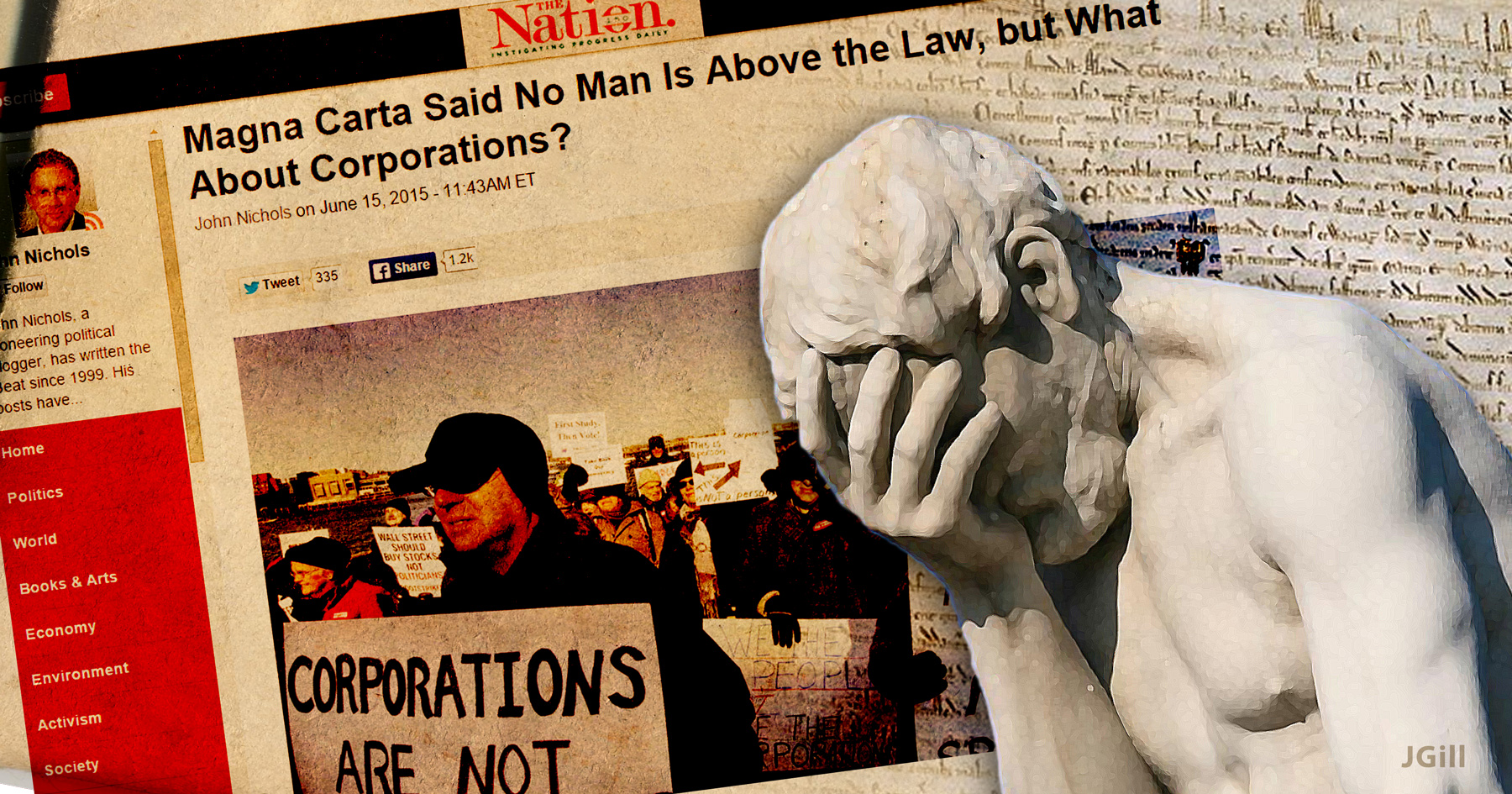
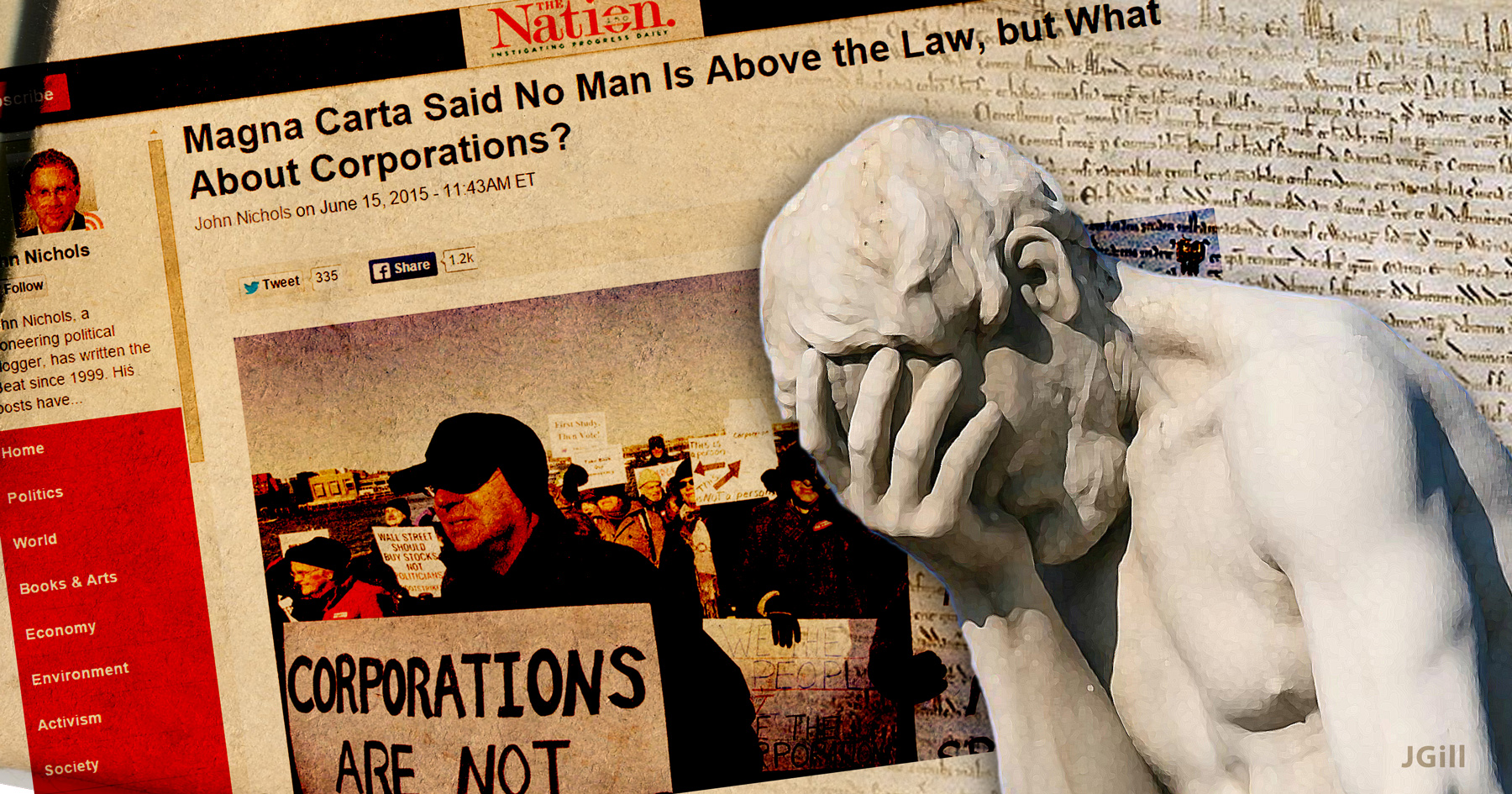
The Nation, on the other hand, used it to excoriate the Citizens United ruling.

“Magna Carta reminds us that no man is above the law,” wrote John Nichols on Monday. “But it should not be imagined that Magna Carta established democracy, or anything akin to it.”

Of course the Magna Carta did not establish democracy. No one said it did. And neither Britain nor America has pure democracy, if you define it . . . in Nichols fashion. What is he driving at?

If we respect the notion that the rule of law must apply to all . . . then surely it must apply to corporations.

And, surely, the best celebration of those premises in the United States must be the extension of the movement to amend the US Constitution to declare that corporations are not people, money is not speech, and citizens and their elected representatives have the authority to organize elections — and systems of governance — where our votes matter more than their dollars.

Sure, Mr. Nichols, corporations shouldn’t be above the law. But they shouldn’t be below it, either. And in America we have rights to free speech and press. Those rights “surely . . . must apply to corporations.”

Let’s increase the liberating powers of democracy: open up ballot access, de-privilege incumbents, count votes in a non-mere-plurality-wins fashion.

But let’s not throw out equal rights under the law, even in the name of democracy.

This is Common Sense. I’m Paul Jacob.


Printable PDF

Magna Carta Nation


Categories
video

Video: Citizens United Explained

The Citizens United decision is still talked about, blogged about, whined about. Maybe it should be understood, first:

Categories
First Amendment rights

Speech Results

You often hear people who support campaign finance laws say that the First Amendment isn’t about money, “just speech.” These folks despise the Citizens United decision that forbade, under the First Amendment, regulation of groups of people (“corporations,” profit or non-profit) pooling money to advertise and promote ideas and arguments and slogans and such.

Though many are First Amendment extremists on other matters, desiring no government interference of protests or movies or the Internet, when it comes to politics they fear “Big Money.” So they want to censor speech that some groups would push near elections.

It turns out, of course, that the effects of the Citizens United decision have been mostly beneficial, as Tim Cavanaugh points out in Reason. As a result of that infamous decision, local political races have been “shaken up”; the decision “guaranteed ‘big laughs’” in many humorous political commercials that were all-too-rare before; interest groups have been freed of the old yoke of the major parties; the GOP presidential nomination process has been made far more competitive; and even President Obama, the Citizens United critic-in-chief, has raised millions under the auspices of the organizations the decision allowed to operate — so he apparently likes it, too.

The blessings of “more speech” are pretty obvious — if one looks for them. But for those with a prohibitionist mindset, who fear a wide open public discussion, they’ll no doubt hate actual free speech. As protected by the Citizens United decision.

This is Common Sense. I’m Paul Jacob.

Categories
First Amendment rights ideological culture national politics & policies

Ad Ad Hominem!

Early reports and predictions about political spending in this election cycle claim there’s a 30 percent increase over the last mid-term election. One figure hazards that this campaign will total out to around $3.7 billion. Spending on ads is said to be up 75 percent. Traditional spending via parties and party committees shows Democrats to have an edge over Republicans by about $20 million. Republicans are making up for it, we’re told, by newly re-legalized “outside” spending.

A CBS News report relates the conventional wisdom about this. Watchdog groups “say more ads and information can be good — but voters can’t judge their credibility when donors are secret.” One expert decries this, saying “We just cannot know and we’ll never know who is ponying up the money.”

I say, “so what?”

Information cannot be judged good or bad, nor facts or argument dismissed, depending on where the money comes from to distribute the information and argumentation. The classic fallacy of the argumentum ad hominem judges conclusions by the character of the speaker rather than the truth of the facts or the validity of arguments.

Its dominance in politics is a curse, not a blessing.

Demands for full transparency of citizen activism bolster the nasty politics of a logical fallacy. When we don’t know the economic provenance of an ad or a slogan or an argument, we’ll just have to decide the issue on its own merits.

Horrors!

This is Common Sense. I’m Paul Jacob.

Categories
ideological culture U.S. Constitution

Potted Presence

The State of the Union Address has become political, said Justice Alito last week, so he will follow the lead of Justices Scalia and Thomas and not sit in Congress while the Commander in Chief intones his annual duty.

Last January, Alito objected to President Obama’s little stab at the Supreme Court when the prez decried the Citizens United decision. Obama said that the Court had “reversed a century of law” and would “open the floodgates of special interests . . . to spend without limit in our elections.” Alito mouthed the words “NOT TRUE.”

And Alito was right. The decision certainly did not overturn a century of law. Not even a teensy bit . . . Well, maybe a teensy-weensy bit, if we count Progressive’s wishes to run everything by bureaucracy and “experts.” (It’s worth remembering that Progressives had a populist wing, supporting initiative and referendum a century ago.) The Citizens United case was about the unfortunately successful censorship of a movie. About a Democrat, Hillary Clinton.

So you can see why politicians — especially, these days, some Democrats — might oppose free speech around election time. The better to control the opposition.

No wonder Alito won’t “be there in January.” He doesn’t want to serve as a “potted plant.”

Congress, of course, takes occasion to seem “potted” in another sense. Amidst congressional applause and shouts, there’s scant room for reason.

Our third president, Thomas Jefferson, merely sent his report to Congress. Obama should, too — and save Alito RSVP duty.

This is Common Sense. I’m Paul Jacob.