Categories
education and schooling general freedom media and media people

People Lover

Steven Mosher loves people.

Mosher is a student of China who, according to the bio at his Population Research Institute website, pop.org, “has worked tirelessly since 1979 to fight coercive population control programs. . . .”

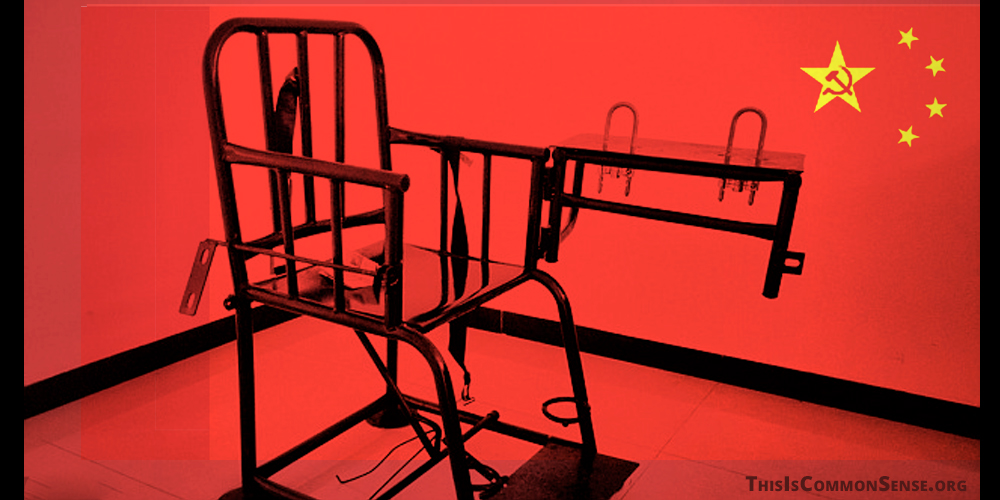
In 1979, the Chinese government let him pursue research in a village where he observed many instances of compulsory abortions under the country’s one-child policy. Some of the women were in their eighth or ninth month of pregnancy.

Perhaps the Chinese government expected Mosher to produce rosy-eyed, footnoted rationalizations of what he saw. When he published his unvarnished findings in a Taiwanese magazine, officials complained to the U.S. Embassy and to Stanford University.

Stanford appeased China by denying Mosher his PhD. I note the university’s injustice in part because Mosher tends to omit this detail. But it should not be forgotten.

Back then, he said he “did what was right to do. I told the truth.”

He opposes population control because, in his view, people are a good thing, not a bad thing.

This viewpoint is beautifully conveyed in a video on the pop.org home page, in which Mosher says that people “are the ultimate resource, the one resource that you cannot do without.” The Institute works to expose “the myth of overpopulation” and the violations of human rights that occur in the name of population control.

The prolific scholar argues that people “can become the agents of their own development without having to sacrifice their children in the process.”

My wife and I glad to hear it. We’ll let the kids know.

This is Common Sense. I’m Paul Jacob.


PDF for printing

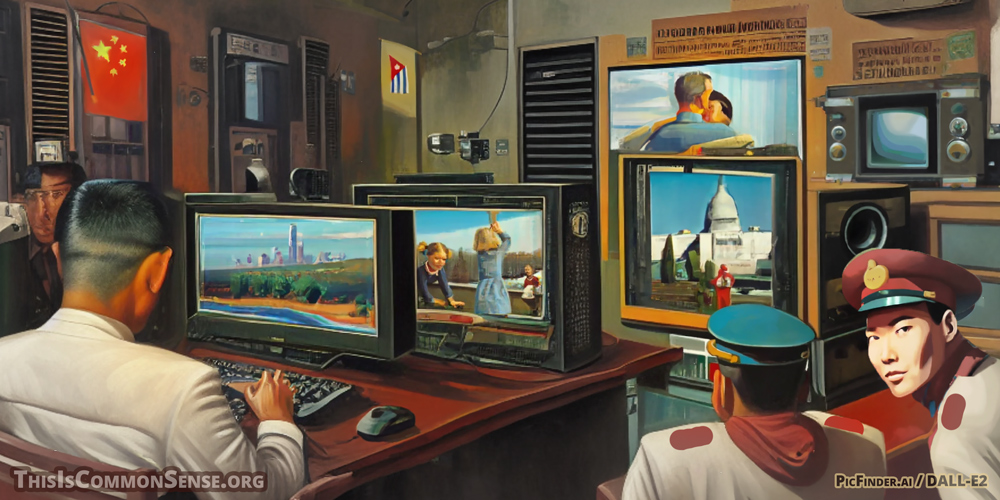
Illustration created with PicFinder.ai and DALL-E2

See all recent commentary
(simplified and organized)
See recent popular posts

Categories
general freedom international affairs

Look Around

Yesterday marked the 34th anniversary of the Tiananmen Square massacre. Not in China, where the Communist Party (CCP) has always clubbed down any public remembrance of the thousands murdered on that day by the bullets from the so-called People’s Liberation Army. 

While Hong Kong long witnessed massive June 4 vigils — even under COVID restrictions — that changed after the draconian National Security Law in 2020. Still, this year public silence required the Chinazis to arrest more than 30 Hong Kongers, some for “suspicion of carrying out acts with seditious intent.”

Seems our “leaders” quite quickly forgot about the Butchers of Beijing . . . and only now are waking up to the threat the CCP poses via their embrace of totalitarianism, their military build-up, the biggest since World War II, and their claims to Taiwan as well as the entire South China Sea.

“China has been bullying its neighbors for years,” explains Chris Chappell, host of China Uncensored on Rumble, before adding: “Now its bullying is coming back to bite it.”

Chappell notes that “[e]ven countries that kinda hate each other, like Japan and South Korea, have been teaming up because of the China threat.”

Mr. Chappell offers:

  • “Thanks to China, last year Japan announced a plan to double its military budget.”
  • South Korean President Yoon Suk Yeol recently called Taiwan “a global issue” and joined President Biden in “[opposing] any unilateral attempts to change the status quo.”
  • “Australia is beefing up its military — specifically in response to China.”
  • “The Philippines . . . has moved back to closer ties with the United States, allowing the U.S. to expand its military presence there.” 
  • “India is also increasing its defense budget.”

This allied response has been spurred not by U.S. arm-twisting, but good old-fashioned fear. 

Chappell also applauded open collaboration with the U.S. and NATO by South Korea, Japan, Australia, and New Zealand. But he dubbed NATO’s declaration of China as “a security challenge” “the understatement of the year.”

Attested by the weekend’s near collision of Chinese and U.S. naval vessels in the Taiwan Strait.

This is Common Sense. I’m Paul Jacob. 


Note: China Uncensored also plays on YouTube, but, as Chappell complains, “YouTube frequently demonetizes, suppresses, and secretly unsubscribes people from this channel.” 

PDF for printing

Illustration created with PicFinder.ai / DALL-E2

See all recent commentary
(simplified and organized)
See recent popular posts

Categories
First Amendment rights general freedom ideological culture

No Laughing Matter

Without freedom of speech, the jester’s art can be perilous.

Chinese comedian Li Haoshi, who performs under the name House, recently did stand-up comedy at a Beijing club, after which, reports Reuters, “an audience member posted online a description of a joke he had made . . . describing it as demeaning to China’s People’s Liberation Army (PLA).”

That went viral on Chinese social media.

“In the joke,” Reuters explains, “Li recounted seeing two stray dogs he had adopted chase a squirrel and said it had reminded him of the phrase ‘have a good work style, be able to fight and win battles,’ a slogan Chinese President Xi Jinping used in 2013 to praise the PLA’s work ethic.”

Not exactly a ripsnorter, it is hardly biting satire, either — after all, Li steered clear of any mention of Winnie the Pooh.

But no matter. Next thing the funny man’s employer knew, “China’s Ministry of Culture and Tourism Bureau said it would fine Shanghai Xiaoguo Culture Media Co 13.35 million yuan and confiscate 1.35 million yuan in ‘illegal gains’ from the firm.”

That’s a cool $2 million U.S. for the ever-so specific crime of “harming society.”

“In response to the fine, Xiaoguo Culture . . . said it had terminated Li’s contract,” and, for good measure if you are a totalitarian, Reuters adds that “Weibo appears to have banned him from posting to his account there.”

“We will never allow any company or individual [to] use the Chinese capital as a stage to wantonly slander the glorious image of the PLA,” declared China’s cultural ministry.

Suffice it to say, China isn’t currently known for its comedy. 

And won’t be until more people perform their own stand-up act.

This is Common Sense. I’m Paul Jacob.


PDF for printing

Illustration created with PicFinder.ai and DALL-E2

See all recent commentary
(simplified and organized)
See recent popular posts
Categories
general freedom individual achievement

A Life of Meaning

My wife and I are attending tonight’s Milton Friedman Prize for Advancing Liberty dinner at the Cato Institute. We are very excited, for this year’s award will be given to a very worthy recipient: Jimmy Lai.

The 75-year-old Lai, alas, won’t be there.* He sits in a Hong Kong jail for committing the Chinese Communist Party’s most feared crimes: speech, association, practicing religious faith, advocacy for democracy and human rights. And he awaits more charges that could (and probably will) keep him in prison for life.

Lai is no stranger to this audience. Last December, I gave two thumbs up to the Acton Institute’s documentary†, “The Hong Konger: Jimmy Lai’s Extraordinary Struggle for Freedom”; back in 2020, I noted his long deployment on Hong Kong’s front lines of freedom.

Lai escaped to Hong Kong from Communist China as a kid. His hard work and entrepreneurial skills made him a wealthy man. He used that wealth to advance freedom, including publishing the pro-democracy Apple Daily, which was shuttered by Chinese authorities in 2021 under the National Security Law. 

Mr. Lai could have escaped it all with plenty of money to live comfortably somewhere far away from the Chinazis. “I think you have to live a life of meaning,” he offers. “And I find taking responsibility to fight for freedom is meaningful for me.”

Thanks to Jimmy Lai and the Hong Kong protesters for standing up against the CCP, the world has a much clearer view of those imprisoning him. Let’s hope the world acts accordingly.

This is Common Sense. I’m Paul Jacob.


* The Wall Street Journal’s William McGurn, a friend of Lai, will give the keynote address. Jimmy Lai’s son, Sebastian, will be there to receive the award.

† The documentary now has over a million views on YouTube, which may be why Tik Tok “shut down” the Acton Institute’s account. Meanwhile, for context , a documentary to “mark the handover anniversary,” on which the Hong Kong government spent $1.3 million, garnered only 4,000 views.

PDF for printing

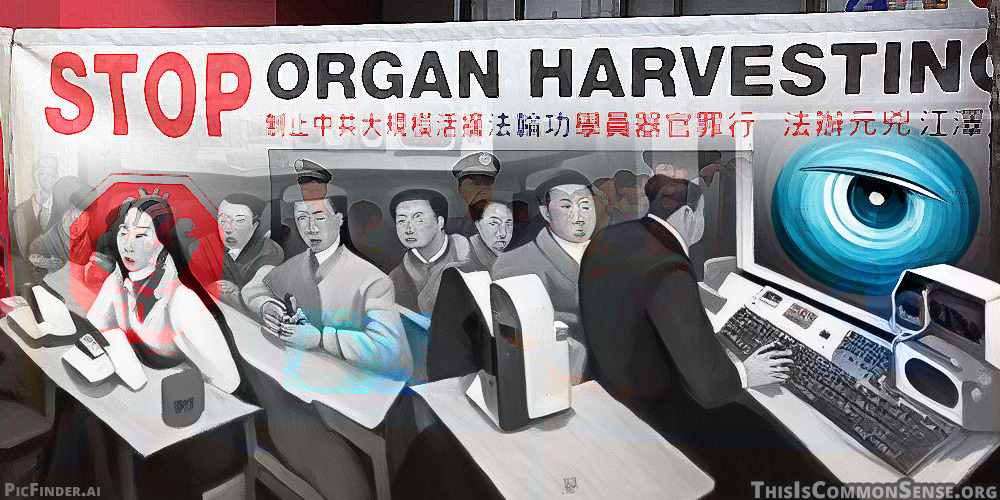
Illustration created with PicFinder.ai and DALL-E2

See all recent commentary
(simplified and organized)
See recent popular posts
Categories
international affairs

Here-at-Home Problem

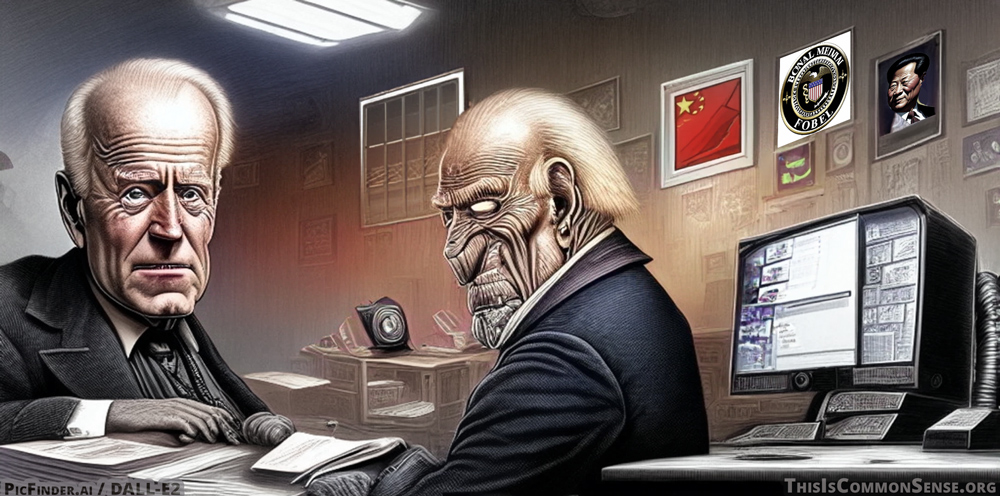
The China problem is “not just a distant ‘over there’ problem,” Rep. Mike Gallagher (R-Wisc.) recently argued. “As the spy balloon incident as well as the illegal CCP police stations on American soil illustrate, it’s a ‘right here at home’ problem.”

It’s also a just-north-of-us problem. Canada is currently expelling a Chinese diplomat and dealing with the fallout over China’s interventions in Canadian politics, along with big financial gifts to a foundation for Prime Minister Justin Trudeau’s father.

An article in The Globe and Mail nonchalantly explained the reasons China is engaged in trying to control the speech of every one of the planet’s inhabitants. The Chinese Communist Party (CCP) has many international goals:

  • “build acceptance abroad for its claims on Taiwan, a self-ruled island that it . . . reserves the right to annex by force.”
  • “play down its conduct in Xinjiang, where the office of former UN Human Rights commissioner Michelle Bachelet last year said China has committed ‘serious human-rights violations.’”
  • “generate support for a draconian 2020 national-security law to silence opposition and dissent in Hong Kong.”
  • “quell foreign support for Tibet, a region China invaded and annexed more than 70 years ago, and to discourage opposition to Beijing’s militarization of the South China Sea and sweeping maritime claims in the region.”

Having committed a long list of crimes against humanity, the CCP understandably demands that everyone keep their mouths shut. 

Rep. Gallagher believes the U.S. should improve “our deterrent posture across the Taiwan Strait” and communicate “in clear terms that we will not stand idly by while the CCP continues to increase its aggression internationally” — while President Biden has repeatedly pledged U.S. military support for Taiwan.

But for some reason, Biden has never discussed the prospect with the American public. 

As if it weren’t our concern, too.

This is Common Sense. I’m Paul Jacob.


PDF for printing

Illustration created with PicFinder.ai

See all recent commentary
(simplified and organized)
See recent popular posts
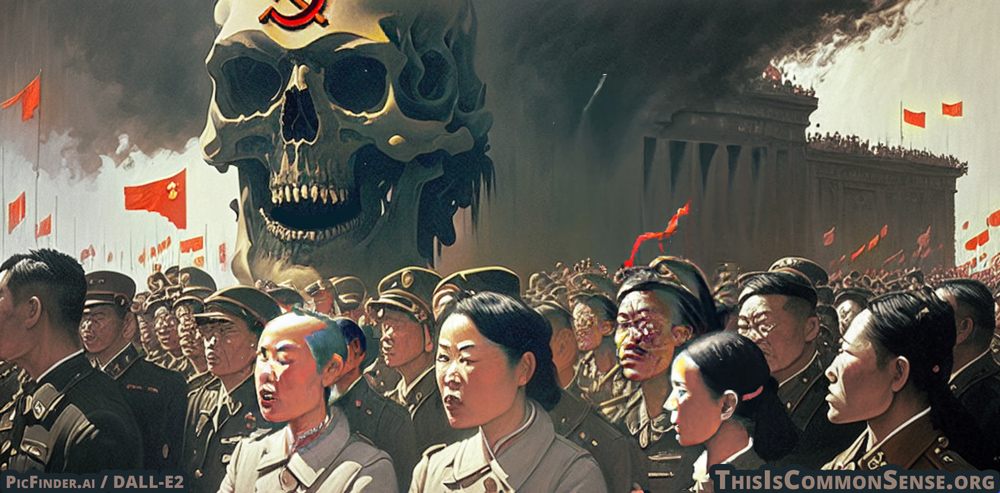
Categories
government transparency media and media people national politics & policies

Bioweapon

Back in 2020, at the beginning of the COVID-19 pandemic, Arkansas Senator Tom Cotton informed a Fox News audience that “just a few miles away from that food market [initially proposed as the epicenter of the outbreak] is China’s only biosafety level 4 super laboratory that researches human infectious diseases.”

The Senator’s mere suggestion that the fast-spreading virus might have originated from a leak at the Wuhan Institute of Virology labs — which were (a) known to be sloppy, and (b) doing U.S. funded gain-of-function research on coronaviruses — was immediately labelled a “debunked” “conspiracy theory” by The Washington Post (which has since corrected its story).

Some scientists and pundits also expressed outrage — erroneously — at Cotton’s “implication” that China had unleashed a bioweapon. In Cotton’s defense, he never said any such thing. 

Hmmm?

When the lab leak theory made a comeback — after a year or more of Fauci & Co. colluding to snuff out the very thought — it seemed the one thing “we” somehow “knew” was that it certainly wasn’t a bioweapon.

Yet, unsure of its precise origin, how can we know that? 

“It matters little whether it was intentionally leaked from a lab or not,” Brian T. Kennedy, chairman of the Committee on the Present Danger: China, explained at a recent Hillsdale College speech, “what is clear is that they allowed it to spread throughout the world knowing the harm it would cause.”

The Chinese rulers did this both by covering up human transmission for many weeks and by knowingly allowing hundreds of thousands of Chinese to travel throughout the world spreading the new virus. That’s why Kennedy calls it “a biowarfare attack against the United States.” 

In his book, No Limits: The Inside Story of China’s War with the West, Andrew Small writes about a well-placed Chinese friend who told him in January of 2020 that “the Chinese leadership had reached a decision: if China was going to take a hit from the pandemic, the rest of the world should too.”

With friends like China . . .

This is Common Sense. I’m Paul Jacob.


PDF for printing

Illustration created with PicFinder.ai

See all recent commentary
(simplified and organized)
See recent popular posts
Categories
First Amendment rights national politics & policies social media

A Package Deal

Suppose suggested legislation outlaws both murder and walking. How could you oppose it? Are you, a dedicated perambulator-peripatetic, also a murder-supporter?

Obviously, this would be an attempt to foist a package deal consisting of unrelated or mutually contradictory elements.

Consider a more true-to-life example.

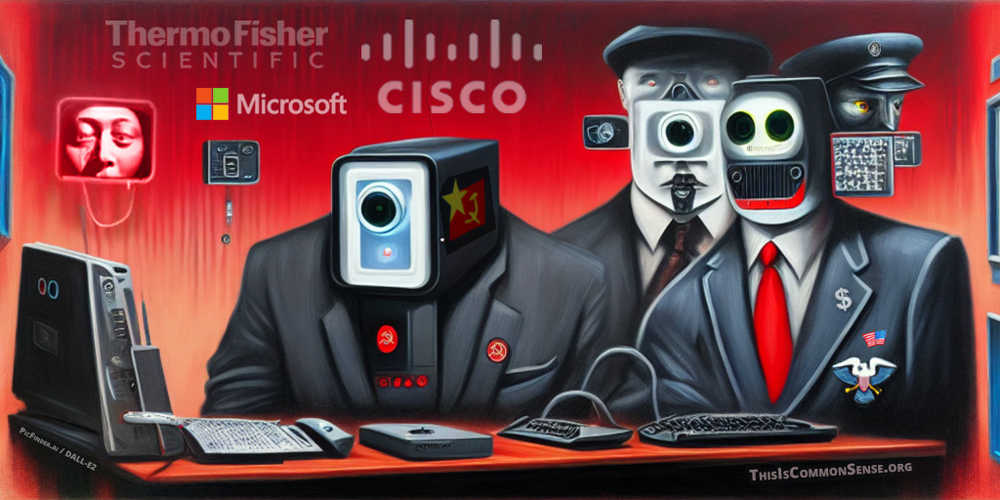
In the Wall Street Journal, Philip Hamburger argues that a congressional bill targeting TikTok would do much more than counter Chinazi spying on Americans (“The TikTok Bill Is a Sneak Attack on Free Speech”).

If curbing or even outlawing TikTok were the sole focus, one could argue the merits of the legislation given what is known about the company’s collecting of data and its relationship with the Chinese government. There’s no free-speech protection of foreign espionage.

However, as Hamburger points out, the bill gives the federal government “sweeping power over communications” and could be used to stifle speech protected by the Constitution.

The proposed statute would allow the Department of Commerce to undertake open-ended mitigation of “undue or unacceptable” risk regarded as arising from use of communications technology in which any entity subject to the jurisdiction of a foreign adversary “has any interest.”

This is very vague and very all-encompassing. The legislation thus confers power over domestic communication companies “that could be used to extort their cooperation in censorship.”

Attempts to resist such “mitigation” or censorship would risk administrative fines of $250,000, criminal penalties of $1 million, two decades in prison. For supporting freedom of speech?

Please walk away from this, Congress.

This is Common Sense. I’m Paul Jacob.


PDF for printing

Illustration created with Midjourney / DALL-E2

See all recent commentary
(simplified and organized)
See recent popular posts
Categories
general freedom international affairs

Now and Then

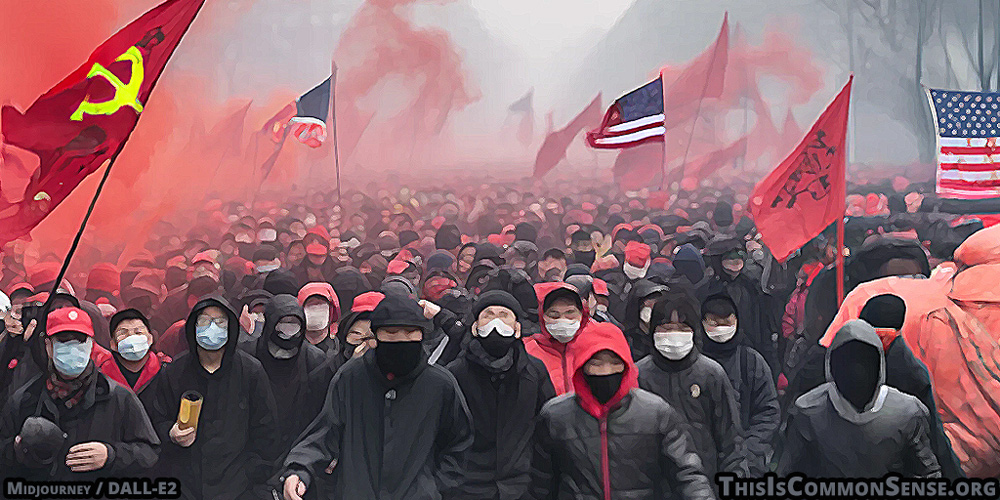
This March in San Francisco, hundreds of Tibetans and their supporters rallied to protest the government of China and to commemorate the Tibetan uprising of 1959.

“As we are in a free nation,” one of the protesters, Lobsang Chodon, told the Epoch Times, “we have the rights to rally and protest; we have the rights to parade and speak out. We can say whatever we want to say. So we have to speak out loudly for our brothers and sisters who cannot speak out. We will fight until the end, until Tibet is freed, until we can get back to our homeland.”

In March 1959, the Dalai Lama (born 1935), champion of the rights of the Tibetan people and autonomy for Tibet, was forced into exile by the Chinese Communist Party.

This had not been the plan. 

The plan had been to kidnap the Dalai Lama as he attended a theatrical performance at the invitation of People’s Liberation Army. The PLA’s invitation or demand that the Dalai Lama attend included an insistence that he not bring his guards with him and that no one be told that he would be leaving the palace.

The Dalai Lama accepted or pretended to accept the invitation.

Word of the danger spread rapidly. On the day that he was scheduled to travel, many thousands of Tibetans surrounded his palace before the CCP could get its hands on him. And the Dalai Lama managed to flee into exile.

I welcome these protests, for they remind us of a history we must not forget.

This is Common Sense. I’m Paul Jacob.


PDF for printing

Illustration created with PicFinder.ai

See all recent commentary
(simplified and organized)
See recent popular posts

Categories
Accountability government transparency international affairs

Time for Truth Is . . . Now?

The “kooky” conspiracy hypothesis that in 2019 a Wuhan laboratory that had been rebuilding viruses to make them better, stronger, faster then somehow unleashed the COVID-19 virus on the world has been gaining traction lately.

Three years ago, such a thing was declared to be impossible, or at least extremely unlikely. After all, the Chinese government itself, which always tells the truth, had repudiated this explanation, even going so far as to conscientiously refuse to cooperate with investigations into the origin of the pandemic.

Many policy makers and media mavens in the West nodded vigorously. No need to inquire further.

But the dam has been breaking in recent months. Now, even U.S. government agencies — government agencies themselves! — are saying yeah, probably a lab leak.

The FBI has hopped on the probably-lab bandwagon and, according to its director, has been on the wagon a while.

FBI director Chris Wray says: “The FBI has for quite some time now assessed that the origins of the pandemic are most likely a potential lab incident in Wuhan.”

Quite some time now? And kept quiet?

Author James Kunstler wants to know if the FBI knew during all the time that fey Wray “was in charge of a battalion of FBI agents assigned to managing Twitter, Facebook, and Google . . . to make sure that anyone who opined about Covid coming from the Wuhan lab got censored, banished, cancelled, reputationally destroyed.”

It’s hardly “kooky” to inquire as to what the FBI was thinking, simultaneously believing something to be true and, yet, in contravention of the First Amendment, working to suppress that very belief.

This is Common Sense. I’m Paul Jacob.


PDF for printing

Illustration created with PicFinder.ai

See all recent commentary
(simplified and organized)
See recent popular posts
Categories
defense & war international affairs Internet controversy social media

Too Funny or Too On-Target?

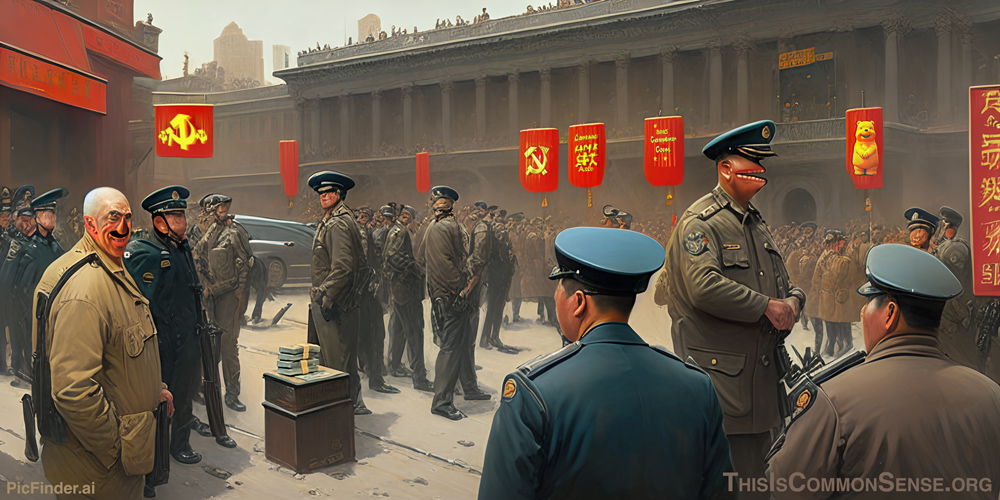
Since nobody has noticed or documented a Google policy of banning YouTube videos that are too funny, let’s go with “too on-target” as the reason that Google deleted a popular YouTube channel, the RutersXiaoFanQi channel, devoted to satirically slapping China autocrat Xi Jinping.

Some of RutersXiaoFanQi’s videos survive in lesser-known YouTube channels. (Here is one. Here is another.) The approach of the videos seems to be to keep throwing stuff at the wall and seeing what sticks. Apparently, the ratio of sticking to falling flat was too high for Xi and Google.

Unfair to Google? Maybe. We don’t know what happened behind the scenes.

Did Google just automatically delete the channel after having received a certain number of complaints about copyright violations from Xi’s offices? Or did Google honchos sit around an oak conference table, mull all the variables, and solemnly conclude “We simply must appease the Xi regime!”?

YouTube did not respond to an inquiry from Radio Free Asia about the matter. But RutersXiaoFanQi had received a notice stating that “Your YouTube account has been shut down following repeated copyright warnings,” presumably pertaining to music used in the videos.

It is unlikely, though, that various owners of whatever tunes the channel used bothered to lodge any complaints. It is much more likely that, as RFA speculates, the censors of Xi’s regime are exploiting YouTube’s system for reporting copyright infringements. 

And that Google’s YouTube is taking the easy way out.

This is Common Sense. I’m Paul Jacob.


PDF for printing

Illustration created with PicFinder.ai

See all recent commentary
(simplified and organized)
See recent popular posts