Categories
ideological culture international affairs media and media people

Unspoken Contract

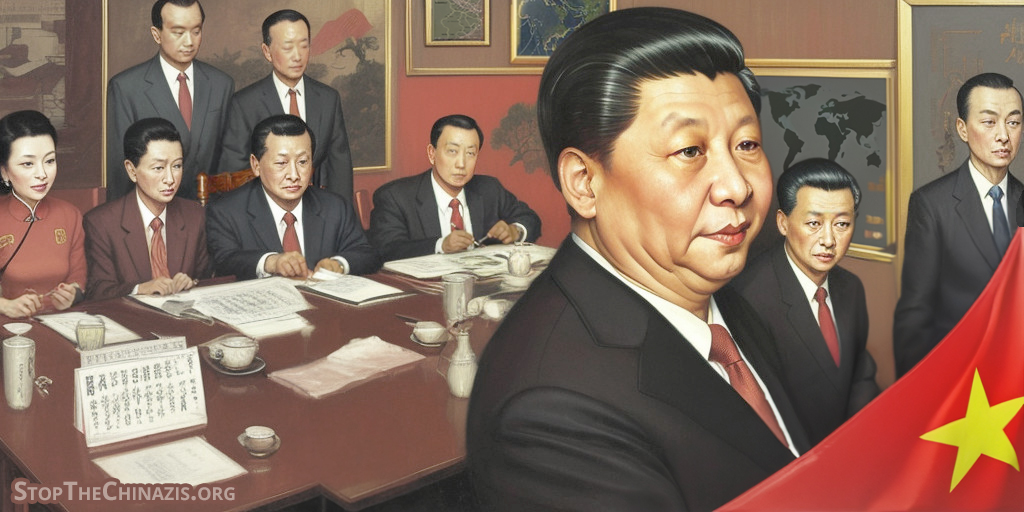
“After the Tiananmen massacre,” explained Washington Post editorial board member, Keith Richburg, “China’s rulers adopted an unspoken social compact with the population: The Communist Party offers them boundless economic growth, the opportunity to get rich and some expanded personal freedoms in exchange for its continued right to rule.”

Mr. Richburg doesn’t bother to name any of these “expanded personal freedoms” to which he refers. I’m sure the Chinese people are wondering as well.  

Richburg is certainly not alone in his delusion; one regularly hears this inane idea suggesting some sort of political legitimacy and justification for the CCP’s totalitarian state. In fact, in this same Post feature assessing China’s current economic woes, columnist Catherine Rampell likewise declared, “For generations, the Chinese Communist Party has held on to power partly through an implicit bargain with its citizenry: Sacrifice your freedoms, and, in exchange, we’ll guarantee ever-rising living standards.”

But there simply is no such bargain. No contract. No political compact between the Chinazi rulers and the Chinese people. That’s a figment of fuzzy Western elitist — and Rousseauvian — fantasy. 

The CCP doesn’t hold power via demonstrated public support. Their power flows from the barrel of a gun, as notorious mass-murderer Chairman Mao acknowledged long ago. Not to mention fear of today’s Tiger chair

Pretending otherwise only enables the tyranny.

Know your enemy. And if you know the Chinese state, you know it is your enemy and an enemy of the Chinese people.

This is Common Sense. I’m Paul Jacob.


PDF for printing

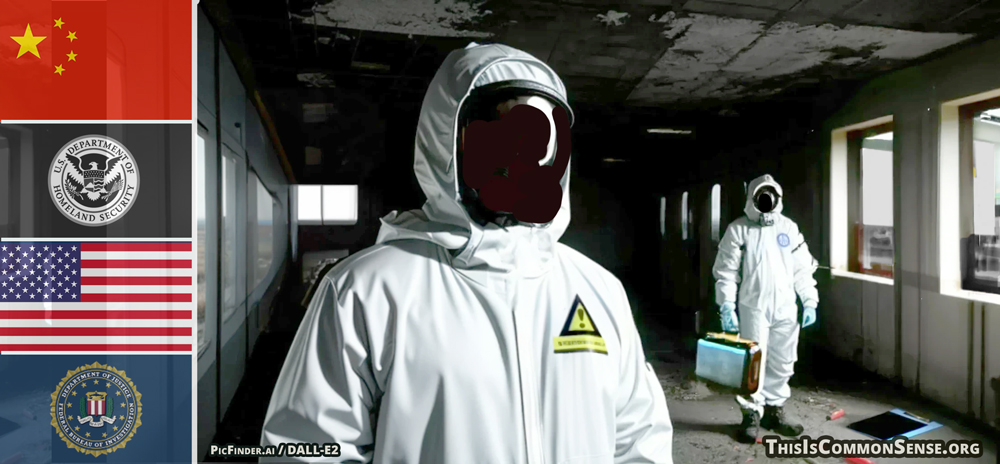
Illustration created with PicFinder.ai and DALL-E2

See all recent commentary
(simplified and organized)
See recent popular posts
Categories
general freedom international affairs national politics & policies

It’s a Date

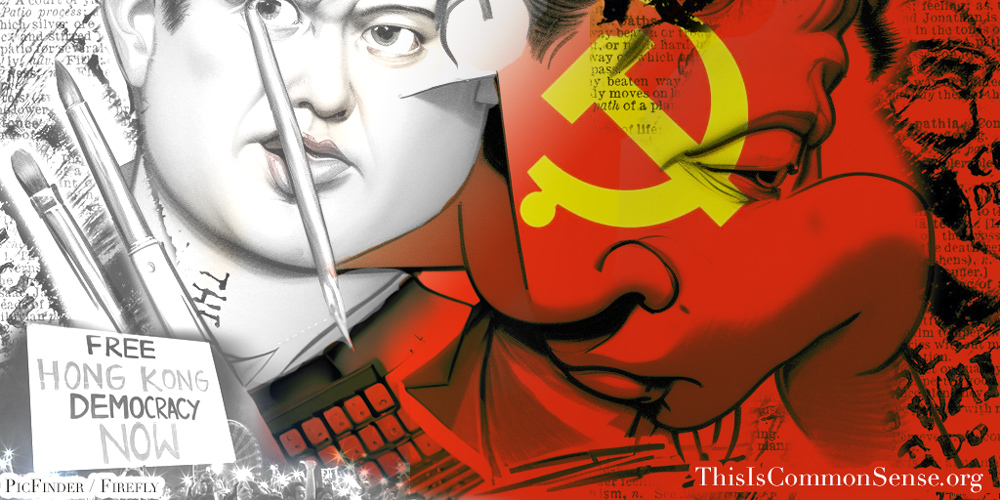
“Do not mess with Taiwan before 2028,” Vivek Ramaswamy instructed translators to tell Chinese ruler Xi Jinping, “before the end of my first term, okay?”

Responding to a question from Hugh Hewitt on his radio program, Ramaswamy — the entrepreneur, author, and GOP presidential candidate — urged a “move from strategic ambiguity to strategic clarity.”

The right idea, I guess, just not elaborated in the clear-thinking manner I have been hoping for.

You see, there was a “second part” to Ramaswamy’s foreign policy prescription. “That commitment is only as far as 2028,” he explained, “by which point I will have led the United States of America to achieve semiconductor independence, and we will not take the risk of war that risks Americans lives after that for some nationalistic dispute between China and Taiwan.”

“Some nationalistic dispute”?* Sure, between the democratic miracle of the last century and a genocidal totalitarian regime that claims it . . . along with claiming 90 percent of the South China Sea, the world’s busiest waterway.

A skeptical Hewitt heard Ramaswamy “saying ‘I will go to war, including attacking the Chinese mainland, if you attack before semiconductor independence. And afterwards, you can have Taiwan. So if you just wait until 2029, you may have Taiwan.’”

Let’s make the world safe for semiconductors! 

But . . . not for people? 

Ramaswamy’s transactional approach might make the Taiwanese feel less inclined to assist our efforts toward semiconductor independence. And what a terrible message to send other allies in the region!  

As the democratic countries of Asia and the world are stepping up and coming together to push back against Beijing’s belligerence, the U.S. ought not jeopardize this by suggesting more convenient dates for calendaring in future Chinazi invasions.

This is Common Sense. I’m Paul Jacob.


* From the interview, Ramaswamy appears ignorant of Taiwanese history; namely, the fact that the Nationalist Chinese forces that fled to the island in 1949, as well as their offspring, comprise a distinct minority of the island nation’s population. Meanwhile, the native Taiwanese had been under Japanese colonial rule for the previous fifty years and, prior to that, never completely under Chinese control.

PDF for printing

Illustration created with PicFinder.ai and DALL-E2

See all recent commentary
(simplified and organized)
See recent popular posts
Categories
ideological culture international affairs

Accounting for Taste

“In an open-ended question allowing Americans to name which country they see as the greatest threat to the U.S., 50% name China, almost three times the share who name Russia (17%),” Pew Research reported last week.

Of course, some argue, as does Columbia University professor Jeffrey Sachs, that this “overwrought fear of China and Russia is sold to a Western public through manipulation of the facts.”

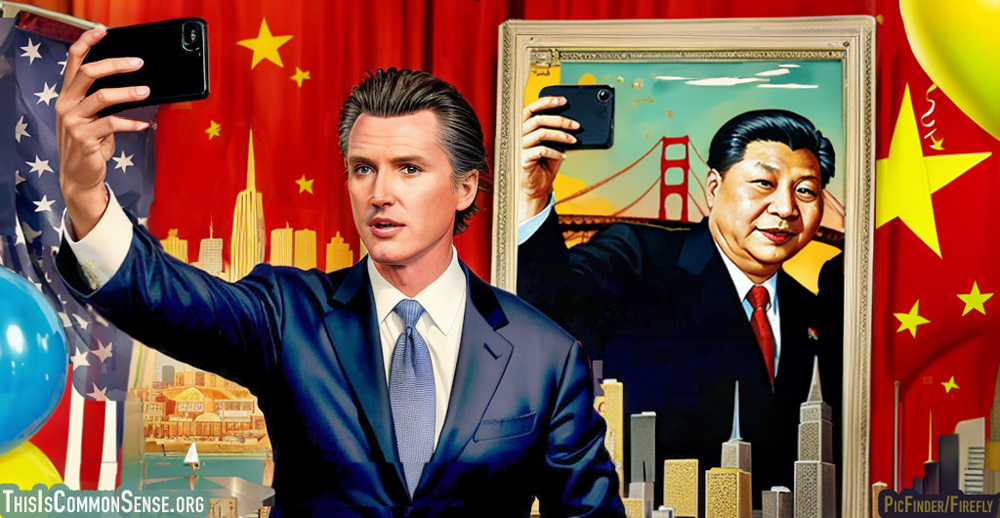
Has our government and media somehow hoodwinked us into not liking Xi Jinping and the Chinese Communist Party? I sorta think we finally convinced them to start paying attention to the Chinazi threat — but whatever.

In perusing the polling at Pew’s website, I came across a recent survey of Asian Americans entitled, “Most Asian Americans View Their Ancestral Homelands Favorably, Except Chinese Americans.”

Strange that China would be the only unpopular outlier . . . unless you know modern Chinese history.

Still, these Asian Americans who responded to the poll might also have fallen victim to “Western propaganda.” What do people outside of the U.S. think?

“The nonpartisan Pew Research Center found that a median of 67% of those surveyed [in 24 countries] have an unfavorable opinion of China, while only 28% have a favorable view of the country. At least 50% of respondents in 17 countries gave China negative marks,” U.S. News & World Report detailed about the international poll, “with shares eclipsing 80% in Australia, Japan, Sweden and the United States. Majorities in only three countries — Kenya, Mexico and Nigeria — gave the country positive ratings.”

Apparently, genocidal totalitarianism isn’t very popular on this planet

This is Common Sense. I’m Paul Jacob.


PDF for printing

Illustration created with PicFinder.ai

See all recent commentary
(simplified and organized)
See recent popular posts
Categories
First Amendment rights ideological culture too much government

The Way We Censor Now

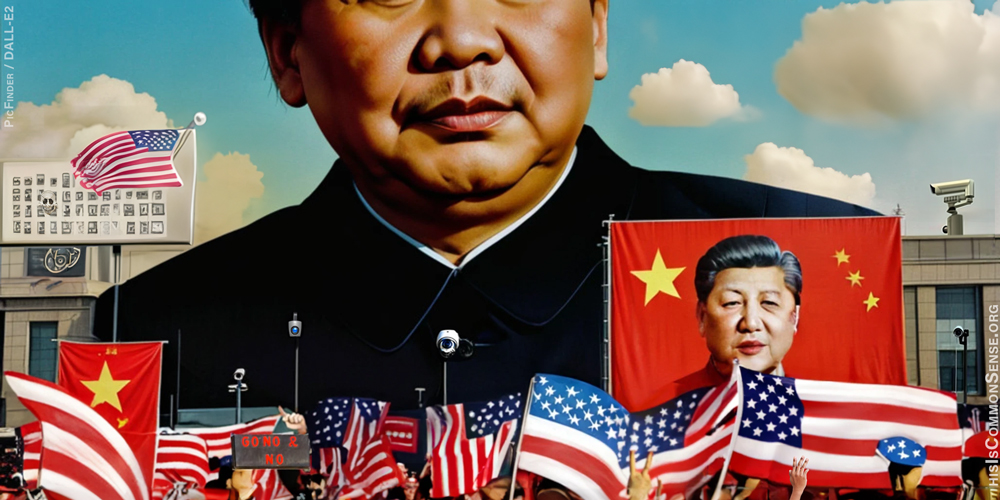
In China, the government now sells software to social media companies so they have the best real-time idea of what the government currently does not want people to say. 

The companies then perform such obliging actions as removing posts and banning users.

The software serves as a self-defense system — of the social media companies. You see, if the companies fail to sufficiently prevent government-outlawed speech on their websites, they will be punished. Maybe ruinously. By the Chinese government.

So who is doing the censoring here? 

Obviously, the government.

In the U.S., the intimidatory relationship between government and social media firms is not quite so advanced or nearly so clear. But as we keep learning from documents extracted by litigation and subpoenas, for years now our federal government has been telling firms to censor things, and the firms have complied.

The latest example is that Facebook, which has always said that its content-moderation policies are “independent,” obeyed White House demands to censor posts about the likelihood that the COVID-19 virus originated in a Chinese lab, not in nature.

In a July 2021 email, Nick Clegg, a Facebook executive, asked whether anyone could “remind me why we were removing — rather than demoting/labeling — claims that Covid is man-made.”

To which a VP in charge of content policy replied: “We were under pressure from the [Biden] administration and others to do more. We shouldn’t have done it.”

No matter how White House press secretaries or others try to dress it up, “private” censorship conducted in obedience to governmental requests is governmental censorship.

And is eerily close to the Chinese practice.

This is Common Sense. I’m Paul Jacob.


PDF for printing

Illustration created with PicFinder.ai and DALL-E2

See all recent commentary
(simplified and organized)
See recent popular posts

Categories
First Amendment rights general freedom international affairs

Truth, Compassion & Forbearance

The Chinese Communist Party’s genocidal ways did not begin with the mass Uyghur incarcerations. Twenty-four years ago the CCP kicked off “its brutal campaign to eradicate Falun Gong in China,” writes John A. Deller in The Epoch Times.

“Falun Gong (also called Falun Dafa) was introduced to the public in China by Mr. Li Hongzhi in May 1992,” explains Mr. Deller. “It is a spiritual practice in the Buddhist tradition based on the principles of truth, compassion, and forbearance. . . . By 1998, over 70 million people across China had found improved health and morality through Falun Gong.”

In the West, we may not immediately see how dangerous (to tyrants) a religio-philosophical movement like Falun Gong could be. 

Isn’t it innocuous? When D. T. Suzuki introduced Zen Buddhism to the U.S. in the last century, most Americans . . . yawned. 

But the Chinazis did not yawn. They banned Falun Gong on July 20, 1999. And began arresting and imprisoning and torturing and executing its practitioners.

While Deller insists that Falun Gong was not perceived by most of its practitioners to be intrinsically anti-communist, over the course of the antagonism it has dawned on the persecuted that “socialism with Chinese characteristics” is indeed at odds with “truth, compassion, and forbearance.”

What really bothers the CCP? Ideas

Of independence . . . forbearance. 

Of truth . . . not propaganda. 

Of compassion . . . the idea that maybe prisoners shouldn’t be killed to facilitate lucrative organ transplants.

The 24-year-old genocide is a memecide, the attempted final solution to these paramount ideas.

This is Common Sense. I’m Paul Jacob.


PDF for printing

Illustration created with PicFinder.ai and DALL-E2

See all recent commentary
(simplified and organized)
See recent popular posts
Categories
general freedom international affairs

Big Biz-Big China Alliance

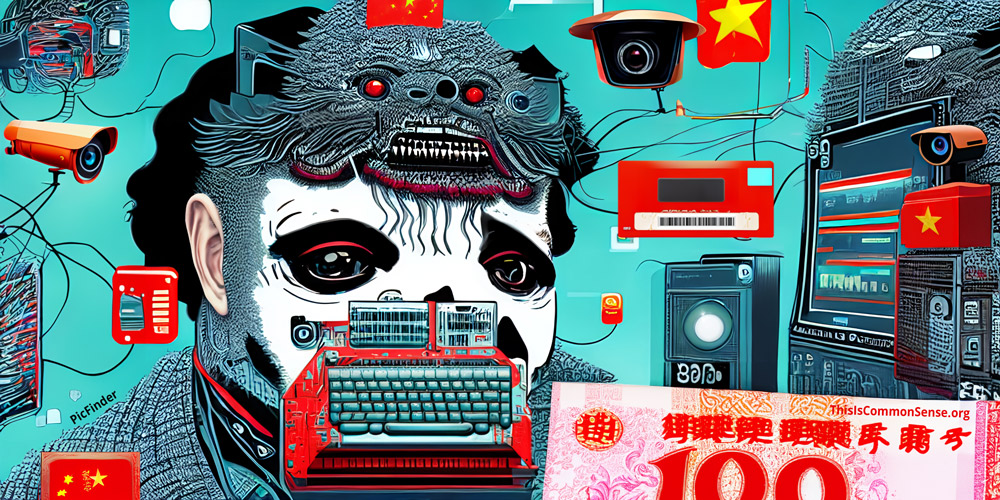
Cisco is in trouble, again, for a reason that many American technology firms should be: for aiding and abetting the tyranny of the Chinese government.

Cisco may have thought it was out of the woods after a lawsuit against it, originally filed in 2011, was wrongly dismissed in 2014. The litigation has just been revived by an appellate court.

The suit pertains to the company’s sale of software called Golden Shield to the Chinese Communist Party (CCP). Golden Shield is used to track down members of the popular and peaceful Falun Gong spiritual movement so that the CCP can persecute them as subversives (as proved by being part of Falun Gong). For the Chinese regime, all dissent and all activity it disapproves of are threats to national security.

Arrestees are tortured, imprisoned, even murdered, and the lawsuit contends that Cisco knew the ultimate goals that the software would serve. (The culpability of Cisco, Thermo Fisher, Microsoft, and other firms that abet CCP oppression is discussed with sarcastic brio by the YouTube channel China Uncensored.)

Ninth Circuit Judge Marsha Berzon states that the allegations are “sufficient to state a plausible claim that Cisco provided essential technical assistance to the [persecution] of Falun Gong with awareness that the international law violations of torture, arbitrary detention, disappearance, and extrajudicial killing were substantially likely to take place.”

The revival of this lawsuit and its ultimate resolution will deter, I hope, all U.S. firms from helping the Chinazis to systematically destroy innocent people.

This is Common Sense. I’m Paul Jacob.


PDF for printing

Illustration created with PicFinder.ai and DALL-E2

See all recent commentary
(simplified and organized)
See recent popular posts
Categories
crime and punishment ideological culture

Haunted by the Specter of Mao

“There is a whole intellectual structure, architecture, and, ultimately, strategy bound up with the idea of how to disrupt society, disrupt the West, overthrow the traditional order,” M.L.R. Smith tells Epoch Times.

According to Smith and David Jones, authors of The Strategy of Maoism in the West: Rage and the Radical Left (2022), the conduct of the America’s radical Left resembles that of the Red Guards and others during the Cultural Revolution of the 1960s and 1970s in China.

The authors got the idea for their study from the riots that swept the U.S. after the killing of George Floyd. These rage-filled protests-turned-riots made them think of Maoism:

  • Defacing and toppling of monuments, reminders of the pesky past.
  • Shouting down and “cancelling” speakers. (Sometimes physically as well as verbally assaulting them.)
  • Abject kneeling and self-criticism in response to alleged wrongdoing, including “‘white guilt’ genuflection.”

The parallels are real, even though the scale of the humiliations and destruction that we have seen is nowhere near that of the Cultural Revolution, when millions were tortured and murdered. 

Jones says Maoism was bred in China and hothoused in Paris but “achieved its global appeal in the Ivy League schools of the United States,” where it is manifest in thinking about race and gender.

The authors explore the nature of rage as a motivating force and strategy, “an energy to be harnessed as a mode of power.” This is the fuel of many a revolution, where mob action serves as a kind of open terrorism. Histories and treatises are filled with it.

America’s Founding Fathers feared such rage, hence in their revolution they stated principles in elegant but clear sentences. They expected argument and readily engaged.

But now?You can’t reason with rage.

This is Common Sense. I’m Paul Jacob.


PDF for printing

Illustration created with PicFinder.ai and DALL-E2

See all recent commentary
(simplified and organized)
See recent popular posts
Categories
international affairs national politics & policies

Not Just a Border-Line Case

Should the U.S. Government let soldiers of the People’s Liberation Army (PLA) enter these United States through the southern border so that they’re in place if and when the Chinese government directs them to undertake sabotage against the United States (perhaps during a Chinese invasion of Taiwan)?

We are not talking about borderline cases of one or two Chinese soldiers a year. The U.S. Border Patrol now acknowledges 347 encounters with Chinese nationals in 2021; 1,987 in 2022; and a whopping 12,533 encounters so far this year!

In a piece for Gatestone Institute, Gordon Chang reports that although some Chinese migrants entering through the southern border are simply “seeking a better life for themselves and their children,” many “are coming to commit acts of sabotage.” These are PLA soldiers.

They can first go to a country like Ecuador, which permits entry without a visa. They can then make their way through jungle before catching a bus to the border. They are often then simply released into the U.S.

Representative Mark Greenn (R-Tenn.) says that he was told by a Border Patrol sector chief that some of the people coming across have “known ties to the PLA.”

Chang quotes war correspondent Michael Yon: “At the Darien Gap, I have seen countless packs of Chinese males of military age, unattached to family groups, and pretending not to understand English. They were all headed to the American border.”

This is consistent with the pattern of Chinese aggression.

So maybe we — and maybe the government whose job is to protect us — should pay attention to this.

This is Common Sense. I’m Paul Jacob.


PDF for printing

Illustration created with PicFinder.ai

See all recent commentary
(simplified and organized)
See recent popular posts
Categories
international affairs media and media people

China’s Many Rushdies

Since when do police place bounties on the heads of former residents who have committed no crime?

Since just now. 

But it depends on how you define “crime.”

For me, to be guilty of a crime you must have committed an objectively definable, willful violation of the rights of others — fraud, robbery, kidnapping, torture, rape, murder. Speech criticizing the crimes of a crime-committing government cannot count as “crime.” To pretend otherwise would be an abuse and usurpation of proper standards of thought.

But the dictatorial Chinese regime is unbound by such considerations.

On July 3, the Hong Kong police, mere lackeys of the mainland government, placed bounties of one million Hong Kong dollars (about $128,000 USD) on the heads of eight pro-democracy dissidents no longer living in Hong Kong.

“We’re absolutely not staging any show or spreading terror,” says top HK police official Steve Li. “We’re enforcing the law.” Oh.

CNN notes that “many of the activists have continued to speak out against what they say is Beijing’s crackdown on their home city’s freedoms and autonomy.”

“What they say” is Beijing’s crackdown? 

Just a smidgen of investigative journalism would enable CNN’s reporters to report, as fact, that there has indeed been a crackdown, that it’s not just “critics” who say that the 2020 National Security Law has been used to destroy the pro-democracy, pro-human rights movement in Hong Kong and “cripple its once vibrant society.”

But I guess folks at CNN dare not risk bounties on their heads, also.

This is Common Sense. I’m Paul Jacob.


PDF for printing

Illustration created with PicFinder.ai

See all recent commentary
(simplified and organized)
See recent popular posts
Categories
international affairs privacy

The Cuban Missive Crisis

Very soon, maybe, the Chinese government will be able to peruse secret military and other electronic missives being transmitted “throughout the southeastern U.S., where many military bases are located, and monitor U.S. ship traffic,” according to a Wall Street Journal story.

Under an until-now secret agreement between China and Cuba, Cuba will charge China a mere several billion dollars for Cuba’s permission to build the eavesdropping station on Cuban territory.

If cited intelligence is accurate, the planned station would enable China to spy on emails, phone calls, satellite transmissions, and other communications. The data thus scooped up would probably facilitate China-sponsored cyberwarfare and other sabotage, as well as its pursuit of overseas Chinese nationals that the Chinese government wants to keep trapped in China.

Craig Singleton, an analyst for the think tank Foundation for Defense of Democracies, says that moving to establish the spy facility “signals a new, escalatory phase in China’s broader defense strategy. The selection of Cuba is also intentionally provocative.”

Perhaps the publicity about the spy station will help to stop it from happening.

John Kirby, a National Security Council spokesman, told the Journal that its story is “inaccurate” without spelling out the inaccuracies. He also said that the U.S. is taking steps to counter Chinese development of such spy infrastructure. “We remain confident that we are able to meet all our security commitments at home and in the region.”

I guess we’ll see. Before it’s too late, I hope.

This is Common Sense. I’m Paul Jacob.


PDF for printing

Illustration created with PicFinder.ai and DALL-E2

See all recent commentary
(simplified and organized)
See recent popular posts