Categories
general freedom ideological culture Popular

What It Means

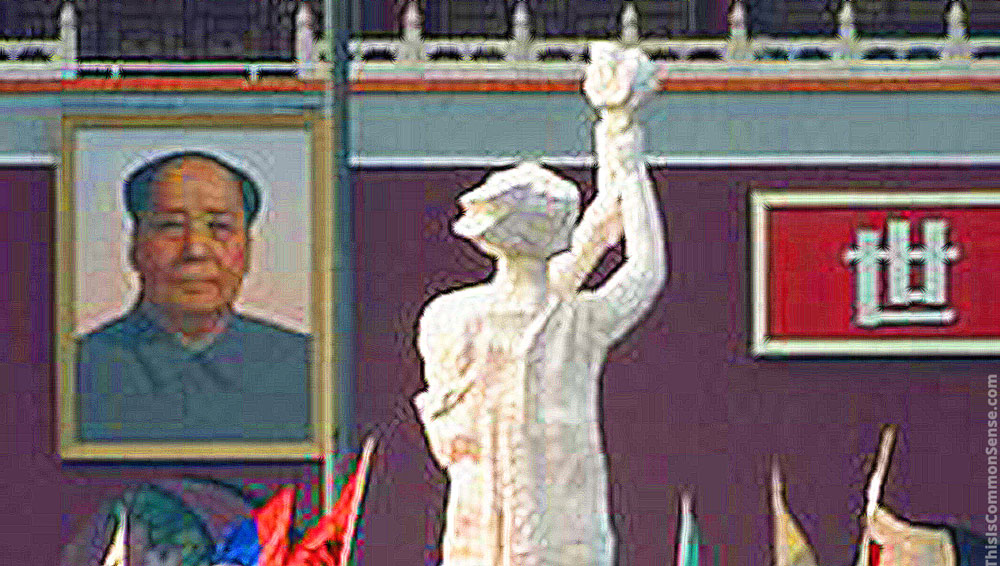
The most inspiring political event of my six decades on this planet remains the pro-freedom and democracy protests of three decades ago, when for seven weeks first students and then other Chinese citizens occupied iconic, historic Tiananmen Square in Beijing.

“In the history of communist China,” said a CNN correspondent as a million people swelled into the square, “there has never been anything like this.”

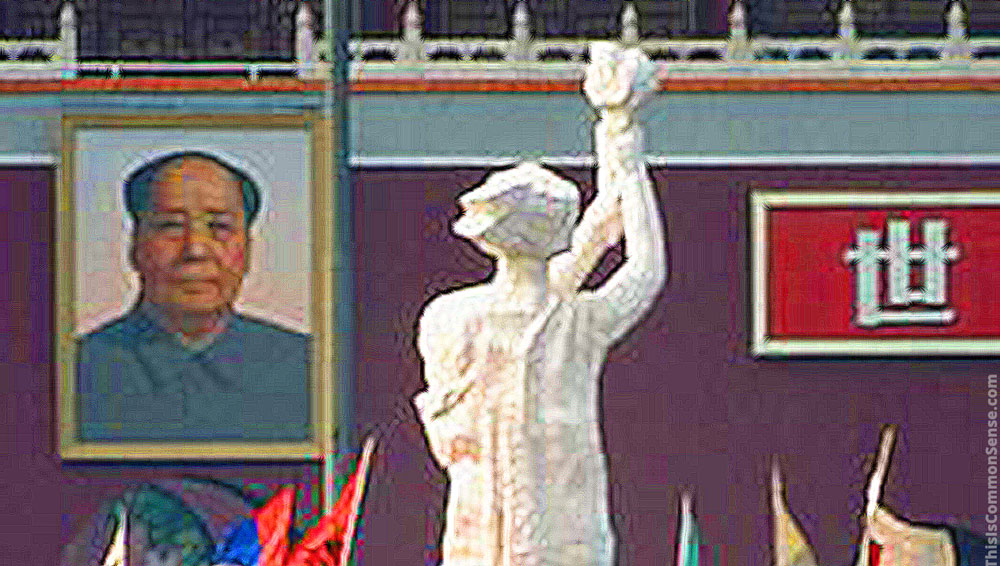
The students’ demands were strikingly similar to those articulated in America’s Declaration of Independence, and their symbol was the Goddess of Democracy and Freedom, something of a replica of our Statue of Liberty.

Now, one might ask what the protestors knew of liberty and democracy. “To them,” offered Princeton Professor Perry Link, “democracy just meant ‘get off our back.’”

What, it doesn’t mean that?

“We probably don’t know what democracy is, living in China,” acknowledged student leader Wuer Kaixi, “but we have a pretty good idea what totalitarianism, what non-democracy, is.”

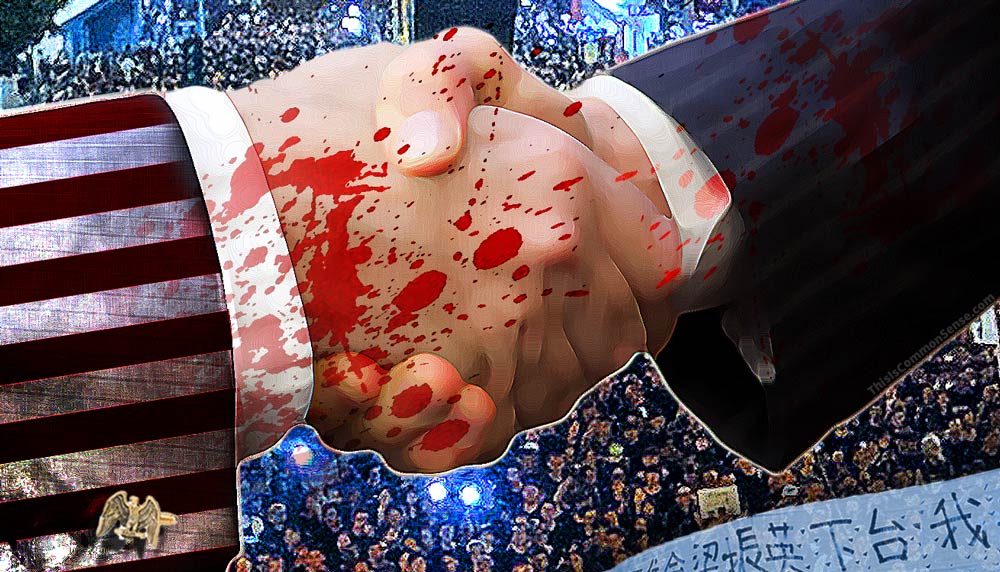
That totalitarian tyranny exploded late this very evening 30 years ago, when Chinese troops fired on unarmed protesters and tanks rolled; the massacre continued into the wee hours of June 4, 1989. Death counts range from 300 to several thousand, and there’s uncertainty as to whether the carnage took place in or out of the square, killing mostly workers or students. Regardless, it is all-too-typical behavior from an illegitimate regime.*

The saddest news is that, as a survivor told the South China Morning Post, “What happened [30] years ago in China . . . is still happening now in China.”

Over a million Uighur Muslims are, reportedly, confined in concentration camps right now.

What can we do? Remember, for starters.

This is Common Sense. I’m Paul Jacob.

*Firing on one’s own citizens is far too common, and delegitimizes any regime that practices it, as I have pointed out per Nicaragua, Venezuela, and U.S.-subsidized Egypt — the list goes on and on.

PDF for printing

Goddesss of Democracy, China, freedom, protest,

See all recent commentary
(simplified and organized)
See recent popular posts

Categories
First Amendment rights general freedom ideological culture media and media people moral hazard privacy

Google Goes Bad

Good Google’s evil twin, Bad Google, is at it again.

In addition to doing bad things to advance its political agenda, Google is willing to work with bad governments do bad things. 

For example, the authoritarian Chinese government.

Google is working on a mobile version of its search engine, code-named Dragonfly, which would censor search results the way the Chinese government wants. The company is doing so even though it shut down its Chinese-mainland search engine back in 2010 because it “could no longer continue censoring our results” in China. At the time, I praised Google for moving in the right direction.

Now it’s regressing.

And more than regressing. The Intercept reports that Dragonfly goes beyond censorship. How? By linking a user’s search results to his phone number. Critics note that this would abet human rights violations, since users could easily be detained and even jailed for searching for the “wrong” terms.

At least five Google employees have resigned in protest. One, Jack Poulson, a research scientist, says that he regards “our intent to capitulate to censorship and surveillance demands in exchange for access to the Chinese market as a forfeiture of our values and governmental negotiating position across the globe.”

Google no longer promotes what used to be its motto and guide: “Don’t be evil.” 

To be sure, that motto did not put a very positive spin on the company’s moral stance. “Always be good” might be better. But I agree with both. 

Be good, not evil.

This is Common Sense. I’m Paul Jacob.


PDF for printing


Categories
Accountability folly general freedom ideological culture moral hazard responsibility U.S. Constitution

China Marks Marx Anniversary

The Chinese government has sought to honor the birth of Karl Marx (1818-1883) by giving a giant bronze statue of the social philosopher and pseudo-economist to the German city of Trier, his birthplace.

Agreeing that Trier and Marx should be thus honored, local officials shamefully accepted the donation.

Marx was a bad guy. His willfully destructive anti-capitalist theorizing and polemics have been enlisted to enslave and murder many millions of people in the Soviet Union, China, Cambodia, Cuba and elsewhere. The story is told in works like Modern Times and The Black Book of Communism. One effective critique of Marxian ideas may be found in the second volume of Murray Rothbard’s History of Economic Thought.

We often hear that Communist implementation of Marxian theory poorly translates “real” communism/socialism/collectivism. No government unswervingly enacts all the ideas and prescriptions of a single intellectual founding father. But there is much in Marx’s volumes that openly demands the razing of the division of labor, profit-seeking, and other requirements of civilization.

In one article, Marx scribbled that “there is only one way in which the murderous death agonies of the old society and the bloody birth throes of the new society can be shortened, simplified and concentrated, and that way is revolutionary terror.” There’s plenty more where this came from.

When a major nation-state gives a town a statue, it’s hard to say no. But one needn’t accept it at face value. Install it on a base that lists the separate bouts of Marx-inspired mass murder. Or use it as a target in paintball tournaments.

Or just place it in the local cemetery. Where deadly ideologies should go.   

This is Common Sense. I’m Paul Jacob.


PDF for printing


Categories
Accountability moral hazard term limits too much government

Dictatorship with the Usual Characteristics

“Argh, we’re going to become North Korea,” a dejected Chinese citizen wrote on his country’s social media site, Weibo.

His comment, later removed by China’s “safe space” police, responded to the Communist Party’s announcement that it would soon remove term limits on President Xi Jinping.

While neighboring North Korea has been ruled in totalitarian dynastic fashion by the Kim family since 1948, the Chinese have had their own experience with extended one-man rule, 33 years of Mao Zedong.

From 1958 to 1962, his Great Leap Forward policy led to the deaths of up to 45 million people,” the Washington Post clarified, “easily making it the biggest episode of mass murder ever recorded.”

A decade after Mao’s death in 1979 — there’s always that ultimate term limit — even Communist Party apparatchiks embraced a formal limit on the president and the vice-president of two five-year terms . . . to block dictatorship.*

Talk about a reform popular across the political spectrum!

So popular that, as Business Insider explained, “Criticism of the Chinese government’s desire to abolish presidential term limits has seen censorship soar since Sunday.” Searches for “two term limit,” “third consecutive term,” and “Emperor Xi” were blocked.

“There are no longer any checks and balances,” complained a political analyst at the Chinese University in Hong Kong.

This is bad news for everybody everywhere.

The need to limit those in power is universal. At National Review, John Fund reminds us of our “ongoing job here at home to limit the insatiable urge of incumbents to remain in office for years, even decades, and sometimes until they die of ripe old age.”

Early retirements for all!

This is Common Sense. I’m Paul Jacob.


* There are also five-year limits on the tenure of those serving in the National People’s Congress. Do I hear six years for our Congress?


PDF for printing


Categories
crime and punishment First Amendment rights general freedom government transparency ideological culture media and media people moral hazard nannyism national politics & policies too much government

No Joking Matter

He thought he was just horsing around.

Using the popular app WeChat, a Chinese construction worker supervisor Chen Sho Uli made a gossipy joke about government officials while chatting in a chat group. But being too casual about what you say — and where — can be dangerous in China. For his sin Chen was incarcerated for several days.

Picking quarrels” is another no-no in the country.

In lieu of Orwell’s telescreen in every room, modern Internet technology enables repressive governments to punish citizens for thoughtcrime that becomes app-speech crime. If the Chinese government can spy on you, it will. And penalize you for remarks it deems offensive to the dignity of the state.

Because of such repression, blogger Stephen Green observes that “strong encryption is everybody’s friend — except the tyrant’s.”

Agreed. Encryption is an important line of defense.

But some societies require this more than others, because harmless, incidental communications are not equally attacked by government, from country to country. Which means that encryption is actually a second line of defense.

The first is a cultural and political tradition respecting individual rights.

For one thing, robust encryption helps only those who engage in hyper-careful private discourse, or hyper-careful anonymous public discourse. Encryption won’t help thinkers of controversial thoughts who wish to express those thoughts publicly and under their own name. Everywhere we can, then, we must strengthen both the technological and cultural defenses of open discourse — recognizing that the latter is the more crucial and fundamental.

This is Common Sense. I’m Paul Jacob.


PDF for printing


Categories
Accountability general freedom ideological culture media and media people moral hazard national politics & policies

Not So Bad, Communism?

First the good news. The New York Times has repudiated Walter Duranty’s 1930s-era “journalism” for whitewashing — “underestimating” — the murderousness of Soviet Communism.

So that’s done, right?

Whatever its failings today, the paper will certainly no longer allow writers to use its august pages to discount blatant systematic evil.

Right?

But Helen Raleigh, a writer for The Federalist who is an immigrant from China, finds that the Times does indeed persist in glossing over the sins of Communism. In commemorating the centenary of the Bolshevik Revolution, the paper is “once again proving itself Communism’s greatest apologist” through articles variously arguing that “women had better sex under socialism to now claiming China’s Communist revolution taught Chinese women to ‘dream big’…”

As if, suggests Raleigh, Duranty’s ghost were still calling the shots.

In rebuttal, she recounts what so many people suffered under Communism, as exemplified by the fate of her Aunt San.

At age 15, her aunt was forced by Mao’s government to leave the city and work in the countryside, separately from her siblings, who were forced to do the same but in different villages. Cutting family ties was important “so people could devote themselves 100 percent to the Communist Party’s causes.”

Primitive farming, mandatory singing of gruesomely cheerful revolutionary songs, food rations, malnutrition, ritual humiliation, derailed education, derailed or extinguished lives.

Just a few of the standard ingredients of the totalitarianism that, according to the Times of 2017, taught women to “dream big.”

Which should remind us: despite only a few countries’ close ties to the doctrine — Cuba, Venezuela, North Korea — Communism’s threat to world peace, prosperity, and freedom remains big.

The Times must change.

This is Common Sense. I’m Paul Jacob.


PDF for printing


Categories
Accountability general freedom moral hazard responsibility

Kim Jong Un-civilized

The Democratic People’s Republic of North Korea isn’t.

That is, it isn’t democratic and it is not “the people’s” in any republican sense.

But it does exist . . . as the world’s most totalitarian dictatorship. A tyranny that would make the Pharaohs, Caesars, and Grand Poobahs of the ancient world wince in distaste.

Once dubbed The Land of the Morning Calm, North Korea is today the darkest place on Earth. Agitated, terrified — not calm.

In Pyongyang, the Seventh Worker’s Party Congress is going on, and Kim Jong Un, the nation’s tyrant, has laid out a blustery, challenging barrage of threats to the outside world, particularly South Korea and the United States, with 30,000 soldiers stationed on the peninsula.

Kim Jong Un has a new “five-year plan,” and his foreign policy, though backed by nukes, doesn’t seem so much Stalinesque as Husseinish.

He threatens offensive action, raining down destruction against his enemies.

But he also says he’d only use nukes in defense. Plus, his capabilities are much doubted.

No wonder many analysts dismiss his talk as a cover to keep his people in line. And to worship him. The subject North Koreans are weak in the face of such monstrous tyranny, and the more Un “challenges” the world, the bigger and more impregnable he seems.

And yet, when one individual rides herd so cruelly on so many, there’s a certain . . . frangibility about the whole system.

I hope.

Like the late Saddam Hussein, Un’s braggadocio is a sign of weakness, likely designed to discourage more powerful nations — China, South Korea, and our country — from intervention.

And we shouldn’t intervene.

But neither should we make any more stupid deals to provide him oil.

This is Common Sense. I’m Paul Jacob.


Printable PDF

North Korea, Kim Jong Un, Saddam Hussein, Stalin, China


Common Sense Needs Your Help!

Please consider showing your appreciation by dropping something in our tip jar  (this link will take you to the Citizens in Charge donation page… and your contribution will go to the support of the Common Sense website). Maintaining this site takes time and money.

Your help in spreading the message of common sense and liberty is very much appreciated!


Categories
general freedom ideological culture meme moral hazard national politics & policies Popular

Socialism’s Idealistic Youth

When the protection of individual rights is replaced with vague and pious appeals to the “collective good”… things can get very ugly, very quickly.


The Cultural Revolution, was a social-political movement that took place in the People’s Republic of China from 1966 until 1976. Its stated goal was to purge all remnants of capitalism and traditional elements from Chinese society

In 1966, the Communist Party Central Committee passed its “Decision Concerning the Great Proletarian Cultural Revolution.” This decision defined the Cultural Revolution as “a great revolution that touches people to their very souls and constitutes a deeper and more extensive stage in the development of the socialist revolution in our country.” China’s youth responded by forming Red Guard groups around the country.

Currently, our objective is to struggle against and crush those people in authority who are taking the capitalist road, to criticize and repudiate the reactionary bourgeois academic “authorities” and the ideology of the bourgeoisie (capitalist class) and all other exploiting classes and to transform education, literature and art, and all other parts of the superstructure that do not correspond to the socialist economic base, so as to facilitate the consolidation and development of the socialist system. Excerpt from “Decision Concerning the Great Proletarian Cultural Revolution.”

The revolution aimed to “sweep away all the monsters and demons”, that is, all the class enemy who promoted bourgeois (the “capitalist” class) idea within the party, the government, the army, among the intellectuals, as well as those from an exploitative family background or belonged to one of the “Five Black Categories.” Large number of people perceived to be “monsters and demons” (牛鬼蛇神, literally “cow ghosts snake spirits”) regardless of guilt or innocence were publicly denounced, humiliated, and beaten. In their revolutionary fervor, students denounced their teachers, and children denounced their parents. Hundreds of thousands of individuals were persecuted. Many died through their ill-treatment or committed suicide.

According to the documents for the prosecution of the Gang of Four, 142,000 cadres and teachers in the education circles were persecuted, and noted academics, scientists, and educators were sent to rural labor camps. Many survivors and observers suggest that almost anyone with skills over that of the average person was made the target of political “struggle” in some way. The entire generation of tormented and inadequately educated individuals is often referred to in the West as well as in China as the ‘lost generation’.


But doesn’t the success of Scandinavian “democratic socialism” prove that socialism can work? Doesn’t Denmark show that socialism doesn’t always lead to economic collapse, political oppression, poverty and starvation? Find the answer to that question here: Does Denmark Prove That Socialism Can Work?


Click below for a high resolution version of this image:

socialism, communism, China, Red Guard, Cultural Revolution, individual rights, Common Sense, meme


A healthy democracy depends on the spreading of good ideas. If you found this article useful,  please share it with friends by clicking on any of the social media icons below.

Also, please consider showing your appreciation by dropping something in our tip jar  (this link will take you to the Citizens in Charge donation page… and your contribution will go to the support of the Common Sense website). Maintaining this site takes time and money. Your help in spreading the message of common sense and liberty is very much appreciated!


Categories
folly general freedom ideological culture too much government

Discreditable Credit

Capitalism can be rigged a hundred different ways, apparently. China’s is run by its Communist Party, and even current innovations bear the stamp of the Party.

Take “social credit.”

Not the quaint decentralist economic reform movement that was a minor deal in politics on the West Coast of the U.S. and Canada 60 or more years ago.

What I’m referring to is the innovative credit scoring system devised by a gaming company in cooperation with China’s commie-run government.

But it’s not quite like the credit scoring systems set up by competing companies in the U.S., which cook up “credit scores” based on going into debt and paying off debt. If you pay your bills, you get a higher score. If you don’t, it plummets.

The new “Sesame” credit scoring system is less interested in the debts you pay off and more in what you buy and what you put up on social media. The company has concocted a secret algorithm, and gives higher scores to good citizens — obedient people — and lower scores to lazy people (inferred from, say, if you play a lot of video games) or to folks who are rebellious free thinkers (posting pictures of Tank Man in Tiananmen Square, for example).

That is what it seems like, so far.

It rewards those Chinese who are industrious (yay?) and who kowtow to Communist Party expectations (yikes!) — and makes me extra glad I live in the U.S., where government is too chaotic and stupid to cook up anything quite this insidious.

This is Common Sense. I’m Paul Jacob.


Printable PDF

China Credit System, Sesame, China, Credit Rating, Common Sense


Categories
folly free trade & free markets general freedom ideological culture moral hazard nannyism national politics & policies property rights responsibility

Climate Changelings

Worried that the world is going to sacrifice progress for the mess of pottage that is “global climate change”?

Don’t. Years ago, economists specializing in game theory recognized that the governments of the world would be extremely unlikely to agree to reduce carbon dioxide emissions. The incentives are all wrong for that.

Last month, the great debunker of junk climate science, Patrick Michaels, reporting on the recent Paris talks, concurred. The international agreement going forward is so worded as to be “free to be meaningless.” Countries can claim to be “doing something,” but effectively accomplish nothing. Which allows “the world’s largest emitter (China) and the third-largest one (India)” to balk.

But the ole USA? It is doing something . . .

and it’s going to cost. Here’s one reason: Under Obama’s Clean Power Plan, substitution of natural gas for coal in electrical generation isn’t going to increase, even though it produces only half the carbon dioxide per kilowatt of electricity as coal. Instead, his EPA says power companies have to substitute unreliable, expensive “renewables,” mainly solar energy and wind. These are mighty expensive compared with new natural-gas power. And even the Clean Power Plan won’t meet our Paris target.

Obviously, what we have to worry about are our martyrdom-prone environmental zealots and their power-hungry (political power-hungry) friends ensconced in government.

They just can’t leave well enough alone, for, as Michaels notes, even CO2 emissions improve with industrial progress — when markets are free and property rights established.

But anti-capitalists in and out of government don’t want improvements to come naturally. Apparently, they would rather make things worse even by their own standards than let markets work.

This is Common Sense. I’m Paul Jacob.


Printable PDF

Paris, climate change, global warming, natural gas, fracking, Common Sense, illustration