Categories
media and media people

Wrong Field for You

“If you’re an emotionally unstable baby who regards disagreement as ‘violence,’” tweeted “roving journalist” Michael Tracey, “journalism is probably the wrong field for you.”

Only half-right. Given their goals, filling jobs that would otherwise be filled by journalists is indeed the right thing for hysterico-new-new-Left activists — just as bank-tellering is right for inside men helping bank robbers rob banks.

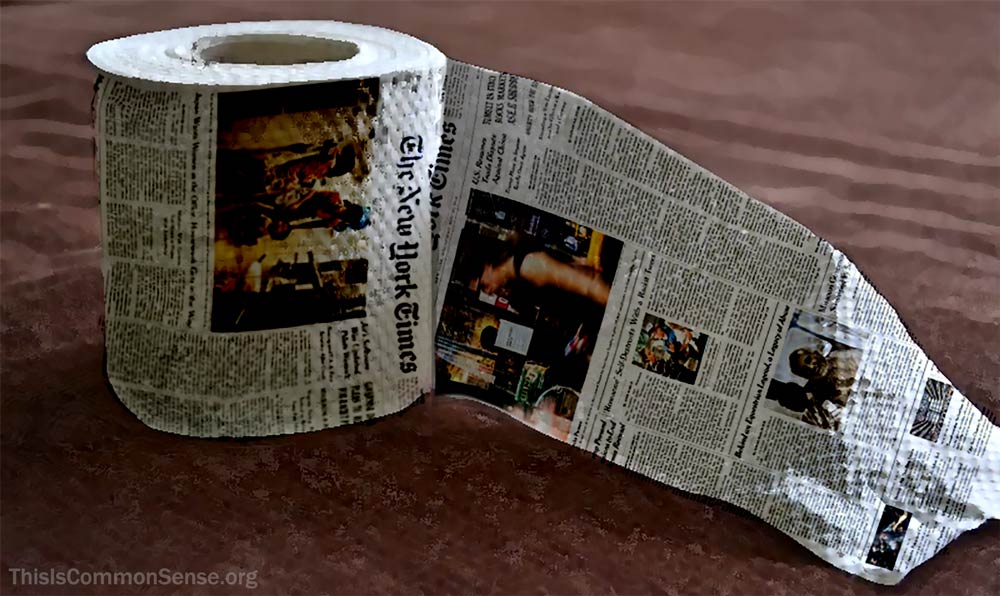
Tracey is commenting on how New York Times “journalists” — and others — apoplexed over the Times’ sin of permitting unqualified disapproval of mass rioting to grace its editorial pages. In his June Third op-ed, U.S. Senator Tom Cotton argued that the rioters, “if not subdued, not only will destroy the livelihoods of law-abiding citizens but will also take more innocent lives.” He recommended invoking the Insurrection Act in order to deploy the military.

One can argue about whether invoking the Act would be a good idea. 

Or one could, even in the Times . . . if one weren’t thereby invading the “safe space” of pseudo-journalists who had supposed that they need never face the hazards of fundamental debate within its pages.

An abject but vague apology now prefaces the op-ed. 

The Times has also fired the editor who let it be published. 

After all, by the time it reached print, Cotton’s piece did continue to contain evaluations with which someone might disagree.

This is a new low for the Times, which continues its downward spiral. The rest of us, I trust, will escape that vortex, resisting the great flush down to the sewer at civilization’s end.

This is Common Sense. I’m Paul Jacob.


PDF for printing

See all recent commentary
(simplified and organized)
See recent popular posts

Categories
First Amendment rights media and media people

Who’s Banned What?

Has dissent about pandemic policy been outlawed? 

I mean, “for the duration”?

Well, no. 

The Internet displays every possible view of policy and epidemiology, expressed with every possible degree of temperateness or intemperateness.

Yet we are indeed seeing signs of indifference to freedom of speech even when that speech cannot entail breathing a coronavirus on anybody.

According to CNN, Facebook told the network: “Anti-quarantine protests being organized through Facebook in California, New Jersey, and Nebraska are being removed from the platform on the instruction of governments in those three states because it violates stay-at-home orders.”

Online posts “violate stay-at-home orders”? 

Who knew? 

Obviously, a protest that violates social-distancing rules (if it does) is not the same thing as a communication about the protest.

Apparently, Facebook is a willing functionary of whichever state governments will instruct it to carry out their censorship. Tyler O’Neil opines that “it is disconcerting that Facebook would work with local governments to remove pages organizing protests against them.” 

Yes, indeed.

But such reports have been disputed. Facebook may be acting on its own. For example, a spokeswoman for New Jersey Governor Phil Murphy says that his office “did not ask Facebook to remove pages or posts for events promoting lifting the provisions of the Governor’s stay-at-home order.” Nebraska also denies making such a request. 

Which version of the story is true? 

Which is worse? 

Both are creepy.

I just hope that this muzzling-speech-just-to-help thing doesn’t start spreading like a virus.

This is Common Sense. I’m Paul Jacob


PDF for printing

Facebook, censorship, protests, corona virus, Covid, pandemic, epidemic,

See all recent commentary
(simplified and organized)
See recent popular posts
Categories
general freedom ideological culture media and media people Snowden

The Whistleblower Who Shall Not Be Named

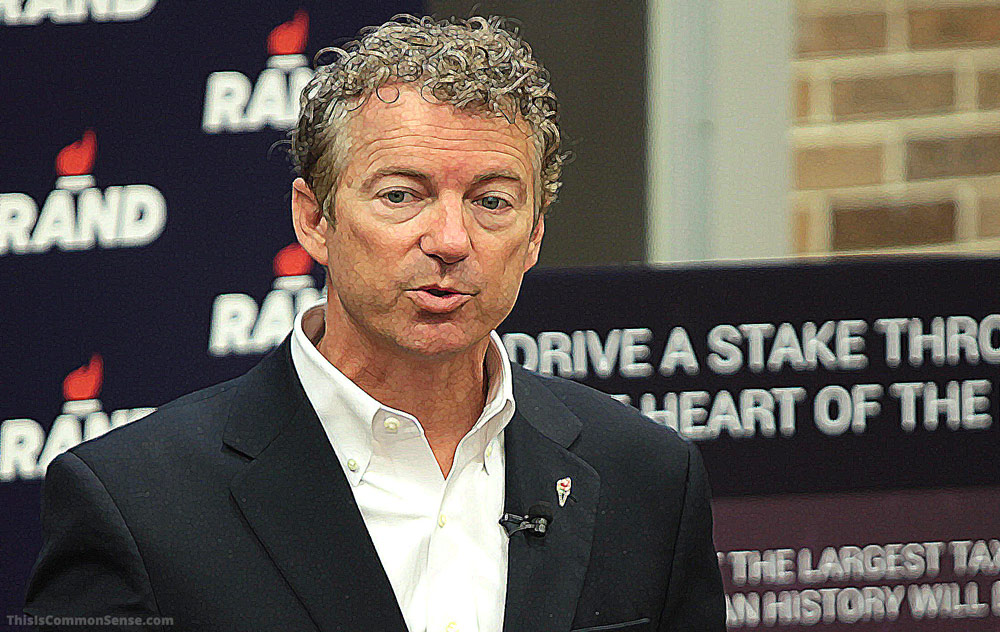
“YouTube — Google, one of the largest, most powerful companies on the planet — has just censored political discourse from a U.S. senator on the Senate floor,” reports independent, online journalist Tim Pool. 

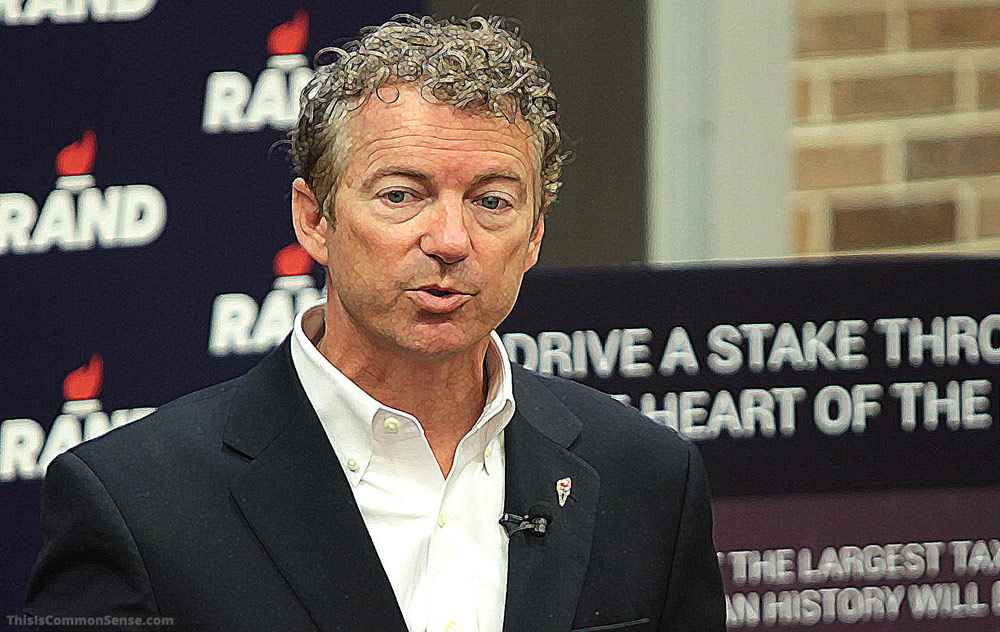
The case refers to the alleged “whistleblower” Eric Ciaramella, around whom hangs a sort of hush-hush infamy regarding the Ukraine phone call that became the centerpiece of the Democrat’s impeachment of Donald Trump. YouTube, under a self-imposed/tribe-imposed gag order not to mention the man’s name, takes down all videos that dare breach this rule. YouTube just took down a C-Span video featuring Senator Rand Paul discussing Mr. Ciaramella on the Senate floor — in which he defended whistleblower protections, but notes that they do not enforce anonymity.*

“Think about how dangerous that will be.”

“It is a chilling and disturbing day in America when giant web companies such as YouTube decide to censure [sic] speech,” the senator was quoted in The Washington Examiner after YouTube removed the clip. “Now, even protected speech, such as that of a senator on the Senate floor, can be blocked from getting to the American people.”

Rand Paul has been demanding full disclosure of possible conspiracy on the part of Ciaramella — working with Representative Adam Schiff, who led the impeachment push — but has not been getting very far. During the Senate impeachment trial, presiding officer Chief Justice Roberts declined to read a question (“as written”) by the senator that had specified the Unnamable Name without identifying him as the “whistleblower.”

Google is free to play censor, of course, but who wants an information age without the information?

This is Common Sense. I’m Paul Jacob.


* The senator also expressed some incredulity about the near-universal proclamations in support of whistleblower laws, calling Edward Snowden “the greatest whistleblower of all-time” but noting that half the Senate wanted Snowden put to death and the other half to plunk him “in jail forever. So it depends on what you blow the whistle on whether or not they’re for the whistleblower statute.”

PDF for printing

Rand Paul

See all recent commentary
(simplified and organized)
See recent popular posts
Categories
education and schooling ideological culture

The Awful Strain of Insurmountable Parody

What if “political correctness” were really a problem of rampant cowardice?

University of Massachusetts Amherst administrators removed Catherine West Lowry from her 13-year gig as an accounting lecturer because of an extra-credit project. 

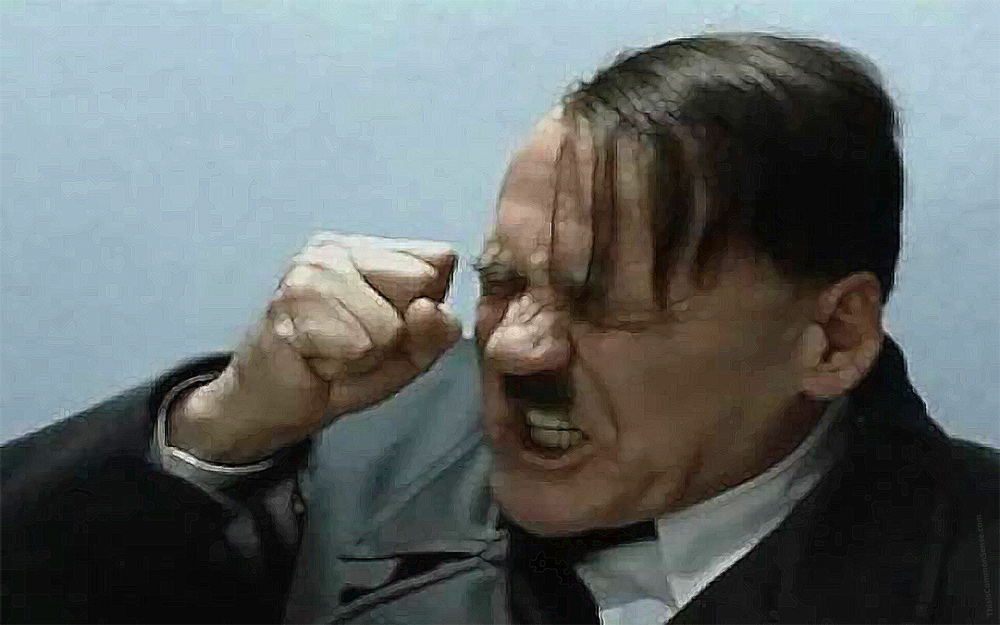
She had shown a previous year’s student-produced parody video using the infamous Hitler breakdown scene in the excellent 2004 movie Downfall. I assume you’ve seen dozens of these; I know I have. Their ubiquity notwithstanding, the university claims to have received student complaints about the one Ms. Lowry showed.

The proper response to a protestation of offense at a Downfall parody? Eye rolls. Were I a professor, I’d have to resist the nearly irresistible desire to reduce office hours starting immediately. 

Any other response, especially dismissing the lecturer, is pure pusillanimity.

Or, make that cowardice of the impure variety, for I suppose something else could be going on here.

Lowry claims that she’d shown this particular effort in previous years and no one had complained. And I believe her.

Can we believe the university’s claim to have received complaints from students this year?

Before we accept such a statement, we should peruse the evidence. After all, in the case of the Wilfrid Laurier University mistreatment of the T.A. who had shown a Jordan Peterson video in class, administrators had simply lied — there had been no complaints.

Had UMass Amherst actually received complaints, then their response would be merely cowardice. But were there no complaints, the whole thing becomes far more ominous.

And I wonder: what would today’s university make of Hogan’s Heroes?

This is Common Sense. I’m Paul Jacob.


PDF for printing

Hitler, Downfall, parody,

See all recent commentary
(simplified and organized)
See recent popular posts

Categories
Popular too much government

Gloating Time?

“The freak-out was something to behold,” I wrote two years ago.

Newly appointed chair of Federal Communications Commission, Ajit Pai, had just nixed ‘net neutrality,’ and reactions from the left end of the political spectrum were overwhelmingly negative.

I, on the other hand, prophesied good times ahead. But we free-market folks were outshouted.

At least on Twitter. 

Now, two years later, with something like a free market returned to Internet regulation, Casey Given at the Washington Examiner urges us not to “forget how the Left cried wolf.”

Contrary to doomsayers — whose alarm was that, sans net neutrality, we would experience “the End of the Internet as We Know It” — things are turning out pretty well. Mr. Given tells us that “since the repeal of net neutrality, more than 6 million people have gained access to the internet. Internet speeds have increased as well.”

Which shouldn’t shock. After all, the whole net neutrality mania was fear-based anti-capitalist prejudice. 

“The Internet had stumbled along just fine until 2015, when President Barack Obama’s FCC put ‘net neutrality’ in place — a point Ajit Pai ably makes in his defense,” I argued two orbits ago. “Do the doom-sayers really believe that a set of regulations that had been in place just a few years was going to ‘ruin the Internet’ and unleash Big Corporations upon the world to the detriment of regular consumers and start-up service providers?”

What most net neutrality advocates wouldn’t acknowledge, at the time, was that net neutrality was supported by key telecom corporations. This should have given them a hint that net neutrality itself was the thing to be most feared: a rigged system for a few at the expense of the many.

This is Common Sense. I’m Paul Jacob.


PDF for printing

net neutrality, censorship, control, FCC,

See all recent commentary
(simplified and organized)
See recent popular posts

Categories
First Amendment rights media and media people political challengers

The Silence Option

“While internet advertising is incredibly powerful and very effective for commercial advertisers,” Twitter CEO Jack Dorsey said last month in announcing a complete ban on political advertising for candidates or issues, “that power brings significant risks to politics, where it can be used to influence votes to affect the lives of millions.”

But is it the risk to “the lives of millions” that is at issue here?

Really?

Pressure for social media companies to police “renegade” voices came mainly from the left . . . in Congress and major media. These are the groups with the most to lose by the free flow of political debate, as spurred by paid political advertising, which is what challengers often use to break through the incumbents’ natural advantage. 

Congress is filled with incumbents, by definition.

Major media sees itself as gatekeeper for political discourse, and feels threatened by an unregulated online culture.

Accordingly, Twitter’s ban received rave reviews from the political left. “Good call,” progressive Congresswoman Alexandria Ocasio-Cortez responded. A spokesperson for former Vice-President Joe Biden’s campaign called it “encouraging.”*

“Good,” tweeted Montana Gov. Steve Bullock (also sort of a presidential candidate). “Your turn, Facebook.”

But Facebook is thankfully not bending to pressure.

“[I]f Facebook were to cut off political ads, it could end up undercutting the scrappy, first-time candidates . . .,” reports The Washington Post. “Voters are more likely to see Facebook ads than television ads from challengers, according to the findings, published in a working paper whose first author is Erika Franklin Fowler of Wesleyan University.”

“Online advertising lowers the cost and the barriers to entry,” Fowler told The Washington Post.

Which is bad for the political establishment because it is good for challengers, the outsiders.

This is Common Sense. I’m Paul Jacob.


Perhaps the ban encourages top Democrats for the same reason the president’s campaign manager sounded the alarm: “This is yet another attempt to silence conservatives since Twitter knows President Trump has the most sophisticated online program ever known.”

PDF for printing

gatekeeper, Twitter, Facebook, censorship, political advertising,

See all recent commentary
(simplified and organized)
See recent popular posts
Categories
media and media people political challengers

Twitter Abuse

“Look,” tweeted Sen. Kamala Harris, “let’s be honest. . . .”

When a politician talks about being honest — presumably “for a change” — it’s gonna be a doozy.

President Trump’s “Twitter account should be suspended.”

“What?” the reader will likely object, “Trump’s Twitter account is the second-best thing about the his presidency!”

The reader wouldn’t be wrong. 

We may disagree about the actual best thing, but the presidential Twitter account is indeed one of the things that makes the current chaos bearable. Sure, it is the cause of much of the chaos, but, well, we take our chuckles where we can get them. At least Trump’s tweets are not articulated in standard insiderese.

So, what did Trump tweet that so upset the former California prosecutor?

This: he had come to the “conclusion that what is taking place is not an impeachment, it is a COUP, intended to take away the Power of the People, their VOTE, their Freedoms, their Second Amendment, Religion, Military, Border Wall, and their God-given rights as a Citizen of The United States of America!”

Harris publicly called upon Jack Dorsey, Twitter’s CEO, to “do something” about the tweet.

He did nothing.

Understandably. 

Suspending the account of the United States President because a failing opposition candidate was offended by typical Trumpian hyperbole would br idiotic. Mr. Dorsey has a lot to answer for, sure. But complete and utter idiocy? Not that.

For he knows something: Donald Trump has it within his powers to command every federal agency to cease using Twitter. Trump himself could switch to Gab or Minds or even MeWe — perhaps he should

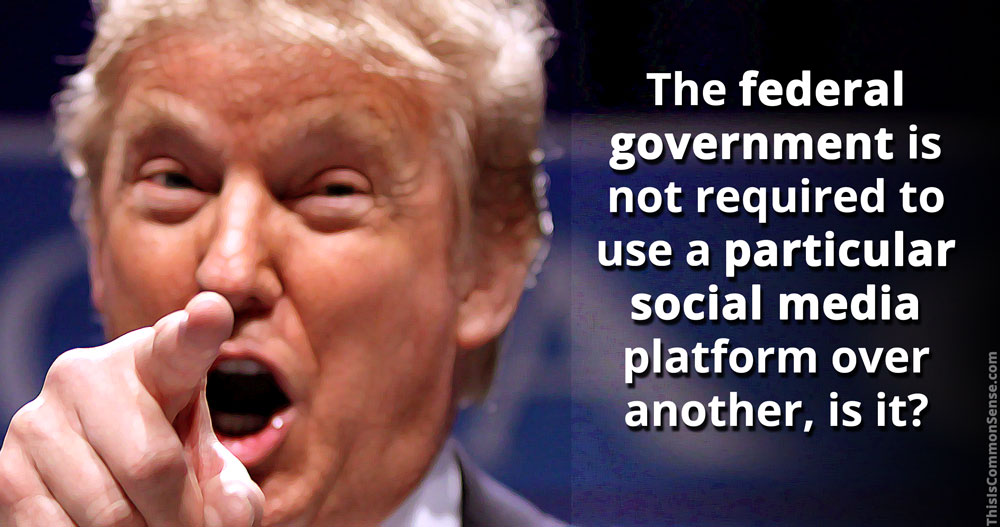
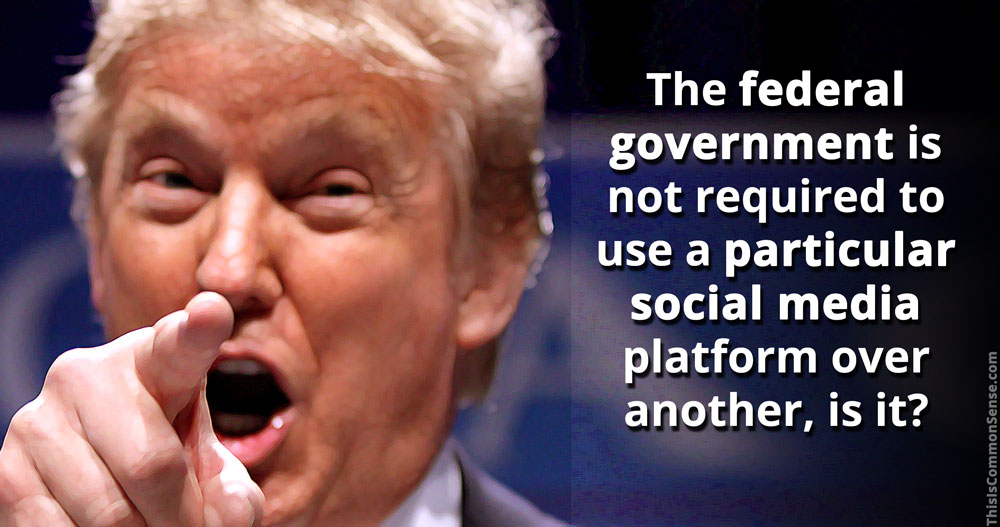
The federal government is not required to use a particular social media platform over another, is it?

This is Common Sense. I’m Paul Jacob.


Donald Trump, twitter, censorship, Kamala Harris threat,

See all recent commentary
(simplified and organized)
See recent popular posts

Categories
insider corruption tax policy

There You Go Again, IRS

The old keywords were “Constitution,” “Patriot” and “Tea Party.”

The new ones? “Marijuana,” “oxycodone,” and “legalization.”

Paul Caron, the TaxProf blogger, calls attention to another IRS scandal — again about denying tax-exempt status to organizations because of their political views. He had barely finished blogging about the scandal that came to light in 2013 when a new one burst into view.

You almost certainly remember the older scandal, in which the Internal Revenue Service had been caught intrusively scrutinizing and delaying the applications of conservative non-profits picked on because of their conservatism.

To cover that mess, Professor Caron published a blog series called “The IRS Scandal, Day __.” He added a post daily.

Every day.

For years.

The last installment, Day 1921, published on August 14, 2018, reported a settlement: meager taxpayer-funded payouts to over a hundred victimized organizations. The IRS never admitted wrongdoing. No one was ever punished. According to the Washington Times, the agency said that it had “made changes so that political targeting can’t occur in the future.”

These changes don’t seem to include prohibiting political targeting by the IRS, however.

Now we have another case.

Caron points us to a Wall Street Journal op-ed by David Rivkin and Randal Meyer, lawyers, who have discovered a dirty little secret in Revenue Procedure 2018-5. One provision authorizes IRS to withhold tax-exempt status from applicants seeking to improve “business conditions . . . relating to an activity involving controlled substances,” including marijuana and oxycodone. Advocating legalization of marijuana would count as trying to improve such conditions.

Apparently, the IRS thinks its mandate entails enforcing the status quo by stifling dissent — instead of just doing its congressionally mandated (if all-in-all irksome) job.

This is Common Sense. I’m Paul Jacob.


PDF for printing


» See popular posts from Common Sense with Paul Jacob HERE.


Categories
First Amendment rights too much government

Burning Isn’t the Only Way to Attack Books

The U.S. Copyright Office is enforcing an unjust and destructive law merely because it is there.

Selectively enforcing.

Valancourt Books prints books on demand. It keeps no stocks of books in a warehouse in between orders. Even so, the Copyright Office is demanding to be supplied with physical copies of each of the 400+ books in Valancourt’s catalog.

Failure to comply means crippling fines.

Why the harassment?

Well, once upon a time the Copyright Office required publishers to submit physical copies of books in order to receive copyrights for them. Yet the work of authors is now automatically copyrighted as soon as they create it.

Of course, the government doesn’t demand printed copies of their titles from every small publisher in the country. The Copyright Office just happens to have noticed and targeted Valancourt Books.

The Institute for Justice, which is representing the publisher in court, argues that this requirement unconstitutionally forces people to give up property without compensation, violating the takings clause of the First Amendment.

IJ also argues that the law violates the right of freedom of speech protected by that amendment. “People have a right to speak and to publish without notifying the government that they are doing so or incurring significant expenses,” IJ’s Jeffrey Redfern concludes.

“Because it’s there” may be a good reason to climb a mountain. It is a very poor reason to use an old — and outdated — law to destroy the livelihood of innocent people.

This is Common Sense. I’m Paul Jacob.


PDF for printing


Categories
crime and punishment First Amendment rights judiciary

Church Not Forced to Encourage Sin

In Hawaii, those who would compel others to promote abortion have suffered a well-deserved setback.

A U.S. District Court tossed a law requiring pregnancy centers to post ads for abortion clinics. Among the centers that would have been affected was one run by a church opposed to abortion. Of course, whether we’re religious or non-religious, we have the same rights. 

The president of National Institute of Family & Life Advocates (NIFLA), Thomas Glessner, hails the decision as a “major victory for free speech and freedom of religion.” For its reasoning, the district court relied on a Supreme Court decision, NIFLA v. Becerra.

“In NIFLA v. Becerra, the Supreme Court affirmed that we don’t force people to say things they don’t believe,” says Kevin Theriot, a lawyer with Alliance Defending Freedom who argued that case before the Supreme Court. Thus, “the district court was correct to permanently halt Hawaii’s enforcement of Act 200’s compelled speech requirement.”

You shouldn’t be forced in any way to abet any conduct that you regard as morally wrong — not if the rest of us respect your rights as a moral agent. And it is worth remembering that a lot of people have moral qualms about all sorts of issues, and that many of the people running Hawaii’s non-church-sponsored centers doubtless also oppose abortion.

Obvious? To you and me, maybe. But some people disagree. They appear eager to compel others to join their various causes. 

The noble cause of leaving other people alone isn’t on the list.

This is Common Sense. I’m Paul Jacob.


PDF for printing