Categories
free trade & free markets general freedom moral hazard nannyism national politics & policies responsibility too much government

Free the Truck Drivers

Should our government liberate truck drivers from the country-wide prison in which they’re incarcerated?

You say I’m exaggerating. Being metaphorical.

Yes. Maybe metaphors and hyperbole are not to your taste, but suggesting an analogy, at least, is more than justified. The government does treat truck drivers like inmates . . . with no right to plan their own schedules.

In an article for The Federalist (“‘Overregulation’ Means Government Literally Deciding When I Work, Eat, Sleep”), Matthew Garnett attests to what the regulations mean in practice. He must obey five deadlines, only one — showing up on time — related to the objective requirements of the job. Also: He may work only so many hours before taking a break, only so many hours on the job and driving, only so many hours on the job and not driving, only so many hours per week.

“There’s no way I can decide for myself when I’m going to sleep or rest or drive,” Garnett “concedes.” “After all, I’m just a stupid truck driver. What would I know about such things?”

The mandatory pacing means that drivers often rush to meet a bureaucratic deadline even if they’d rather travel more slowly and safely. And rushing can be “a very, very bad thing to do when you’re operating an 80-foot, 80,000-pound vehicle that will go 70 miles an hour downhill,” Garnett observes.

What to do? Repeal it all.

Of course, hold the truck driver, like every other driver, responsible for conducting himself safely.

But don’t force him to obey continuous and arbitrary edicts about when to stop and go.

This is Common Sense. I’m Paul Jacob.


PDF for printing


Categories
Thought

Yves Guyot

The dupe is the more ridiculous that if he only opened his eyes he must see how crude and flimsy are the artifices by which he has been swindled.

The aim of the Protectionist in every country is to reduce imports and encourage exports. Since there can be no selling without buying, if he attained his end international trade would cease and each nation be self-sufficing.


Yves Guyot, The Comedy of Protection, 1906, vii

Categories
Today

First U.S. budget

On September 19, 1778, the Continental Congress passed the first budget of the United States.

Congress last passed a budget in 1997.

Categories
Accountability crime and punishment government transparency moral hazard responsibility too much government

Half a Win Is Better than None

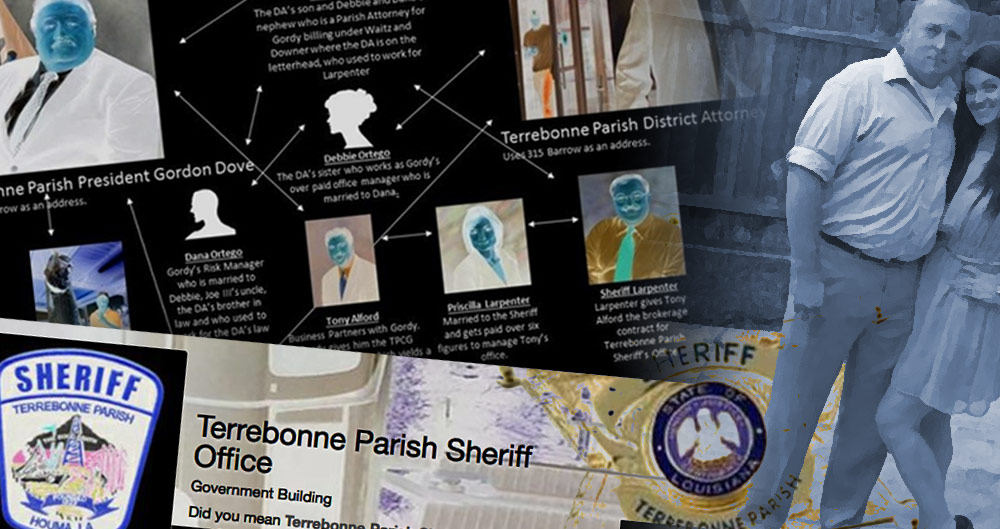
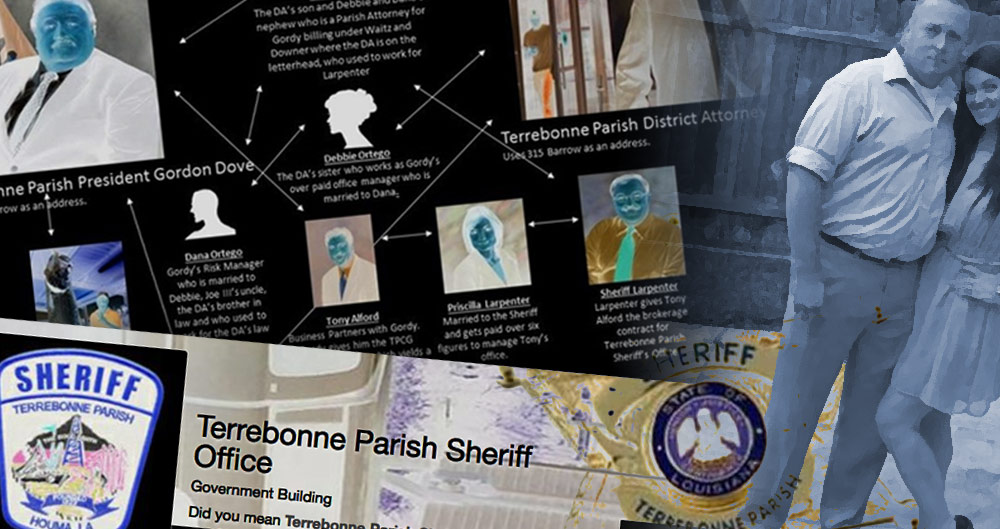
Jennifer Anderson criticized her local sheriff. Her family’s home was raided in 2016 by the sheriff as a result.

Terrebonne Parish Sheriff Jerry Larpenter’s reaction to criticism was ugly and unconscionable, but it hasn’t been allowed to stand. On the other hand, the sheriff hasn’t been adequately punished, either.

Jennifer Anderson’s pseudonymous blog ExposeDAT criticized various public figures in Terrebonne Parish, Louisiana, including with respect to the business relationships between Larpenter and others. Bridling at the criticism — which had to do with assessment of publicly available facts — the sheriff submitted warrants to Facebook and AT&T to track down the identity of the blogger. Then he sent men to raid the Andersons’ home and grab computers and cell phones.

The Andersons fought back, suing in federal court. They wanted the raid and seizure and search of their private stuff to be declared unconstitutional.

Finally, this September, the Andersons reached an undisclosed settlement with Larpenter out of court. According to its terms, the Andersons aren’t allowed to discuss it any detail. But their attorney says the settlement is “a victory for citizens’ right to be critical of their elected officials without fear of retribution.” U.S. District Court Judge Lance Africk has said that “Jennifer Anderson’s speech [in her blog] falls squarely within the four corners of the First Amendment.”

All that’s fine, but why hasn’t this sheriff also at least been kicked out of his job for his blatant abuse of power?

This is Common Sense. I’m Paul Jacob.

PDF for printing


Categories
Thought

Vilfredo Pareto

“We can group socialists and protectionists under the name of restrictionists, whilst those who want to base the distribution of wealth solely on free competition can be called liberationists…

“Thus restrictionists are divided into two types: socialists, who through the intervention of the state, wish to change the distribution of wealth in favour of the less rich; and the others, who, even if they are sometimes not completely conscious of what they are doing, favour the rich — these are the supporters of commercial protectionism and social organisation of a military type.”


Vilfredo Pareto, “Socialism and Freedom,” 1891.

Categories
Today

Washington

On September 18, 1793, George Washington laid the cornerstone of the Capitol building.

It has grown, since.

On September 18, 1838, Richard Cobden established the Anti-Corn Law League, which proceeded to bring free trade to Britain.

Categories
links

Townhall: Attack of the Dreaded Spoilers

Something there is that doesn’t love a spoiler. And yet, there is much to be said for spoilers. They provide, after all, one of the most important strains of competition in politics. Click on over to Townhall. Then come back here for further reading:

This weekend”s column will appear on this site on Tuesday.

Categories
Thought

Yves Guyot

We must not confound liberty with anarchy. Liberty is the reciprocal respect for personal rights, according to certain fixed rules known by the name of law. Anarchy is the privilege of some and the spoliation of others, according to the caprices and arbitrary will of the cunning and the violent, and the feebleness and lack of energy of the timorous.


Yves Guyot, The Tyranny of Socialism, 1894

Categories
Today

U. S. Constitution

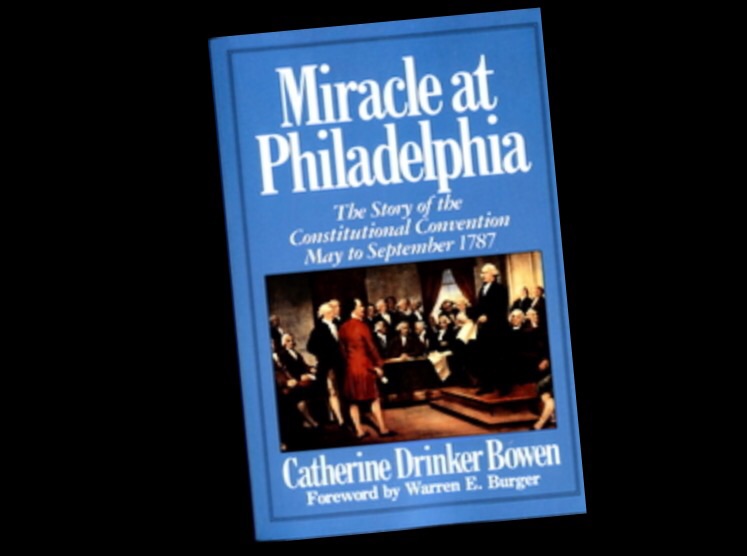
On September 17, 1787, the Constitution of the United States was signed in Philadelphia, Pennsylvania.

In 1849 on this same day in September, Harriet Tubman escaped to freedom in Philadelphia, but soon returned to Maryland to rescue her family. She made at least 13 trips into the slave-owning South to liberate more than 70 slaves before the Civil War (in which she served as a spy for the North).

Categories
video

A Speech in Berkeley

A much-awaited, much-dreaded speech:

https://youtu.be/Ae4VZTVEFC4

The culture of violence around it:

The speechmaker’s wrap-up: