Categories
Thought

Charles A. Beard

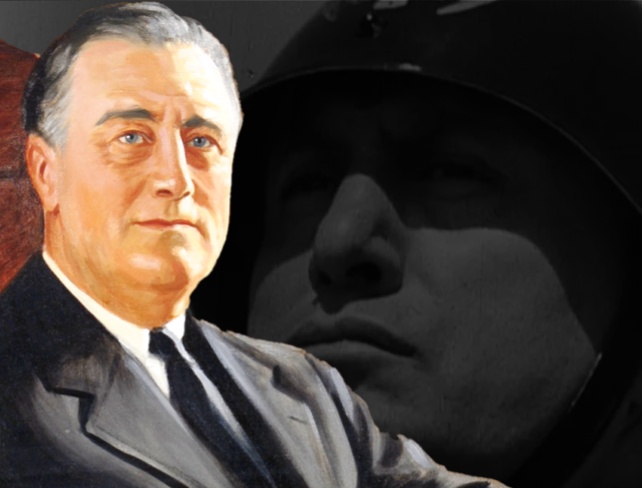
The lessons of history:

  1. Whom the gods would destroy, they first make mad with power.
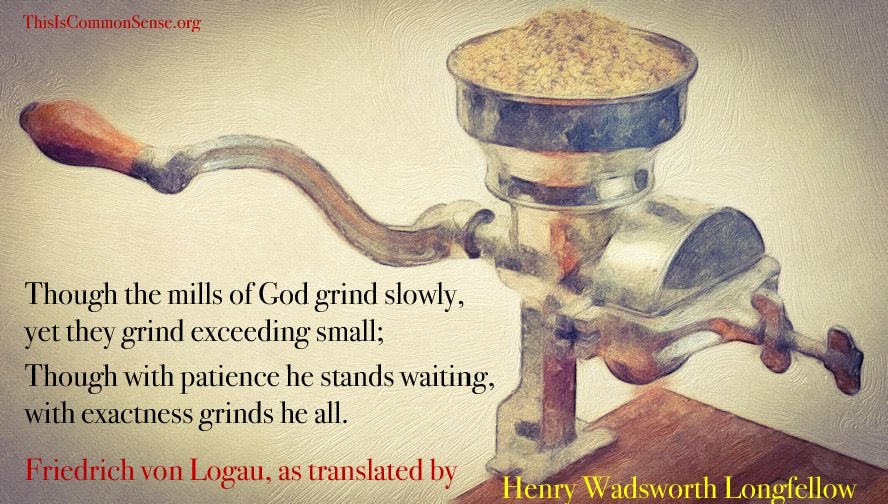
  2. The mills of God grind slowly, but they grind exceedingly small.
  3. The bee fertilizes the flower it robs.
  4. When it is dark enough, you can see the stars.

Charles A. Beard’s response, upon being asked to summarize the lessons of history, saying he could do it in four key points; as quoted in “Condensed History Lesson” by Arthur H. Secord, in Readers’ Digest, Vol. 38, No. 226 (February 1941), p. 20.

Categories
Today

The Mahatma

On March 10, 1922, Mohandas Karamchand Gandhi (1869-1948), activist and theorist of non-violent revolution, was arrested in India, tried for sedition, and sentenced to six years in prison, only to be released nearly two years later for an appendicitis operation.

Categories
First Amendment rights

Register the Critics!

Joy Reid cited it as just another example of “right-wing fantasy,” and Newt Gingrich had, if anything, worse things to say about it.

What is it?

A proposed Florida law advanced by State Senator Jason Brodeur (R-Lake Mary).

Senate Bill 1316 “would require bloggers to register with the state within five days of any post mentioning a state official, according to Florida Politics,” a Newsweek article explains. “It would then require bloggers to file monthly reports listing posts that mention officials, as well as any compensation for those posts.”

The legislation, which has not advanced far — and probably won’t — has received mostly negative responses. Former Speaker of the House Gingrich’s is typical: “The idea that bloggers criticizing a politician should register with the government is insane. [I]t is an embarrassment that it is a Republican state legislator in Florida who introduced a bill to that effect. He should withdraw it immediately.”

Promoters of the law defended it mainly by saying that Ginrich’s criticism mischaracterized the law. Not all political bloggers would have to register, only those paid to write would be. Only!

“If a blogger posts to a blog about an elected state officer and receives, or will receive, compensation for that post, the blogger must register with the appropriate office. . . .”

Former FEC Commissioner Brad Smith challenged the notion itself: “Would you apply this to journalists? Citizen who write letters to their representatives? People who talk to their neighbors? Why not? No, you don’t have a right to know who is paying them. You have a right to ignore them if that matters to you.”

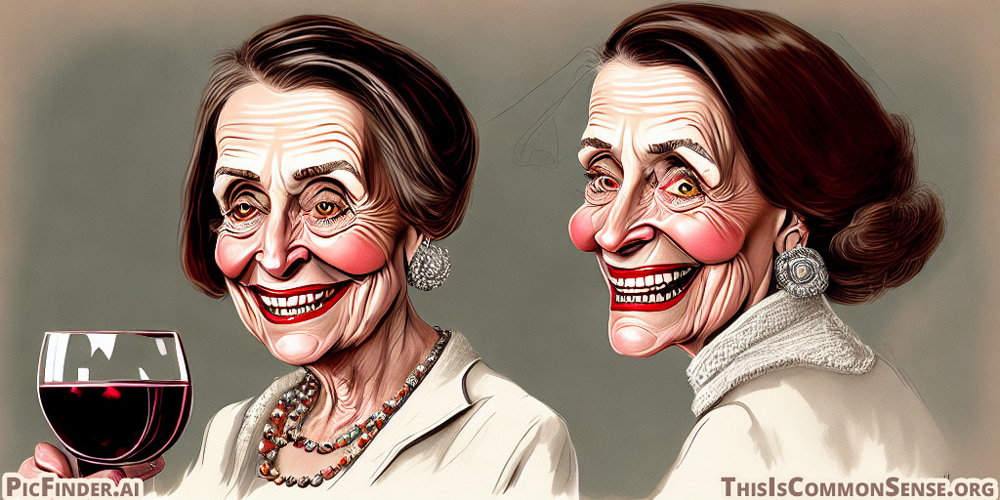
Since the world began, politicians have had a very difficult time ignoring their critics. Instead, like this Florida Senator, they want to shut them up. By force. By intimidation. By regulatory harassment.

The First Amendment says NO.

This is Common Sense. I’m Paul Jacob.


PDF for printing

Illustration created with PicFinder.ai

See all recent commentary
(simplified and organized)
See recent popular posts
Categories
Thought

Ayn Rand

Man is free to choose not to be conscious, but not free to escape the penalty of unconsciousness: destruction.

Ayn Rand, “The Objectivist Ethics,” The Virtue of Selfishness (1964).
Categories
Today

William Cobbett & Adam Smith

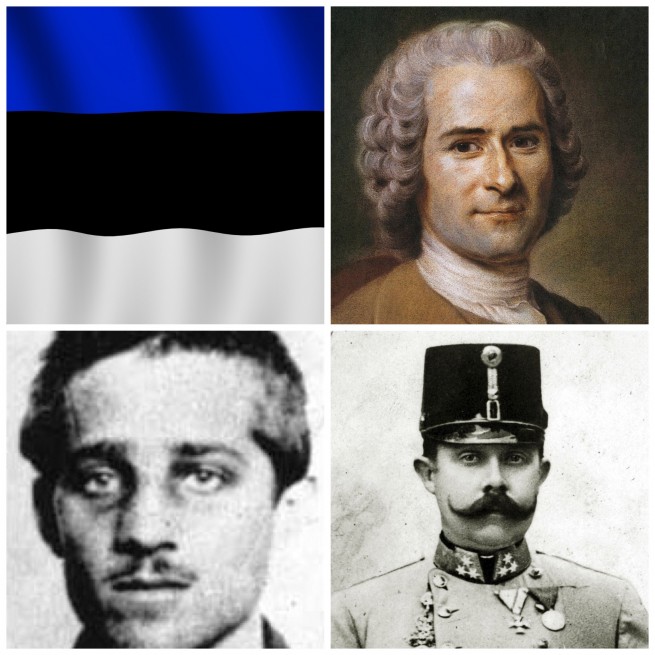
March 9 marks the 1763 birthday of British pamphleteer and activist William Cobbett. Cobbett was known for his lifelong opposition to authority, and his later-in-life “radicalism,” which included his opposition to Britain’s protectionist Corn Laws as well as his support for Catholic Emancipation. Cobbett died in 1835.

In 1776 on this date, Scottish philosopher Adam Smith published An Inquiry into the Nature and Causes of the Wealth of Nations, which became the first widely accepted landmark work in the field of economics. It was not the first general treatise on the subject, however; that designation almost certainly belongs to banker Richard Cantillon’s Essai sur la Nature du Commerce en Général, cited by Smith in his more famous book. It is also worth noting that Étienne Bonnot de Condillac’s systematic treatise, Le Commerce et le Gouvernement, also saw publication in 1776.

On March 9, 1862, the USS Monitor and CSS Virginia fought to a draw in the Battle of Hampton Roads, the first battle between two ironclad warships. The Virginia was built on the remains of the USS Merrimack, and the battle is often referred to as between “the Monitor and the Merrimack.”

Categories
Accountability government transparency international affairs

Time for Truth Is . . . Now?

The “kooky” conspiracy hypothesis that in 2019 a Wuhan laboratory that had been rebuilding viruses to make them better, stronger, faster then somehow unleashed the COVID-19 virus on the world has been gaining traction lately.

Three years ago, such a thing was declared to be impossible, or at least extremely unlikely. After all, the Chinese government itself, which always tells the truth, had repudiated this explanation, even going so far as to conscientiously refuse to cooperate with investigations into the origin of the pandemic.

Many policy makers and media mavens in the West nodded vigorously. No need to inquire further.

But the dam has been breaking in recent months. Now, even U.S. government agencies — government agencies themselves! — are saying yeah, probably a lab leak.

The FBI has hopped on the probably-lab bandwagon and, according to its director, has been on the wagon a while.

FBI director Chris Wray says: “The FBI has for quite some time now assessed that the origins of the pandemic are most likely a potential lab incident in Wuhan.”

Quite some time now? And kept quiet?

Author James Kunstler wants to know if the FBI knew during all the time that fey Wray “was in charge of a battalion of FBI agents assigned to managing Twitter, Facebook, and Google . . . to make sure that anyone who opined about Covid coming from the Wuhan lab got censored, banished, cancelled, reputationally destroyed.”

It’s hardly “kooky” to inquire as to what the FBI was thinking, simultaneously believing something to be true and, yet, in contravention of the First Amendment, working to suppress that very belief.

This is Common Sense. I’m Paul Jacob.


PDF for printing

Illustration created with PicFinder.ai

See all recent commentary
(simplified and organized)
See recent popular posts
Categories
Thought

John Jay

Justice is indiscriminately due to all, without regard to numbers, wealth, or rank.

Supreme Court Chief Justice John Jay, Georgia v. Brailsford (1794).
Categories
Today

Slavery and Anti-Slavery in America

On March 8, 1775, “African Slavery In America,” often described as the first known essay advocating the abolition of slavery in America, was published anonymously in the Pennsylvania Journal and the Weekly Advertiser. Thomas Paine (pictured) is believed to be the essay’s author.

The first anti-slavery society was formed in Philadelphia weeks after publication, and Paine was a founding member.

Exactly 120 years earlier, a court in Northampton County of the Virginia Colony ruled that John Casor, then working as an indentured servant to Robert Palmer, must be returned to Anthony Johnson as Johnson’s “lawful” slave for life. Johnson himself was one of the original indentured servants brought to Jamestown, had completed his indenture to become a “free Negro,” and became the first African landowner in the colony. The case marked the first person of African descent to be legally recognized as a lifelong slave in England’s North American colonies. In summary: the first official chattel slave in English-speaking North America was of African descent was owned by a man also of African descent.

Categories
ballot access election law national politics & policies

Alien National Capital

While the 58th anniversary of the Selma, Alabama, Bloody Sunday seemed an apt occasion to address the right of all citizens to participate democratically in their government, leaving the job to President Joe Biden was . . . awkward. He said nothing of consequence.

But back in 2020, candidate Biden said this: “In order to be able to vote, it’s important that you be a U.S. citizen.” That’s consequential.

In 2021, however, when the New York City Council extended suffrage to foreign nationals living legally in the Big Apple, against the will of the majority of New Yorkers, I don’t recall hearing even the slightest peep from 1600 Pennsylvania Avenue.

Now the wackos in Washington, D.C., have enacted a non-citizen voting measure that goes further. It allows Russian nationals working for Mr. Putin at their embassy in our nation’s capital to vote on city candidates and ballot issues and welcomes onto Washington’s voter rolls Chinese citizens here promoting Xi Jinping and the interests of his genocidal regime. 

The District of Columbia’s ordinance extends the franchise even to people here illegally, allowing anyone from anywhere in the world able to avoid deportation to cast a ballot. Legally.

Thankfully, House Joint Resolution 24, which seeks to block the D.C. non-citizen voting ordinance passed the U.S. House last month, garnering support from every Republican present as well as roughly one in five Democrats. Action now moves to the Senate. 

“After years of lamenting so-called ‘foreign interference’ in our elections,” argues Sen. Tom Cotton (R-Ark.), “every single Democrat ought to join in invalidating this insane policy.”

But will they? 

Congressional Democrats might claim that their support for local control in D.C. excuses them for allowing this non-citizen voting measure to become law. But it’s not even a fig-leaf after Biden declared he would sign the congressional Republicans’ repeal of another D.C. council enactment, a controversial crime “reform” law, which District officials then hurriedly withdrew to placate nervous national Dems.

Talk about awkward!

This is Common Sense. I’m Paul Jacob. 


Note: Biden certainly has a cavernous credibility gap on election integrity. After he attacked Republicans as “un-American” and the 2021 election reform legislation enacted in Georgia as “Jim Crow in the 21st Century,” the Peach State saw “record breaking turnout” in last year’s election. Sadly, much of the media merely ignored reality; CBS News headlined one report, “Effect of Georgia’s voting law unclear, despite high turnout.”

PDF for printing

Illustration created with PicFinder.ai

See all recent commentary
(simplified and organized)
See recent popular posts
Categories
Thought

Roger J. Vaughan

The art of politics is ostentatious giving and surreptitious taking.

Roger J. Vaughan, quoted in Stephen Labaton, “Presidential Candidates Ignore Banking Problem,” New York Times, October 7, 1992.