From Huzzahs to Shame! Shame! Shame! — Paul Jacob talks about the big stories of the week, not all of which appeared here on Common Sense with Paul Jacob:

From Huzzahs to Shame! Shame! Shame! — Paul Jacob talks about the big stories of the week, not all of which appeared here on Common Sense with Paul Jacob:

The assertion that men are objectively equal is so absurd that it does not even merit being refuted.
Vilfredo Pareto, Manual of Political Economy (1927, Ann S. Schwier, trans., 1971), p. 90.
John Cabot landed in North America at Newfoundland on June 24, 1497, leading the first European exploration of the region since the Vikings.
In 1535 on this date, the Anabaptist state of Münster was conquered and disbanded.
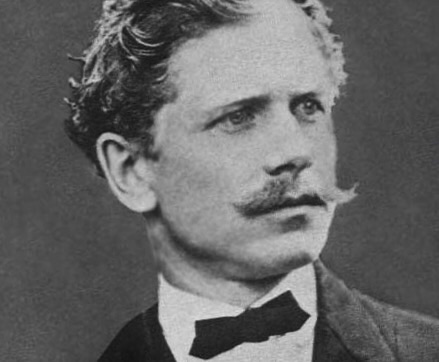
June 24 birthdays include Henry Ward Beecher, clergyman and reformer (1813); Ambrose Bierce [pictured], author of “An Occurrence at Owl Creek Bridge” and The Devil’s Dictionary — his dark, cynical wit earned him the epithet “Bitter Bierce” (1842); Richard Timberlake, American free-market economist (1922–2020).
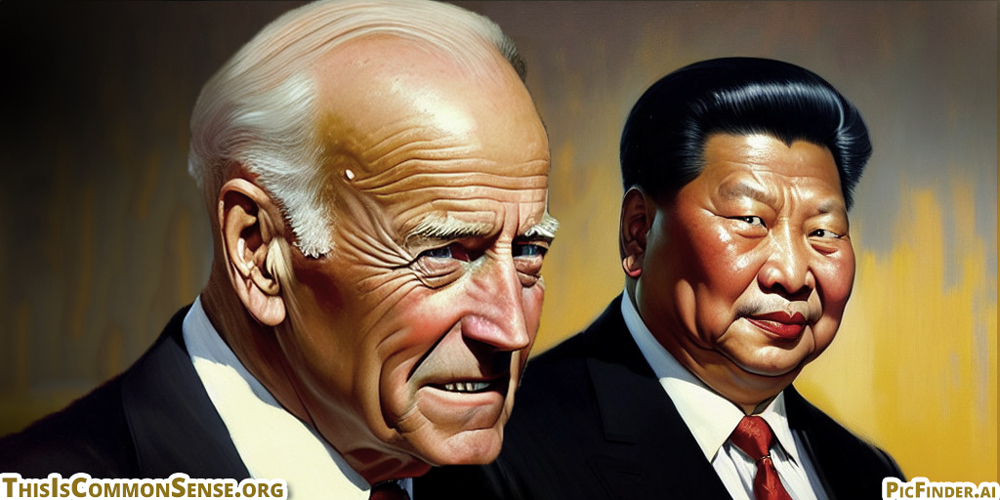
To a camera-less roomful of big Democratic Party donors out in California, the leader of the Free World called Xi Jinping, the un-term-limited totalitarian atop the Chinese Communist Party (CCP), a “dictator.”
Xi is reportedly upset.
“This threatens to reverse the recent efforts to improve U.S. ties with China,” CBS Mornings co-host Tony Dokoupil lamented. The Communist capo “might fit the textbook definition,” he added, “but you don’t often hear an American president use the term.”
Joe is not wrong. CCP-run China is a genocidal regime with zero respect for individual rights, human life, its word, the truth . . . need I go on? . . . threatening military invasion against its neighbors.
Yet, rather than the dictator label, what probably angered China’s Chief Butcher most was President Biden’s claim that Xi had been clueless about their spy balloon traveling across the United States — until the U.S. military shot it down.
Nobody told him? Biden dubbed it “the great embarrassment for dictators.”
How does Biden know — from personal (wannabe) experience? Or from many corrupt dealings with Xi’s regime?
Let’s put our priority on military preparedness, rather than name-calling, but the first order of business in dealing with the Chinazis is not the relentless pursuit of “good relations.”
It is remembering with whom we are dealing.
This is Common Sense. I’m Paul Jacob.
Illustration created with PicFinder.ai
See all recent commentary
(simplified and organized)
See recent popular posts
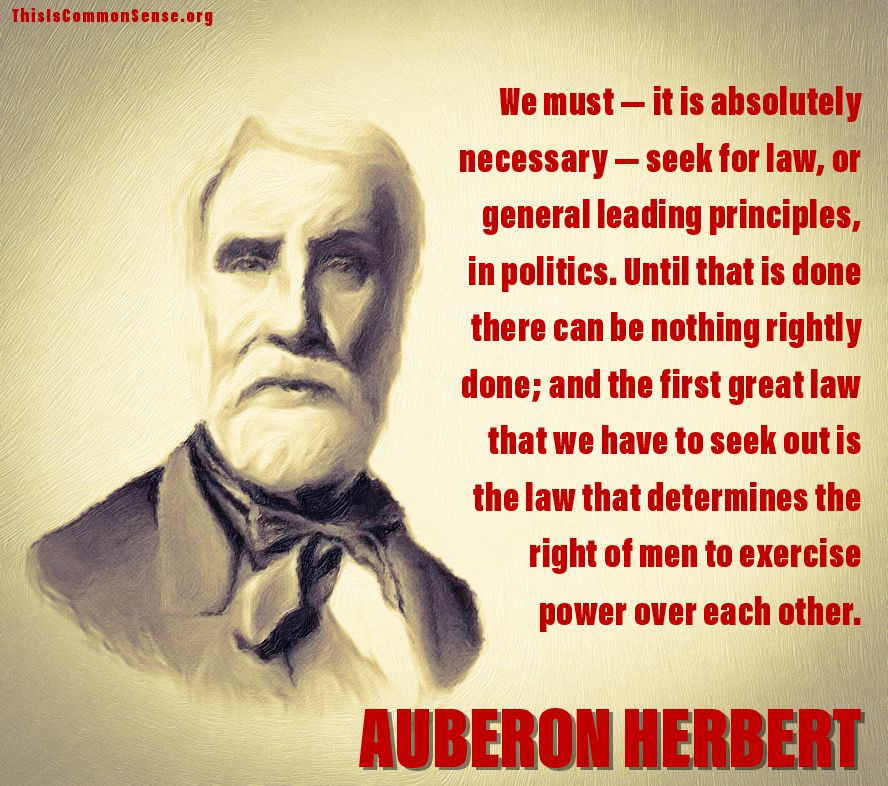
We must — it is absolutely necessary — seek for law, or general leading principles, in politics. Until that is done there can be nothing rightly done; and the first great law that we have to seek out is the law that determines the right of men to exercise power over each other. Have men any right to this power? If they have it, do they possess it for all matters? If not for all matters, for what matters? And in this last case how are we to tell what these matters are?
Auberon Herbert, The Right and Wrong of Compulsion by the State (1885).

Today is Estonia’s Victory Day, which has been celebrated on June 23 every year since 1934. The date recalls the victory in the 1919 Battle of Vonnu of the Estonian military forces (and Latvian North brigade) and their allies over German forces (Baltische Landeswehr) who sought to re-assert Baltic-German control over the region. The battle was part of the 1918-1920 Estonian War of Independence, where the main adversary of the newly independent Estonia was Communist Russia.
Today, Victory Day also marks the contributions of all Estonians in their fight to regain and retain their independence. Estonian celebration of June 23 is ceremonially tied to the following Midsummer Day celebrations on the 24th.
According to Estonian laws, the state flags are not to be lowered during the night between days.

Now, Trump is being prosecuted for mishandling classified documents upon leaving office, and only Republicans cry “prosecution of a political rival!”
Meanwhile, Hunter Biden just received something close to mere admonishment for his not paying taxes on his loot. And no charge for lying on a federal gun application. The Administrative State favors its own.
“The real difficulty, in my view, is trying to figure out how to hold people accountable for their conduct,” said former Special Counsel John Durham in his recent testimony to Congress. “It’s not a simple problem to solve.”
Durham was talkingabout the Russiagate panic that Democrats in government, media, and Congress exhorted for years. “If there was something that was inconsistent with the notion that Trump was involved in a ‘well-coordinated conspiracy’ with the Russians and whatnot, that information was largely discarded or ignored and I think, unfortunately, that’s what the facts bear out.”
Functionaries in the CIA, FBI and Department of Justice “investigated” — but merely to find evidence to bolster a pre-selected story that they could use to oust a president they did not like.
What to do?
Clean house: fire the worst offenders.
Who can do that?
Any president could hire an Attorney General and directors of the FBI and CIA, each with broom in hand.
And Congress could actually do its job. You know, legislate in the public interest.
But we possess neither, and so we persist in the current stalemate.
This is Common Sense. I’m Paul Jacob.
Illustration created with PicFinder.ai
See all recent commentary
(simplified and organized)
See recent popular posts

Toutes les fois que je donne une place
vacante, je fais cent mécontents et un ingrat.
Every time that I fill a high office, I create a hundred discontented men and an ingrate.
Louis XIV, as quoted in Voltaire, Le Siècle de Louis XIV (1751), ch.26.

On June 22, 1633, astronomer Galileo Galilei recanted his belief in heliocentrism, the idea that the Earth revolves around the sun. He didn’t do this based on scientific research, but under pressure from the Holy Office in Rome.
Three hundred forty-five years later, to the date, American astronomer James W. Christy discovered Charon, a moon for what was then called “the ninth planet,” Pluto. This put Christy in an august company of satellite discoverers, including Galileo, who had discovered four of Jupiter’s moons in 1610.
When Pluto was later “demoted” to “dwarf planet” status, in 2006, no one was put under house arrest for objecting, or for not changing his or her mind, as had Galileo been centuries before.
The ratio in sizes between Charon and Pluto make the pair, effectively, a “double dwarf planet.”

Because of the emails and other documents that have come to light in various lawsuits, we now know for sure that social-media companies have not been censoring independently.
They’ve been in cahoots with government agencies — agencies eager to find corporate workarounds to the First Amendment.
A recent target of Google’s YouTube? Robert F. Kennedy, Jr.
Running for president as a Democrat in competition with the alleged incumbent, Joe Biden, this son of assassinated 1968 Democratic presidential candidate Bobby Kennedy is disturbing the serene pools of so-called thought that constitute Acceptable Opinion and Settled Science.
I often disagree with Kennedy. But I feel that he isn’t just feeding me B.S.; he actually believes stuff.
He may be mostly wrong, but I prefer that to mostly crooked.
Google has just deleted another Kennedy video, one in which he converses with Canadian psychologist Jordan Peterson about climate change, COVID-19, and a possible link between exposure to chemicals and sexual dysphoria.
This last musing seems dubious. But, whatever, let the guy talk. Except — hold on — isn’t RFK Jr. causing Joe Biden a lot of political trouble?
Can’t have that.
Or, anyway, Google can’t have that.
Or whichever Biden administration officials are directing Google (or vice versa) can’t have that.
This is Common Sense. I’m Paul Jacob.
Illustration created with PicFinder.ai
See all recent commentary
(simplified and organized)
See recent popular posts