Karl Kraus, about his newsletter, Die Fackel.
My public and I understand each other very well: it does not hear what I say, and I don’t say what it wants to hear.
Categories
Karl Kraus

Karl Kraus, about his newsletter, Die Fackel.
My public and I understand each other very well: it does not hear what I say, and I don’t say what it wants to hear.
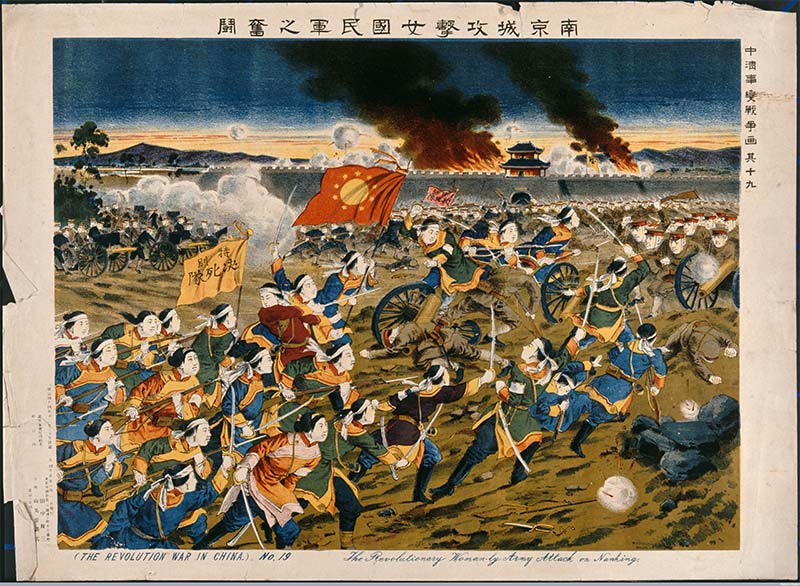
On December 29, 1911, Mongolia gained independence from the Qing Dynasty.
On his podcast, Tom Woods asserted that a Chinese invasion of Taiwan would be “a net-negative for the overall cause of human liberty” before asking Solis-Mullen: “So is your position that that’s a very unfortunate thing but there is absolutely no way the United States is going to defeat China over Taiwan, so what’s the point in trying?”
Solis-Mullen answered in the affirmative: “the U.S. would lose an attempt to block China from absorbing Taiwan.”
To illustrate, he noted that “it’s 80 miles off the coast of China,” and said “imagine someone trying to invade Cuba, for example, and the United States was determined not to let them. Of course, they couldn’t.”
An unfortunate formulation, since the U.S. is not threatening to invade Taiwan; China is!
Better to have said, imagine an eastern hemisphere power trying to protect Cuba from an invasion by the U.S. Since to this day you can find American politicians advocating a conquest of Cuba, the analogy is more nearly exact.
And perhaps for similar reasons as to why Cuba remains unconquered, Taiwan is actually defensible — especially with U.S. naval and air support.
While a recent CSIS war game showed massive death and destruction should China surprise Solis-Mullen by launching an amphibious assault, it in turn found China’s navy devastated and the attack repelled. Ian Easton’s look at The Chinese Invasion Threat also concluded that Taiwan can defeat a PLA invasion force.
Today, treaty obligations require the U.S. to come to the military defense of Japan and the Philippines, both under threat from China. The Taiwan Relations Act mandates that we provide Taiwan (which lies between them) with the wherewithal to defend itself and President Biden has repeatedly pledged direct U.S. military assistance should China launch the unprovoked attack the CCP regularly threatens.
Solis-Mullen advocates we abandon these obligations. He seems to recognize it means a complete U.S. withdrawal from Asia and Chinese Communist Party “domination,” but his notion that it “will not impact our prosperity at all” is naïve.
Sitting back to watch another evil empire gobble up free peoples would be, as Tom Woods put it, a huge blow “for the overall cause of human liberty.”
Seems like the wrong armchair position.
This is Common Sense. I’m Paul Jacob.
Illustration created with PicFinder and Firefly
See all recent commentary
(simplified and organized)
See recent popular posts
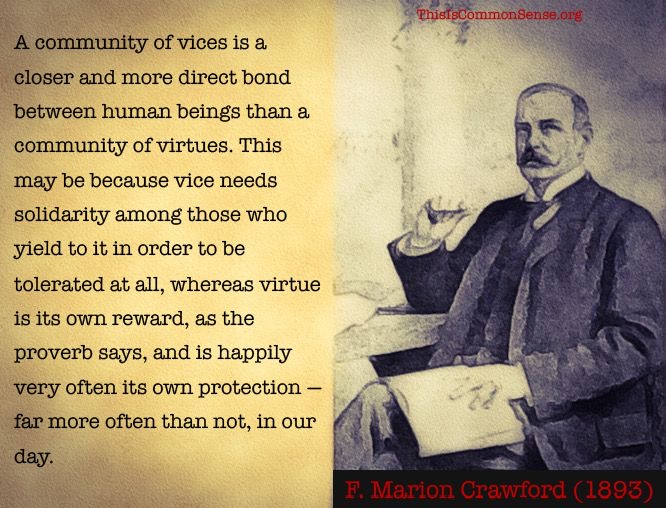
A community of vices is a closer and more direct bond between human beings than a community of virtues. This may be because vice needs solidarity among those who yield to it in order to be tolerated at all, whereas virtue is its own reward, as the proverb says, and is happily very often its own protection — far more often than not, in our day.
Francis Marion Crawford, The Novel: What It Is (1893), p. 40.
On December 28, 1793, Thomas Paine was arrested in France for treason, after being tried (and convicted) in absentia on December 26. Prior to moving to France, Paine had been an instrumental figure in the American Revolution as the author of Common Sense. Paine then moved to Paris to help along the French Revolution, but the chaotic political climate turned against him. Paine had not earned friends in the Revolution with his vocal opposition to capital punishment.
“During the whole of my imprisonment,” Paine later wrote, “prior to the fall of Robespierre, there was no time when I could think my life worth twenty-four hours, and my mind was made up to meet its fate. The Americans in Paris went in a body to the convention to reclaim me, but without success.”
Paine’s imprisonment in France caused a general uproar in America. Future President James Monroe used all of his diplomatic connections to get Paine released in November 1794.
With the publication of Paine’s secular tract, The Age of Reason — a great part of which he wrote in French prison — the American population turned against him, and he died penniless in New York in 1809.
On this date in 1832, John C. Calhoun resigned as Vice President of the United States, the first to do so.
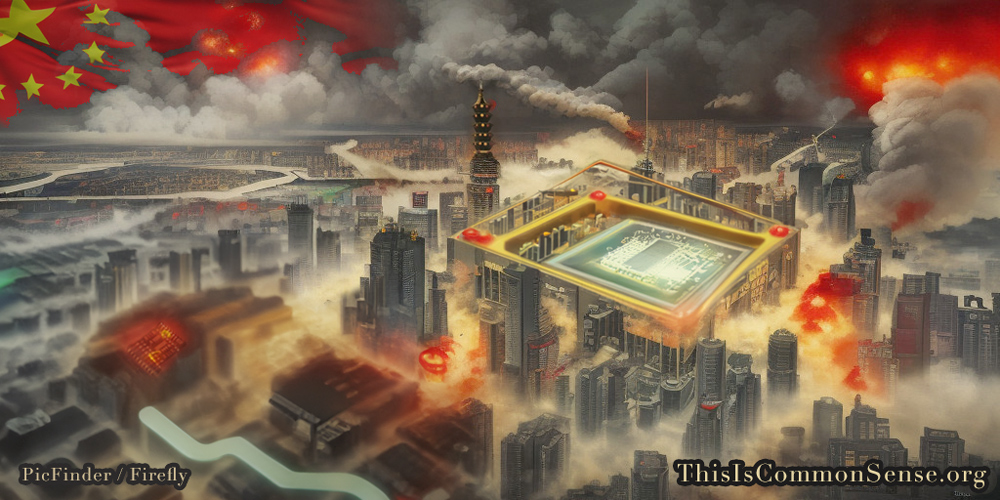
“That would never happen,” the author of The Fake China Threat assures, “because the United States has already said publicly that they would destroy — that they would literally bomb out of existence — those very factories.“
Wow. Sure seems those semiconductor chips are awfully important.
It’s a “pretext,” he argues — and I’m quoting from his November Tom Woods Show appearance. “Even if China had [the high-end chip fabs], why wouldn’t China want to sell [chips] to the rest of the world? Right? What good is it just to hold all of the semiconductors? It doesn’t make any sense.”
After Solis-Mullen complained about a lack of follow-up questions in mainstream media discourse, historian and podcaster Woods inexplicably failed to ask him one. Instead, Woods doubled down by dismissing previous fears that some authoritarian dictator might monopolize “all the oil.”
Woods inquired incredulously, “What would you do with it? Unless you have a fetish for it. What would you do with it?”
“Drink it?” Solis-Mullen jokingly asked.
Hahaha. But, seriously, Mr. Woods, no concerns at all about “so-and-so” having a monopoly on oil? Not even Putin? Or China’s Xi Jinping?
¡No problemo! Xi can’t drink the oil, after all. He would just have to sell it to us . . . and surely at very reasonable rates.
Right? Whew! That was close.
Maybe the CCP could “never” get its hands on those fabs producing all the high-end computer chips, but if somehow it did, are we really supposed to believe it wouldn’t be YUGELY advantageous to China?
Say, militarily?
You know, should this “fake” threat keep becoming more and more real.
This is Common Sense. I’m Paul Jacob.
Illustration created with PicFinder and Firefly
See all recent commentary
(simplified and organized)
See recent popular posts

Corruption is worse than prostitution. The latter might endanger the morals of an individual, the former invariably endangers the morals of the entire country.
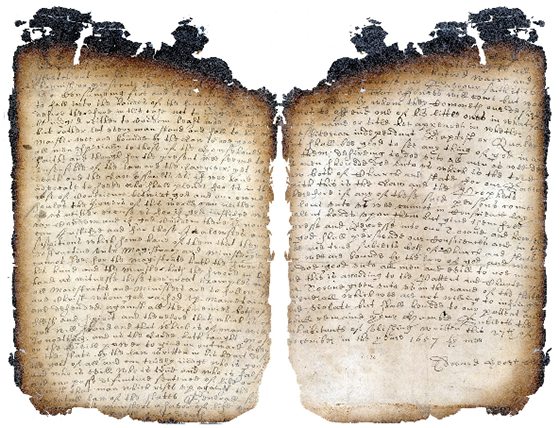
On December 27, 1657, a group of English citizens in Flushing, New York, who were not themselves Quakers, signed a petition protesting the persecution of Quakers. This “Flushing Remonstrance” is an eloquent statement of the principle of religious liberty, and is widely regarded as a forerunner to the U.S. Constitution’s First Amendment.
The petition was delivered to Director-General of New Netherlands, Peter Stuyvesant.
“Gentlemen may cry peace, peace,
— Patrick Henrybut there is no peace.”
The 2023 Chicago Council Survey shows 58 percent of us view China as “a critical threat” and a “plurality of Americans (46%) say that US leaders are not paying enough attention to the issue of US competition with China.”
On the other hand, libertarian political scientist Joseph Solis-Mullen pooh-poohs these fears, which he sees as manufactured by the powers that be, the military-industrial complex, the Deep State. Since our un-beloved Deep State has been known to wander to and fro about the Earth manufacturing crises and conflicts, the case possesses a surface plausibility.
Still, “The Fake China Threat,” an episode of The Tom Woods Show* from last month, failed to convince. See if you can detect the reason.
“This is something maybe we should mention,” Solis-Mullen told Woods, before disclosing that China “fought a border war” with India in 2020 with “hundreds” dead.
“The Philippines is a big one,” he added, “because there’s also a lot of conflict over the South and East China Seas.”
“Conflict”? You don’t say.
“So, it’s not just Taiwan,” explained this researcher and journalist. “There’s danger everywhere over there — because Washington really wants to be involved in these disputes.”
Wait a second . . . how many disputes?
“There’s disputes with Japan, disputes with Korea, disputes with Vietnam, disputes with Philippines, India,” Solis-Mullen recalled. “I think one or two more. I can’t remember off the top of my head.”
It does appear to be a lot to keep up with!
Nor is the problem that “Washington really wants to be involved,” certainly not for Japan, South Korea, Taiwan, the Philippines, etc. . . . even Vietnam. Instead, every dispute, conflict, danger, and threat that Solis-Mullen cites has a singular cause: China.
Heck, someone might dedicate an entire website to “Tracking Chinese Communist Party Aggression Worldwide.”
This is Common Sense. I’m Paul Jacob.
* The discussion centered on Solis-Mullen’s new book, The Fake China Threat and Its Very Real Dangers, published by the Libertarian Institute.
Illustration created with PicFinder and Firefly
See all recent commentary
(simplified and organized)
See recent popular posts
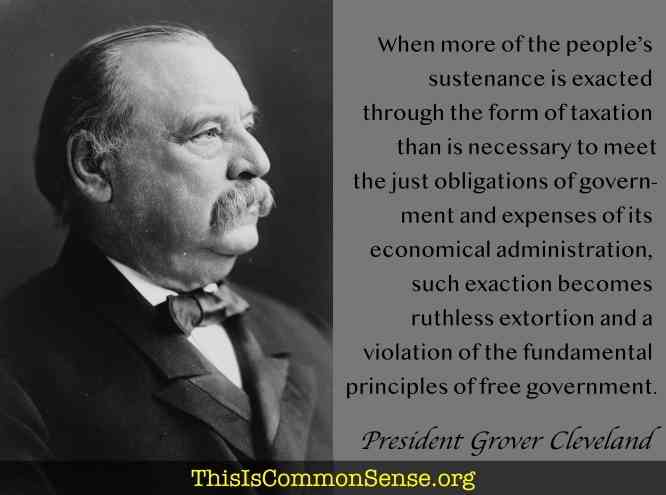
When more of the people’s sustenance is exacted through the form of taxation than is necessary to meet the just obligations of government and expenses of its economical administration, such exaction becomes ruthless extortion and a violation of the fundamental principles of free government.
President Stephen Grover Cleveland, Second Annual Message (December 1886).