On January 10, 1776, Thomas Paine published Common Sense.
You can read this classic on this site’s library.
On January 10, 1776, Thomas Paine published Common Sense.
You can read this classic on this site’s library.

To most of us, this is common sense.
We lack the totalitarian impulse.
But every day, otherwise-inclined people, including lawmakers, notice another aspect of our lives that they decide must no longer be free. If they can’t fix our bad thinking — by sending us to reeducation camps for summary brainwashing — they can at least regiment our conduct.
The latest victims of this totalitarian impulse are owners of big stores that sell toys. Often, toys for boys are in one section, toys for girls in another. Barbie dolls are not on the same shelf as firetrucks and water pistols.
It’s a great hardship — supposedly — for a little girl who likes fire trucks or a little boy who likes Barbie dolls to cross the aisle to the opposite-gender toy section.
Enacted in 2021 and taking effect in 2024, California’s new law says that “keeping similar items that are traditionally marketed either for girls or for boys separated makes it more difficult for the consumer to compare the product and incorrectly implies that their use by one gender is inappropriate.”
So the new law compels stores with at least 500 employees to “maintain a gender-neutral section” that is so labeled. First violation, $250 fine. Further violations, up to $500.
There ought to be a law making such laws illegal.
A constitution, maybe?
Meantime, the affected stores should sue.
This is Common Sense. I’m Paul Jacob.
Illustration created with PicFinder and Firefly
See all recent commentary
(simplified and organized)
See recent popular posts

. . . there, strung out under the cornice of the building, was the motto, which he had never noticed before, of the Federal Communications Agency:
PLANNED FREEDOM IS
THE ROAD TO LASTING PROGRESS.So simple, so direct, and yet, when you thought about it, almost impossible to understand.
Thomas M. Disch, “The Man Who Had No Idea,” The Magazine of Fantasy and Science Fiction (October 1978).

The government’s allegedly actionable dereliction was having “known for decades that carbon dioxide pollution was causing catastrophic climate change . . . and a nation-wide transition away from fossil fuels was needed to protect plaintiff’s constitutional rights.”
The government “recklessly allowed” transport of fossil fuels, combustion of fossil fuels, etc.
I blame the lawyers more than the kids for the filing’s falsehoods and non sequiturs. Outlawing fossil fuels would be the actual catastrophe and actual reckless violation of individual and constitutional rights.
Climate variations are nothing new in the earth’s four-billion-year history. We should expect to see all the usual dry spells, hurricanes, and tornadoes that have buffeted human beings since we emerged as human beings. Fossil fuels help us to protect ourselves from these things.
Government cannot outlaw fossil fuels slowly or quickly without in effect putting a gun to the heads of everyone who wants to use a gas-fueled car, bulldozer, or airplane and saying, “You have no right to take the actions required for your survival.”
Efforts by several states and the federal government to outlaw various uses of fossil fuels are what deserve lawsuits.
Judge Ann Aiken, who recently had a chance to end this litigation but is illogically allowing it to move forward, has one thing right: “Some may balk at the Court’s approach as errant or unmeasured. . . .”
I balk. It’s errant. And over the top.
This is Common Sense. I’m Paul Jacob.
Illustration created with PicFinder and Firefly
See all recent commentary
(simplified and organized)
See recent popular posts

Better to make haste slowly than not at all.
Leigh Brackett’s character Amnir, referencing the ancient motto “Festina lente” (hasten slowly) in The Ginger Star (1974). “Festina Lente” has been the motto of the Barons Dunsany in Ireland, and features on the family’s coat of arms.

All knowledge is sacred, but it should not be secret.
Susan Cooper, Over Sea, Under Stone (1965).
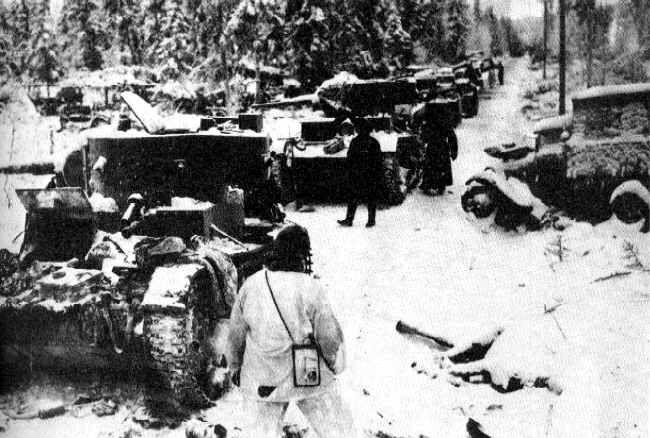
On January 7, 1940, the Finnish 9th Division completely destroyed the much-larger Soviet forces on the Raate-Suomussalmi Road, in a crucial battle during Finland’s Winter War.
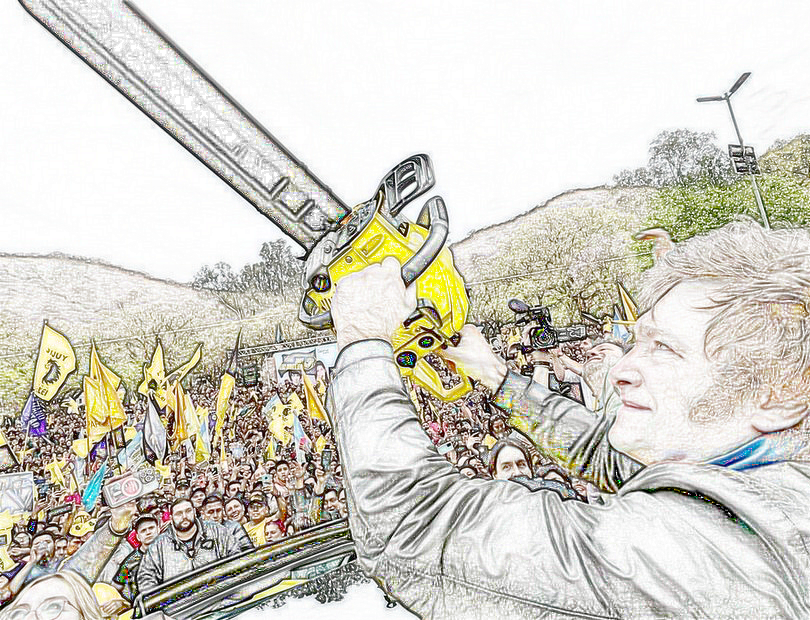
Among the big stories we have been following is the Javier Milei epic, the tale of of the colorful new libertarian president of Argentina and his attempt to bring prosperity and freedom to the beleaguered South American country.
Once upon a time Argentina — named for the metal silver — was wealthy, its people gaining in prosperity. It was a common phrase, a century ago, to refer to a prosperous person as being “as rich as an Argentine.” But with the rise of fascism and Peronism and “modernism” in general, the old liberal peace and prosperity course of progress became a metastasizing cancer of statism and growing gap between the rich and poor. So the new president has presented a radical new reform bill to the Argentine congress.
The 351-page bill includes 664 articles aimed at deregulating and modifying laws pertaining to several sectors, including labor, commercial, real estate, aeronautics, and health. According to Milei, the omnibus bill contains two-thirds of all of his reform proposals.
Katarina Hill, “Milei Brings His Chainsaw to Argentina’s Regulatory State,” Reason (December 29, 2023).
A big part of the reform bill is a de-nationalization effort:
The bill mentions 41 companies it proposes to privatize, including the flagship airline Aerolíneas Argentinas, the oil company YFP, the country’s largest bank, Banco de la Nación, the news agency Télam, the water company AYSA, the Argentine mint, and the country’s rail system.
Hill, ibid.
While granting the president some huge powers for a two-year period, the bill would prohibit the government from engaging in all sorts of regulatory activity, especially in the energy industry:
Argentine President Javier Milei is seeking to extinguish decades of government intervention in the nation’s oil industry by unshackling crude exports and leaving local fuel prices at the whim of market forces.
Milei included such measures in sweeping legislation he sent to congress on Wednesday, the latest move since the libertarian president took office on Dec. 10 with a mission to deregulate Argentina’s tightly controlled economy. While his bill has far-reaching consequences for a slew of industries, it features a chapter specifically addressing oil.
Jonathan Gilbert, “Argentina’s Javier Milei Seeks Free Oil Markets in New Legislation,” Bloomberg (December 28, 2023).
The bill would increase export taxes, but offer a tax amnesty for Argentinians. It would eliminate the presidential primary. Other political reforms include
Changes to Argentina’s proportional representation electoral system would raise the number of lawmakers in each district to one per 161,000 inhabitants, from one per 180,000 inhabitants. This would give more power to the populous province of Buenos Aires in the lower house of Congress, according to a note to clients by consultancy firm 1816.
Lucinda Elliott, “What is in Javier Milei’s sweeping Argentina reform bill?” Reuters (December 28, 2023).
The “chainsaw” is in the hands of legislators now.

None has more contempt for what it is to be a man than they who make it their profession to lead the crowd.
Søren Kierkegaard, in Walter Kaufmann, ed., Existentialism from Dostoevsky to Sartre, p. 96.

On January 6, 1907, Maria Montessori opened her first school and daycare center for working class children in Rome, Italy.
In 1912 on this date New Mexico became the 47th state of America’s United States.
On this date in 1941, President Franklin Delano Roosevelt delivered his “Four Freedoms” State of the Union speech, emphasizing vague “freedoms” that enabled government to usurp definable freedoms.
On January 6, 2021, lame duck President Donald John Trump gave a speech in Washington, D.C., aiming to rouse his supporters to pressure the U.S. Senate not to certify some states’ Electoral College votes in Election 2020, to address “election fraud.” Before his speech ended, and under questionable circumstances, some of his supporters (along with some possible false flag agents) broke into the Capitol to set off one of the great political controversies of our time.