It is not the business of the law to make anyone good or reverent or moral or clean or upright.
Categories
Murray N. Rothbard
It is not the business of the law to make anyone good or reverent or moral or clean or upright.

On March 5, 1616, Nicolaus Copernicus’s book, De revolutionibus orbium coelestium, was placed on the Catholic Church’s Index of Forbidden Books. This censorship notwithstanding, the Earth continued to revolve around the Sun.
The book had been first published in 1543 in Nuremberg.
| In 1770, the Boston Massacre took place on March 5.
| Joseph Stalin, the longest serving leader of the Soviet Union, died at his Volynskoe dacha in Moscow on this date in 1953, after a cerebral hemorrhage.
| March 5 is magician Penn Jillette’s birthday.
Instead of relying on a strategy of promoting Hillary herself, Clinton insiders plied what they called “Pied Piper candidates,” Republican hopefuls who, they theorized, would shift mainstream candidates further “right,” thus making the ultimate winners unpalatable to enough general election voters to win Hillary the election. There were three they identified: Ted Cruz, Ben Carson, and Donald Trump.
We know how this worked out.
In California, Democrats are returning to
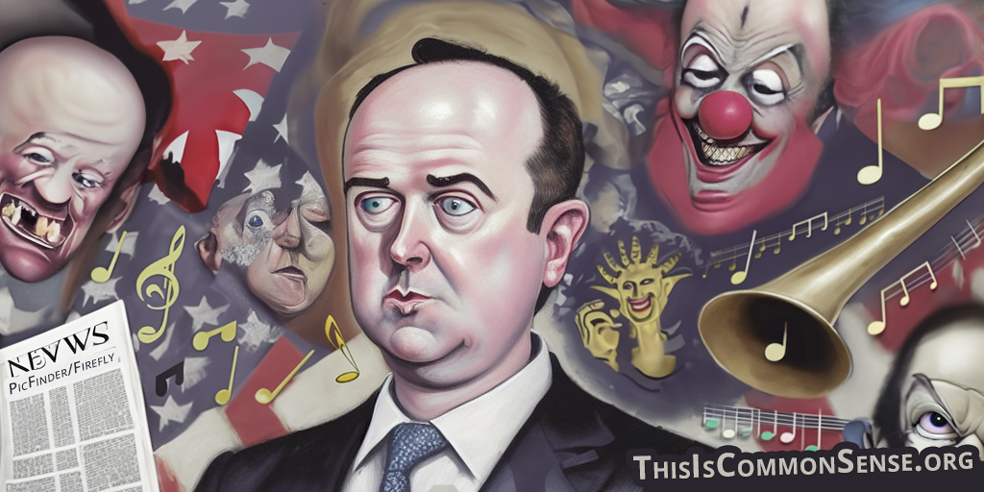
The serpentine Adam Schiff, who is running to fill the slot formerly occupied by Senator Diane Feinstein, has directed $11 million in the primary “to elevate a GOP candidate,” according to The Washington Post.
“The ads argue that Republican Steve Garvey — a congenial former pro baseball player for the Los Angeles Dodgers and San Diego Padres who voted twice for Donald Trump but won’t say if he will do so again — is too conservative for California and highlight his recent surge, in an apparent effort to consolidate support for him on the right.”
The idea is to boost Garvey with Republican primary voters in hopes that Garvey takes the second of two spots available for the November election under California’s Top Two system, becauseSchiff’s people think Garveyis easier to defeat than liberal Democrat “Rep. Katie Porter, whom Schiff and his backers would prefer to avoid facing come November in this left-leaning state.”
But can this strategy really work in California? The ads portray Garvey as more Trumpian than he probably is, and recent polling suggests that Schiff and Garvey are now neck-and-neck.
A review of the Clinton metaphor, “Pied Piper,” shows how slippery the strategy can be. The “Pied Piper of Hamelin” is a cautionary tale.
The Democrats’support may go the way of rats
This is Common Sense. I’m Paul Jacob.
Illustration created with PicFinder and Firefly
See all recent commentary
(simplified and organized)
See recent popular posts
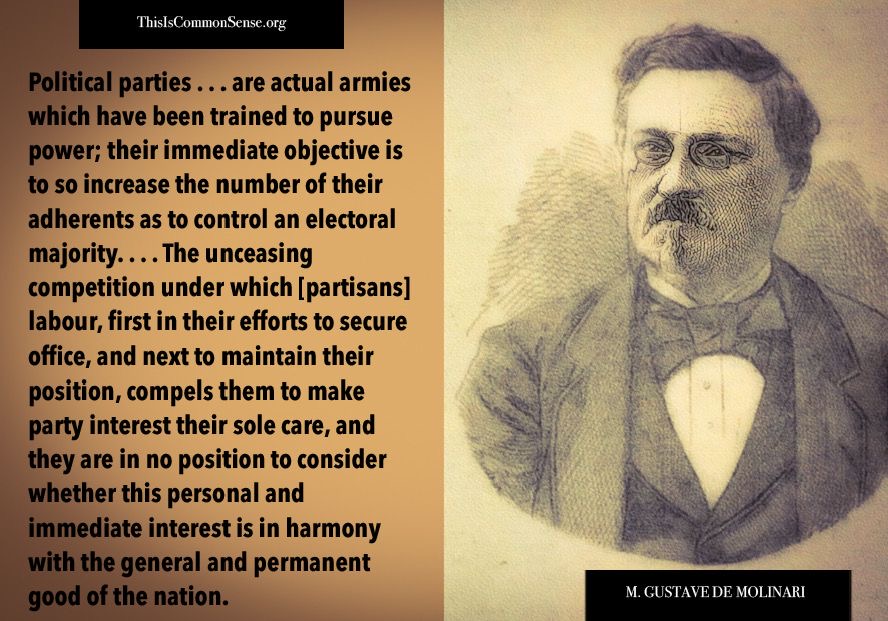
Gustave de Molinari, The Society of To-morrow (1904).
These associations, or political parties, are actual armies which have been trained to pursue power; their immediate objective is to so increase the number of their adherents as to control an electoral majority. Influential electors are for this purpose promised such or such share in the profits which will follow success, but such promises — generally place or privilege — are redeemable only by a multiplication of ‘places,’ which involves a corresponding increase of national enterprises, whether of war or of peace. It is nothing to a politician that the result is increased charges and heavier drains on the vital energy of the people. The unceasing competition under which they labour, first in their efforts to secure office, and next to maintain their position, compels them to make party interest their sole care, and they are in no position to consider whether this personal and immediate interest is in harmony with the general and permanent good of the nation.

On March 4, 1933, newly inaugurated President Franklin Delano Roosevelt gave his customary address. The speech “brought a decidedly favorable reaction in the Italian press, especially his declaration that he will seek extraordinary powers to deal with the situation if necessary,” wrote The New York Times the next day. The Times went on to quote “Premier Mussolini’s Milan newspaper, Popolo d’Italia,” which stated that “The American people place their hope in decisive action by the new President and his speech truly satisfied public opinion.”
The Italian newspaper “said the bank moratorium in New York contributed perhaps more than any other factor in convincing even the most reluctant of the urgent necessity for the whole nation to rally around Mr. Roosevelt.” A Turin paper succinctly stated its appreciation for FDR: “Mr. Roosevelt is following the great principles established by the Fascist revolution and the genius of Il Duce.”
On March 4, 1789, the first bicameral Congress of the United States met in New York, New York, in accordance with the new Constitution.
Two years later on the same date, Vermont was admitted as the fourteenth state of the union.
In a twist in World War II allegiances, Finland declared war on Nazi Germany on March 4, 1945, beginning the Lapland War.
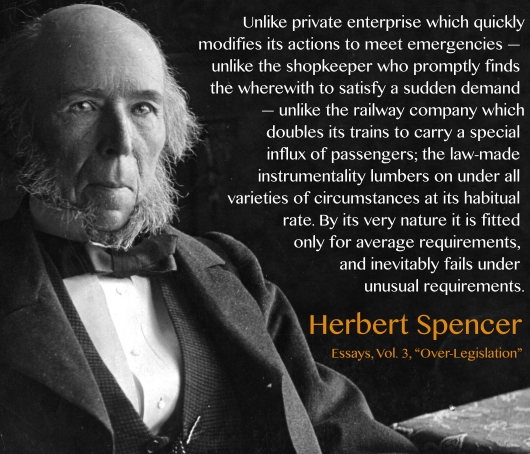
Yes, the “law-made instrumentality lumbers on under all varieties of circumstances at its habitual rate,” with minimal adaptability to new conditions. “By its very nature it is fitted only for average requirements, and inevitably fails under unusual requirements.” Herbert Spencer had it right over a century ago. The latest example? The massive cluster-muck that was school shutdowns during the lockdown period of the recent pandemic.
Here at Common Sense with Paul Jacob you read of the overkill that were the lockdowns, especially as regarding public schools. But now the evidence is pouring in, as reported in Reason magazine. Yes, government schools exhibit the old Spencerian principle:
When COVID-19 shuttered virtually everything in 2020 and forced public schools to begin distance learning, those schools responded with the agility one would expect from a decrepit battleship forced to make a quick change of course in the face of an unexpected enemy. In other words, the state’s hulking K-12 system barely responded at all, even as small and nimble private and charter schools quickly adapted to the new reality.
I remember news stories about public schools unable to set up even the most basic Zoom classes, of teachers who had no idea what they were supposed to do — and then of unions and administrators resisting efforts to re-start classroom teaching even after the rest of society was getting back to normal. Instead of re-ordering procedures to help kids stay current on their schoolwork, the school establishment mainly whined about not having enough money.
Anyone who needs a reminder about why government bureaucracies are incapable of providing quality public services need only look at the resulting disaster. A Stanford University study found, “a substantial decline in student learning in both English language arts/literacy (ELA) and mathematics between the 2018–19 and 2021–22 academic years.” Those are the general figures, but the results for poor and minority students were a travesty.
Steven Greenhut, “More Evidence That COVID School Closures Wrecked Student Performance,” Reason, March 1, 2024.
The whole article is worth reading, though we add one caveat: “COVID-19” did not shut down schools: governments did. In reaction. In over-reaction. For very little reason. The lockdowns in general were unnecessary and usurpative. But regarding schools — government or non-government — they were baseless and grand folly.
And if you want to see how learning can happen in online chats, look to unschooling and home schooling and other systems with actual, working feedback systems.
Dr. Phil has a clip that is making the rounds on this subject. It is worth viewing:
The Great School Reset, January 27, 2021
The Only Choice Left, February 11, 2021
The Young and the Unmasked, January 19, 2022
The Expulsion of the Sick, September 6, 2023
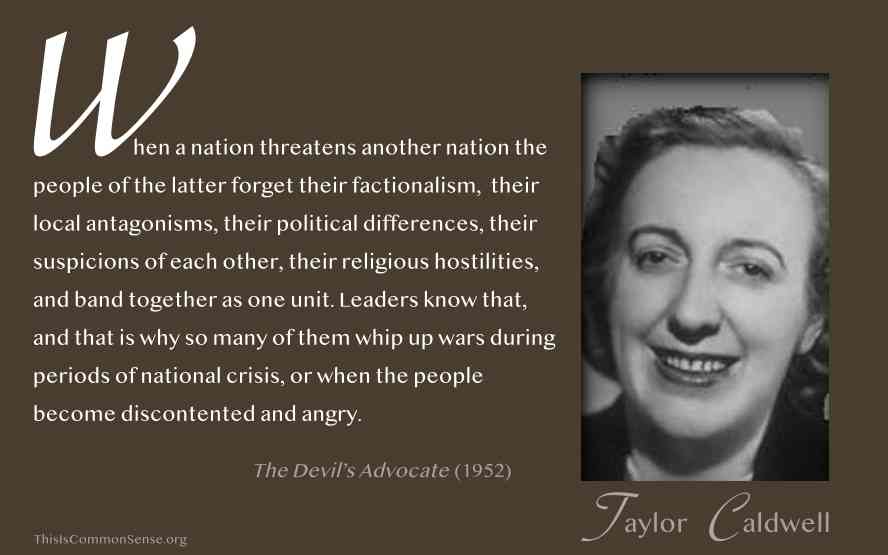
You see, when a nation threatens another nation the people of the latter forget their factionalism, their local antagonisms, their political differences, their suspicions of each other, their religious hostilities, and band together as one unit. Leaders know that, and that is why so many of them whip up wars during periods of national crisis, or when the people become discontented and angry. The leaders stigmatize the enemy with every vice they can think of, every evil and human depravity. They stimulate their people’s natural fear of all other men by channeling it into a defined fear of just certain men, or nations. Attacking another nation, then, acts as a sort of catharsis, temporarily, on men’s fear of their immediate neighbors. This is the explanation of all wars, all racial and religious hatreds, all massacres, and all attempts at genocide.
Taylor Caldwell, The Devil’s Advocate (1952).

On March 3, 1924, the 407-year-old Islamic caliphate collapsed when Caliph Abdülmecid II of the Ottoman Caliphate was deposed. The last remnant of the old regime gave way to the reformer Kemal Atatürk.
On the same day, the Free State of Fiume was annexed by the Kingdom of Italy.
On March 3 of 1931, the United States adopted The Star-Spangled Banner as its national anthem.
Mohandas K. Gandhi began his hunger strike in Bombay to protest at the autocratic rule in British India on this day in 1939.
Belgian economist Gustave de Molinari (pictured above) was born on March 3, 1819. Associated with French laissez-faire economists Frédéric Bastiat and Yves Guyot, he was the longest-serving editor of Guillamin’s Journal des économistes. While today chiefly known in the English-speaking world for his authorship of one article, “The Production of Security” (1849), he was, as Ludwig von Mises described, the most productive economist in his school. Despite this, and his worldwide recognition, only one of his many books was translated from the French into English during his lifetime, The Society of To-morrow (1904), his final book.
In the book he advanced the idea of “the free constitution of nationality.”
Molinari died on January 28, 1912.
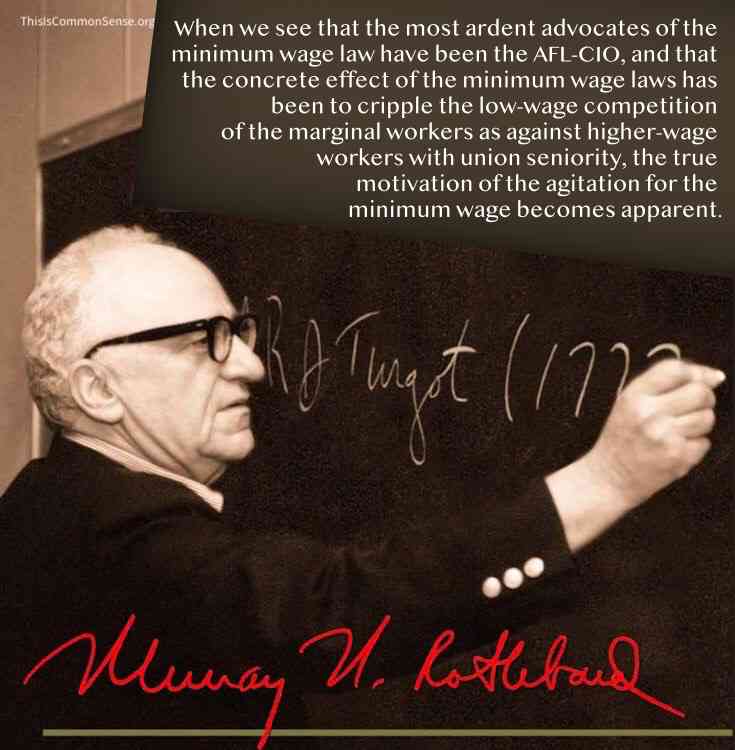
When we see that the most ardent advocates of the minimum wage law have been the AFL-CIO, and that the concrete effect of the minimum wage laws has been to cripple the low-wage competition of the marginal workers as against higher-wage workers with union seniority, the true motivation of the agitation for the minimum wage becomes apparent.

“We’re like rats in a Skinner box,” says psychologist and researcher Robert Epstein.
In “Electoral Fraud, Google-Style” (April 25, 2022), Paul Jacob looked at Epstein’s work on how Google manipulates elections. Now, Google’s political bias has become obvious. That bias’s efficacy, however, requires some science to understand. In Michael Shellenberger’s recent podcast interview, Epstein explains how he has studied what Google does:
There is indeed some new information here. Epstein says that in 2022, had Google not engaged in its manipulations, the GOP would have gained a two-seat majority, not lost by two seats.
The amount of power Google has is amazing. And simply by using the platform, we have given that power to the company.
Remember, as has become clear since — and something Epstein does not talk about — Google was seeded with Deep State money. It has never been an innocent partner.
Recent coverage of Google on Common Sense with Paul Jacob includes “Google’s Evil AI” and “Big-Gov-Google-Plex” and “Google Can’t Have That.”