Rep. Justin Amash (R-Mich.) fields questions from Laura Ingraham, guest-hosting on The O’Reilly Factor:
Categories
Rep. Justin Amash (R-Mich.) fields questions from Laura Ingraham, guest-hosting on The O’Reilly Factor:
 Liberty sets the mind free, fosters independence and unorthodox thinking and ideas. But it does not offer instant prosperity or happiness and wealth to everyone. This is something that politicians in particular must keep in mind.
Writing about Walmart is like reading The Nation: neither is as much fun as shopping at Walmart.
At Walmart I get good deals. In The Nation I get skewed analysis. Just look at the old progressive rag’s online “petition” to Walmart:
While Walmart rakes in annual profits of more than one billion dollars, the average hourly wage of a Walmart sales associate . . . is just $8.81. That translates to an annual salary . . . far below the federal poverty level for a family of four.
On top of being unjust, Walmart’s low wages come at a high price for American taxpayers: a recent report revealed that, because the retail giant’s employees are forced to utilize government benefits to supplement their meager income, a single Walmart Supercenter could cost taxpayers from $900,000 to $1.7 million per year.
Typical: there’s so much left out.
What would Walmart workers’ wages be if Walmart hadn’t employed them? More? Not plausible. Walmart’s mom-and-pop competition typically pay lower wages.
Net effect: Walmart lifts workers out of poverty.
Whose responsibility is it to feed “a family of four”? The employer of one family member? No. The parents in the family, who might be morally compelled to develop more lucrative skills or a plan for abstinence. (Of course, many Walmart workers are single, or have spouses or parents who work as well.)
Recently, a Walmart bigwig got a bit testy and sent out an email noting that The Nation has been paying its interns a monthly stipend of $150 per week, far below the minimum wage.
Normally I’d defend The Nation’s (and the nation’s) internship policies. But for now let’s just chuckle.
This is Common Sense. I’m Paul Jacob.
You can build a throne with bayonets, but it’s difficult to sit on it.
The Federal Election Commission is now implicated in the Obama administration’s years-long hounding of groups ideologically hostile to it.
Wall Street Journal Editorial Board member Kimberly Strassel details how, at the behest of a lawyer in the Obama administration, FEC staff “have been engaged in their own conservative targeting, with help from the IRS’s infamous Lois Lerner.” After the Obama lawyer filed a complaint with FEC against a conservative organization called American Issues Project in 2008, FEC staffers asked Lerner about the group. They went on to repeatedly challenge AIP’s non-profit status, cooking up new report-length rationales each time a previous one was exploded.
Papers like The Wall Street Journal as well as various blogs have published regular updates about how IRS personnel — top officers, not just a few file clerks — really did go after ideological critics of the Obama administration in the run-up to the 2012 election. But a “paper of record” like The New York Times barely notices the story except to rationalize it away. Same with other “liberal” outlets.
How many dots must be connected before left-leaning media mavens and their troops say “this is too much even for us! Letting IRS, now FEC, plus anyone in the Obama administration who winked and nodded get away with this would be hazardous to our own health! The next administration may be staffed by unscrupulous Republicans instead of unscrupulous Democrats! We’re going to start reporting on this! We may even criticize such abuse of power! Sharply criticize! Yeah!”?
How many?
This is Common Sense. I’m Paul Jacob.
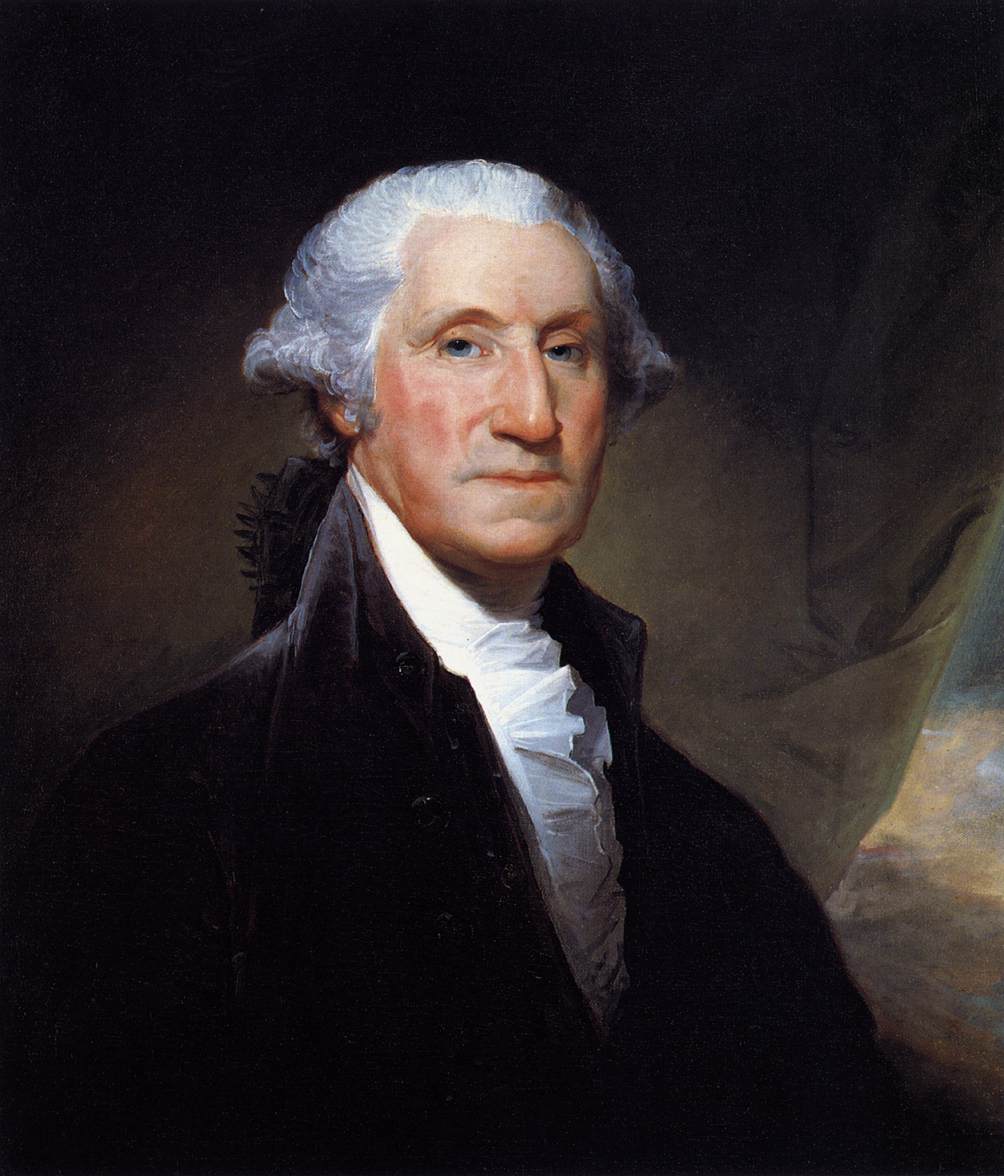 Arbitrary power is most easily established on the ruins of liberty abused to licentiousness.
Not everything new is wonderful.
When a company improves its operations, it seeks to do so in a way that decreases costs or produces features customers want enough to pay for. It works to ensure that the benefits of adopting new procedures outweigh the costs.
At least, this is what profitable companies do when free to act in accordance with their reason for being.
Government regulations clash with this, however. One of the “we have to pass the bill so that you can find out what is in it” provisions of Obamacare, for example, forces medical practitioners to convert to electronic record-keeping — even if they think the burden unjustified.
A businessman may be wrong about whether to try a new way — and, if he does adopt an innovation, about how fast or thoroughly to adopt it. If he’s wrong, he’s free to change his mind as evidence comes in. But, in medicine, government edict replaces entrepreneurial judgment.
Mandates and prohibitions are already rife in the medical industry; Obamacare makes a bad situation worse. “In today’s health care system,” writes blogger Rituparna Basu, “a doctor’s judgment as to whether it makes sense to adopt a new technology for his practice is deemed irrelevant. The government is the one calling the shots, and jeopardizing doctors’ practices in the process.”
A sound diagnosis.
The prognosis might not be so negative, however. While governments tend to prescribe uniform, one-size-fits-all “cures,” ongoing advances in genetics point the other direction, to individualizing medical practice, finding specific causes of illnesses, and developing genetics-informed, patient-specific cures.
But it’s just possible that individually focused medicine would be enhanced by a healthy dose of individual freedom.
This is Common Sense. I’m Paul Jacob.
Happiness and moral duty are inseparably connected.
What the goat does, the kid follows.
Protecting the peace isn’t easy. Sometimes it calls for extraordinary action. Like a recent police assault to capture and kill an outlaw . . .
In this case, the targeted outlaw wasn’t really a person at all, but a fawn named Giggles.
The baby deer was being illegally held by the Society of St. Francis no-kill animal shelter and farm near Kenosha, Wisconsin, without the required state permit. Giggles had been nursed back to health by shelter employees, who told reporters they were within days of moving the fawn to an Illinois wildlife facility.
Four sheriff deputies and nine Department of Natural Resources agents took the heavily-armed SWAT-like approach, and, through “aerial surveillance,” were able descend upon the fawn and kill it.
It is policy to euthanize because of the potential for disease and danger to humans.
“That’s one hell of a policy,” said the man who had cared for the dangerous Giggles.
Why the rush to kill this deer? And, why not make a phone call to talk to the folks at the Society of St. Francis, instead of a launching a military-style assault?
“If a sheriff’s department is going in to do a search warrant on a drug bust,” DNR spokeswomen Jennifer Niemeyer explained, “they don’t call them and ask them to voluntarily surrender their marijuana or whatever drug that they have before they show up.”
Right. No quarter is given to outlaws. Even if they are innocent forest creatures who had received illegal charity from well-meaning humanitarians.
This is Common Sense? I’m Paul Jacob.