 I cannot praise a fugitive and cloistered virtue, unexercised and unbreathed, that never sallies out and sees her adversary, but slinks out of the race where that immortal garland is to be run for, not without dust and heat.
Categories
I cannot praise a fugitive and cloistered virtue, unexercised and unbreathed, that never sallies out and sees her adversary, but slinks out of the race where that immortal garland is to be run for, not without dust and heat.
On November 23, 1644, “Areopagitica: A speech of Mr. John Milton for the Liberty of Unlicensed Printing to the Parliament of England,” was published, and became a classic anti-censorship tract.
Skyscrapers inspire.
Sometimes they inspire shudders.
I am an admirer of such neo-Babels, and you can’t find a better Schelling point for New York than the Empire State Building. Civilization’s highest erections symbolize something good about humanity.
And yet, I wonder about the latest Chinese engineering effort, Sky City, to be built in Changsha in record time, 90 days.
It’s supposed to house over 31,000 people, contain hotels and restaurants and schools and shops, too, and tower up 163 floors to a height of 2,749 feet.
How could such a thing be so quickly constructed, and still be safe?
Cheating.
Well, not really. It’s prefab. Much of the work has already been done. Building it will be a job of putting pre-fabricated pieces together. The company responsible for the effort has had some success on prefab buildings before, and . . .
The whole thing still sounds a tad hubristic. I wish the builders (and inhabitants) the best, but, even if it succeeds, there’s an ominous aspect to the whole project, if economist Mark Thornton’s theory about new-building skyscrapers has any truth to it. Tall buildings are built when people are optimistic. People are most optimistic during booms. Booms — at least inflationary booms — yield to busts, and many of the major economic depressions have been marked by unfinished or just-finished record-book skyscraper projects.
Does Sky City signal a Chinese bust coming soon?
It may. For the story of our time might be this: China is to America, now, what America was to Great Britain in the 1920s and ’30s. Similar monetary policies and bailouts.
And the loaning nation doesn’t get off free. At least, we didn’t in the decade in which the Empire State Building was finished.
This is Common Sense. I’m Paul Jacob.
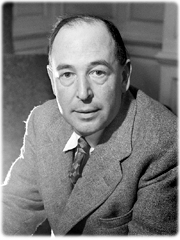 It essential to oppose the Humanitarian theory of punishment, root and branch, wherever we encounter it. It carries on its front a semblance of mercy which is wholly false. That is how it can deceive men of good will. The error began, with Shelley’s statement that the distinction between mercy and justice was invented in the courts of tyrants. It sounds noble, and was indeed the error of a noble mind. But the distinction is essential. The older view was that mercy ‘tempered’ justice, or (on the highest level of all) that mercy and justice had met and kissed. The essential act of mercy was to pardon; and pardon in its very essence involves the recognition of guilt and ill-desert in the recipient. If crime is only a disease which needs cure, not sin which deserves punishment, it cannot be pardoned. How can you pardon a man for having a gumboil or a club foot? But the Humanitarian theory wants simply to abolish Justice and substitute Mercy for it. This means that you start being ‘kind’ to people before you have considered their rights, and then force upon them supposed kindnesses which no on but you will recognize as kindnesses and which the recipient will feel as abominable cruelties. You have overshot the mark. Mercy, detached from Justice, grows unmerciful. That is the important paradox. As there are plants which will flourish only in mountain soil, so it appears that Mercy will flower only when it grows in the crannies of the rock of Justice; transplanted to the marshlands of mere Humanitarianism, it becomes a man-eating weed, all the more dangerous because it is still called by the same name as the mountain variety.
When I was a kid, my mother would rhetorically ask, “If your friends jumped off a cliff, Paul, would you?”
Moot question now. My friends don’t dare jump, nor do my political enemies. Face it, Ma, nobody wants to do a swan dive off the fiscal cliff.
Except for me.
It now appears that enough House Republicans will join Democrats in voting to raise taxes on the so-called “wealthy,” thus hiking up taxes on some of my countrymen. It will do little to raise revenue, and nothing to control spending.
We taxpayers should stand together. I oppose being divided and conquered. And when they ask us to turn over Spartacus — er, the wealthy — we should each declare, “I am wealthy!”
Debt-delivering, big-spending politicians relentlessly provide us with pious pronouncements to the effect that, though we simply must stop piling up such debt and cut wasteful and out-of-control spending, because such fiscal responsibility remains unthinkable, at present, we must postpone responsibility till later.
They see the fiscal cliff and insist we climb higher.
Let’s face this fiscal cliff honestly, let’s not pretend that the acme of responsibility is funding government on the backs of the few. Besides, if there is no political will to make spending cuts today or tomorrow, why would anyone expect such backbone to miraculous appear . . . later?
I see the cliff and say, “Let’s jump!” While we can still land safely.
This is Common Sense. I’m Paul Jacob.
Two court cases come to our attention, courtesy of Cato’s Ilya Shapiro. Both involve the favoring of members of one group over another.
The Sixth Circuit ruled that a voter-approved amendment to the Michigan state constitution outlawing racial preferences in college admissions would violate the U.S. Constitution’s equal protection clause. The amendment states in part that Michigan public colleges and universities shall “not discriminate against, or grant preferential treatment to, any individual or group on the basis of race, sex, color, ethnicity, or national origin. . . .”
In his dissent, Judge Richard Griffin writes: “The post-Civil War amendment that guarantees equal protection to persons of all races has now been construed as barring a state from prohibiting discrimination on the basis of race.” Shapiro calls the decision Orwellian.
The other case involves California law banning sellers of eyewear who are not state-licensed optometrists and ophthalmologists from conducting eye exams and selling glasses at the same place of business. The law prevents national eyewear chains from competing effectively in California (since customers prefer to get their glasses and eye exams in one shop).
Cato joins an amicus brief urging the Supreme Court to take up the California case. Shapiro also says that because there are two conflicting lower-court decisions on the Michigan question, the Supreme Court is likely to add that case to its docket.
Let’s hope all further rulings are based on a clear-sighted respect for equal rights under the law.
This is Common Sense. I’m Paul Jacob.
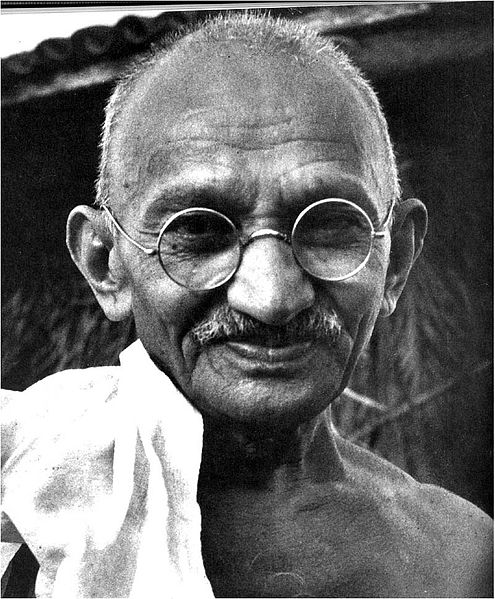 Victory attained by violence is tantamount to a defeat, for it is momentary.
Last Friday, at the 2012 Global Forum on Modern Direct Democracy in Montevideo, Uruguay, Paul interviewed Daniela Bozhinova, a Bulgarian Green Party and direct democracy activist. Daniela spent the better part of a year studying initiative & referendum in the United States as a Fulbright scholar and you might be surprised by what she has to say.
Paul returns from his South American travels today.
Taking a few moments away from the main events of the Global Conference on Direct Democracy, an interview:
More to come.
On November 16, 1776, the Republic of the Seven United Provinces (Netherlands) recognized the independence of the United States of America. The date in 1811 marks the birth of free trade advocate and British politician John Bright.