Most ballot measures to enact term limits triumph. According to U.S. Term Limits, 100 percent of such measures did so in last November’s elections. Voters also rebuff most attempts to weaken or repeal term limits.
But not all.
 Politicians who loathe term limits often use all their resources and cunning to assail them. Occasionally they claw out a victory. Thus, last month Arkansas voters narrowly approved a multi-deceptive ballot measure with provisions to weaken the state’s legislative term limits. The measure passed despite everything pro-term-limit activists could do to expose the dirty tricks.
On the other hand, anti-term-limits forces in Prince Georges County, Maryland narrowly failed to flabbify term limits from two four-year terms to three four-year terms despite generous funding of the anti-term-limits campaign (primarily by local developers).
Much of the credit for saving Prince Georges term limits goes to University of Maryland sophomore Shabham Ahmed, creator of nothreeterms.com, who campaigned relentlessly against the measure. Ahmed believes that the vote was close only because some voters misunderstood what the measure would do; voters “do get caught up in the political propaganda.”
“People are tired of politicians in our county as it is,” she says. “Extending term limits would only increase the likelihood of creating a regime in politics, and voters don’t want that.”
No, we don’t.
But the politicians want that. And they’re not done yet.
Fortunately for the residents of Prince Georges County, defenders of term limits like Shabham Ahmed aren’t either.
This is Common Sense. I’m Paul Jacob.
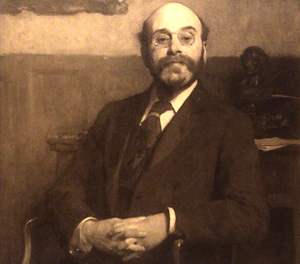
 Taxation must be, potentially at least, co-extensive with government. The way to reduce it is to severely limit the function of government to the maximising of liberty, to abolish privilege, and to exercise due vigilance over the expenditure of the State revenue.
 On December 20, 1740, Arthur Lee — Revolutionary Era diplomat, spy, and Virginia delegate to the Continental Congress — was born. He practiced law in London from 1770 to 1776, where he wrote polemics against slavery and in defense of the American colonies’ resistance to the Townshend acts and other tyrannical British policies. He was brother to Richard Henry Lee and Francis Lightfoot Lee.
 In New York City, rent control discourages new supply as well as maintaining existing supplies — causing shortages leading to higher prices. In many cities, particularly in Blue political metropolises, zoning has pretty much the same effect.
 On December 19, 1776, Tom Paine published one of a series of pamphlets in the Pennsylvania Journal titled The American Crisis. Exactly one year later, George Washington’s Continental Army went into winter quarters at Valley Forge, Pennsylvania.