On March 25, 1965, civil rights activists led by Martin Luther King, Jr., successfully completed their four-day, 50-mile march from Selma to the capitol in Montgomery, Alabama.
Categories
From Selma to Montgomery

On March 25, 1965, civil rights activists led by Martin Luther King, Jr., successfully completed their four-day, 50-mile march from Selma to the capitol in Montgomery, Alabama.

There’s been a big push for criminal justice reform, with some recent progress on civil asset forfeiture.
This is the process through which police and government agencies grab a citizen’s money or property — even if the citizen is never charged with a crime, much less convicted. Then, to get one’s stuff back, a citizen must sue to prove the stuff was innocent of being involved in criminal activity.
Asset forfeiture without a criminal conviction turns our system of justice on its head, encouraging bad behavior by police — ahem, stealing — by rewarding departments and agencies that get to keep the loot.
Reform legislation passed through an Oklahoma House committee earlier this week and now goes to the full House. Television News 9 in Oklahoma City began its report by acknowledging that, “A watered down version of the civil asset forfeiture bill has crossed another hurdle in the state Legislature.”
That’s because a bill to end civil asset forfeiture outright had already failed in the Senate. The currently pending legislation requires that citizens who sue to recover their property and win be awarded their legal fees.
It’s progress . . . but still not justice enough.
Late last month, Wyoming’s Gov. Matt Mead signed reform legislation mandating that there be a probable cause hearing before the legal forfeiture process can begin. Good. But that was after Gov. Mead vetoed a better bill, which stopped all official, convictionless snatching of stuff.
Police taking people’s stuff without having to prove a crime must be ended altogether, abolished. That means we better stop waiting for politicians. Instead, petition this important principle directly to the people — use ballot initiatives in cities and states across the country.
No time like the present.
This is Common Sense. I’m Paul Jacob.

Also, please consider showing your appreciation by dropping something in our tip jar (this link will take you to the Citizens in Charge donation page… and your contribution will go to the support of the Common Sense website). Maintaining this site takes time and money. Your help in spreading the message of common sense and liberty is very much appreciated!

The day will come, as we shake our minds free from the old and stupid ideas about coercing each other, that we shall mock as much at the idea of state education as we are now learning to mock at the idea of state religion — when even a municipal organization of education will seem to us as absurd and grotesque an undertaking as a municipal organization of religion.
Auberon Herbert, letter to the editor, Newcastle Weekly Chronicle, as reprinted in The Right and Wrong of Compulsion by the State, 1885.

On March 24, 1765, the Kingdom of Great Britain passed the Quartering Act, which required the Thirteen Colonies to house British troops.
On the same date in 1855, slavery was abolished in Venezuela.
The Intolerable Acts (among which was the Quartering Act) was the American Patriots’ name for a series of punitive laws passed by the British Parliament in 1774 after the Boston Tea party. They were meant to punish the Massachusetts colonists for their defiance in throwing a large tea shipment into Boston harbor. In Great Britain, these laws were referred to as the Coercive Acts.

I’ve been tough on Bernie Sanders, the socialist Vermont Senator and Democratic Party presidential candidate. Why? Because socialism is — to quote a current GOP candidate — “a disaster.”
But I appreciate his campaign for showing former Secretary of State Hillary Clinton for what she is, the ultimate establishment insider.
Even while, as SNL parodied, she seeks to co-opt Sanders’s progressivism.
Nowhere is Hillary’s have-it-both-ways mode of operation more obvious than in regard to Big Finance. She attacks the big banks, promoting her “very aggressive plan to rein in Wall Street.” Yet, she is supported politically and has been enriched personally by Wall Street firms. In 2014 and 2015 alone, Mrs. Clinton was paid $11 million dollars for speeches to various groups, including these financial interests.
On the campaign trail, Bernie has been calling on Mrs. Clinton to release transcripts of her speeches to Wall Street firms:
She gets paid $225,000 for a speech. Now you know that is a lot of money for an hour speech. . . . It must be mind-blowing speech, it must be a Shakespearean speech, it must be a speech that could educate and enlighten the entire world.
An anonymous attendee of Mrs. Clinton’s speeches to Goldman Sachs has characterized her remarks as “far from what she sounds like as a candidate now. She sounded more like a Goldman Sachs managing director.” Another said making the transcript public “would bury her against Sanders.”
Understandably, Hillary refuses . . . until every other living person who has ever spoken a word to anyone on Wall Street does so first.
At his rallies, Bernie now throws his empty hands up into the air to release his non-existent speech transcripts.
This is Common Sense. I’m Paul Jacob.

Also, please consider showing your appreciation by dropping something in our tip jar (this link will take you to the Citizens in Charge donation page… and your contribution will go to the support of the Common Sense website). Maintaining this site takes time and money. Your help in spreading the message of common sense and liberty is very much appreciated!

We would be worse than we are without the good books we have read, more conformist, not as restless, more submissive, and the critical spirit, the engine of progress, would not even exist. Like writing, reading is a protest against the insufficiencies of life. When we look in fiction for what is missing in life, we are saying, with no need to say it or even to know it, that life as it is does not satisfy our thirst for the absolute – the foundation of the human condition – and should be better. We invent fictions in order to live somehow the many lives we would like to lead when we barely have one at our disposal.
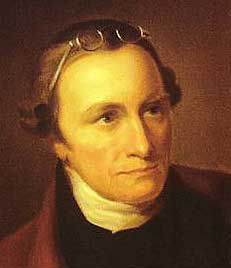
On March 23, 1775, Patrick Henry delivered his “Give me Liberty, or give me Death!” speech at St. John’s Church in Richmond, Virginia.
On this date in 1992, economist and social philosopher Friedrich August von Hayek died.

As the President of the United States noodles around Cuba, opening up relations and trade for the first time in half a century, one obvious obstacle to progress sticks out: Fidel Castro is still alive, and his brother, Raoul, still runs a one-party state.
It is worth reminding Americans how desperately socialism in Cuba requires repressive one-party rule. Sometimes folks forget. As Bernie Sanders pushes a “democratic socialism,” we should wonder where he and his Sandernistas stand on Cuba’s brand of socialism, i.e. without the democratic part.
Months ago, an old 1985 video surfaced of Bernie Sanders, then mayor of Burlington, Vermont, back from trips to Nicaragua and Cuba. Frankly, I agreed with his opposition to U.S. intervention in Central America. But Bernie also praised the Cuban government, asserting that Cubans were not “against Fidel Castro” because “he educated their kids, gave their kids health care, totally transformed society.”
He did not mention what Fidel didn’t give, indeed, would not allow: opportunity, progress, autonomy, freedom, democracy . . . the list is long.
Cubans who speak out are arrested, imprisoned.
The necessity of violence to establish socialism should be obvious. Even Bernie’s so-called “non-violent” supporters engage in raucous, invasive protests against Trump, and litter Twitter with indecent talk of assassinating the Republican front-runner.
What would they do with official power?
Are they committed to democracy as a process, really? Or to their programs alone?
Programs that rely upon mass expropriation and strong-arming governance. No matter what Sanders says about “love.”
This is Common Sense. I’m Paul Jacob.

A healthy democracy depends on the spreading of good ideas. If you liked this post, please share it with friends by clicking on any of the social media icons below.
Also, please consider showing your appreciation by dropping something in our tip jar (this link will take you to the Citizens in Charge donation page… and your contribution will go to the support of the Common Sense website). Maintaining this site takes time and money. Your help in spreading the message of common sense and liberty is very much appreciated!

On March 22, 1630, the Massachusetts Bay Colony outlawed the possession of cards, dice, and gaming tables. Exactly eight years later, the colony expelled Anne Hutchinson for religious dissent.
In 1812 on this date, Stephen Pearl Andrews was born. Andrews would go on to become an important American abolitionist, free love advocate, and theorist of “individual sovereignty,” promulgating the reforms of Josiah Warren.
[I]n the good town of Newcastle you will not find a dozen men, unless in some way practically connected with school work, who really understand our present code or have given their attention to the many serious questions involved in it. When this divorce between public intelligence and the directing department has existed for some time, the people begin to be accustomed to see a great system in operation in their midst, settled and worked for them in all its main lines by an office, morally, if not physically, some hundreds of miles away, and presently, with very few searchings of heart and very little intelligence exercised, they simply accept it and let themselves and their children be molded by it into — a something that they don’t exactly understand, and about which in the pressure of life they don’t find time to ask many questions. They are stupefied by the system, just because so little is required of them, mentally or practically, as individuals.
Auberon Herbert, letter to the editor, Newcastle Weekly Chronicle, as reprinted in The Right and Wrong of Compulsion by the State, 1885.