Categories
Accountability government transparency national politics & policies responsibility

That Bright, Shining, Responsible Congress

The latest Gallup public approval rating for our so-called “representatives” on Capitol Hill stands at 11 percent — two whole percentage points higher than 2013’s worst-ever 9 percent measure.

But what if Congress changed? What if our representatives did something dramatic? You know, to show Americans that they get it, that they’ll start representing us, that they’re about doing the job and not just riding the gravy train of power, high pay, lavish pensions, special exemption from Obamacare, etc.?

No, I don’t envision a majority of the 535 House and Senate members jumping into a phone booth and coming out with Super Solon capes. My fantasy actually has its roots in reality.

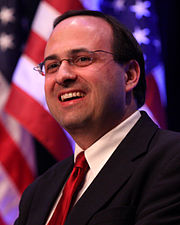
Neither Obama nor congressional Democrats dare stop Republicans in Congress from passing The Fiscal Responsibility Act of 2016, introduced by Rep. Rod Blum (R-Iowa). The legislation presents a straightforward incentive: do your job, balance the budget or . . . your pay will be cut.

Okay, disincentive.

Until the deficit is closed, and budget balanced, Blum’s law would reduce each congressman’s salary by 5 percent the first year, then 10 percent each year thereafter. Once Congress balances the budget, their full pay will be restored.

“For the sake of our children and grandchildren who will be stuck paying off our $19 trillion debt,” Rep. Blum argues, “it’s time we make our politicians face the reality of our fiscal crisis by hitting them where it counts: their own pocketbook.”

If the Republican-controlled Congress passed The Fiscal Responsibility Act, cutting their own pay until they get our country’s finances in order, the elections this November would be a rout.

Just a dream?

This is Common Sense. I’m Paul Jacob.


Printable PDF

congress, responsibility, fiscal, debt, pay, paycheck, illustration


Common Sense Needs Your Help!
If you enjoyed this article, please consider showing your appreciation by dropping something in our tip jar  (this link will take you to the Citizens in Charge donation page… and your contribution will go to the support of the Common Sense website). Maintaining this site takes time and money. Your help in spreading the message of common sense and liberty is very much appreciated!


Categories
Today White Rose

White Rose

On Feb. 18, 1943, Hans and Sophie Scholl, a brother and sister, were arrested at the University of Munich for secretly (or not so secretly) putting out leaflets calling on Germans to revolt against Adolf Hitler and the Nazi regime.

In the previous year Hans had founded a group of students, who called themselves “The White Rose.” The group wrote and distributed six leaflets aimed at educated Germans. The leaflets made their way across Germany and to several other occupied countries. The Allies later dropped them all over the Third Reich.

Categories
Thought

Thomas Jefferson

Resolved, That the several States composing the United States of America, are not united under the principle of unlimited submission to their general government; but that, by a compact under the style and title of a Constitution for the United States, and of amendments thereto, they constituted a general government for special purposes — delegated to that government certain definite powers, reserving, each State to itself, the residuary mass of right to their own self-government, and that whensoever the general government assumes undelegated powers, its acts are unauthoritative, void, and of no force. . . .


Thomas Jefferson, Kentucky Resolutions (November 1798).

Categories
national politics & policies political challengers

Trump Card Trumped

According to poll after poll, Donald Trump is winning. He’s a winner.

. . . of a plurality, anyway.

Admittedly, he lost the Iowa caucuses to Sen. Ted Cruz. But he rebounded with a sizeable plurality victory in New Hampshire. Now Trump leads in South Carolina polls.

Among Republican primary voters, that is.

It is a different story in the public and private polls I’ve seen, ones surveying the entire electorate — Republicans, Democrats and independents. Consider the new poll of swing-state Virginia voters by the Judy Ford Wason Center for Public Policy at Christopher Newport University.

Again, Trump garners a plurality of Old Dominion Republicans, leading next closest contender, Sen. Marco Rubio, 28 to 22 percent. On the other hand, among the entire voting population, a disquieting 64 percent — nearly two out of three voters — view The Donald unfavorably.

Put another way, Trump’s winning in un-favorability.  Only Jeb Bush and Hillary Clinton are seen anywhere near as negatively, at 58 and 59 percent, respectively.

Can Trump turn that around? Not likely. Folks already know him. He has the highest name recognition of any candidate — higher than Hillary Clinton.

“Almost all the voters have an opinion about Donald Trump,” explained the Wason Center’s Dr. Quentin Kidd, “and twice as many see him in an unfavorable light as view him favorably.”

Trump starts at a “disadvantage,” according to Nate Silver at FiveThirtyEight, because “Most Americans just really don’t like the guy.”

To appoint future Supreme Court justices, one must win the General Election with all the people voting, not merely the GOP nomination.

According to poll after poll, that candidate is not Donald Trump.

This is Common Sense. I’m Paul Jacob.


Printable PDF

Trump, popularity, polls, president, 2016, illustration


Categories
Today

President Jefferson

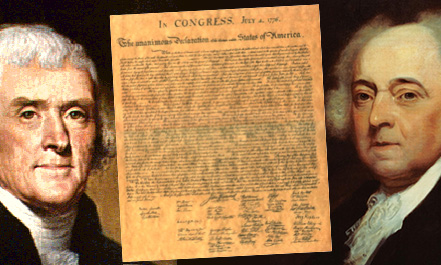
On Feb. 17, 1801, Thomas Jefferson was elected by the U.S. House of Representatives to be the third president of the United States, after an arduous election process that ended only 15 days prior to inauguration.

The fracas included a tie vote in the Electoral College followed by 35 indecisive ballots in the House. At that time, votes were cast for president, with the second place candidate becoming Vice-President. But in the Electoral College, Jefferson tied with his vice-presidential running mate, Aaron Burr. When that sent the balloting to the House of Representatives, the Federalists opposing Jefferson initially threw their support to Burr.


On Feb. 17, 1933, a constitutional amendment to repeal the Eighteenth Amendment to the U.S. Constitution, which had established the national prohibition of alcohol, was passed by the U.S. Senate. Known as the Blaine Act, the prime author was Wisconsin Senator John J. Blaine. By the end of 1933, the repeal of prohibition was adopted as the 21st Amendment to the Constitution.

Categories
Thought

Georgia O’Keeffe

Anyone with any degree of mental toughness ought to be able to exist without the things they like most for a few months at least.


Georgia O’Keeffe, letter to Anita Pollitzer (December 1915)

Categories
general freedom ideological culture meme moral hazard national politics & policies Popular responsibility too much government

9 Dangers of “Democratic Socialism”

First… some definitions:

Socialism advocates the public ownership and control of business and industry in service of a more equal distribution of wealth.

Democratic Socialist” Bernie Sanders places emphasis on redistribution and downplays the public ownership and control part of the system.

However… Bernie seems never to have met a government monopoly he didn’t love, or a private enterprise he didn’t distrust or despise. It’s the state for Bernie, and Bernie for the state.

What are the 9 dangers?


It normalizes envy.


It rationalizes theft.


It idealizes state power.


It penalizes accomplishment.


It rewards indolence.


It preaches obedience to the state.


It encourages dependence on the state by treating citizens as children.


It dismisses the protection of individual rights with a vague appeal to the “collective good” or “public good.”


It has repeatedly led to economic collapse, oppression, poverty and starvation.

So how have Scandinavian democratic socialists managed to avoid these dangers?

Quote from the current Prime Minister of Denmark:

“I know that some people in the US associate the Nordic model with some sort of socialism. Therefore I would like to make one thing clear. Denmark is far from a socialist planned economy. Denmark is a market economy.”
Speech, Harvard Institute of Politics


From “Scandinavian Unexceptionalism” (from the Institute of Economic Affairs):

Today the Nordic economies are again growing, following a return to broadly free-market policies that served them well before policies changed during the 1960s and 1970s.

The countries are changing in the face of serious long-term problems that have developed over the last 30 years.

Finland, Sweden and Denmark have…introduced far-reaching market reforms. These changes include greater openness to trade, clear reductions in the tax burden, private provision of welfare services, the introduction of personal retirement accounts and, in Denmark, even a shift towards a liberal labour market.

—Scandinavian Unexceptionalism (highly recommended!)

And the moral hazards?

The development of Scandinavian welfare states has led to a deterioration in social capital.

Nordic societies have for hundreds of years benefited from a strong Lutheran work ethic, a strong sense of individual responsibility and high levels of trust and civic participation.

In the early stages of their transition to “democratic socialism”, safety nets did exist, but few used them. Over time, an increasing share of the population became dependent on government transfers. The welfare states moved from offering services to the broad public to transferring benefits to those who did not work.

The situation that exists in Nordic societies today is one in which ethics relating to work and responsibility are not strongly encouraged by the economic systems. Individuals with low skills and education have limited gains from working. This is particularly true of parents of large families, which gain extra support if on welfare.

It is true that welfare systems have reduced poverty. However, especially in the second generation, they have also created a form of social poverty of the same type that is apparent in the countries from which many of the admirers of the Scandinavian systems come. Detailed research clearly shows that welfare systems have formed a culture of dependency which is passed on from parents to children.

All of these problems are widely acknowledged by policy makers in the Nordic states. They are generally ignored by American enthusiasts for “democratic socialism.”

MUCH MORE HERE on the moral and economic capital that preceded the welfare state, and its gradual disintegration over time… 


Do you believe that socialism is a good idea that has simply been corrupted by ruthless dictators? Consider the story of the Great Cultural Revolution. . .  a mass movement of Chinese youth dedicated to eradicating capitalism and advancing socialism. Its bloody history tells us quite a lot about the logic of this flawed political philosophy. . . “Socialism’s Idealistic Youth”


 Useful References

Scandinavian Unexceptionalism (Institute of Economic Affairs)
This paper is especially valuable because it was written by someone who actually favors a large welfare state. His willingness to concede the problems inherent in such a state are refreshingly honest… and useful for anyone interested in the issues.

What Can the United States Learn from the Nordic Model? (CATO Institute)

Myth: The Scandinavian countries are proof socialism works (Being Classically Liberal)

The Myth of the Scandinavian Model

Economic Freedom of the World: 2013 Annual Report

International government spending (Wikipedia)

Index of Economic Freedom (Heritage Foundation)


A healthy democracy depends on the spreading of good ideas. If you found this article useful,  please share it with friends by clicking on any of the social media icons below.

Common Sense Needs Your Help!

Also, please consider showing your appreciation by dropping something in our tip jar  (this link will take you to the Citizens in Charge donation page… and your contribution will go to the support of the Common Sense website). Maintaining this site takes time and money. Your help in spreading the message of common sense and liberty is very much appreciated!


Categories
Accountability ideological culture national politics & policies

Tainted Money?

Bernie Sanders’s supporters take great pride in the “fact” that their candidate doesn’t take money from corporate interests. He himself has said he doesn’t want PAC money. But he has not been returning the checks from unions.

The National Nurses United, a seven-year-old union, has been the biggest donor. According to the New York Times, “The union’s ‘super PAC’ has spent close to $1 million on ads and other support for Mr. Sanders, the Democratic presidential candidate who has inspired liberal voters with his calls to eradicate such outside groups.”

The Sanders crusade has, in fact, benefited from “more super PAC money . . . than for either of his Democratic rivals, including Hillary Clinton. . . .”

You will forgive me my growing guffaw.

“I do appreciate the irony,” the union’s executive director told the Times. “All things being equal, we would rather not be doing this. On the other hand, we want to see Bernie as president.”

Bernie doesn’t see the irony, and denies a contradiction. He wants to overturn the Citizens United decision. If that decision allows unions to launder money and soak his cause with it, well, fine. At least he’s not getting his hands dirty like Hillary, who really knows how to milk corporate groups. Bernie benefits from “spontaneous” PAC support.

It is worth remembering that this PAC method, after all, is little more than a consequence of post-Nixon Era limits on individual campaign contributions. It’s a work-around.

Overturn Citizens United and other work-arounds will be found.

Meanwhile, Sanders and his followers will continue to live by a double standard: your money, bad; our money, good.

This is Common Sense. I’m Paul Jacob.


Printable PDF

Bernie Sanders, PAC, hypocrisy, donations, illustration


Categories
Today

Silver Coinage

On Feb. 16, 1878, the Bland-Allison Act, which provided for a return to the minting of silver coins, became U.S. law. Today, the value of American money is secured only by public faith in the stability of the government, but during the 19th Century, money was backed by actual deposits of silver and gold.

That is, money was silver and gold. But that did not mean that all was right with the monetary system.

Five years earlier, when Congress had stopped buying silver and minting silver coins — following the lead of European nations — a financial panic ensued. Reasons for the suspension lay in the fact that the exchange value of silver and gold had retained an old, out-moded fixed ratio that favored silver producers. Had the United States Treasury let the two standards freely float, making a distinction between silver dollars and gold dollars, none of the political strife over bimetallism would have occurred.

As it was, with silver over-valued, the silver coins increasingly “drove” gold out of circulation, as well as out of the Treasury and into private hands.

In 1893, in the midst of another financial panic, this time as a result of depletion of gold reserves in the U.S. Treasury, President Grover Cleveland called a special session of Congress to repeal the bimetallic standard. He was successful, though agrarian inflationists took over the Democratic Party and offered up, for the next election, William Jennings “Cross of Gold” Bryan as a counter to Cleveland’s old-fashioned fiscal conservative/social liberalism.

Categories
Thought

Charles Ives

There is a moral in the ‘Nominalist and Realist’ that will prove all sums. It runs something like this: No matter how sincere and confidential men are in trying to know or assuming that they do know each other’s mood and habits of thought, the net result leaves a feeling that all is left unsaid; for the reason of their incapacity to know each other, though they use the same words. They go on from one explanation to another but things seem to stand about as they did in the beginning ‘because of that vicious assumption.’ But we would rather believe that music is beyond any analogy to word language and that the time is coming, but not in our lifetime, when it will develop possibilities unconceivable now, — a language, so transcendent, that its heights and depths will be common to all mankind.


Charles Ives, in Essays Before a Sonata (1920).