On March 26, 1991, local self-government in South Korea was restored after three decades of centralized control.
South Korea
On March 26, 1991, local self-government in South Korea was restored after three decades of centralized control.
Freedom is never really won. You earn it and win it in every generation. That is what we have not taught young people, or older ones for that matter. You do not finally win a state of freedom that is protected forever. It doesn’t work that way.
The next president will take office as this year’s $544 billion deficit pushes up the U. S. national debt to nearly $20 trillion . . . which is chicken feed compared to nearly $127 trillion in unfunded liabilities racked up by our entitlement state.
And, on top of that, add our outrageous world policeman fees.
The Washington Post reports that, “thanks to various treaties and deals set up since 1945, the U.S. government might be legally obligated to defend countries containing 25 percent of the world’s population.”
And boy, has America, World Policeman, been active! The U. S. military is well into a second decade of wars in Iraq and Afghanistan, engaged in ongoing armed conflict in Libya, Pakistan, Somalia, Syria and Yemen, and with ISIS and its terror, not seemingly degraded at all but growing.
No wonder, then, that the iconoclastic Donald J. Trump questioned — at a Washington Post editorial board meeting, just before the Brussels terrorist attacks — the wisdom of U.S. commitments to NATO, South Korea and Japan.
“NATO was set up when we were a richer country,” Trump explained. “We’re not a rich country. We’re borrowing, we’re borrowing all of this money. We’re borrowing money from China. . . .”
So why subsidize wealthy countries? “Well, if you look at Germany . . . Saudi Arabia . . . Japan . . . South Korea — I mean we spend billions of dollars on Saudi Arabia, and they have nothing but money.”
Lest I get my hopes up too high, it seems unlikely that Trump would change actual policy, but simply make “a much different deal with them, and it would be a much better deal.”
Here’s an even better deal, as our third president, Thomas Jefferson, articulated: “Peace, commerce, and honest friendship with all nations. Entangling alliances with none.”
It’s quite affordable.
This is Common Sense, I’m Paul Jacob.
Also, please consider showing your appreciation by dropping something in our tip jar (this link will take you to the Citizens in Charge donation page… and your contribution will go to the support of the Common Sense website). Maintaining this site takes time and money. Your help in spreading the message of common sense and liberty is very much appreciated!
We must all begin to question the experts. They have not really been right. No abundance of material goods can compensate for the death of individuality and personal creativity.
Correta Scott King, Harvard class day address (1968); published in the July 1, 1968, issue of Harvard Alumni Bulletin.
On March 25, 1965, civil rights activists led by Martin Luther King, Jr., successfully completed their four-day, 50-mile march from Selma to the capitol in Montgomery, Alabama.
There’s been a big push for criminal justice reform, with some recent progress on civil asset forfeiture.
This is the process through which police and government agencies grab a citizen’s money or property — even if the citizen is never charged with a crime, much less convicted. Then, to get one’s stuff back, a citizen must sue to prove the stuff was innocent of being involved in criminal activity.
Asset forfeiture without a criminal conviction turns our system of justice on its head, encouraging bad behavior by police — ahem, stealing — by rewarding departments and agencies that get to keep the loot.
Reform legislation passed through an Oklahoma House committee earlier this week and now goes to the full House. Television News 9 in Oklahoma City began its report by acknowledging that, “A watered down version of the civil asset forfeiture bill has crossed another hurdle in the state Legislature.”
That’s because a bill to end civil asset forfeiture outright had already failed in the Senate. The currently pending legislation requires that citizens who sue to recover their property and win be awarded their legal fees.
It’s progress . . . but still not justice enough.
Late last month, Wyoming’s Gov. Matt Mead signed reform legislation mandating that there be a probable cause hearing before the legal forfeiture process can begin. Good. But that was after Gov. Mead vetoed a better bill, which stopped all official, convictionless snatching of stuff.
Police taking people’s stuff without having to prove a crime must be ended altogether, abolished. That means we better stop waiting for politicians. Instead, petition this important principle directly to the people — use ballot initiatives in cities and states across the country.
No time like the present.
This is Common Sense. I’m Paul Jacob.
Also, please consider showing your appreciation by dropping something in our tip jar (this link will take you to the Citizens in Charge donation page… and your contribution will go to the support of the Common Sense website). Maintaining this site takes time and money. Your help in spreading the message of common sense and liberty is very much appreciated!
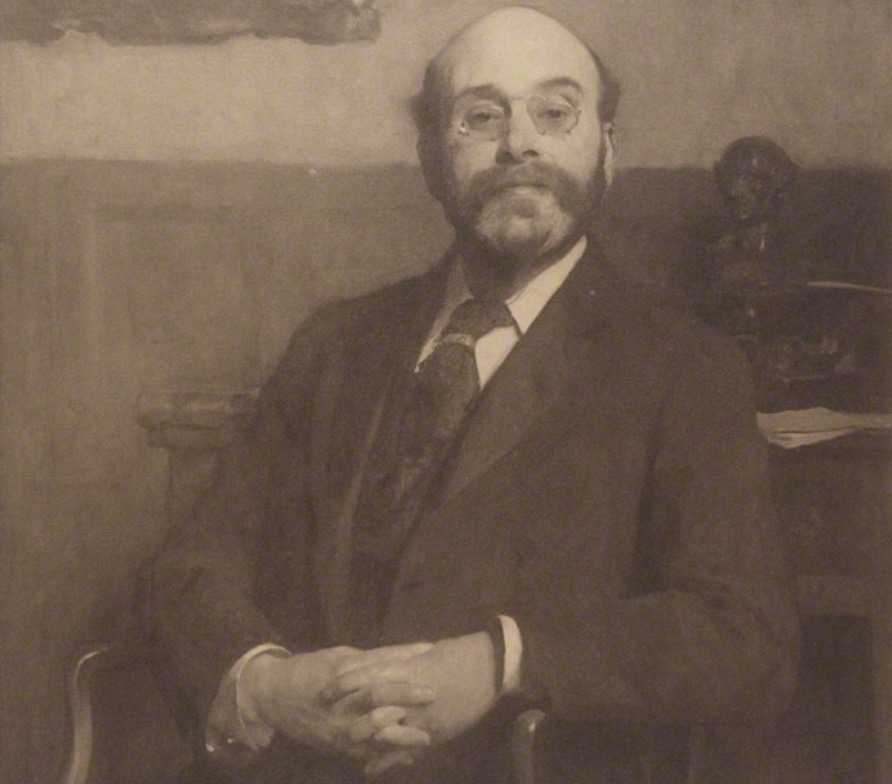
The day will come, as we shake our minds free from the old and stupid ideas about coercing each other, that we shall mock as much at the idea of state education as we are now learning to mock at the idea of state religion — when even a municipal organization of education will seem to us as absurd and grotesque an undertaking as a municipal organization of religion.
Auberon Herbert, letter to the editor, Newcastle Weekly Chronicle, as reprinted in The Right and Wrong of Compulsion by the State, 1885.
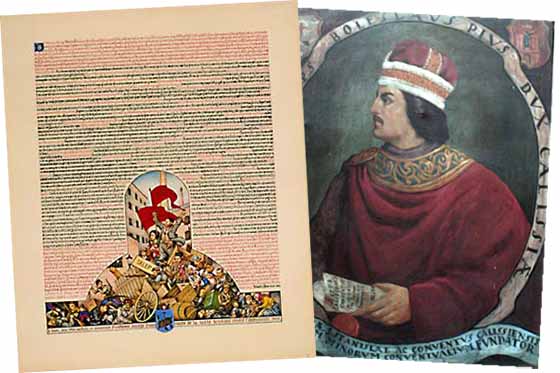
On March 24, 1765, the Kingdom of Great Britain passed the Quartering Act, which required the Thirteen Colonies to house British troops.
On the same date in 1855, slavery was abolished in Venezuela.
The Intolerable Acts (among which was the Quartering Act) was the American Patriots’ name for a series of punitive laws passed by the British Parliament in 1774 after the Boston Tea party. They were meant to punish the Massachusetts colonists for their defiance in throwing a large tea shipment into Boston harbor. In Great Britain, these laws were referred to as the Coercive Acts.
I’ve been tough on Bernie Sanders, the socialist Vermont Senator and Democratic Party presidential candidate. Why? Because socialism is — to quote a current GOP candidate — “a disaster.”
But I appreciate his campaign for showing former Secretary of State Hillary Clinton for what she is, the ultimate establishment insider.
Even while, as SNL parodied, she seeks to co-opt Sanders’s progressivism.
Nowhere is Hillary’s have-it-both-ways mode of operation more obvious than in regard to Big Finance. She attacks the big banks, promoting her “very aggressive plan to rein in Wall Street.” Yet, she is supported politically and has been enriched personally by Wall Street firms. In 2014 and 2015 alone, Mrs. Clinton was paid $11 million dollars for speeches to various groups, including these financial interests.
On the campaign trail, Bernie has been calling on Mrs. Clinton to release transcripts of her speeches to Wall Street firms:
She gets paid $225,000 for a speech. Now you know that is a lot of money for an hour speech. . . . It must be mind-blowing speech, it must be a Shakespearean speech, it must be a speech that could educate and enlighten the entire world.
An anonymous attendee of Mrs. Clinton’s speeches to Goldman Sachs has characterized her remarks as “far from what she sounds like as a candidate now. She sounded more like a Goldman Sachs managing director.” Another said making the transcript public “would bury her against Sanders.”
Understandably, Hillary refuses . . . until every other living person who has ever spoken a word to anyone on Wall Street does so first.
At his rallies, Bernie now throws his empty hands up into the air to release his non-existent speech transcripts.
This is Common Sense. I’m Paul Jacob.
Also, please consider showing your appreciation by dropping something in our tip jar (this link will take you to the Citizens in Charge donation page… and your contribution will go to the support of the Common Sense website). Maintaining this site takes time and money. Your help in spreading the message of common sense and liberty is very much appreciated!
We would be worse than we are without the good books we have read, more conformist, not as restless, more submissive, and the critical spirit, the engine of progress, would not even exist. Like writing, reading is a protest against the insufficiencies of life. When we look in fiction for what is missing in life, we are saying, with no need to say it or even to know it, that life as it is does not satisfy our thirst for the absolute – the foundation of the human condition – and should be better. We invent fictions in order to live somehow the many lives we would like to lead when we barely have one at our disposal.