Almost all our misfortunes in life come from the wrong notions we have about the things that happen to us. To know men thoroughly, to judge events sanely, is, therefore, a great step towards happiness.
Stendhal, journal entry (December 10, 1801)
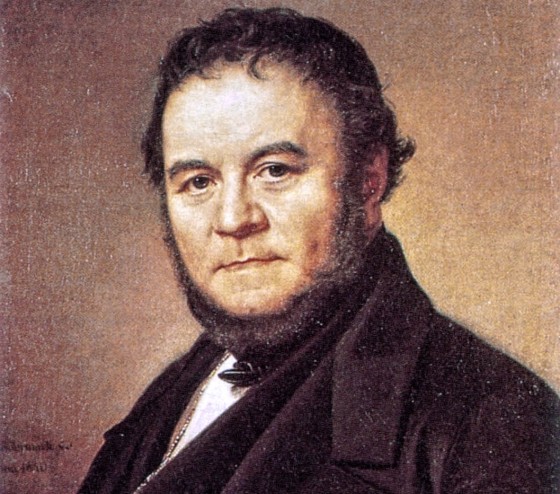
Almost all our misfortunes in life come from the wrong notions we have about the things that happen to us. To know men thoroughly, to judge events sanely, is, therefore, a great step towards happiness.
Stendhal, journal entry (December 10, 1801)

In the Show-Me State, an attorney is showing us government held accountable.
He leaves folks inspired about their freedom, wondering . . . who was that masked attorney?
Well, no. Against my advice, he won’t wear a mask to court, nor leave behind silver bullets. (He says they’re too expensive.)
David Roland is the Man from Freedom — er, the Freedom Center of Missouri, co-founded with his wife Jenifer in 2010. Every day, they defend “individual liberty and constitutionally limited government.”
I first heard about the Center when Dave Roland defended two Girl Scouts being harassed by the City of Hazelwood. “People would assume you have the right to have a lemonade or cookie stand in your yard,” he explained. “Here we have a city that says not only is it illegal, but you can’t even get a permit to do it.”
Last January, Roland won a verdict preventing St. Louis County officials from banning third party and independent candidates from special election ballots.
Earlier this month, our crusader* achieved another big victory, this time against the East Missouri [Drug] Task Force, which had been violating the open records law by blocking public attendance at its public meetings.
Yet, the judge failed to award the Center attorney’s fees. Hey, even super-heroes and super-lawyers have to pay the rent.
Let’s form “a posse”: click here† to support the work of the Freedom Center of Missouri with our own silver bullets, coins . . . or just pull out your plastic. Please.
The Man and Woman from Freedom will thank you (and so do I).
This is Common Sense. I’m Paul Jacob.
* Darn it, if Dave doesn’t refuse to don the cape, too.
† This link goes to the Freedom Center’s main page — the PayPal donation button is at right.


In order that liberty should have a firm foundation, an acquaintance with the world would naturally lead cool men to conclude that it must be laid, knowing the weakness of the human heart, and the ‘deceitfulness of riches,’ either by poor men, or philosophers, if a sufficient number of men, disinterested from principle, or truly wise, could be wise.
Mary Wollstonecraft, A Vindicaton of the Rights of Men, in a Letter to the Right Honourable Edmund Burke; Occasioned by His Reflections on the Revolution in France (1790).
On January 17, 1937, Chicago School economist George Stigler was born. Stigler won a Nobel Memorial Prize for his work. His autobiography is entitled Memoirs of an Unregulated Economist.

In his Washington Post op-ed, “The dangerous myth of the ‘missing black father,’” Mychal Denzel Smith argues that “responsible fatherhood only goes so far in a world plagued by institutionalized oppression.”
He asks:
If black children were raised in an environment that focused not on bemoaning their lack of fathers but on filling their lives with the nurturing love we all need to thrive, what difference would an absent father make? If they woke up in homes where electricity, running water and food were never scarce, went to schools with teachers and counselors who provided everything they needed to learn, then went home to caretakers of any gender who weren’t too exhausted to sit and talk and do homework with them, and no one ever said their lives were incomplete because they didn’t have a father, would they hold on to the pain of lack well into adulthood?”
Hmmm. The first question answers itself. If all children get everything they “need to thrive,” it is assumed they’ll thrive. The second question is impossible to know . . . at least until the creation of that perfect utopia with universal material abundance, a flawless education system and indefatigable single-parents.
Fatherlessness is not just a black problem. And let’s agree there are great single-parent (or no-parent) homes as well as terrible two-parent homes.
Still, fathers are nice. Oftentimes they help children thrive, in part by providing “electricity, running water and food” as well as “love” — both tough and nurturing. Proclaiming that fathers would not matter in a society where everything’s automatically supplied is . . . simple-minded.
Often called socialism.
Smith raises the issues of “racist drug laws, prosecutorial protection of police officers who kill, mass school closures . . . the poisoning of their water.” He’s right: having a father won’t magically solve those.
But it would solve the problem of not having a father.
This is Common Sense. I’m Paul Jacob.

Original photo by Sunil Soundarapandian on Flickr

[W]ith respect to economy . . . [u]nder this relation society consists only in a continual succession of E X C H A N G E S, and exchange is a transaction of such a nature that both contracting parties both gain by it. . . .
We cannot cast our eyes on a civilized country without seeing with astonishment how much this continual succession of small advantages, unperceived but incessantly repeated, adds to the primitive power of man.
It is because this succession of changes, which constitutes society, has three remarkable properties. It produces concurrence of force, increase and preservation of intelligence and division of labour.
The utility of these three effects is continually augmenting.
Destutt de Tracy, Traité de la volonté, English translation titled A Treatise on Political Economy (Georgetown, D.C.: Joseph Milligan; W. A. Rind & Co. Printers, 1817), pp. xvi-xvii.
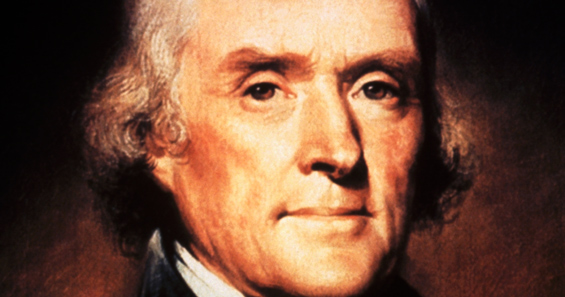
On January 16, 1786, Virginia enacted the Statute for Religious Freedom authored by Thomas Jefferson.

Fighting corruption in government is a never-ending task. But it looks like there are certain institutional practices that can help us, year in, year out.
Click on over to Townhall for the latest lesson in this ancient wisdom, pried from newspaper headlines. Then come back here for those headlines:

[T]he horrors of neologism, which startle the purist, have given no alarm to the translator; where brevity, perspicuity, and even euphonium can be promoted by the introduction of a new word, it is an improvement of language. It is thus the English language has been brought to what it is; one half of it having been innovations, made at different times, from the Greek, Latin, French, and other languages — and is it the worse for these? Had the preposterous idea of fixing the language been adopted in the time of our Saxon ancestors, Pierce, Plowman, of Chaucer, of Spencer, the progress of ideas must have stopped with that of the progress of the language. On the contrary, nothing is more evident than that, as we advance in the knowledge of new things, and of new combinations of old ones, we must have new words to express them.
From the Prospectus to the English language translation of
Destutt de Tracy’s A Treatise on Political Economy, authored presumably by former President Thomas Jefferson (Georgetown, D.C.: Joseph Milligan; W. A. Rind & Co. Printers 1817).
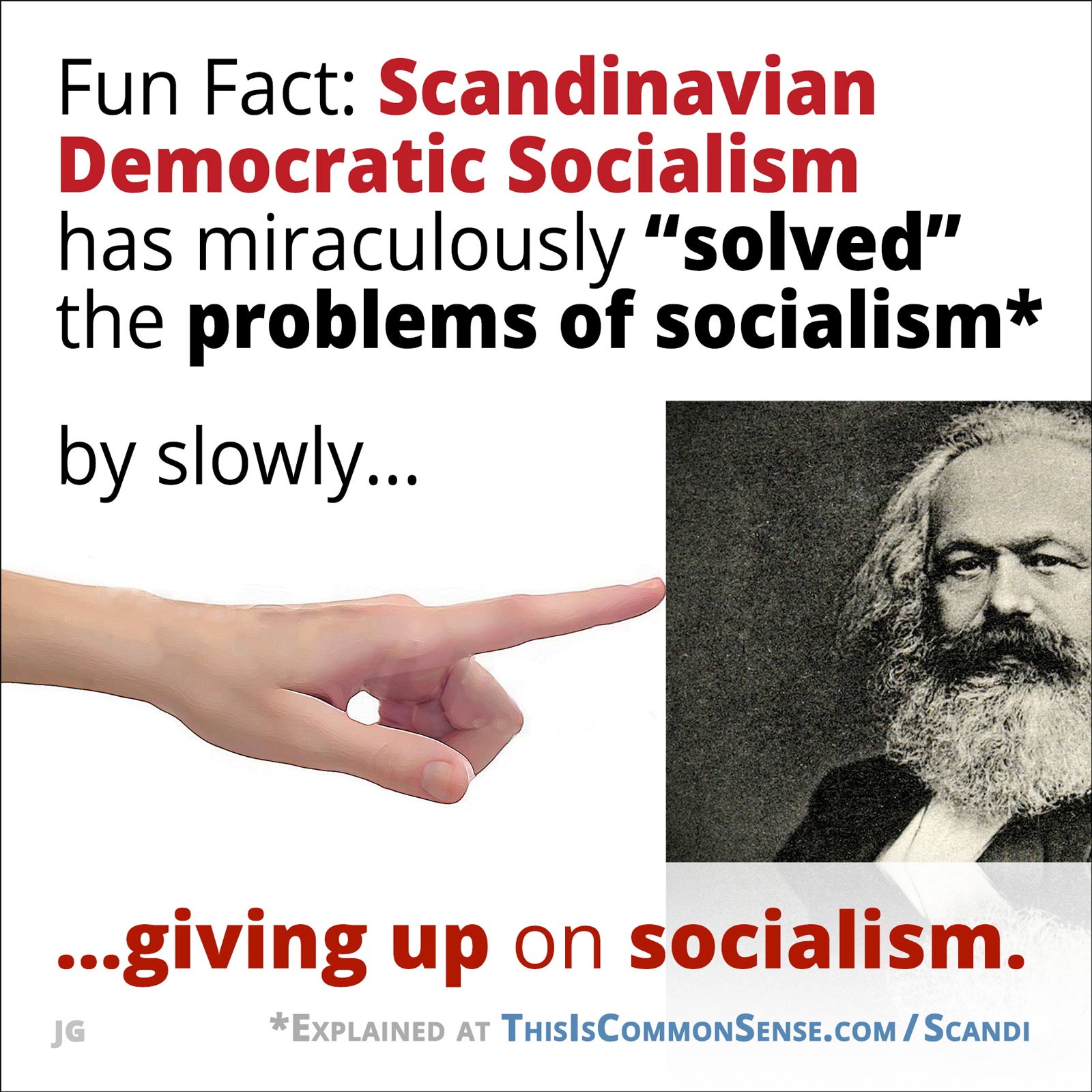
Socialism advocates the public ownership (or control) of business and industry in service of a more equal distribution of wealth.
Bernie Sanders and his version of “democratic socialism” places emphasis on redistribution and downplays the public ownership and control part of the system.
However… Bernie seems never to have met a government monopoly he didn’t love, or a free market enterprise he didn’t distrust or despise.





 So how have Scandinavian democratic socialists managed to overcome these problems?
“I know that some people in the US associate the Nordic model with some sort of socialism. Therefore I would like to make one thing clear. Denmark is far from a socialist planned economy. Denmark is a market economy.”
—Speech, Harvard Institute of Politics

Today the Nordic economies are again growing, following a return to broadly free-market policies that served them well before policies changed during the 1960s and 1970s.
The countries are changing in the face of serious long-term problems that have developed over the last 30 years.
Finland, Sweden and Denmark have…introduced far-reaching market reforms. These changes include greater openness to trade, clear reductions in the tax burden, private provision of welfare services, the introduction of personal retirement accounts and, in Denmark, even a shift towards a liberal labour market.
—Scandinavian Unexceptionalism (highly recommended!)

The development of Scandinavian welfare states has led to a deterioration in social capital.
Nordic societies have for hundreds of years benefited from a strong Lutheran work ethic, a strong sense of individual responsibility and high levels of trust and civic participation.
In the early stages of their transition to “democratic socialism”, safety nets DID exist, but few used them. Over time, an increasing share of the population became dependent on government transfers. The welfare states moved from offering services to the broad public to transferring benefits to those who did not work.
The situation that exists in Nordic societies today is one in which ethics relating to work and responsibility are not strongly encouraged by the economic systems. Individuals with low skills and education have limited gains from working. This is particularly true of parents of large families, which gain extra support if on welfare.
It is true that welfare systems have reduced poverty. However, especially in the second generation, they have also created a form of social poverty of the same type that is apparent in the countries from which many of the admirers of the Scandinavian systems come. Detailed research clearly shows that welfare systems have formed a culture of dependency which is passed on from parents to children.
MUCH MORE HERE on the moral and economic capital that preceded the welfare state, and its gradual disintegration over time…
Scandinavian Unexceptionalism (Institute of Economic Affairs)
This paper is especially valuable because it was written by someone who actually favors a large welfare state. His willingness to concede the problems inherent in such a state are refreshingly honest… and useful for anyone interested in the issues.
What Can the United States Learn from the Nordic Model? (CATO Institute)
Myth: The Scandinavian countries are proof socialism works (Being Classically Liberal)
The Myth of the Scandinavian Model
Economic Freedom of the World: 2013 Annual Report
International government spending (Wikipedia)
Index of Economic Freedom (Heritage Foundation)
A healthy democracy depends on the spreading of good ideas. If you found this article useful, please share it with friends by clicking on any of the social media icons below.
Also, please consider showing your appreciation by dropping something in our tip jar (this link will take you to the Citizens in Charge donation page… and your contribution will go to the support of the Common Sense website). Maintaining this site takes time and money. Your help in spreading the message of common sense and liberty is very much appreciated!