Categories
Today

Witness

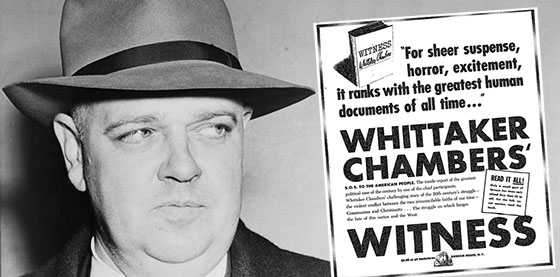
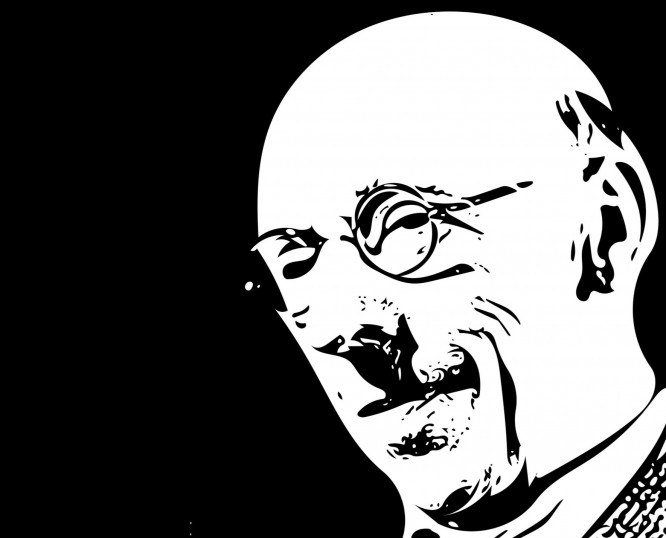
On January 21, 1950, Alger Hiss was convicted of perjury, with Whittaker Chambers being the main witness in Hiss’s prosecution. Chambers confessed to having been a Soviet spy, and accused Hiss as an accomplice, which Hiss denied to his dying day. Chambers gave a fascinating account of all this in his bestselling memoir, Witness.

Categories
Thought

Miguel de Cervantes

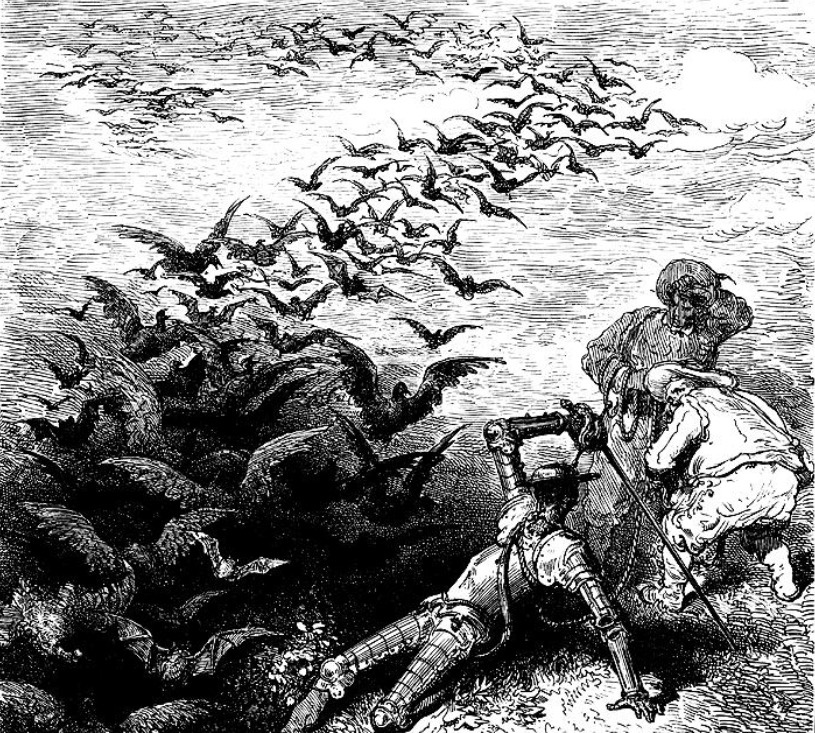
’Tis vain to look for birds in last year’s nests.


Don Quixote in Miguel de Cervantes’s novel Don Quixote (1605).

Categories
Accountability ideological culture moral hazard nannyism national politics & policies

We Demand Inefficiency

It’s all about the money.

Well, that is what Senator Elizabeth Warren believes.

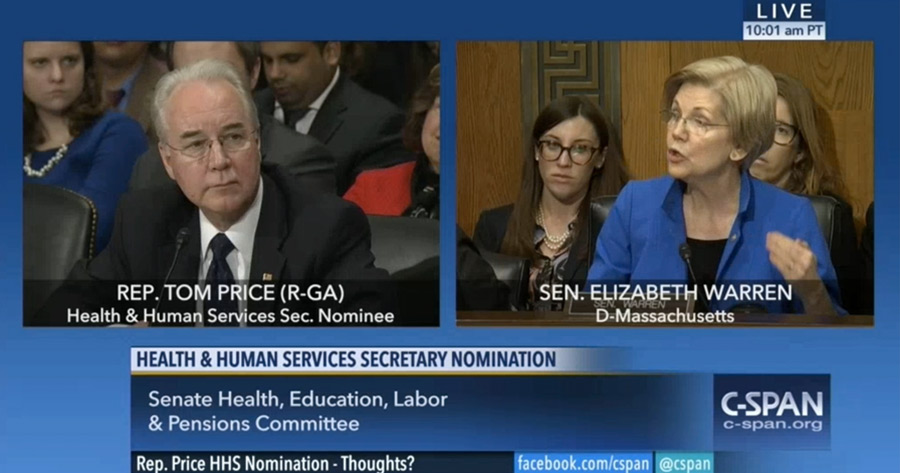
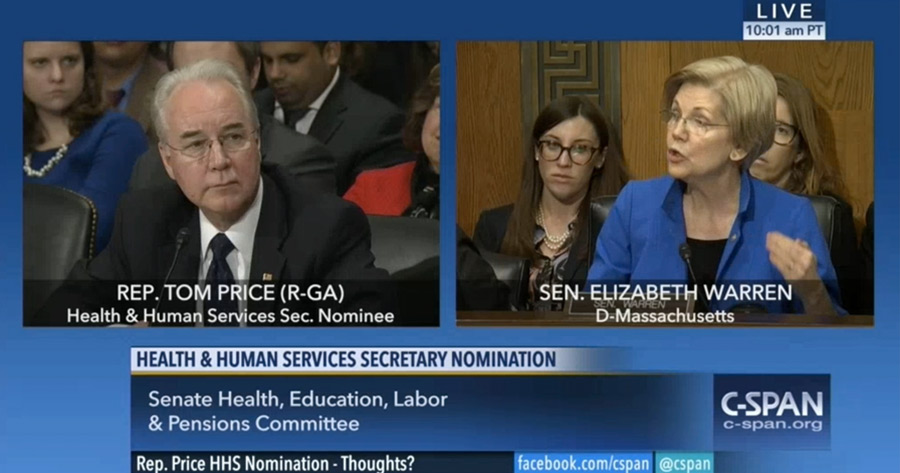
Grilling Republican Congressman Tom Price, the physician turned congressman Donald Trump picked to be Secretary of Health and Human Services, Warren demanded that Price answer a simple question: would he swear on a stack of medical books that he would never, ever “carry out a single dollar of cuts to Medicare or Medicaid eligibility or benefits.”

Trump had said he would not cut either program. But Price, who is known for his skepticism about the efficiency of government programs and has proposed cuts to the programs before, worries Warren.

So she demanded an answer, using words like “guarantee” and “safeguard.”

Price said neither “yes” nor “no.” Instead, he evaded the question.

Thoughtfully.

“What the question presumes is that money is the metric,” Dr. Price replied. “In my belief . . . from a scientific standpoint, if patients aren’t receiving care, even though we’re providing the resources, then it doesn’t work for patients.”

Elizabeth Warren, the doyen of progressive politicians for several years now, was mighty upset about Price’s attempt to switch the standard (“metric” is the buzzword for this) for judging a program to the practical from the simple, easy-to-demagogue-with disbursement tally.

She could have said, “We demand inefficiency; all we care about is the money. Actually helping people? Too complicated. But we sure can score points in debate when you try to cut something.”

What she said* was, “The metric is money.”

Same thing, actually.

Thus it is that government grows while real human welfare is ignored.

This is Common Sense. I’m Paul Jacob.


* Peter Suderman, over at Reason, sums it up like this: “What Warren seems to want from Price is a commitment to spend more regardless of a program’s results.” Suderman calls Warren’s reaction “a surprisingly blunt expression” of a view “that undermines the programs it is designed to defend.”


Printable PDF
 

Categories
Thought

Lysander Spooner

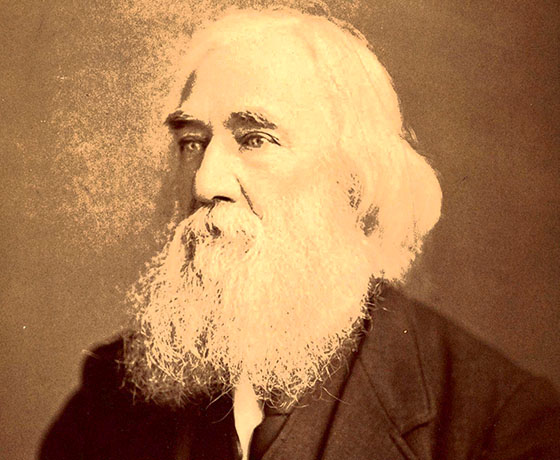
The science of mine and thine — the science of justice — is the science of all human rights; of all a man’s rights of person and property; of all his rights to life, liberty, and the pursuit of happiness.

Lysander Spooner, Natural Law; or, The Science of Justice, Section I, page 5 (1882).

Categories
Today

ACLU

On January 20, 1920, the American Civil Liberties Union was founded.

Categories
Accountability general freedom ideological culture media and media people moral hazard national politics & policies

Don’t Trump the Gun

The 2016 presidential election will go down in history as a doozy. The Trump win was a surprise, even shocking many of his supporters. But the most obvious lesson we learned pertains to the modal Obama-Hillary voter.

Well, make that lessons. Plural.

  1. Today’s most vocal Democrats don’t seem to understand democracy. The “deal” of our democratic republic, as I learned in Civics and “on the streets,” is that you do your best for your party, candidate, or policy, and accept the results . . . until the next election. Whiners, rioters and Hollywood actors (to place them in descending order of tolerability) would serve their cause better by remembering this.
  2. It has become commonplace, now, to make sweeping judgments about one’s opponents based on little or no information. Or erroneous info. On no basis whatsoever, nearly every lefty YouTuber and street shouter I have seen yammers on about how anti-gay Trump is. Truth is? No president has ever entered the White House more pro-gay than Donald J. Trump.
  3. Actual policy issues mean too little to too many. What does matter? Style. Obama has “good style.” Bush had “dumb style.” Trump has “evil style.” Substance? Results?

Blankout.

Tomorrow the President-elect becomes President. And Resident of 1600 Pennsylvania Avenue*. As skeptical as some of us may be (myself included), we owe it to ourselves, our neighbors, and the country — perhaps the world — to give the president a chance. At least, take a deep breath and let him make a mistake before pouncing.

Meanwhile, let’s also stop denigrating half the country — that is, those who voted for Trump. Consider their alternative.

This is Common Sense. I’m Paul Jacob.


* Part-time? Will he really spend a lot of time in Trump Tower?


Printable PDF

Trump, president, inauguration, democracy, election, protest


Categories
Today

Lysander Spooner

On January 19, 1808, Lysander Spooner was born.

Spooner’s achievements in American life, law, and political philosophy, are among the most colorful of the 19th century. Studying law privately, he sued to practice without joining the bar, and won the suit. He set up a postal service that directly competed with the United States Postal Service, delivering mail at a fraction of the cost. He wrote The Unconstitutionality of Slavery, and convinced noted Garrisonian abolitionist Frederick Douglass of his argument. (The book became the centerpiece of intellectual ammunition for the Free Soil Party.) Later in life Spooner turned against constiutionalism itself, and penned some of the most radical political works of his day, including Vices Are Not Crimes and The Constitution of No Authority. Spooner also clearly articulated a “jury nullification” position in his classic treatise Trial by Jury.

Categories
Thought

Ernest Bramah

However deep you dig a well it affords no refuge in the time of flood.


Ernest Bramah, “The Story of Tong So, the Averter of Calamities,” Kai Lung Unrolls His Mat (1928)

Categories
Accountability folly free trade & free markets general freedom moral hazard

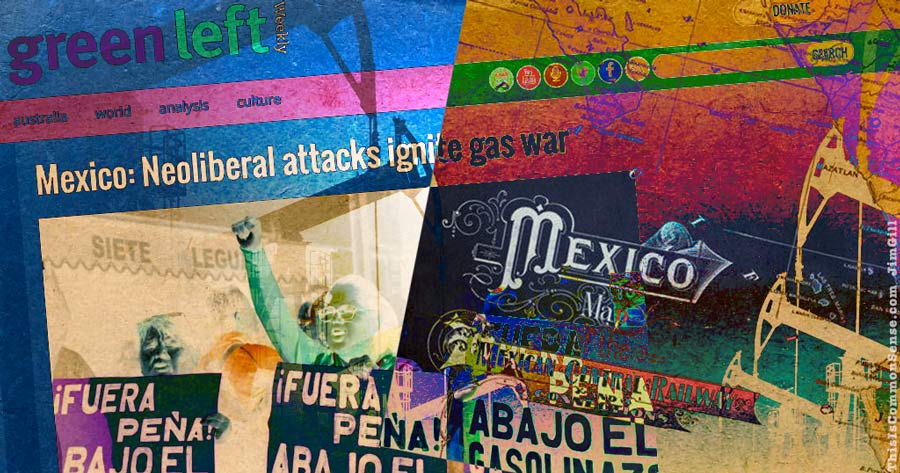
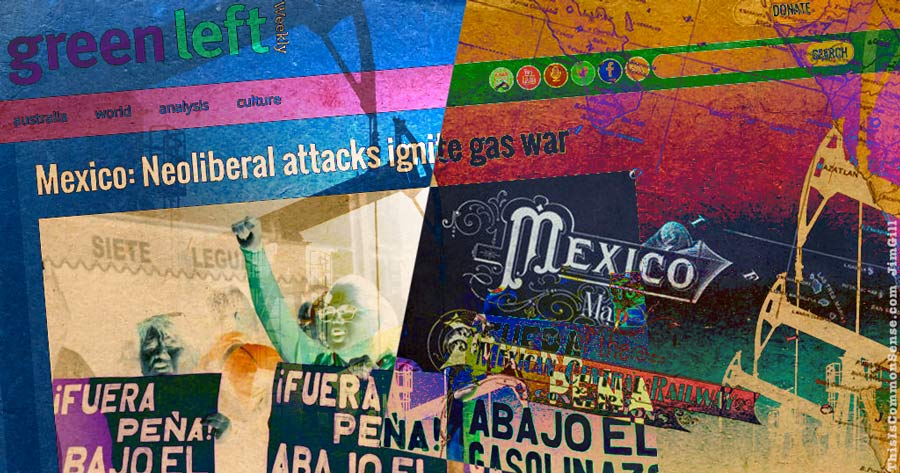
Oil’s Bad that Ends Bad

Sometimes socialism seems reasonable.

Emphasis on “seems.”

Take natural resource socialism. Ores and oil are “just there in the ground” and “belong to everybody.” So it “just makes sense” that “the people” should “own” the mining and drilling and refining industries, and run these operations to share the profits to help “everybody,” not just a few.

The Mexican government bought into this back in 1938, when it nationalized the U.S.- and Dutch-based oil companies. Today, the industry is under-capitalized, its equipment old and inefficient. Mexico itself is a mess. The government is corrupt and the people far poorer than would have been the case had they not bought into the nationalization mania.

The cause of the problems should not be in dispute. “By cutting off Mexican oil exploration from foreign investment and foreign know-how,” Ryan McMaken writes in an interesting analysis, “the Mexican state has only succeeding in making the Mexican oil industry less efficient, and less capable of taking advantage of the natural resources in Mexico.”

Which is why the government has been making tentative “liberalization” moves, de-monopolizing Pemex, the government’s oil outfit.

Unfortunately, though the damage done by bad government policy and monopolistic privilege is everywhere to see, many people (especially intellectuals) in Mexico blame “neo-liberalism” and non-existent “free markets” for rising prices and the specter of economic collapse.

Once bitten by the natural resource socialism bug, it’s apparently easy to dismiss evidence. Or the common-sense notion that government over-reach has made the mess they now struggle with.

This is Common Sense. I’m Paul Jacob.


Printable PDF

Mexico, oil, nationalize, socialism, neoliberalism


Categories
Today

Montesquieu

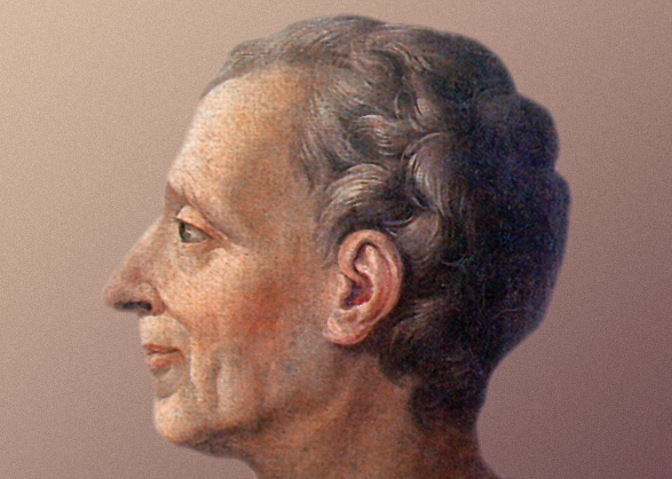
On January 18, 1689, Charles-Louis de Secondat, Baron de La Brède et de Montesquieu, French satirist and philosopher, was born.

His treatise The Spirit of the Laws was a major influence upon America’s founding generation. He is famous for his articulation of the theory of separation of powers, which is implemented in many constitutions throughout the world. He did more than any other author to secure the place of the word despotism in the political lexicon.

In 1811, former U.S. President Thomas Jefferson translated and published Destutt de Tracy’s Commentary and Review of Montesquieu’s ‘Spirit of Laws,’ a very popular review of republican principles — which helps demonstrate how important these French writers were to the American form of government.

Montesquieu died on February 10, 1755.