Government is a dangerous servant. . . as the American left has recently discovered.

Government is a dangerous servant. . . as the American left has recently discovered.
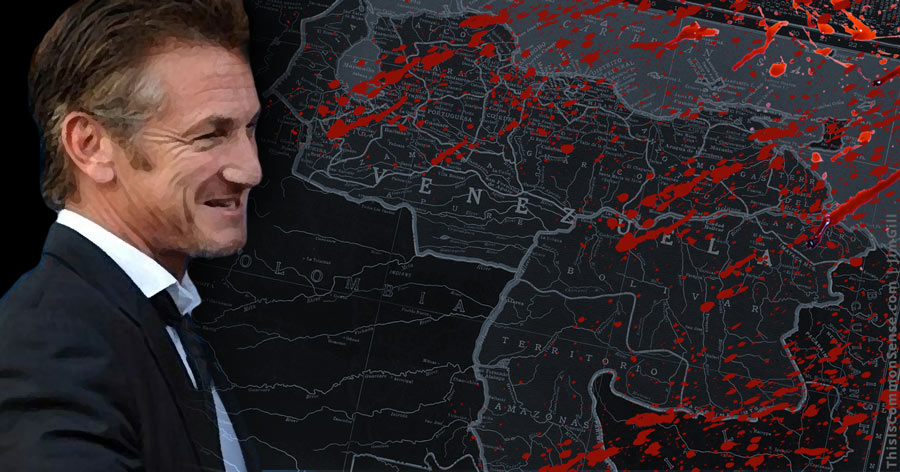
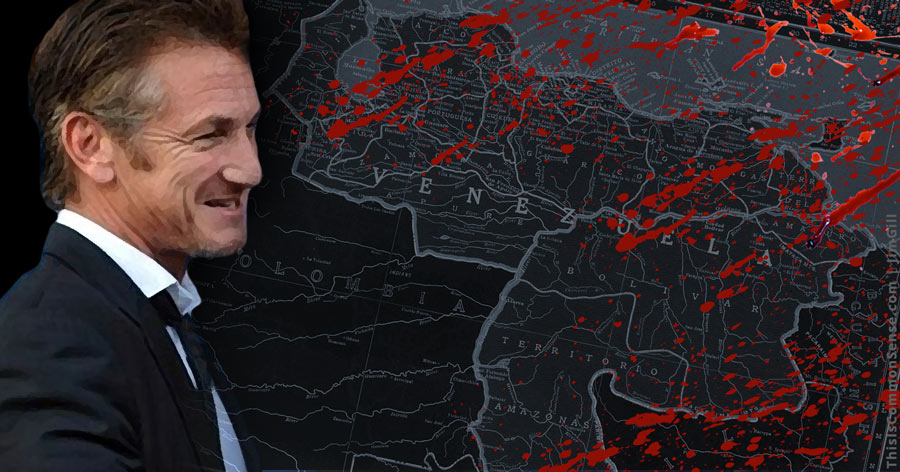
Nearly 75 percent of Venezuelans have lost 19 pounds or more in 2016. “People have become so desperate,” the Miami Herald reported recently, “that they are butchering and eating flamingos.”
While acknowledging the problem, TeleSUR, a television network based in Venezuela and funded by governments including Cuba, Ecuador, Nicaragua, and Venezuela, called the Herald’s story “kooky” and suggested taking reports “like alleged flamingo eating with a grain of salt.”
If, in socialist Venezuela, one could find a grain of salt.
In America, salt is necessary, too, when listening to our socialist Hollywood celebs blather about their kooky diets, for which some are blaming President Trump.*
Socialism kills. The deprivations in Venezuela are no joke, for along with economic chaos, Venezuelans are experiencing political repression on a grand scale. A new report from Luis Almagro, secretary general of the Organization of American States (OAS), documents the thousands arrested for protesting or “having posted something against the national government or a public official on Twitter.” The report details the “curtailment of civil, political and electoral freedoms” and “torture” and “censorship.”
Almagro calls for the suspension of Venezuela’s membership in the OAS, which is long overdue. The Human Rights Foundation demanded that nine years ago.
The Obama administration opposed such a move, as the Washington Post editorialized, in order to pursue “a legacy-making détente” with “the Castro regime in Cuba.”
At Townhall,** I urged Trump to support the effort to boot Venezuela out of the OAS, which might provide some assistance toward political change there . . . and Venezuelans eating more.
And perhaps to socialists in Hollywood and elsewhere eating crow . . . but not flamingo.
This is Common Sense. I’m Paul Jacob.
* I covered this last week, when I compared their Trump Diet nonsense to the “Maduro Diet,” named for Venezuelan President Nicolás Maduro, the socialist dictator presiding over the complete economic collapse of what, prior to socialism, had been South America’s richest country.
** From which this Common Sense is adapted.
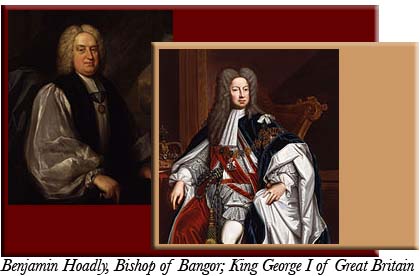
On March 31, 1717, a sermon on “The Nature of the Kingdom of Christ,” by Benjamin Hoadly, the Bishop of Bangor, provoked the Bangorian Controversy.
The sermon’s text was John 18:36, “My kingdom is not of this world,” and from that Hoadly deduced — supposedly at the request of King George I himself, who was present in the assembly — that there was no Biblical justification for any church government. Hoadly identified the church with the kingdom of Heaven, noting that Christ had not delegated His authority to any representative.
King George’s preference for the Whig Party, and for latitudinarianism in ecclesiastical policy, is widely thought to have been a strategic maneuver to degrade church power in political government.
When a country is well governed, poverty and a mean condition are things to be ashamed of. When a country is ill governed, riches and honor are things to be ashamed of.
Master Kong, The Analects, eighth chapter.

On March 21, 1965, Dr. Martin Luther King, Jr. led 3,200 people on the start of the third and finally successful civil rights march from Selma to Montgomery, Alabama.
Nearly two decades earlier, the Twenty-second Amendment (Amendment XXII) of the United States Constitution, passed Congress. The date was March 21, 1947. The amendment, ratified on February 27, 1951, set a term limit for election and overall time of service to the office of President of the United States. This was an obvious reaction to the more than three terms in office of Franklin Delano Roosevelt.
The first section of the amendment reads as follows:
No person shall be elected to the office of the President more than twice, and no person who has held the office of President, or acted as President, for more than two years of a term to which some other person was elected President shall be elected to the office of the President more than once. But this Article shall not apply to any person holding the office of President, when this Article was proposed by the Congress, and shall not prevent any person who may be holding the office of President, or acting as President, during the term within which this Article becomes operative from holding the office of President or acting as President during the remainder of such term.
Microsoft just announced an innovation that might give folks who fear business behavior — or are extremely skeptical of the positive public outcome of markets — pause.
The Bellevue, Washington, company is adding Google calendar connectivity for its Macintosh users of Outlook 2016.
[Pause.]
You see, monopolies give us the willies. We do not trust them. Yet, despite our fears and suspicions, big business activity in a free market does not lead inevitably to One Corporation Ruling Them All. Or chaos.
Why believe that? This Microsoft Outlook story.
Most folks’ worries about monopoly come down to fear of out-of-control competition. In many industries, for the industry to work, there must be general cooperation among competitors. (Think of telephones and electricity distribution, etc.) The reason many people* want to regulate “natural monopolies” is that it seems only natural that businesses would balk at working together on shared standards — they would balk at any form of cooperation . . . they’re competitors, dagnabbit!
But evidence of competitors cooperating for consumer good is all around us. The classic case? Railroads, when the rail gauges in America were standardized to 4′ 9″ — without government edict.
The current case? This, where one of the three biggest computer outfits in the world offers customers on a competitive platform (Apple) easy syncing with a company that competes directly with it as well as its platform competitor (Google).
Why do this?
The better to serve their customers. As much as Microsoft might want to shun their competitors’ products, its customers do not share that view.
And that is enough.
Welcome to free-market capitalism.
This is Common Sense. I’m Paul Jacob.**
* It is worth noting that economists have a different concern regarding natural monopolies. Something about “cost curves.” Meanwhile, the opposite fear — of cooperation among businesses when cooperation would be generally harmful (price fixing) — has been an issue dealt with by economists since Adam Smith.
** Full disclosure: this came to my attention courtesy of a story on Apple’s News app.
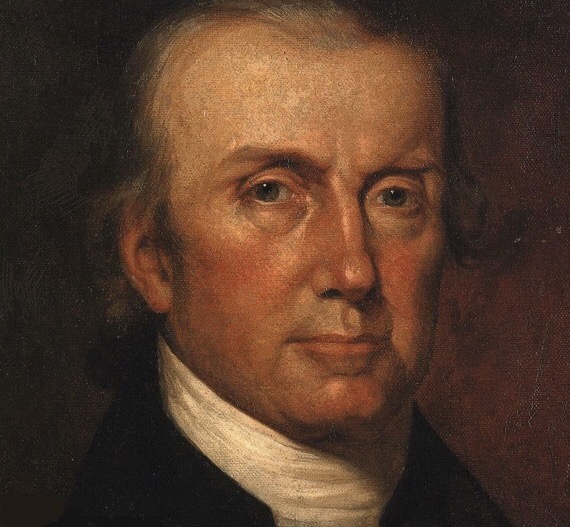
I renounce the idea sometimes advanced that the state governments ever were or continue to be, sovereign or unlimited. If the people are sovereign, their governments cannot also be sovereign.
John Taylor of Caroline, Construction Construed, and Constitutions Vindicated (1820).
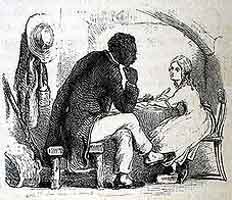
On March 20, 1852, Harriet Beecher Stowe’s anti-slavery novel Uncle Tom’s Cabin was published.
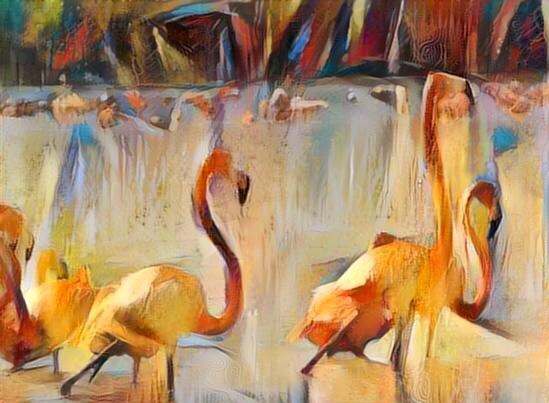
The country of Venezuela has descended into the worst kind of chaos, with fighting over every last scrap of food. Even the rats fear for their lives. All walking food/near-food is. And some feathered food, too.
Click on over to Townhall, then come back here.

On March 19, 1649, England’s House of Commons passed an act abolishing the House of Lords, declaring it “useless and dangerous to the people of England.”
This was during Oliver Cromwell’s rule as Lord Protector, after the execution of Charles I. The House of Lords did not again meet until the Convention Parliament of 1660, under the Restoration of the monarchy.