Categories
Thought

Calvin Coolidge

I favor the policy of economy, not because I wish to save money, but because I wish to save people. The men and women of this country who toil are the ones who bear the cost of the Government. Every dollar that we carelessly waste means that their life will be so much the more meager. Every dollar that we prudently save means that their life will be so much the more abundant. Economy is idealism in its most practical form.

Calvin Coolidge, Calvin Coolidge, Inaugural Address (March 4,1925).
Categories
Thought

Cormac McCarthy

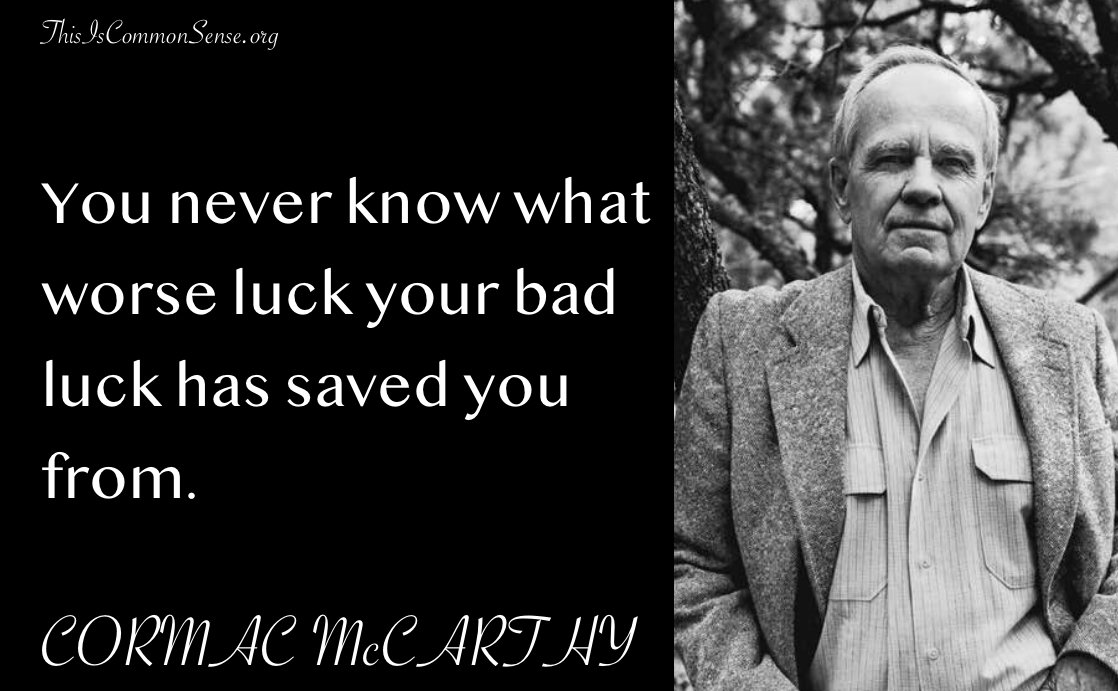
You never know what worse luck your bad luck has saved you from.

Cormac McCarthy, No Country for Old Men (2005).

Categories
Thought

Calvin Coolidge

Men do not make laws. They do but discover them. Laws must be justified by something more than the will of the majority. They must rest on the eternal foundation of righteousness. That state is most fortunate in its form of government which has the aptest instruments for the discovery of law.

Calvin Coolidge, speech to the Massachusetts State Senate (January 7, 1914).
Categories
Thought

Malcolm X

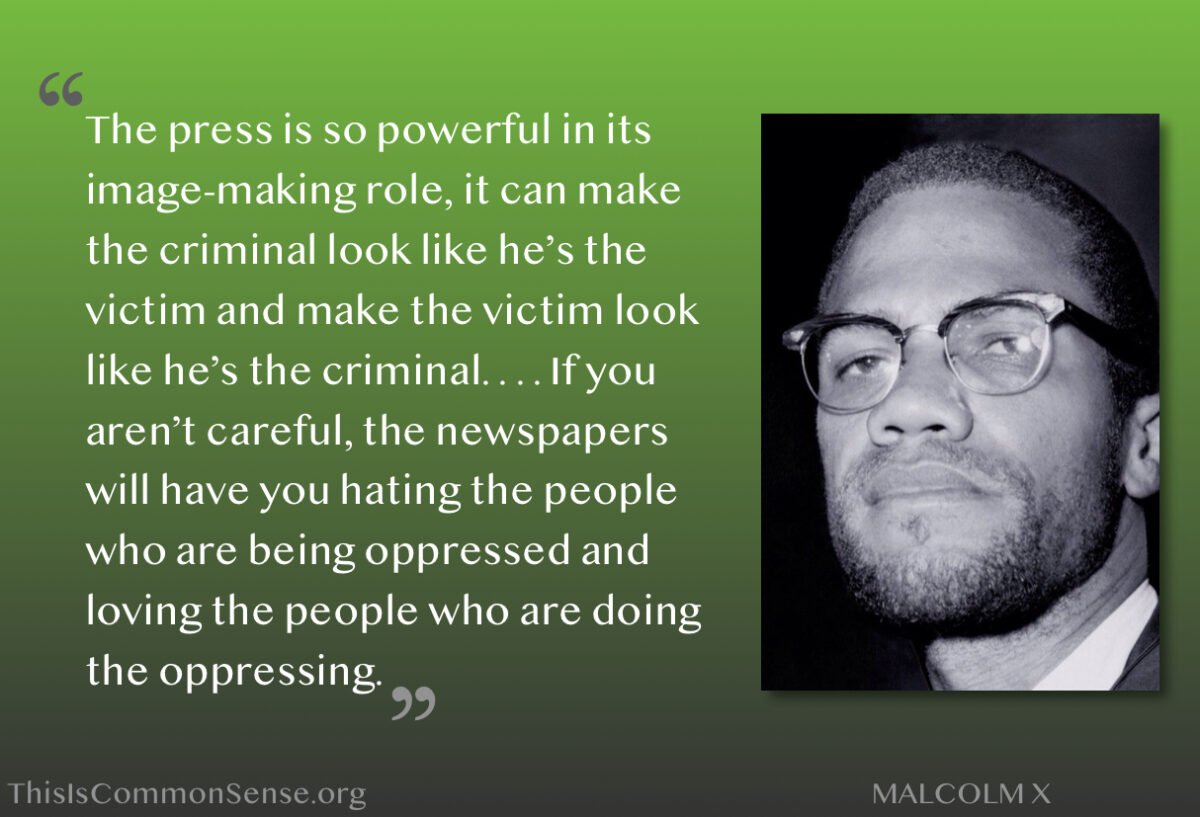
The press is so powerful in its image-making role, it can make the criminal look like he’s the victim and make the victim look like he’s the criminal. . . . If you aren’t careful, the newspapers will have you hating the people who are being oppressed and loving the people who are doing the oppressing.

Malcolm X, at the Audubon Ballroom in Harlem (December 13, 1964), later published in Malcolm X Speaks: Selected Speeches and Statements (1965), edited by George Breitman, p. 93.

Categories
Thought

Charles W. Morris

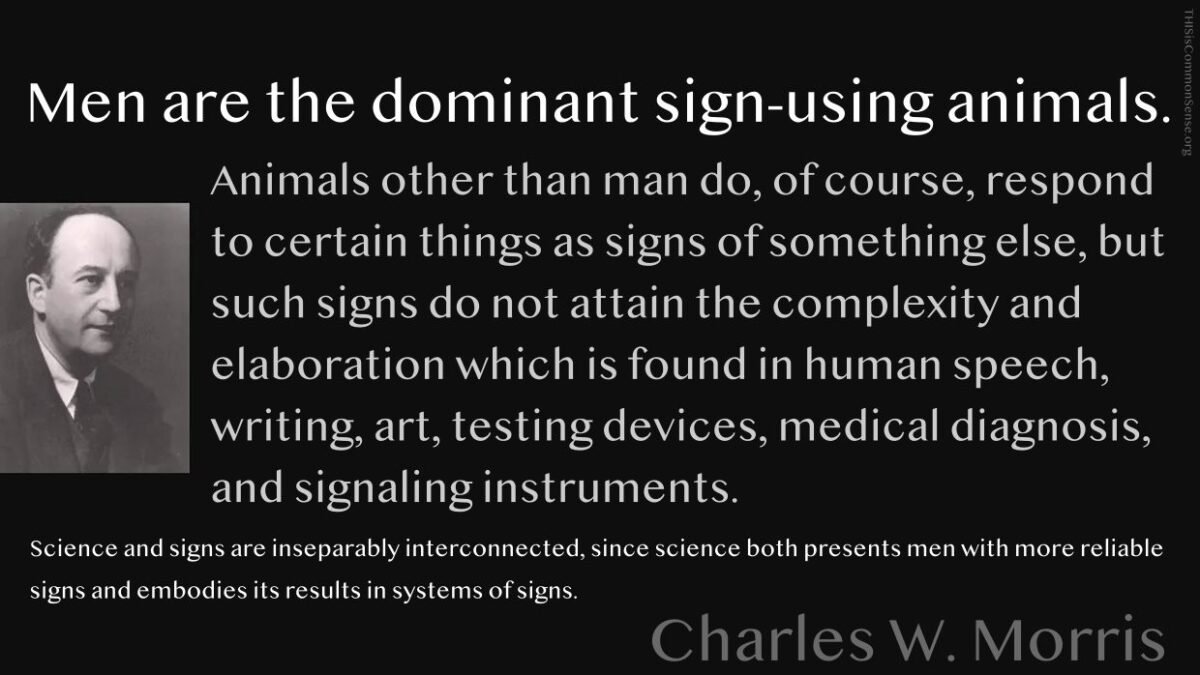
Men are the dominant sign-using animals. Animals other than man do, of course, respond to certain things as signs of something else, but such signs do not attain the complexity and elaboration which is found in human speech, writing, art, testing devices, medical diagnosis, and signaling instruments. Science and signs are inseparably interconnected, since science both presents men with more reliable signs and embodies its results in systems of signs. Human civilization is dependent upon signs and systems of signs, and the human mind is inseparable from the functioning of signs — if indeed mentality is not to be identified with such functioning.

Charles W. Morris, “Foundations of the Theory of Signs,” in International Encyclopedia of Unified Science, Vol. 1, No. 2; Reprinted 1971. 
Categories
Thought

Tyrion

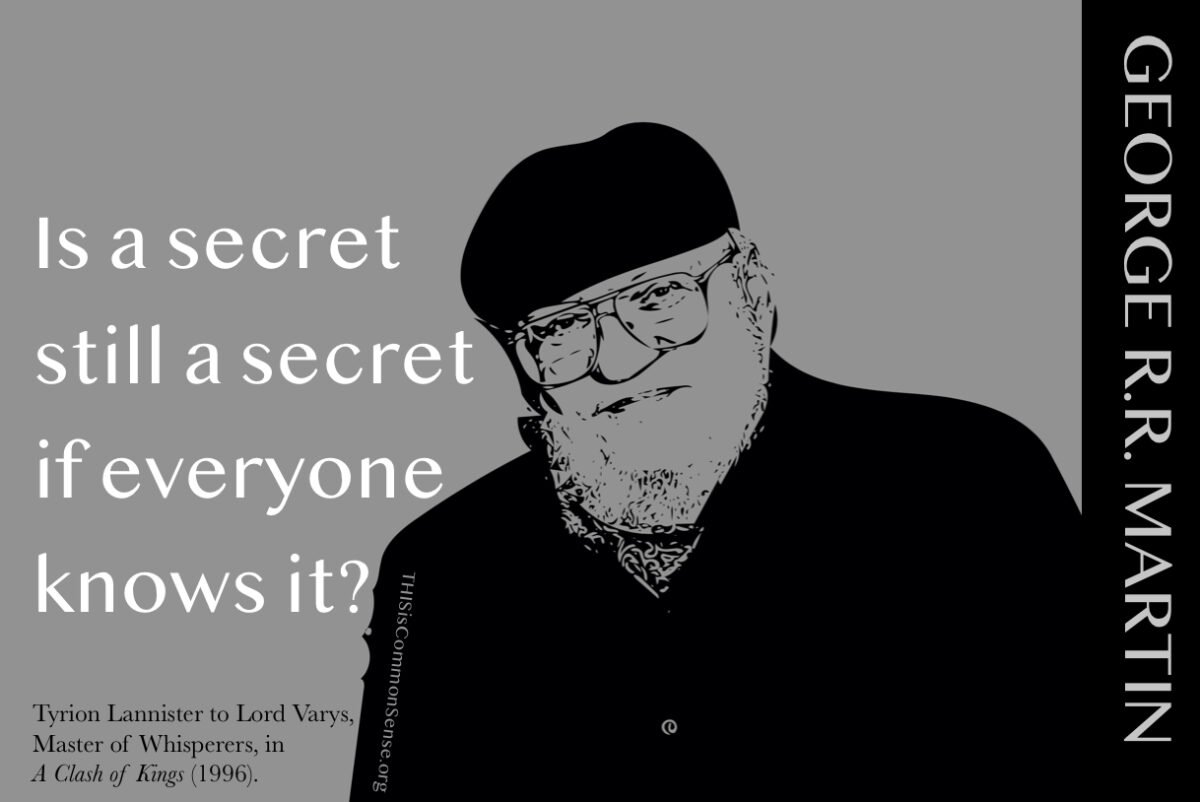
Is a secret still a secret if everyone knows it?

George R.R. Martin, A Clash of Kings (1996); character Tyrion Lannister to Lord Varys, Master of Whisperers.

Categories
Thought

Ali bin Abi Talib

Your friends are three and your enemies are three. Your friends are: your friend, your friend’s friend and your enemy’s enemy. And your enemies are: your enemy, your friend’s enemy and your enemy’s friend.

Ali bin Abi Talib (علي بن أبي طالب), Letter 31: “Advice to one of his sons after returning from the Battle of Siffin” (likely composed soon after July 657 of the current era, when the battle took place.
Categories
Thought

Marshall McLuhan

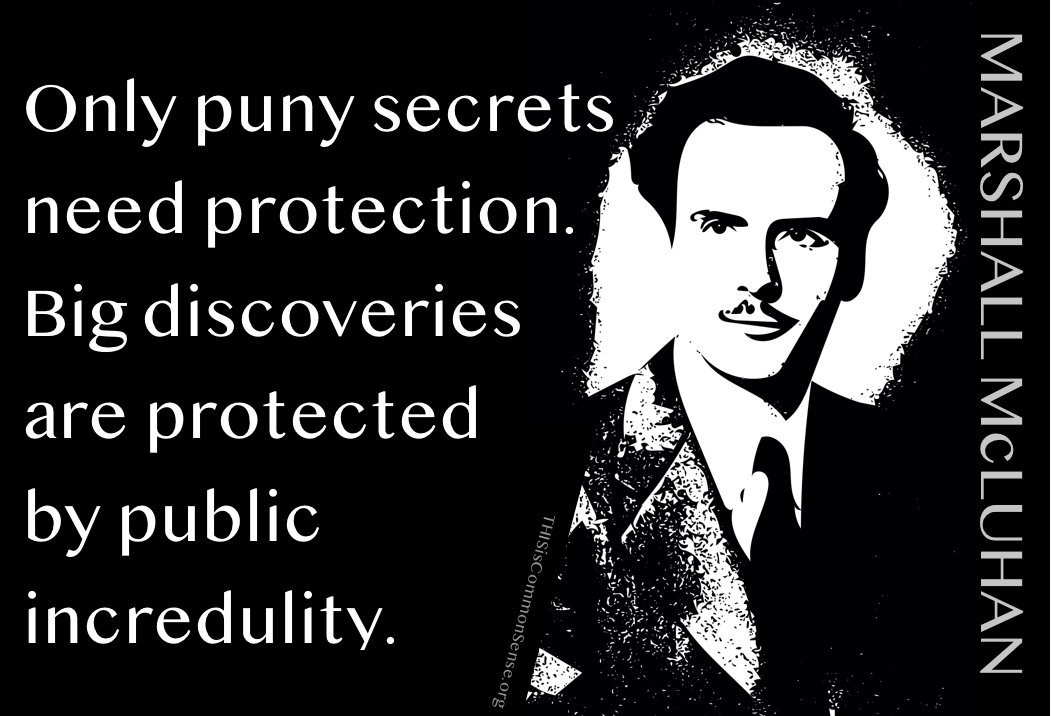
Only puny secrets need protection. Big discoveries are protected by public incredulity.

Marshall McLuhan, Take Today: The Executive as Dropout (1972), p. 92.

Categories
Thought

Miranda July

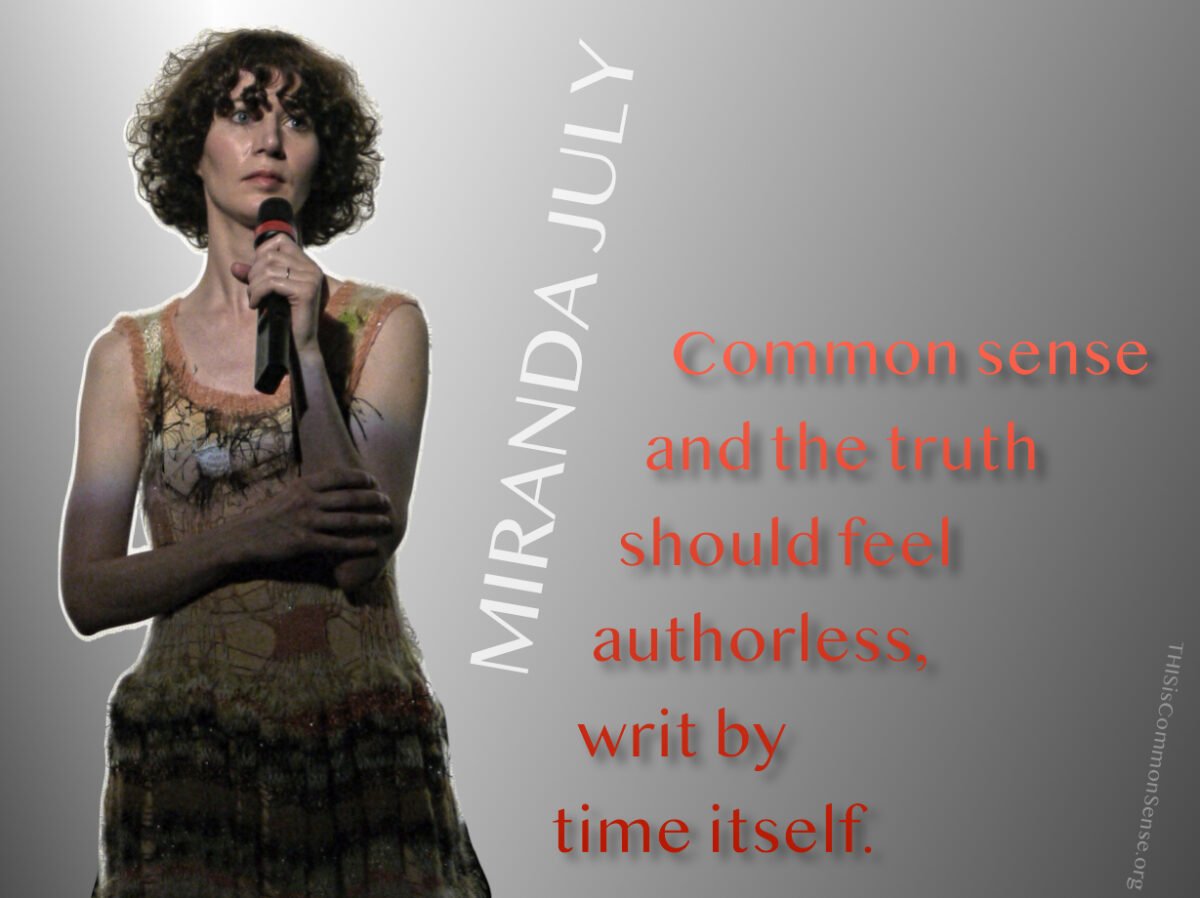
Common sense and the truth should feel authorless, writ by time itself.

Miranda July, “The Shared Patio,” in Zoetrope All-Story (Winter 2005).

Categories
Thought

Bismarck

Mein lieber Professor, ein solcher Krieg hätte uns wenigstens 30,000 Mann brave Soldaten gekostet, und uns im besten Falle keinen Gewinn gebracht. Wer aber nur ein Mal in das brechende Auge eines sterbenden Kriegers auf dem Schlachtfeld geblickt hat, der besinnt sich, bevor er einen Krieg anfängt.

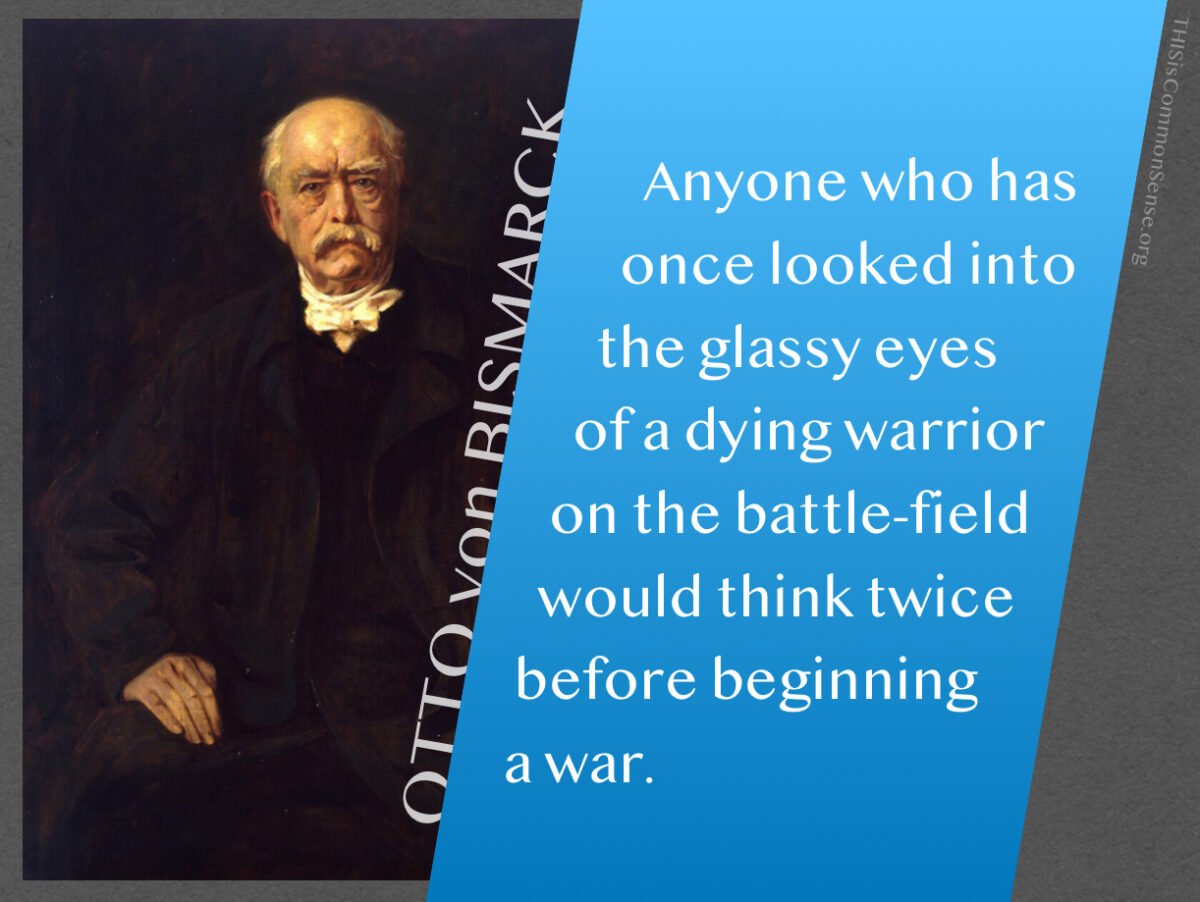
My dear Professor, a war would have cost us at least 30,000 brave soldiers, and at best we should have gained nothing by it. Besides, anyone who has once looked into the glassy eyes of a dying warrior on the battle-field would think twice before beginning a war. 

Minister President Otto von Bismarck, of Prussia, remarks of June 1867 defending provisions of the Treaty of London (May 11, 1867), as quoted by Wilhelm Görlach in Prince Bismarck: A Biographical Sketch (1875), p. 13.