Categories
Thought

Irving Kristol

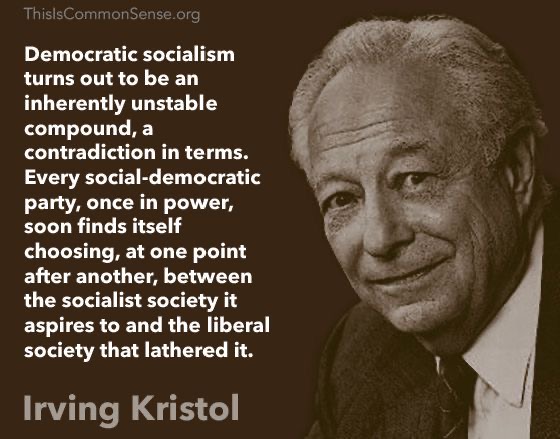
Democratic socialism turns out to be an inherently unstable compound, a contradiction in terms. Every social-democratic party, once in power, soon finds itself choosing, at one point after another, between the socialist society it aspires to and the liberal society that lathered it.

Irving Kristol, as quoted in “Capitalism, Socialism, and Democracy: A Symposium,” edited by William Barrett, Commentary (1978).
Categories
Thought

Philip K. Dick

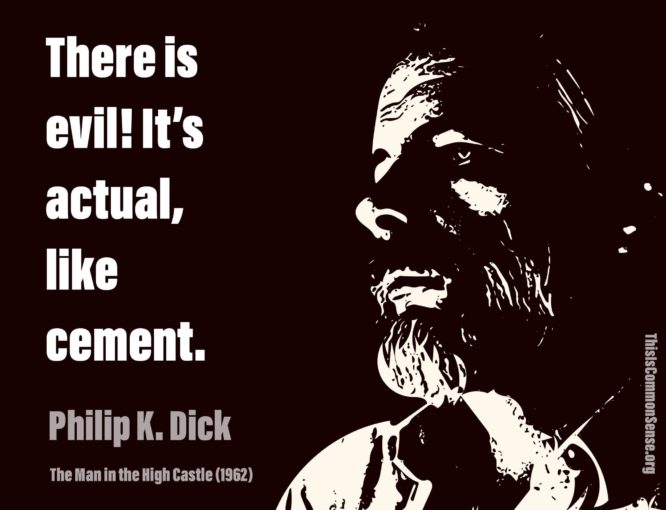
There is evil! It’s actual, like cement.

Philip K. Dick, The Man in the High Castle (1962).

Categories
Thought

Theodore Sturgeon

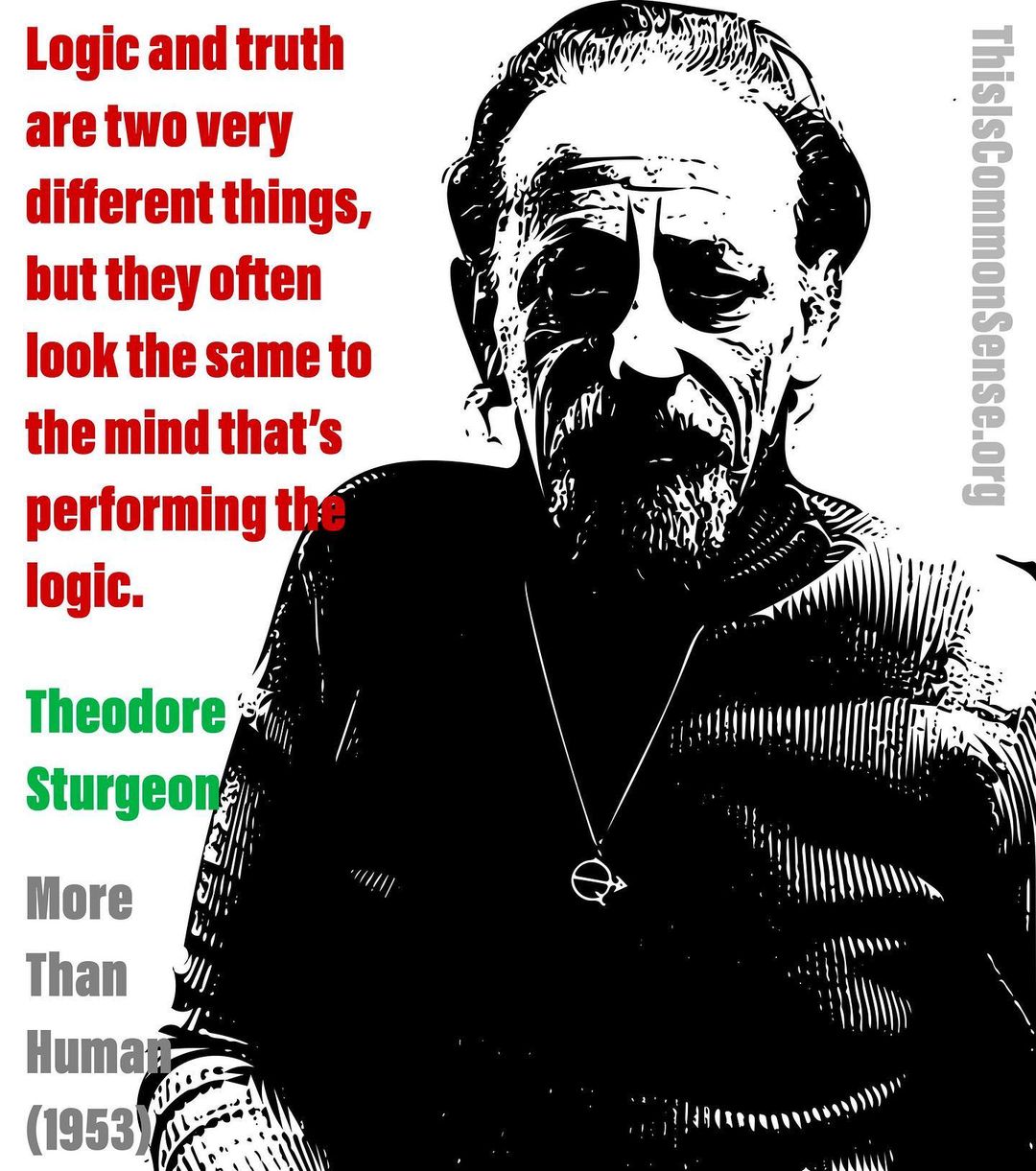
Logic and truth are two very different things, but they often look the same to the mind that’s performing the logic.

Theodore Sturgeon, More Than Human (1953).

Categories
Thought

Philip K. Dick

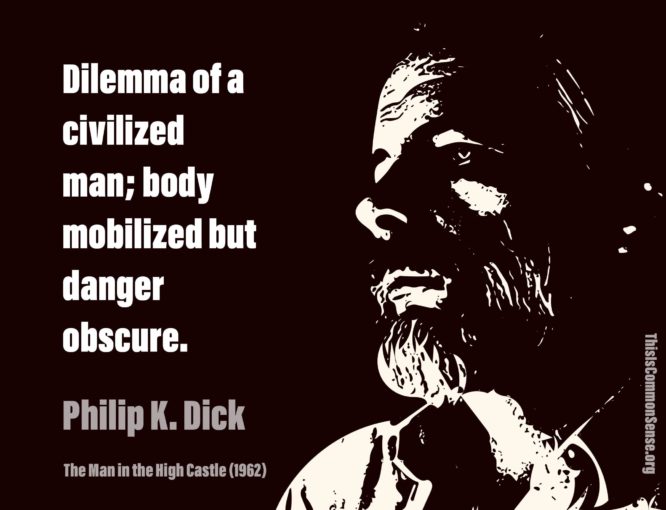
Dilemma of a civilized man; body mobilized but danger obscure.

Philip K. Dick, The Man in the High Castle (1962).

Categories
Thought

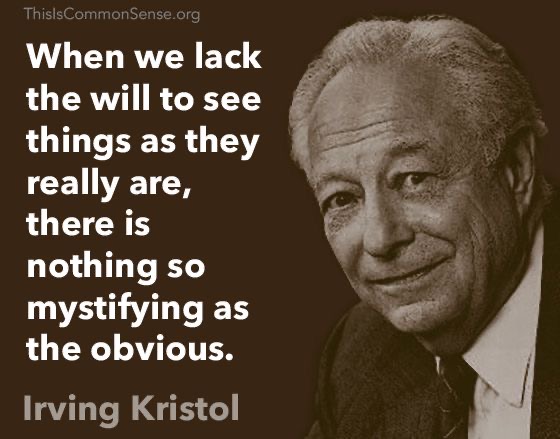
Irving Kristol

When we lack the will to see things as they really are, there is nothing so mystifying as the obvious.

Irving Kristol, “‘When virtue loses all her loveliness’ — some reflections on Capitalism and ‘the free society,’” National Affairs, No. 21, Fall 1970.

Categories
Thought

Philip K. Dick

Reality is that which, when you stop believing in it, doesn’t go away.

Philip K. Dick, speech, “How To Build A Universe That Doesn’t Fall Apart Two Days Later” (1978).

Categories
Thought

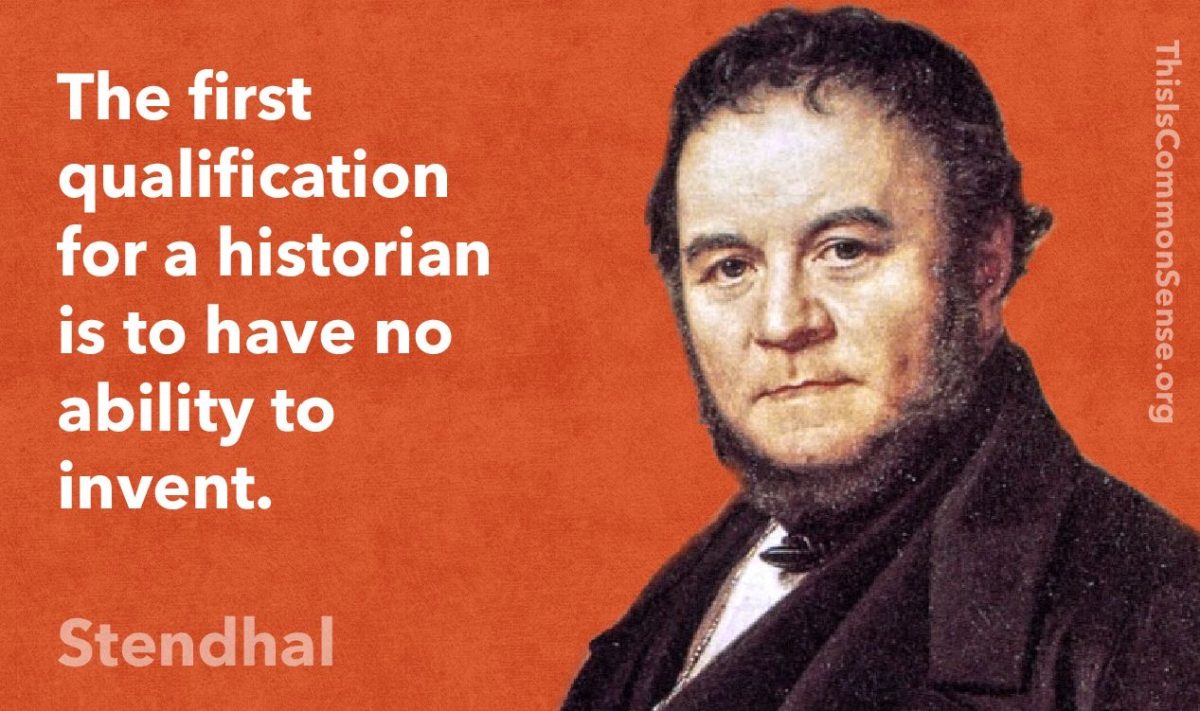
Stendhal

The first qualification for a historian is to have no ability to invent.

Categories
Thought

Rose Wilder Lane

In our ignorance, we could not see that the Kaiser’s Germany and the Communist International were merely two aspects of the Old World’s reaction against the new, the American principle of individual liberty and human rights.

Rose Wilder Lane, Give Me Liberty (1936).
Categories
Thought

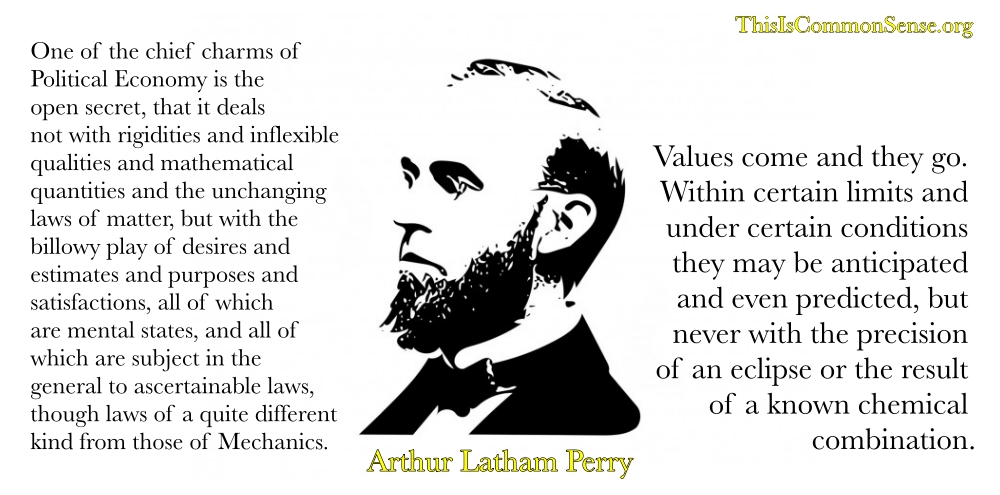
Arthur Latham Perry

One of the chief charms of Political Economy is the open secret, that it deals not with rigidities and inflexible qualities and mathematical quantities and the unchanging laws of matter, but with the billowy play of desires and estimates and purposes and satisfactions, all of which are mental states, and all of which are subject in the general to ascertainable laws, though laws of a quite different kind from those of Mechanics. Values come and they go. Within certain limits and under certain conditions they may be anticipated and even predicted, but never with the precision of an eclipse or the result of a known chemical combination.

Categories
Thought

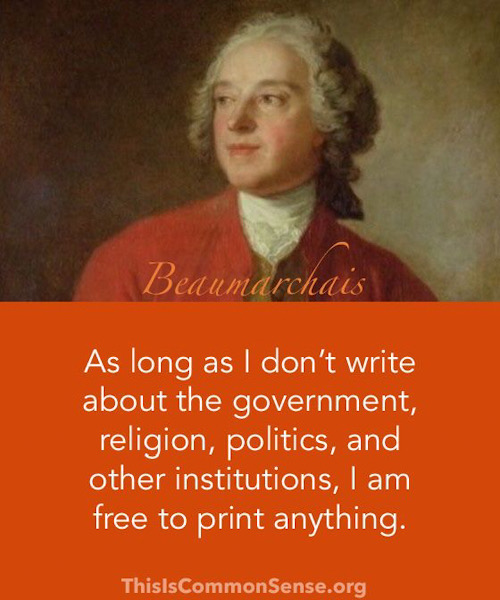
Beaumarchais

As long as I don’t write about the government, religion, politics, and other institutions, I am free to print anything.