Categories
national politics & policies Popular too much government

E-Panic

One of the better arguments for government relies upon sobriety: we want rational, measured responses to threats, not panicky, hot-headed reactions. We have a rule of law to prevent revenge and vendetta, replacing them with justice and civil order.

But when we expand the concept of “threat” far beyond interpersonal violence and to dangers from our own foolish or merely misguided behavior, “sobriety” too often doesn’t even seem an option.

Take drugs. 

Specifically, take “vaping.” 

That is the innovative technology of “e-cigarettes” that can be used to replace the smoking of tobacco and other drugs with inhaling drug-laced water vapor.

Vaping is far less dangerous than tobacco, at least for emphysema and lung cancer, but it is not harmless. Several hundred people across several of these United States have become very ill and a few have died of a mysterious lung disease.

So of course the Surgeon General calls it an epidemic, and the White House and Congress take up the cause to regulate and even prohibit vaping. And India just “became the latest country to ban electronic cigarettes,” according to Bloomberg

Whoa, the subject has barely been studied, and what we know so far is that it was not major-brand nicotine e-liquid, but, instead, boutique product that has caused most of the casualties. 

The leap to legislation has been too quick for consumers to alter their own behavior with new information.

Besides, prohibition and regulation haven’t worked to prevent the current opiate overdose crisis.

The rush to “do something very, very strong,” as President Trump puts it, is the very opposite of why we say we want government.

Its lack of sobriety is . . . sobering.

This is Common Sense. I’m Paul Jacob.


PDF for printing

vape, vaping, law, ban, prohibition,

See all recent commentary
(simplified and organized)
See recent popular posts


Categories
First Amendment rights Popular

Against Spying on American Journalists

Does the Federal Bureau of Investigation have a file on you?

Does it — or some other agency — have an active file on you?

If so, does it have good reason for such an investigation?

Well, refine that last question a bit: does the FBI have a good reason under the principles of a democratic republic, abiding by the limits set by the rights listed (and not listed) in the Constitution?

Eight years ago, the folks at AntiWar.com learned that they had been subject to FISA snooping and multiple “threat assessment” memos of the FBI. Eric Garris, founder, managing editor, and webmaster of the anti-war site sued, under the Freedom of Information Act, for discovery, and, under the 1974 Privacy Act, to have the memos expunged. On September 11, the court instructed the bureau to expunge one of them, mainly because no crime was under investigation.

You can read a good account of the story at The American Conservative, by Kelly Beaucar Vlahos. It is not a simple story. But the gist is that a journalistic enterprise was targeted for a spy operation because the American Deep State disagreed with — or just plain feared — the journalists’ policy of opposing never-ending war.

Never-ending war being, of course, the health of the ever-expanding state.

This may not unreasonably remind you of the Obama Era suppression of Tea Party activism via the Internal Revenue Service’s discriminatory doling out 501(c)3 statuses. But the FBI is even more ominous, as Angela Keaton, Director of Operations, acknowledged: “donors became scared.”

That is all the evidence we need to recognize how dangerous Deep State spying can be to the freedoms — political and personal — of Americans.

This is Common Sense. I’m Paul Jacob.


antiwar, anti war, Justin Raimondo,

See all recent commentary
(simplified and organized)
See recent popular posts


Categories
judiciary national politics & policies Popular Second Amendment rights

Packing

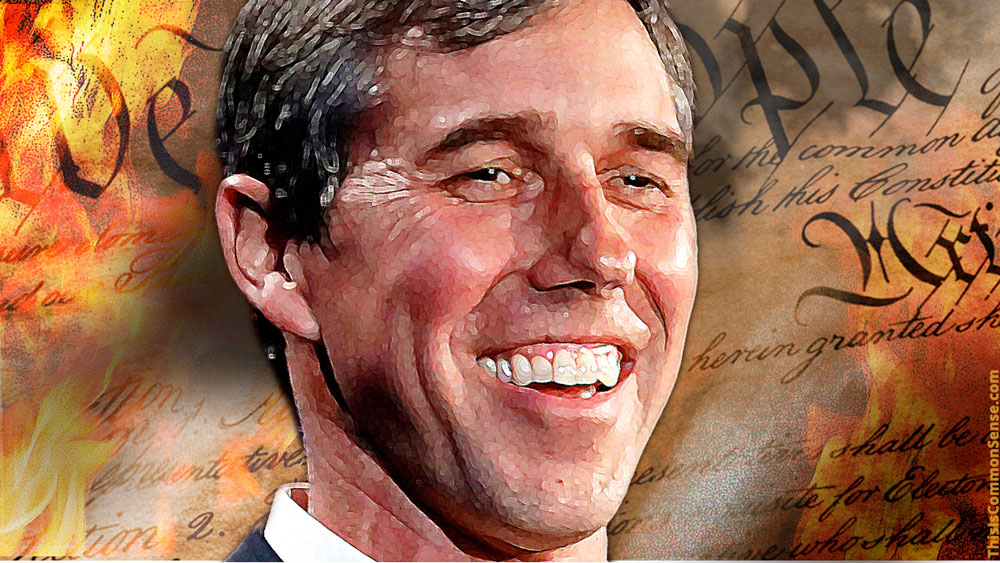
“Are you proposing taking away their guns?” 

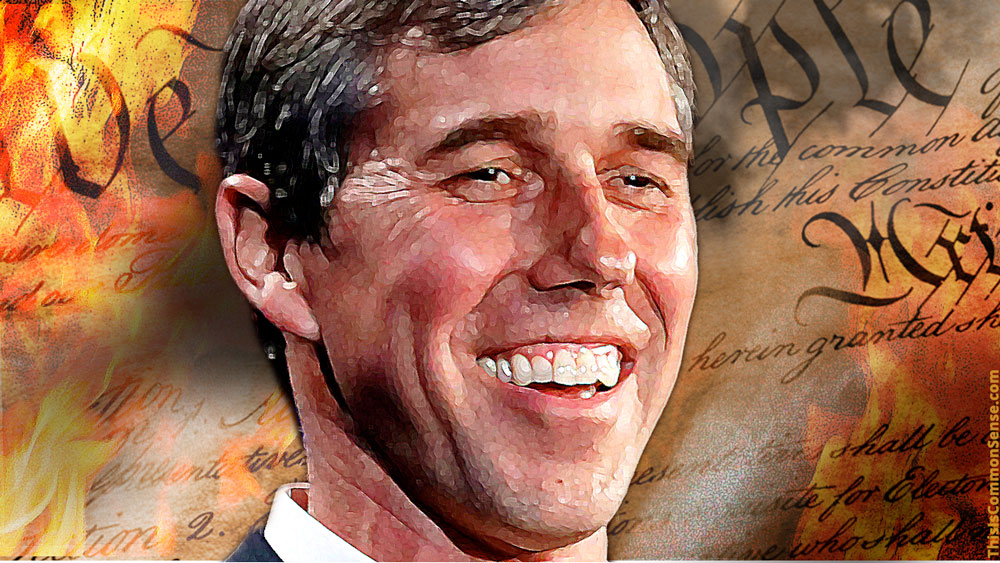
“I am,” replied former Texas Congressman Robert Francis “Beto” O’Rourke to ABC World News Tonight anchor David Muir’s question. If, anyway, “it’s a weapon that was designed to kill people on a battlefield.” 

“Hell, yes,” he added, later in last week’s Democratic presidential debate.

“We’re going to take your AR-15, your AK-47.”

Yesterday, I noted that U.S. Senator Kamala Harris seemed oblivious to any consideration of the constitutional rights of citizens to “bear arms.” Today, consider the constitutional work-around both Democrat presidential contenders support. You see, when they talk about confiscating your guns, they do not intend to go to all the hard work of changing the law of the land. They plan, instead, merely to change the High Court — something the president, with a majority of Congress, can do — and have the new justices re-visit the legal interpretation.

O’Rourke “spoke openly after launching his run,” informs Politico, “about expanding the high court to as many as 15 judges.” Fox News reported that he “is open to making drastic changes to fundamentally reshape the Supreme Court — essentially court-packing, with a twist.”

The “twist” is the scheme that I wrote about in March. In a bizarre nod to bipartisanship, O’Rourke would have Republicans select five justices, Democrats select five more, and then have those ten judges select yet another five. 

Only tradition and public opinion have kept the highest court in the land from previous hijackings.

Is Republican opposition all that stands in the way now?

Gives a whole new meaning to the question: Are you packing?

This is Common Sense. I’m Paul Jacob.


Beto

See all recent commentary
(simplified and organized)
See recent popular posts


Categories
Common Sense Popular

Chortling Evil

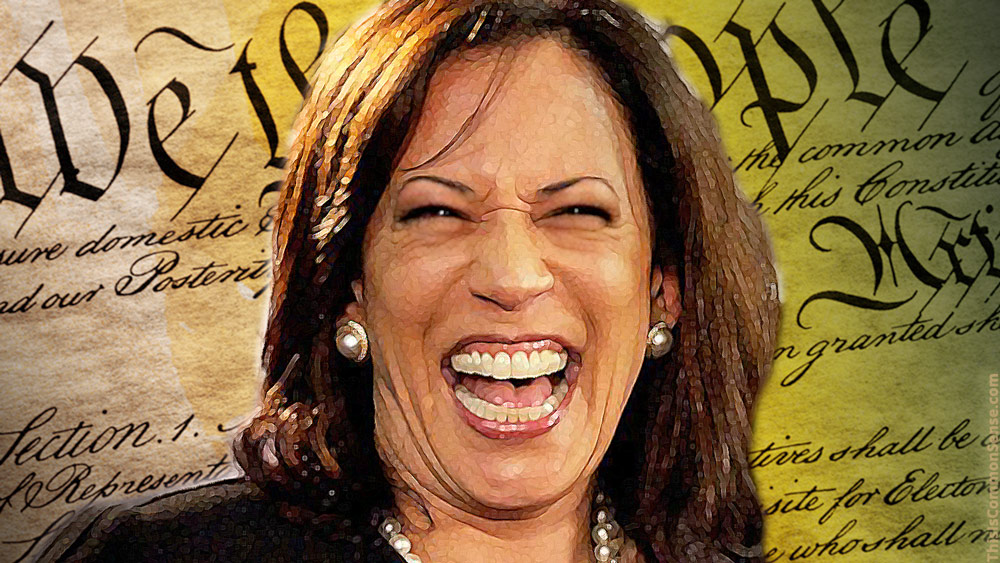
Kamala Harris laughed.

She stood naked on the edge of a . . .

Oops. Wrong story.

The right — or, very wrong — story is Senator Harris (D–Calif.) laughing, sure. But the only thing naked is her powerlust.

Why refer to the opening of the novel The Fountainhead? To call attention to the Chortling Politician.

Harris isn’t the only politician openly contemptuous of treating the Constitution as worth sober assent. House Speaker Nancy Pelosi, when asked about the constitutionality of Obamacare’s health insurance mandate, responded with “Are you serious? Are you serious?”

To some politicians — who I wish I could say did not include the current president — the Constitution is so passé, so insignificant, that bringing up the subject as a possible limit to what they seek to do is, well, chuckleworthy.

On her campaign website, Harris assures us that should Congress fail “to send comprehensive gun safety legislation” to her “desk within her first 100 days as president”  she would “take executive action to keep our kids and communities safe.”

Included in such a demanded “comprehensive” bill is “universal background checks, an assault weapons ban, and the repeal of the NRA’s corporate gun manufacturer and dealer immunity bill.”

Former Vice President Joe Biden, on last Thursday’s Democratic presidential candidates’ debate stage, challenged the notion of executive orders to ban assault weapons. At issue? Constitutionality. She smiled wide, all teeth and bright eyes, with “Hey, Joe, instead of saying, ‘No, we can’t,’ let’s say, ‘Yes, we can.’”

And she laughed and laughed.

Oh, the wit. 

She then explained how she “thinks about” the issue. The Constitution and the rule of law are not part of her thinking.

The empress is naked, yeesh.

This is Common Sense. I’m Paul Jacob.


See all recent commentary
(simplified and organized)
See recent popular posts

Categories
education and schooling national politics & policies Popular too much government

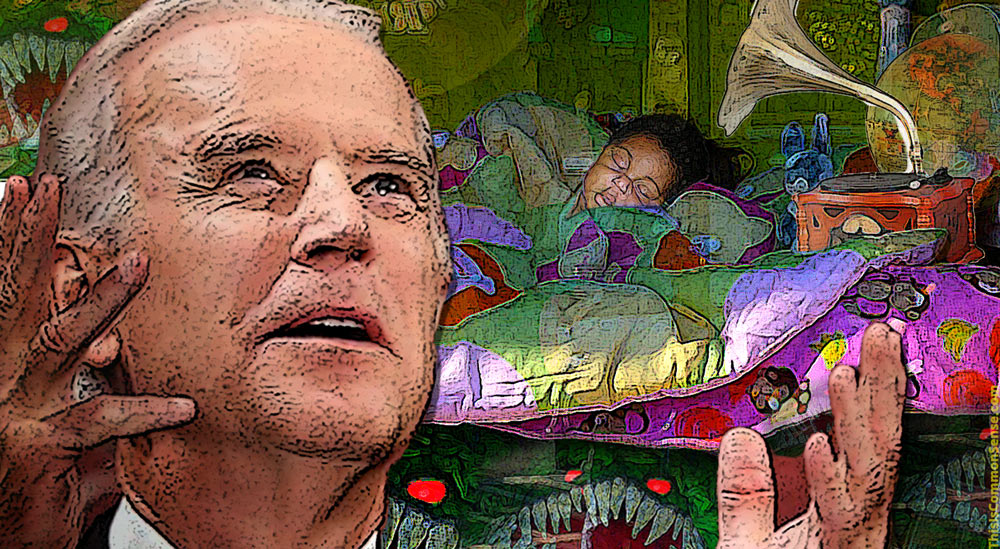
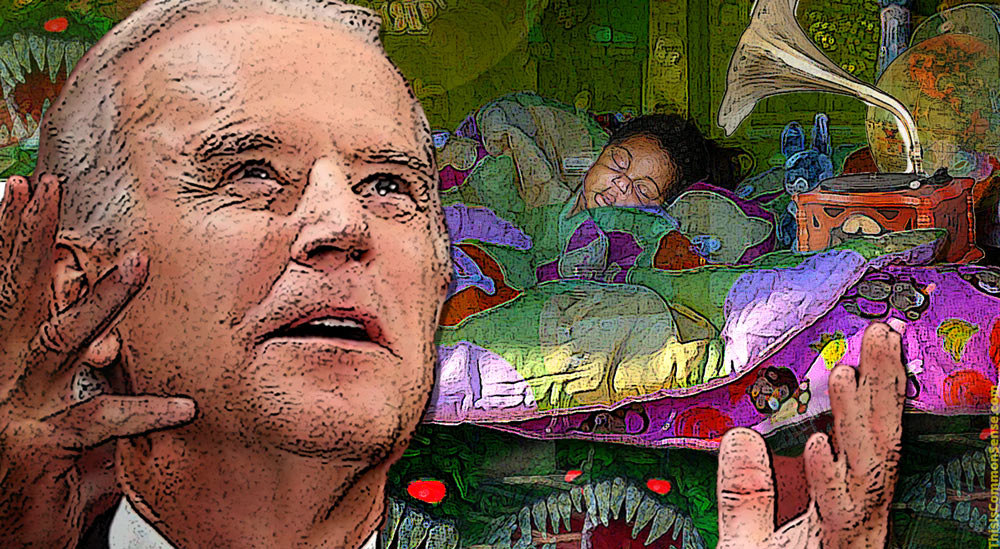
Biden Under the Bed

Former Vice-President Joe Biden was put on the spot, again, about race. During last Thursday’s presidential candidates’ debate, ABC newscaster Lindsey Davis asked what responsibility Americans should “take to repair the legacy of slavery in our country?”

Triple, Biden said, “the amount of money we spend. . . .”

On “very poor schools, the Title I schools.”

From $15 to $45 billion a year.

Dodging the reparations question, he offered a four-part plan for educating poor children that was very . . . educational

Biden’s second solution is “make sure that we . . . help the teachers deal with the problems that come from home.” 

Send in more psychologists!

Step three is to “make sure that . . . 3-, 4-, and 5-year-olds go to school. School. Not daycare. School.”

Sounds like forcing every parent to put their 3-year-old into school. Or just “poor” 3-year-olds? Neither sounds good.

If my elementary school math still holds, next comes policy objective No. 4. 

And it’s a doozy. 

“We bring social workers in to homes and parents to help them deal with how to raise their children,” Sleepy Joe declared. Because as he explained “they”— wealth-challenged parents — “don’t know quite what to do.”

But Biden does. “Play the radio, make sure the television — excuse me, make sure you have the record player on at night, make sure that kids hear words.” 

The former VEEP explained that children from “a very poor background will hear four million words fewer spoken by the time they get [to school].”

Language skills matter. But do we really want the next president to station a social worker under every kid’s bed to make sure the record player isn’t skipping?

This is Common Sense. I’m Paul Jacob.


PDF for printing

Joe Biden, bed, monsters, record player, black child,

Illustration adapted from an image by Rusty Clark

See all recent commentary
(simplified and organized)
See recent popular posts

Categories
general freedom ideological culture Popular

Slavery Is Not Free-Market Capitalism

Tarring free-market capitalism and limited government with the brush of slavery is old hat. What is new is that prominent journals and major media figures now shamelessly slop that brush around.

Indeed, the argument is so often made that addressing it from several angles, as I have — twice in the last few outings of Common Sense — is important. Today I make an additional point.

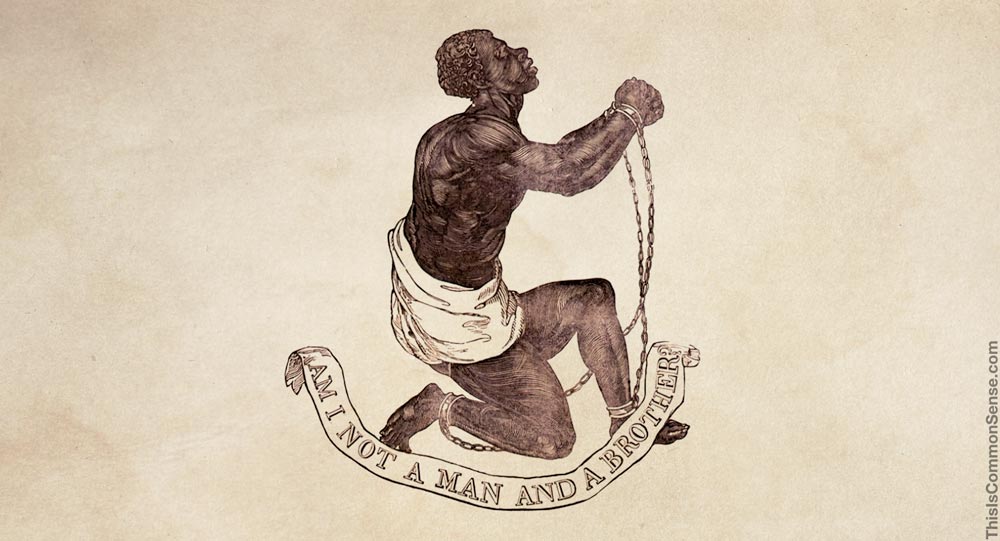
The fact that human beings were treated as property, to be sold and mortgaged and disposed of at will, does not make slavery “free market.” If we legalized and institutionalized the market in stolen goods, that might make those markets legally above board — but not morally

It is this moral argument against stolen goods that undergirds the case against slavery. 

Always has.

For slavery is stealing the rightful property of the people enslaved — their property in their own bodies. 

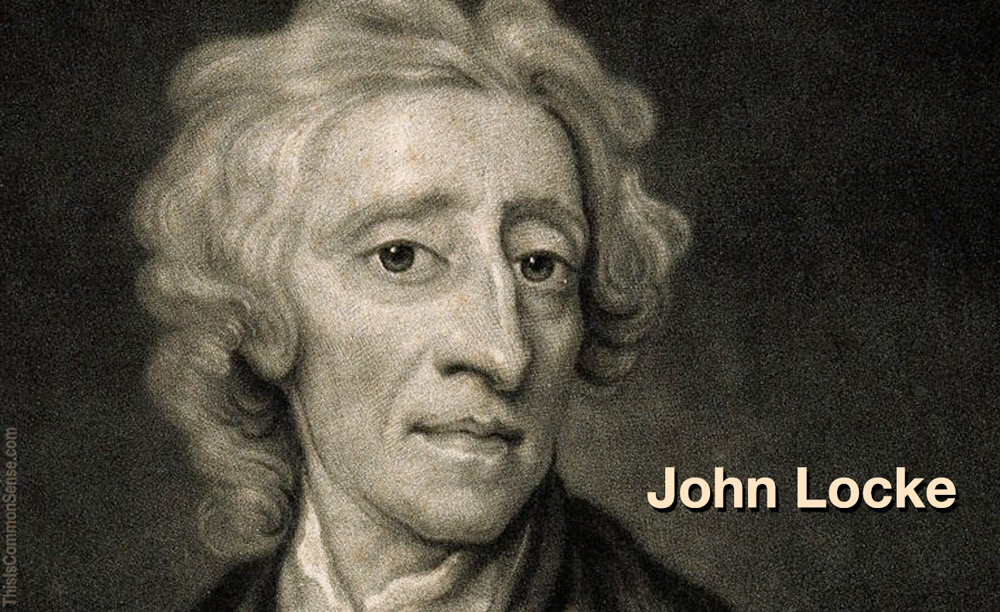
Richard Overton called this “self-propriety” in 1646, and at about the same time John Locke, following Hugo Grotius, wrote of every man having “a property in his own Person.” This is the old liberal way to think about personal freedom when you are dealing with property: self-ownership. 

“Free market capitalism” rests on it just as slavery abridges it.

Unfortunately, there has been a successful campaign to muddy up this logic and its history. Teacher Lawrence Ludlow recently informed readers of American Thinker about the results of this indoctrination: today’s students have “somehow ‘learned’” that “slavery was isolated to the United States instead of practiced worldwide for ages” and that “Westerners were the most enthusiastic practitioners of slavery instead of being among the first to abandon it.”

Freedom is not slavery and the truth shall set us free.

This is Common Sense. I’m Paul Jacob.


See all recent commentary
(simplified and organized)
See recent popular posts


Categories
ideological culture media and media people Popular

The Fifth Century Begins

When socialists and woke scolds talk about slavery, you can almost hear the chains and smell the leather of the slaver’s whip — and not always in a good way.

Project 1619 is the New York Times effort to acknowledge 400 years of Africans in America. Thankfully, the project’s page is more coherent and forthright than Matthew Desmond’s New York Times Magazine farrago of August 14, “In order to understand the brutality of American capitalism, you have to start on the plantation.”

Indeed, that piece (like others in the series) is such a tangle that there is no hope to unravel it in this limited space. Just note that Desmond does his darnedest to help the enemies of liberty tie slavery into the idea of free markets, private property, and free association.*

Project 1619, on the other hand, accepts the complexity of slavery in America without being idiotically tendentious. It recognizes that the captured Africans brought to Virginia shores in August 1619 were treated as indentured servants. Unfortunately, unlike the Englishmen arriving under indentured servitude, the first Africans in Virginia lacked explicit contracts. So negotiating their way out was . . . problematic. Still, one African, arriving two years later, was soon freed and became a landowner. And it was he who was awarded another African as a slave for life, in civil court in 1655, marking the real start of chattel slavery in America.

Which is to say, slavery in America was not exclusively a matter of race.**

Why is this important? Because slavery is wrong not because racism is wrong (as wrong as that is), but because people have a right to freedom.

Could it be that socialists emphasize racism regarding slavery because they fear that focusing on freedom might scuttle their socialism?

This is Common Sense. I’m Paul Jacob.


* See my discussion of slavery yesterday.

** This becomes clear once you read Mark Twain’s Pudd’nhead Wilson, or learn how Thomas Jefferson’s wife was related to Sally Hemings

PDF for printing

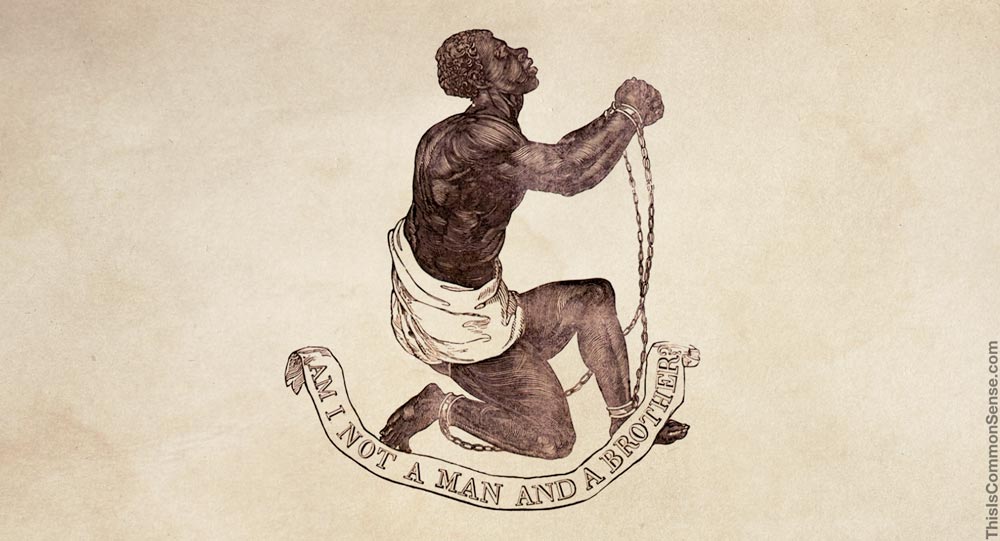
slavery, 1619, freedom, chains,

See all recent commentary
(simplified and organized)
See recent popular posts
Categories
ideological culture Popular too much government

Slaves All?

A bizarre argument is gaining popularity: the United States of America not merely allowed slavery in its first hundred years, it depended upon it, grew rich by it . . .  and, “therefore,” not only the federal government but also its constitutional principles and even capitalism are all tainted . . . and . . . “therefore” . . . we must have socialism!

Why long-dead chattel slavery requires political slavery now is hard to figure.

And no, you should not need to read George Fitzhugh’s Cannibals All! or Sociology for the South to see that socialism is slavery.*

But these days it is more common to link slavery with . . . freedom (this is hard even to type) in the form of free markets. 

Leftists who make this linkage are helped by some popular historians who argue that since the   antebellum South (1) grew faster, economically, than the North, (2) slavery was profitable for slaveholders, and (3) slaves became more productive in picking cotton, the “peculiar institution” was key to American success. Vincent Geloso, a visiting assistant professor of economics at Bates College, writing for the American Institute for Economic Research, ably shows that not one of these three theses hold up to scrutiny.

Most importantly, though, Geloso demonstrates that the slavery system was like all other interventionist systems, with some people (slavers) benefiting at the expense of others (slaves, of course, but also free people . . . through a variety of subsidies).

Geloso uses the term “deadweight loss” to make his case that slavery made America poorer.

He is certainly not wrong. But once you understand why freedom and prosperity are linked, not much economic jargon is necessary.

This is Common Sense. I’m Paul Jacob.


* This pro-slavery southerner did argue against the very idea of liberty and free labor on the grounds that freedom is bad and socialism is good. Indeed, “Fitzhugh disliked ‘political economy’ (as economics was then called), which he saw as ‘the science of free society,’” economist Pierre Lemeiux explains, “as opposed to socialism, which is ‘the science of slavery.’” That forthright appraisal is about all that’s good in Fitzhugh.

PDF for printing

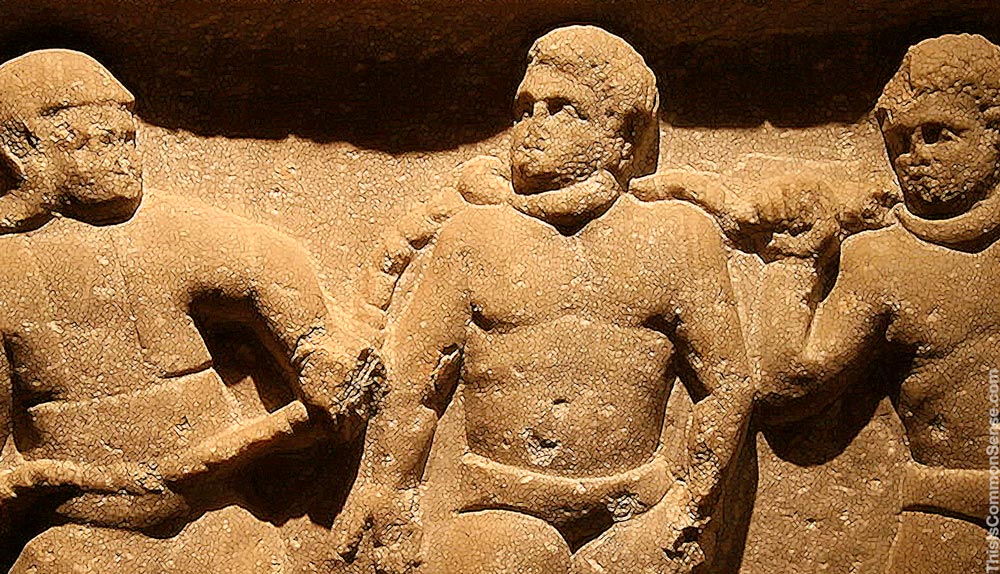
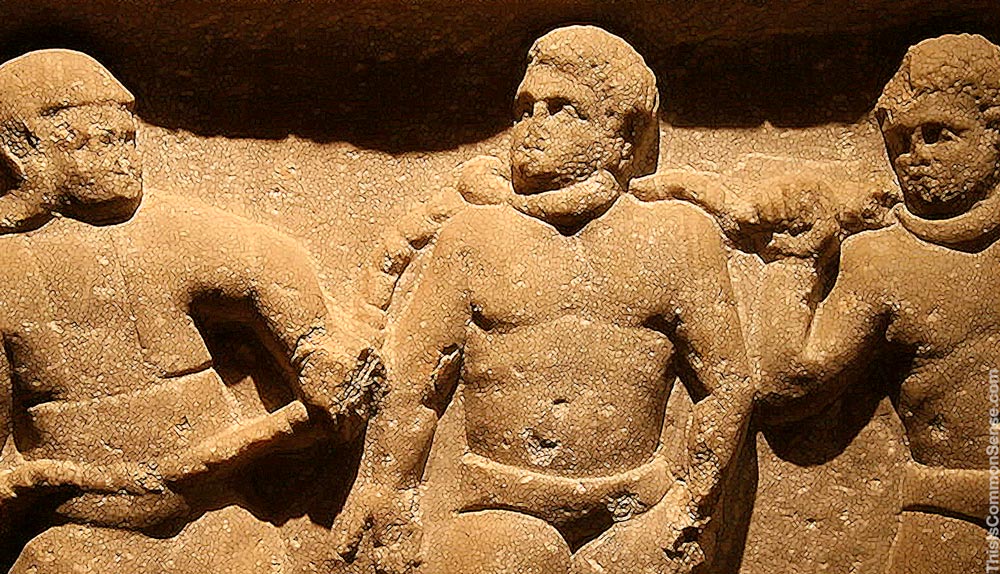
slave, ancient, Roman, Rome, chains,

Photo by Jun on flickr

See all recent commentary
(simplified and organized)
See recent popular posts

Categories
national politics & policies Popular responsibility U.S. Constitution

Congress’s King

Politics today reveals a troubling dialectic.

Thesis: President Trump boasts that he is going to unilaterally “do something” as if he were Emperor, not President. 

Antithesis: Then comes pushback from political opponents and the media, castigating our current commander-in-chief for imagining himself a lawless dictator. 

Synthesis: This is soon followed, however, by the discovery that the president does have such awesome power. 

Legally.

In our constitutional system, can a president can just wake up one day and slap tariffs on imports? Well, numbskulls in Congress passed a law handing the president that specific power.

When President Trump declared an emergency to re-direct money, appropriated by Congress for different purposes, toward building the Wall, many argued that the president cannot usurp Congress’s undisputed power of the purse. True, but irrelevant. Congress had indeed delegated all these undefined and largely unchecked “emergency” powers to the prez.

Last week, as the trade war with China was coming to a boil, Mr. Trump tweeted, “Our great American companies are hereby ordered to immediately start looking for an alternative to China, including bringing . . . your companies HOME and making your products in the USA.”*

I thought, “Does Trump really think he has the legal authority to order all U.S. businesses to leave China?”

Yes . . . and apparently he does. It’s called The International Emergency Economic Powers Act.

“One of the enduring phenomena of the Trump era,” University of Texas law professor Stephen Vladeck told CNN, “is going to be the list of statutes that give far too much power to the President, but that many didn’t used to worry about — assuming there’d be political safeguards.”

Or that “the right person” would always be in office.

This is Common Sense. I’m Paul Jacob.


* Note that Mr. Trump did not order the companies to leave, but did assert his “absolute right” to do so.

PDF for printing

King of Diamonds, King Donald, Donald Trump, trade, tariff, power,

See all recent commentary
(simplified and organized)
See recent popular posts

Categories
general freedom international affairs Popular

Protests and Propaganda

Poised to gobble up Hong Kong whole, completing the process Britain began when it ceded the colony back to China in 1997, the government of China remains concerned about world opinion, for it engages in massive propaganda.

“When a projectile struck a Hong Kong woman in the eye this week as protesters clashed with the police, China responded quickly,” explains an article in the New York Times. “Its state television network reported that the woman had been injured not by one of the police’s bean bag rounds, but by a protester.”

But that’s not the only kind of propaganda. If you have spent any time on Instagram, for example, you have probably seen the posts of Chinese people decrying the scandal and shame of how Hong Kongers resist government efforts at hegemony.

There is a name for this latter form of propagandist, “the fifty cent party” because the Communist Party is said to pay social media users for each pro-government post . . . though almost certainly not 50¢.*

The basic idea, according to General Secretary Xi Jinping, is to “to strengthen media coverage … use innovative outreach methods … tell a good Chinese story, and promote China’s views internationally.”

And managing its own population, as when, according to the Times, state media “posted what it said was a photo of the woman counting out cash on a Hong Kong sidewalk — insinuating, as Chinese reports have claimed before, that the protesters are merely paid provocateurs.”

These young street protestors are almost certainly not mercenaries, though they have sometimes faced what appear to be hired thugs. 

The protests are a kind of insurrection. Strong resistance, at least, to being totalitarianized.

This is Common Sense. I’m Paul Jacob.


PDF for printing

Hong Kong, police, riots, protests, violence,

See all recent commentary
(simplified and organized)
See recent popular posts