Categories
general freedom national politics & policies

Lockdown Mania, Winter Phase

New Mexico, along with many other states, is going into lockdown. 

“The rate of spread and the emergency within our state hospitals are clear indicators that we cannot sustain the current situation without significant interventions to modify individual behavior,” Gov. Michelle Lujan Grisham is quoted in her office’s press release. 

“The public health data make clear,” the governor asserts, that “more aggressive restrictions are not only warranted but essential if we are to prevent mass casualties. Without the compliance and cooperation of New Mexicans statewide, we do not need to imagine the bleak public health calamity we will face — the images from El Paso the last few weeks, from New York City earlier this year, and from Europe at the outset of the pandemic will be our fate in New Mexico.”

The report from The Hill did not interrogate the claims, just repeated the planned massive intervention and accepted the statements as fact.

Contrary to all this assertion, the evidence that lockdowns help remains worse than murky. European states that locked down tightly early in the year are experiencing this second or third “wave” worse than those that did not go full-on “mitigation.” The classic case is Sweden, which infamously resisted lockdown mania. Using the best test of success, “excess mortality,” Sweden is doing remarkably well. 

Sweden’s a problem for lockdowners, who avoid fair comparisons and . . . are devoted to spin. On the same day, Business Insider and Reuters covered the same story, with these headlines:

Sweden has admitted its coronavirus immunity predictions were wrong as cases soar across the country.

Second wave, same strategy: Swedish COVID-19 czar defiant despite surge.

Meanwhile, a controlled study of lockdown mitigations using obedient Marines found: quarantines don’t control the spread of the disease.

Nevertheless, politicians seem hellbent on lockdowns, something they know how to do . . . whether it helps or not.

This is Common Sense. I’m Paul Jacob.


PDF for printing

See all recent commentary
(simplified and organized)
See recent popular posts

Categories
national politics & policies paternalism

Georgia on My Mind

Georgia, oh Georgia
No, no, no, no, no peace I find . . .

So opens James Brown’s famous song — also an iconic hit for Ray Charles.*

As the rest of the country quiets down, post-election, that crooned-about lack of peace continues to echo in the Peach State as if in a deep, vast cavern. Two U.S. Senate seats now go to a January 5th runoff election, which will decide partisan control of Congress’s upper chamber.

Democrats control the House and — barring some Hail Mary effort likely to require Mary’s own participation — they will take the White House as well. In the Senate, Republicans currently hold a 50-48 lead, but if Democrats win both of these razor-close races in a state won narrowly by Democrat Biden, the Senate majority, too, will be theirs . . . by virtue of Vice-President Kamala Harris’s tie-breaking vote.

Whether held by Republicans or Democrats, unitary one-party control of the federal leviathan could prove extraordinarily consequential . . . in a frightening sort of way.

“[T]he federal government works better when divided, not unified,” argues the Cato Institute’s Steve H. Hanke, citing divided government as less likely to go to war, more likely to pass sustainable reforms and noting that “federal spending tends to be lower with divided governments.”**

Other reasons include existential threats to our little experiment with citizen-controlled government. 

Having threatened to completely abolish the Senate filibuster rule, Democrats with a slim majority could then pack the Supreme Court — adding new justices to gain a majority, using one election to nullify elections going back decades. And forever partisanizing and politicizing our independent judiciary. 

Just an old sweet song — and the future of America — Keeps Georgia on my mind.

This is Common Sense. I’m Paul Jacob.


*  We made a terrible mistake. Hoagy Carmichael is the author of “Georgia on My Mind,” not James Brown. Here is a version of the song performed by Carmichael. PJ

** For these reasons, to keep divided government, third-place finishing Libertarian candidate Shane Hazel should endorse Republican David Perdue against Democrat Jon Osskoff. Hazel garnered 2.3 percent of the vote, while Perdue fell only 0.3% short of winning a majority and precluding the runoff.

PDF for printing

See all recent commentary
(simplified and organized)
See recent popular posts

Categories
initiative, referendum, and recall national politics & policies term limits

The Next Election

“If Tuesday’s vote sparks unrest,” a weekend Washington Post feature informed, “customers at Fortitude Ranch will be secure behind walls patrolled by armed guards.”

The Post highlighted a pricey survivalist “get away” in West Virginia and hyped for the rest of us “that violence could erupt, especially if the vote count drags on for days without a clear winner.”

Just as an aside, doesn’t it seem like we are getting less information about what happened yesterday and a lot more “news” about what is going to happen tomorrow? 

Anyway, I think we can trust each other. We’ve got to. Not on TV, but in real life. 

Part of that trust is believing that one election loss won’t alter all previous societal norms [cough: court-packing]. Yes, elections have consequences, but in a free country, losing an election should not be a scary event. Look at me, I have only voted for one winning candidate in my entire life!!!*

Whatever happens tomorrow . . . or days or weeks later . . . don’t worry. You have rights and there shall be another election before too long. Right? 

Rights?

“Eternal vigilance” being the rule about defending basic things like rights, the next election will always be the most important.

Ballot measures in Arkansas, Florida and North Dakota are about the next election. 

Sadly, dangerously, they seek to make it much harder and more expensive for citizens to petition issues onto the state ballot and gain an up or down decision from the voters. That’s why Citizens in Charge is fighting to defeat all three.

Proponents shriek that wealthy out-of-state interests must be stopped from changing the state constitution, but not a single word in any of the three amendments even touches on out-of-state funding. Instead, each makes the process more cumbersome and expensive, undercutting grassroots groups while having little effect on moneyed interests.

In North Dakota, voters passed a reform measure in 2018 creating a state ethics commission. The ballot issue was funded by an out-of-state group, and thoroughly despised by state legislators . . . who referred Measure 2 to the ballot.

Measure 2 allows the legislature to veto a vote of the people for a constitutional amendment and require the vote to be held a second time. Beyond the ugly optics of politicians vetoing the people, it will make passing an initiative amendment much more costly — again empowering wealthier interests at the expense of the less well-heeled.

In Florida, a constitutional amendment already requires a 60-percent supermajority vote. Amendment 4 would require the measure win a second time by that supermajority. In the nation’s third largest state, the expense of a second campaign weighs in favor of long-term established political interests and against grassroots reform.

In Arkansas, Issue 2 seeks to further weaken the already weakened term limits and Issue 3 endeavors to wreck the petition process to block a future term limits initiative. Previously, I’ve explained the duo of amendments as the “Lifetime Politicians Ruin Christmas Amendments.” Today, a “Trojan” Horse travels Arkansas telling the tale

Which is critical because Arkansas legislators refused to clue-in voters. The ballot titles that legislators placed on both measures tell voters precisely zero about the actual constitutional changes being voted upon. 

That our own representatives are attempting to knock out an important democratic check on themselves is not “the small stuff.”

We had better sweat it. 

And you can help Citizens in Charge fight back. It’s too late to do more toward tomorrow’s votes in Arkansas, Florida and North Dakota. With earned (free) media work and a shoestring budget of Facebook ads, we got our message out in all three states and have a shot to defeat each one.

Help us fight the new bills we know are coming as legislative sessions begin in January. Support our work with activists in Arkansas and North Dakota fighting Issue 3 and Measure 2, respectively, as they go on offense to demand change — perhaps by initiative.

Good luck to America tomorrow, but the campaign to prevent critical grassroots democratic checks from being hobbled and chopped and blocked continues. Because there is another election in 2022.

This is Common Sense. I’m Paul Jacob.


* And I still regret it. Who was it? Well, ours are secret ballots, but I will fully disclose the sordid details in the first three minutes of my podcast this weekend.

PDF for printing

See all recent commentary
(simplified and organized)
See recent popular posts
Categories
international affairs national politics & policies

In Deep with Biden

On Election Day, “the Empire hopes to strike back,” writes Daniel McCarthy for The Spectator. “Joe Biden personifies the foreign policy of endless war that Democrats and neoconservatives pursued for 25 years, from the end of the Cold War until the election of Donald Trump in 2016.”

McCarthy argues that “Biden’s overall record is one of foreign policy interventionism,” but Biden’s Senate voting record is iffy-fifty: Biden “voted for the Iraq War, but he also voted against the 2007 surge.” He voted for the 1999 Serbian war, which destabilized relations with Russia, allowing the rise of Putin. But Biden voted against 1991’s Persian Gulf adventure which set the stage for post-Cold War American megalomania.

Nevertheless, McCarthy argues that “Joe Biden is an archetypal liberal interventionist of the post-Cold War variety. He understands war in the same terms as domestic policy: as an occasion to expand the power wielded by experts in Washington, whose moral and rational qualifications are beyond question — no matter how disastrous the consequences of their policies.”

Such a plausible case. War is certainly government “activism.”

McCarthy has spotted a real problem in “progressive liberalism,” and understands the “peer pressure” that so oppressively rules in the corridors of power. But he misses — perhaps merely for reasons of space — the sheer institutional power of the Deep State. It holds the secrets, it controls vast amounts of money, its immensity overpowers rational thought.

It is the government we cannot get to; it is the government that tried to “get” Trump.

Perhaps our “right to petition the government” can skip Congress and go right to the source, the Deep State.

Which really wants Biden to win.

This is Common Sense. I’m Paul Jacob.


PDF for printing

See all recent commentary
(simplified and organized)
See recent popular posts

Categories
judiciary national politics & policies

Ghost of an Argument

On the 73rd anniversary of the birth of Hillary Clinton, the United States Senate confirmed Amy Coney Barrett to the Supreme Court.

Mrs. Clinton, the former Democratic presidential candidate, looms in the background of the issue as a sort of éminence grise, a specter of the politics of the left. Had she won in 2016, late luminary RBG would have been replaced by a progressive woman. Not ACB.

For what would have been Hillary’s, count ’em, third nomination.

Not a specter, or grisey eminence, is Senator Kamala Harris (D-Calif.), Joe Biden’s partner in procuring 2020’s big prize. 

“I’m on my way to the Senate floor to vote no on Judge Amy Coney Barrett’s nomination to the Supreme Court,” Harris tweeted, yesterday. “Health coverage for millions of people hinges on who fills this seat. It’s clear that this nominee has the potential to do great harm to the American people.”

Note that this complaint has nothing to do with actual judicial qualifications. It has to do with a policy that Democrats insist upon: socialized medical billing. But as ACB made clear in the hearings, her judicial mindset is about legal process, as it should be, not government policy.

An hour later, candidate Harris asserted that Senate Republicans had “denied the will of the American people by confirming a Supreme Court justice through an illegitimate process.”

Illegitimate?

Well, you see, “more than 62 million people have already voted.” That is it. Harris pretends that since there is an election next week, and some people have already voted, the normal, constitutional business of Congress should not go on.

Anything to rescue their broken policy, Obamacare. 

Next week’s election sure will have consequences, but ACB’s stint on the Court resulted from Hillary’s quite legitimate loss.

This is Common Sense. I’m Paul Jacob. 


PDF for printing

See all recent commentary
(simplified and organized)
See recent popular posts

Categories
national politics & policies political challengers

Right at the Top of the Stairs

“I’m appalled by the choice that we have been delivered,” political humorist P.J. O’Rourke told Reason TV last week, referring to the two major-party presidential nominees.

“Biden’s campaign platform is 564 pages long. It promises everything to everybody,” bemoans the 72-year-old author of a new book of essays, A Cry from the Far Middle: Dispatches from a Divided Land. “It’s full of unicorns and flying ponies and candy-flavored rainbows and pixie dust.”

As for President Trump, “I think we’re done with this experiment of having the inmates run the asylum,” O’Rourke jabs, calling Trump a “dangerous and unpredictable man” and “rude.” 

“It isn’t so much exactly what Trump has done,” admits the comedic writer, who while panning Trump’s immigration policies, lauded his lowering of corporate tax rates and his raising of “awareness that China is not our friend.”

Instead, O’Rourke argues “it’s a matter of what [Trump] can do” in a second term, calling him “a toddler at the top of the stairs.”

Speaking of . . . P.J. turned back to the Democratic ticket: “They seem to be wrong, all wrong, quite wrong, about everything.” 

He’s not wrong.

“But” of Biden and Harris, O’Rourke contends they are “wrong between normal parameters of wrong.” Adding that, “There’s wrong and there’s damn wrong.” Meaning Trump is “damn wrong.” 

But not wrong on taxes, right P.J.? Or China. Or picking Supreme Court justices — Trump has the best batting average for nominating to the High Court of any president in the last five decades. 

And Mr. Trump is the first president in two decades not to drag the U.S. into a regime change war.

“Wrong on everything” or “a toddler at the top of the stairs”?

This P.J. thinks the better choice is Common Sense. 


PDF for printing

See all recent commentary
(simplified and organized)
See recent popular posts
Categories
general freedom national politics & policies

For WHO the Toll

When the World Health Organization did an about-face, last week, advising against the lockdowns that have constituted the most-touted and most common extreme pandemic response around the world, many wondered: what could the WHO be up to?

David Nabarro, the organization’s special envoy for Covid-19, explains that lockdowns are useful only to buy time “to reorganize, regroup, rebalance” health care resources, and that we are obviously not in such emergency conditions now.

J.D. Tuccille, writing at Reason, provided us with the most astute news angle from the WHO’s apparent turnabout: “At long last, months into the pandemic, the debates over the proper response to COVID-19 have begun.”

We can hope so, anyway. Enough with bullying by government edict or inane “follow the science” rhetoric!

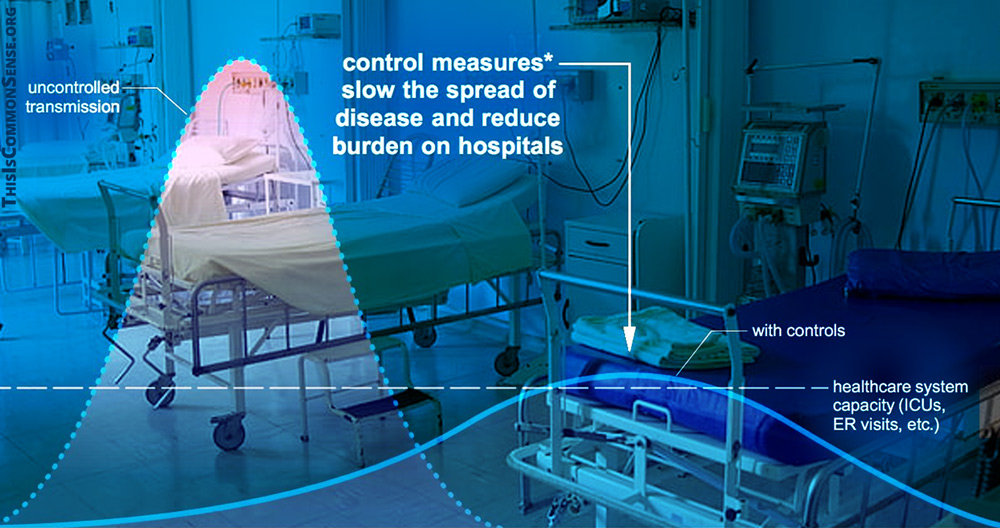
But what the WHO’s new clue should highlight is how we got here. The lockdowns were first offered as a way to do precisely what Mr. Nabarro said, buy time to reorganize medical resources so as not to induce chaos — you know, “flatten the curve.”

It did not take long, however, before a very different rationale for harsh “mitigation efforts” became the rule: buy time for a vaccine.

This plan was strenuously argued against by a trio of doctors in their eyebrow-raising “Great Barrington Declaration.” Continuing the lockdowns until a vaccine emerges “will cause irreparable damage, with the underprivileged disproportionately harmed.”

The lockdown obsession may misdirect our attention from actual treatments for the disease — which President Trump has touted from the beginning. Indeed, Trump’s quick exit from his own bout with the malady may serve as an effective reminder that our options are not limited to (a) quivering in sequestration till vaccinations roll out or (b) mass death.

There is hope.

This is Common Sense. I’m Paul Jacob.


PDF for printing

See all recent commentary
(simplified and organized)
See recent popular posts

Categories
general freedom national politics & policies

Sue the Governors!

Expect a tsunami of lawsuits against state and local governments. The lockdowns, mask mandates, and other putative ‘mitigation efforts’ to combat the spread of SARS-CoV-2 and COVID-19 demand a deluge.

The latest is Burfitt v. Newsom, filed in Kern County’s Superior Court of the State of California.

“The legal complaint,” explains Matthew Vadum in The Epoch Times, “seeks declaratory and injunctive relief for the constitutional violations it alleges have been committed by [Governor Gavin] Newsom and his officials, stating that the ‘lockdown was originally supposed to be only a temporary emergency measure. However, nearly seven months later it appears that, absent judicial intervention, there will never be a “reopening” to normal, pre-COVID activity, despite incontestable facts — including California’s own data . . . showing that the lockdown is no longer warranted and is causing far more harm than good.’”

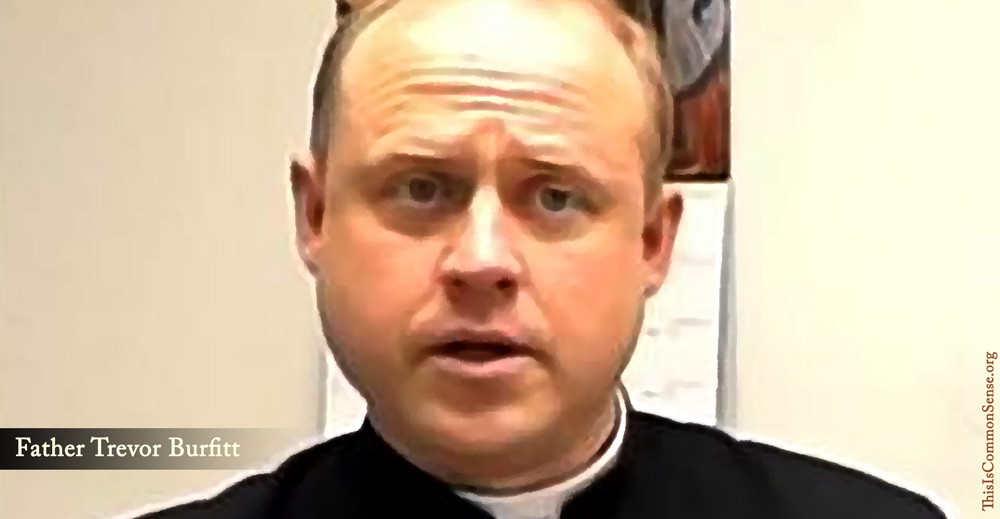
The plaintiff is Father Trevor Burfitt, who simply seeks to carry on the established rites of the Roman Catholic Church. 

Though churchgoers and other observant religious people are increasingly defiant, politicians are generally following New York Governor Andrew Cuomo’s lead. Cuomo says* his edicts apply regardless of religious affiliation: “the community must agree to the rules. If you do not agree to enforce the rules, then we will close the institutions down.”

But Cuomo’s “must” is actually iffy:

  1. The states of emergency do not pass the smell test, as the medical infrastructure the lockdowns initially were touted to defend are actually under scant stress.
  2. The basic right at issue here is beyond ecumenical, it is the freedom to peaceably assemble, which too many governors have attacked, though
  3. they have indeed been hardest on religious gatherings, despite being lenient with big box retailers, liquor stores and marijuana dispensaries and completely tolerant of ‘mostly peaceful protests.’

The biggest If, though, is what would happen were the litigation to fail. 

Citizen political action must join the litigation wave.

This is Common Sense. I’m Paul Jacob.


* Mark Tapscott quotes Cuomo’s bracing statement in The Epoch Times, “Silicon Valley Pastor Fights $220,000 in Fines by California Officials for Holding Church Services.”

PDF for printing

See all recent commentary
(simplified and organized)
See recent popular posts

Categories
judiciary national politics & policies

Biden’s Court-Packing Scheme

Hold on! What scheme am I talking about?

Joe Biden hasn’t said that he agrees with other Democrats (including former Democratic presidential candidates) who propose that the U.S. Congress act to dramatically expand the number of U.S. Supreme Court justices.

Joe Biden hasn’t said that at all. 

In his first and so-far-only debate with President Trump he refused to say, because if he did then that would become the issue.

“The issue is the American people should speak,” he said, and then turned to the camera. “You should go out and vote. . . . Vote and let your senators know how strongly you feel. Vote now. Make sure you in fact let people know.”

Know what, precisely? To vote to allow a Democratic administration to seize control of the Court, overcoming any constitutional objections to his (or her) socialist schemes?

But then Biden turned against the voters, when asked on Friday, whether voters deserve to know where he stands on court-packing: “No, they don’t deserve” to know. “I’m not going to play his [Trump’s] game. . . .”

So, officially, we “don’t know” whether Biden supports packing the High Court the way FDR tried in 1937.

Do voters deserve better from Biden? 

They do not! 

O, those voters — always demanding to know positions and agendas and things. Playing right into the hands of the opposition. 

Come on, man! Ya gotta vote for the guy to know what’s in him.

I know what’s on your mind. You’re asking, “Are you saying that Joe Biden’s coy covertness toward the imposition of one-party authoritarian government exemplifies a crude disdain for voters’ legitimate desire to know what their vote will get them and is even more disqualifying than his stealth court-packing scheme?”

Please. Don’t put words in my mouth.

This is Common Sense. I’m Paul Jacob.


PDF for printing

See all recent commentary
(simplified and organized)
See recent popular posts
Categories
media and media people national politics & policies

Train or Dumpster?

If you sent Trump into a meeting with Xi Jinping, you’d worry that Trump might say something that maybe he shouldn’t. But you wouldn’t have to worry that China’s warlord would go “Wo-ho-ho! Would you sign this? And drink this?!?!” 

With Biden, well, you would worry, no?

That’s my prime takeaway of Tuesday’s terrible debate, which is near-universally described as a “train wreck” or “dumpster fire.” 

My “meta” take is that the debate format itself was doomed to derail or blow up in flames (depending on metaphor).

It started out with a reasonable “two minutes for you; two minutes for you” method, and then lurched into a free-for-all, with far too many interruptions and back-and-forth. 

You can tell when a moderator lacks control: he talks all the time. 

Chris Wallace talked too much. 

Did you notice that both debaters attempted to answer questions before they had been fully formulated? Once, twice, thrice . . . at first you wonder, “Hey guys, can you calm down a bit?” 

Of course,

  • it is hard to calm down in those situations, and
  • at a certain point you realize the problem lies with the person asking the questions.

Why, pray tell, is there a 62-part interrogative barrage?

To allow the questioner to sneak in something tangential but of a “gotcha” nature, of course — an element of some media-spun controversy. 

Must we select the moderator by sortition?

More structure seems a good idea. And gain the ability to turn off microphones.

Or do the opposite: Put both men in a studio all alone* with live mics and let’s see if they could negotiate the 90 minutes like adults. They might learn something.

And so might we.

This is Common Sense. I’m Paul Jacob.


* Maybe a couple security guards, too, just in case.

PDF for printing

See all recent commentary
(simplified and organized)
See recent popular posts