Categories
crime and punishment First Amendment rights national politics & policies

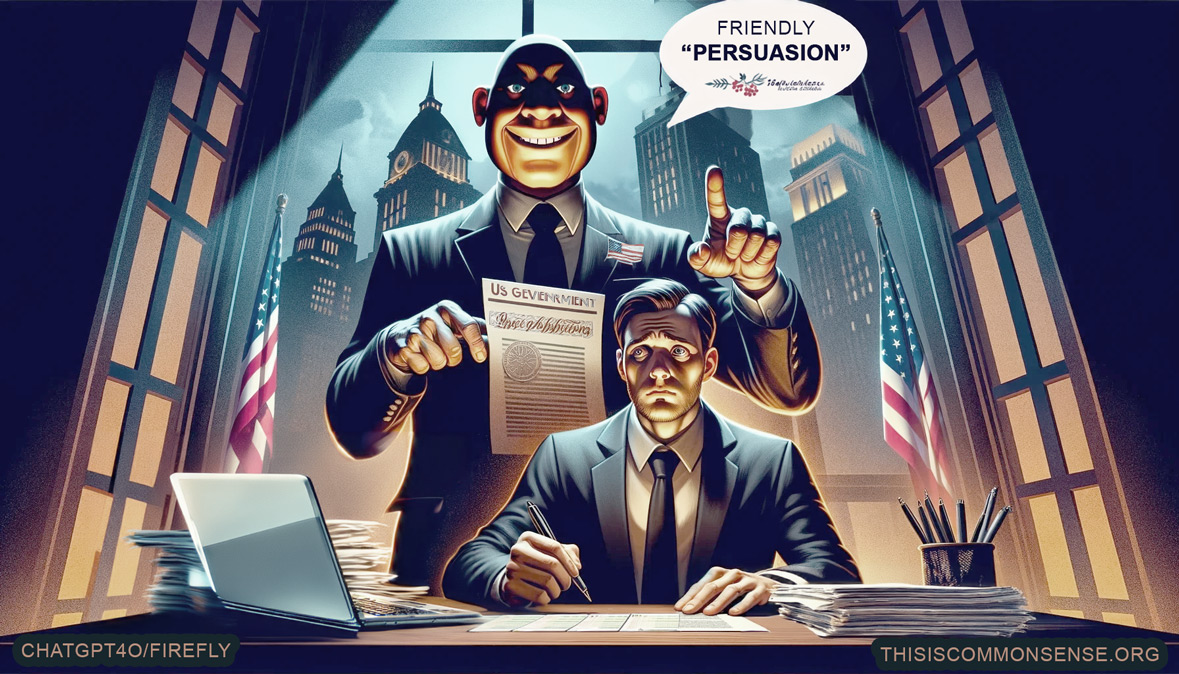
Bills of Suppression

In 2021, Democrats took aim at persons who donate to Democrats’ opponents with legislation called the For the People Act, which Republicans successfully blocked.

Back then, Bradley Smith, chairman of Institute for Free Speech, observed that the legislation aimed to violate the rights of groups “who do nothing more than speak about policy issues before Congress.” It would also have limited political speech on the web.

Now the bill is being resurrected as two separate pieces of legislation, each with language purporting to counter the purported threat of artificial intelligence. They are the Protect Elections from Deceptive AI Act and the AI Transparency in Elections Act.

Some Republicans seem to be buying into the resuscitated anti-speech agenda, even though the legislation incorporates many proposals — even much of the same language — from the earlier bill. Again, says Smith, the goal is to expose conservative donors to “to harassment and boycotts.” Also to outlaw content called “materially deceptive content” as judged by a “reasonable person.” 

Of course, “reasonable persons” can and do disagree about the meaning of various speech and whether it’s “deceptive.” It’s reasonable to assume that the legislation, if enacted, will be used against speech that enforcers happen to disagree with.

As for actually deceptive speech: all manner of jabberwocky is protected by the First Amendment unless uttered to rob or defraud someone. If I tell you the moon is green cheese and you believe it, that may be sad. But I haven’t picked your pocket . . . or made you eat lunar cheese.

This is Common Sense. I’m Paul Jacob.


PDF for printing

Illustration created with PicFinder and Firefly

See all recent commentary
(simplified and organized)
See recent popular posts
Categories
free trade & free markets general freedom national politics & policies

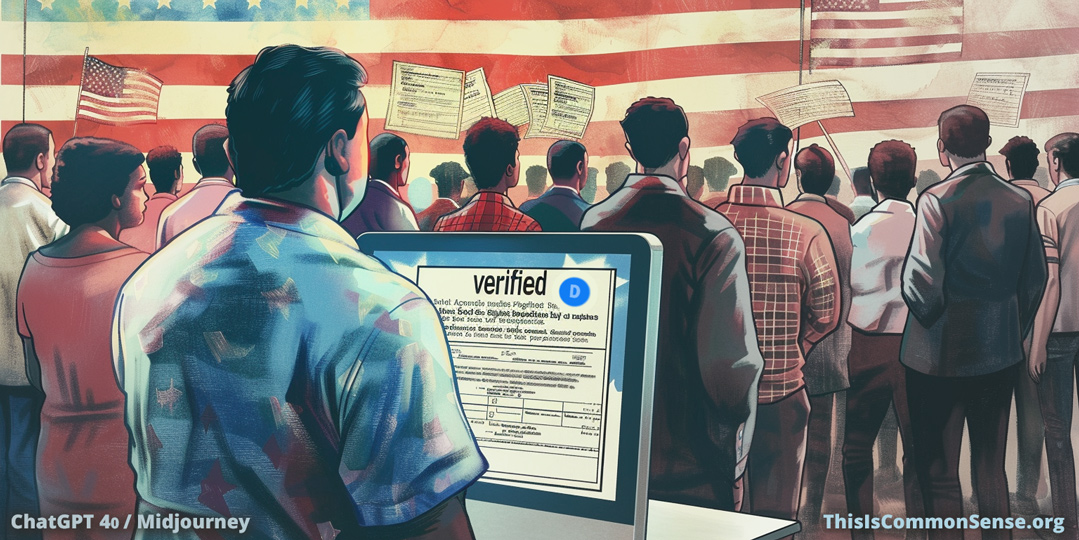
Junk Force

A Space.com news story indicates a big problem and a new role for government — or industry.

“The Infra-Red Calibration Balloon (S73-7) satellite started its journey into the great unknown after launching on April 10, 1974 through the United States Air Force’s Space Test Program,” writes Meredith Garofalo. “While in orbit, the original plan was for S73-7 to inflate and take on the role as a calibration target for remote sensing equipment. After this failed to be achieved during deployment, the satellite faded away into the abyss and joined the graveyard of unwanted space junk until it was rediscovered in April.”

It’s a complicated story; the satellite never really worked properly. Which raises the space junk problem.

The biggest polluter is governments. Space agencies. And the corporations contracting to put up satellites. And the military that puts stuff up we know nothing about.

“[A]s more and more satellites head into space,” explains Garofalo, “the task will become even greater to know what exactly is out there and what threats that could pose.”

When Trump boasted of creating the Space Force in 2019, a lot of people scoffed. I didn’t.*Somebody’s got to do the dirty work, and it does look like Space Force personnel see an important role to be filled, that of garbage men in orbital space. Since the more than 20,000 objects in orbit — and their associated random debris — were put there by governments, maybe governments should clean it up. 

The future of space industry could be hampered, should the problem continue to grow — though, in the end, it may be industry that will take over the task. After all, space litter’s more dangerous than most terrestrial “externalities.”

This is Common Sense. I’m Paul Jacob.


* Also, in no small part, because ceding outer space to China and Russia seems like a bad idea. 

PDF for printing

Illustration created with PicFinder and Firefly

See all recent commentary
(simplified and organized)
See recent popular posts

Categories
national politics & policies Tenth Amendment federalism

The Great Weed Fake-Out

When, in the last State of the Union political rally, Stumbler-in-Chief Joe proclaimed that his administration had been “expunging thousands of convictions for the mere possession” of cannabis, did you believe him? Previously, when Second Banana Kamala set the theme, claiming to have “changed federal marijuana policy, because nobody should have to go to jail just for smoking weed,” how confident were you of her boast?

“Neither claim was accurate,” explains Jacob Sullum, in the June issue of Reason. They are exaggerations at best. For their voting bloc.

Remember Biden’s 2020 campaign promise to “decriminalize the use of cannabis” and “expunge all prior cannabis use convictions”?

They were undelivered because these moves would require new legislation.

Biden’s not a dictator. As much as he tries.

He still needs Congress.

When he announced, last October, to much ballyhoo, a mass pardon for simple marijuana possession convictions, directing a review of the drug’s classification under the Controlled Substances Act, neither move “actually ‘changed federal marijuana policy,’” Sullum insists. Not one prisoner was freed, and — more startling yet — no record was expunged . . . for while the president can pardon, he cannot legally expunge records. 

The question to ask ourselves is this: does Biden or anyone now in power really want to do anything more than yammer about drugs? 

After all, any substantive reform would require, as Sullum points out, addressing the tension in the union: a federal government claiming powers to regulate and prohibit (not found in the Constitution), and 38 states that have effectively nullified federal law.

Confronting that might lead to ceding a whole lot of power back to the states . . . on more matters than just weed.

This is Common Sense. I’m Paul Jacob. 


PDF for printing

Illustration created with PicFinder and Fireflly

See all recent commentary
(simplified and organized)
See recent popular posts
Categories
national politics & policies partisanship

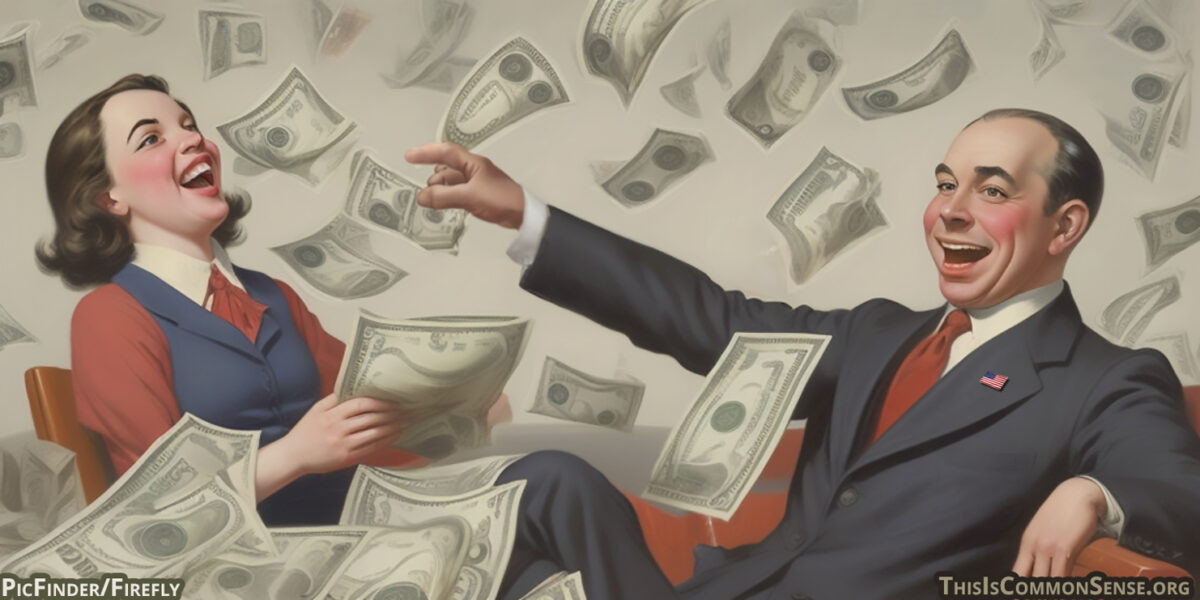
Hypocrisy’s Cash Value

“If these corrupt Democrats didn’t have HYPOCRISY,” the Republican National Committee explained, “they’d have NOTHING!”

After months of Biden surrogates savaging former President Donald Trump for the dastardly deed of using campaign monies to cover his mounting legal fees from the plethora of trumped-up indictments brought by partisan Democratic prosecutors, it turns out the Democrats have been doing the same thing.

The BBC noted: “Democratic donors paid at least $1.7m (£1.35m) of U.S. President Joe Biden’s legal fees during the investigation into his handling of classified documents, records show.”

“We are not spending money on legal bills or hawking gold sneakers,” Rufus Gifford, finance chair of the Biden campaign, told MSNBC only days before the news broke.

Highly questionable that Biden could sell anyone a sneaker, but the other claim was a provable lie.

“The use of party funds to cover Biden’s legal bills is not without precedent and falls within the bounds of campaign finance law,” the Associated Press article quickly informed, before adding that it “could cloud Biden’s ability to continue to hammer former President Donald Trump over his far more extensive use of donor funds to cover his legal bills.”

How unfortunate! The hypocrisy could ruin the piling on by Democrats.

“Democrats say the cases are nothing alike,” The Washington Post reported.

“There is no comparison,” offered a Democratic National Committee spokesman. “The DNC does not spend a single penny of grass-roots donors’ money on legal bills, unlike Donald Trump, who actively solicits legal fees from his supporters . . .”

Let’s get this straight: the difference is that Trump is upfront in asking his middle-class supporters for help, while Biden’s money came surreptitiously from wealthy Democrats?

This must be the proverbial dime’s worth of difference between the parties.

This is Common Sense. I’m Paul Jacob.


PDF for printing

Illustration created with PicFinder and Firefly

See all recent commentary
(simplified and organized)
See recent popular posts

Categories
general freedom national politics & policies Second Amendment rights

The CDC on Self-Defense

This April, a Nashville homeowner shot an intruder intent on burglary.

Also this month, a St. Louis apartment dweller shot an intruder who threatened to kill his family.

A Newport Beach homeowner recently shot an intruder as well.

Aside from the obvious, what do such incidents, often in newspapers, have in common? The government is hiding research about them.

In December 2022, Fox News reported that to appease gun control activists, the Centers for Disease Control had deleted reference to a study on how often guns are used in self-defense from its published research.

The CDC-commissioned study by Gary Kleck showed that “instances of defensive gun use occur between 60,000 and 2.5 million times” annually. But in 2021, after being lobbied by the gun control activists, the CDC pretended that Kleck’s study didn’t exist.

Kleck said: “CDC is just aligning itself with the gun-control advocacy groups. . . . ‘We are their tool, and we will do their bidding.’ And that’s not what a government agency should do.”

CDC’s conduct was not new. In 2018, Capital Research had asked why the agency was “Hiding Its Defensive Gun Use Statistics.”

For decades, we’ve had abundant data on how gun owners defend themselves from violent bad guys. CDC, which investigates something or other related to this subject, won’t share all that it knows.

We can’t legally require the media to stop hiding critical information. But we should be able to require our government to stop doing so.

This is Common Sense. I’m Paul Jacob.


PDF for printing

Illustration created with PicFinder and Firefly

See all recent commentary
(simplified and organized)
See recent popular posts
Categories
Common Sense national politics & policies regulation subsidy

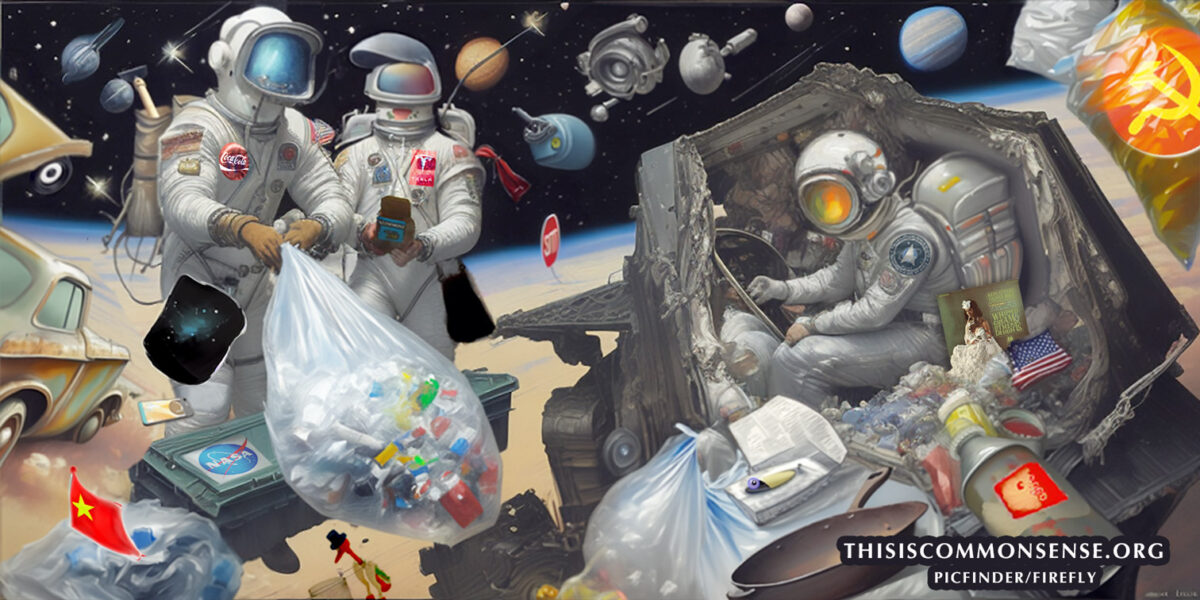
Electric Class Warfare

Star Trek may have adversely affected American politics. Its techno-communist utopian militarism was one thing, its attitude towards engineering? Perhaps worse.

In how many episodes did Captain Kirk demand that Scotty push the warp drives further, or decrease the time required for a task — arbitrarily according to his need, not actual possibility?

And, because television: presto, it was done; just in time for the finale!

We see that in the push for electric vehicles (EVs). 

The EV mandates, explains The Epoch Times, “will likely cause a sizable wealth transfer from rural red regions of the United States to urban blue sections, and to wealthy Democrats who reside in them. . . .”

For while Democrats say they’re trying to “save the planet” from an increase in atmospheric carbon, really, analyst Robert Bryce counters, “it’s a type of class warfare that will prevent low- and middle-income consumers from being able to afford new cars.”

How? The EPA’s new “rules are the strictest in history and will effectively force carmakers to have one-third of new car sales be plug-in EVs by 2027 and more than two-thirds by 2032.” But according to the Texas Public Policy Foundation, “as much as $48,000 of the cost of the average EV sold in the United States is paid not by the owner but in the form of ‘socialized costs’ that are spread out among taxpayers and electricity consumers over a 10-year period.”

So the new rules will reduce the supply of gas-powered vehicles, driving up costs. And the increased number of already-subsidized vehicles will also be paid by taxpayers at large, while the benefits go to . . . mostly Democrats in the bluest counties of the bluest states, as statistics show.

In recent years, Democrats have prided themselves that their “blue states” subsidize “red states,” mocking the “rugged individualist” pretensions of the hapless bubbas in flyover country. But now such boasts ring hollow. 

This is the far-flung future? 

Subsidy and regulation spoil the Star Trek promise.

This is Common Sense. I’m Paul Jacob.


PDF for printing

Illustration created with PicFinder and Firefly

See all recent commentary
(simplified and organized)
See recent popular posts
Categories
First Amendment rights national politics & policies political challengers

The RFK Challenge

Yes, but . . .

When contemplating a candidate for office we may like, we do a lot of “Yes, but” thinking. It’s impossible not to.

Yesterday I considered the candidacy of Bobby Kennedy, Jr., in the context of the Republican/Democrat Duopoly™. Many of my readers may like his stances on COVID or war, but worry about other positions, like the Second Amendment and “climate change.”

Yes, but . . . there is another Yes, But context: the candidate forces mainstream voters and media manipulators to Yes, But their cherished positions.

Yes, Trump was “a threat to democracy” for trying to “overturn an election.” RFK, Jr. grants that Democrat talking point. 

But when pressed by Erin Burnett of CNN, his response was a challenge: “I can make the argument that President Biden is the much worse threat to democracy, and the reason for that is President Biden is the first candidate in history — the first president in history — that has used the federal agencies to censor political speech, so to censor his opponent.”

Now your and my response might be, No, but . . .

As in, he was certainly not the first president in American history to directly censor political speech.

But the presidents who did that are all heroes to the CNN crowd, so they’ll have to say, “Yes, but . . .”

But what? What’s the response? 

The CNN article, linked above, was lame: “‘With a straight face Robert F. Kennedy Jr. said that Joe Biden is a bigger threat to democracy than Donald Trump because he was barred from pushing conspiracy theories online,’ DNC senior adviser Mary Beth Cahill said in a statement. ‘There is no comparison to summoning a mob to the Capitol and promising to be a dictator on day one. . . .’”

What CNN and the DNC and the whole establishment ignore is the vast suppression of thousands, millions of voices online, organized by the government and ex-government and close-to-government operatives.

Yes, but . . . they like censoring their competition!

This is Common Sense. I’m Paul Jacob.


PDF for printing

Illustration created with PicFinder and Firefly

See all recent commentary
(simplified and organized)
See recent popular posts
Categories
ballot access national politics & policies political challengers

The “We the People” Party Pooper

The only substantial challenger to the two parties, this presidential campaign season, has been Robert F. Kennedy, Jr. 

The son of a presidential primary frontrunner in 1968, and nephew of the 35th President of the United States — both assassinated — has been an environmental litigator and vaccine skeptic for years, and, unlike Presidents Biden and Trump, has publicly and fundamentally criticized the handling of the recent pandemic.

Though a Democrat for years, he was marginalized by the Democratic Party — an efficient machine for an astoundingly monolithic power center — and last October decided not to run as a Democrat. 

So he’s gathering signatures, creating parties, all sorts of schemes to make good on his promise of being on the ballot in every state of the union.

As Ron Paul’s last-minute ballot access coordinator in 1988, I know how difficult that is. The two parties have only continued to tighten their grip on American election “rules.” If you were wondering why Bobby Kennedy made his Veep choice so early and picked wealthy Silicon Valley lawyer Nicole Shanahan, the reason is that many states require a Vice Presidential running mate to be on the petition before signatures are gathered.

RFK, Jr., was forced to jump the gun. Plus, now a candidate, there are no campaign finance limitations on Shanahan putting her personal wealth into the effort. 

Interestingly, RFK has formed a “national” political party, the “We the People Party,” which has established footholds in California, Delaware, Hawaii, Mississippi, and North Carolina. He has also formed The Texas Independent Party and is on the ballot as an Independent in Hawaii, Nevada, New Hampshire, and Utah.

While in recent years there has been tremendous focus on how people vote, look at all the hurdles and walls still facing the who, if that candidate exists outside the major-party duopoly, a victim of all its silly, anti-democratic laws.

Maybe that’s one way Kennedy’s campaign can “do good,” by highlighting an issue neither party cares about: free and fair elections.

This is Common Sense. I’m Paul Jacob.


PDF for printing

Illustration created with PicFinder and Firefly

See all recent commentary
(simplified and organized)
See recent popular posts
Categories
general freedom media and media people national politics & policies

Awkward for Ideologues?

There’s good news about inequality?

In late March, George F. Will argued that the truth about inequality in America, according to his op-ed title, is “awkward for the left and right.”

He points to the reality of transfer payments in the United States. 

Ignoring that reality is what leads to awkwardness.

On the left, critics of capitalism portray low-income earners as a growing class of the impoverished . . . and high-income earners as a growing class of filthy rich. 

But by “not counting about 88 percent of government transfer payments that enlarge the buying power of lower-income households, and not counting taxes that lower the wealth of higher-income households, government statistics purport to prove that the average income in the top quintile of earners is 16.7 times that of the average in the bottom quintile. Counting transfers and taxes, however, the actual ratio is 4 to 1.”

So leftists ignore the “successes” of the very system they set up, the better to complain and demand more of what has already been done.

But what do rightists ignore?

That’s where Mr. Wills’s Washington Post editors (a class of professionals who usually determine titles and blurbs) may have given us the wrong impression. Most of his column explodes leftist interpretations of contemporary reality. But he does talk about “the populist right,”: the “national conservatives” who mimic the progressive left in favoring “industrial policy” that, he notices (as I’ve noticed here at Common Sense) “regressively funnels money upward to corporations.

“The populist right advocates protectionism (tariffs to shield corporations from competition), and the populist left advocates hundreds of billions of dollars of subsidies (for semiconductors, electric vehicles, solar panels, etc.).” Both favor the rich when it comes to regulations, while complaining about the rich in other contexts.

A poor way to help the poor.

This is Common Sense. I’m Paul Jacob.


PDF for printing

Illustration created with PicFinder and Firefly

See all recent commentary
(simplified and organized)
See recent popular posts

Categories
First Amendment rights international affairs national politics & policies

TikTok Smoke But No Gun?

I’d like to ban the Communist Party — in China. But TikTok — here?

The app’s possible use as spyware and worse by Chinese Communist Party operatives should be investigated thoroughly.

“Lawmakers and regulators in the West have increasingly expressed concern that TikTok and its parent company, ByteDance, may put sensitive user data, like location information, into the hands of the Chinese government,” explains The New York Times. “They have pointed to laws that allow the Chinese government to secretly demand data from Chinese companies and citizens for intelligence-gathering operations.”

This concerns me enough to not be on TikTok, but while we smell smoke, I see no smoking gun.

And banning Tik Tok has every appearance of doing what the CCP would do — and did with Facebook and YouTube and X (formerly known as Prince — er, Twitter). Not to mention being unconstitutional.

The TikTok ban that passed the House last week — with only 50 Democrats and 15 Republicans voting No — if passed by the Senate and signed by the President, would set up another level of surveillance and Internet control that would be used against American citizens beyond users of this social media video-sharing platform.

It comes down to good ends not justifying evil means, in this case an all-out government attack upon freedom of speech and press.

There are things the federal government could do — and already has done — to limit TikTok’s influence. Last year, the U.S. (along with Canada) banned it from all government devices. 

This didn’t even require an act of Congress. Arguably, Trump could have done this with Facebook and Twitter on federal government devices when it became clear that these platforms were being used to orchestrate partisan speech control.

And, of course, a general social cause against TikTok could be engaged without threat of force. Political leaders owe it to the people to speak out.

This is Common Sense. I’m Paul Jacob.


PDF for printing

Illustration created with PicFinder and Firefly

See all recent commentary
(simplified and organized)
See recent popular posts